News & Announcements Archives | Page 271 of 322 | The Lafete Magazine
close

News & Announcements

News & Announcements

Death Toll Hits 19 As Egypt Buries Train Crash Victims

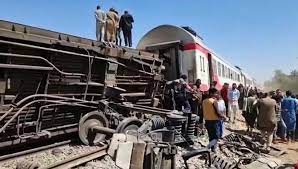
The death toll from the train crash in Egypt has risen to nineteen as the country buried the dead on Saturday. They died from a train collision that also injured 185, according to a revised toll, as investigators probed the country’s latest deadly rail crash.

Health Minister Hala Zayed told reporters that an initial toll of 32 killed in Friday’s crash was revised down, while the number of injured rose from 165.

“After we honed in on the details of those killed and injured… at this moment there are 185 injured and 19 corpses and three bags of body parts,” Zayed said, without giving further details.

Surveillance camera footage of the accident scene by AFP showed a speeding train barreling into another as it rolled slowly down the tracks, sending a carriage hurtling into the air in a cloud of dust.

Most of those injured in Friday’s crash that occurred in the Tahta district of southern Sohag province suffered fractures.

The first victims were laid to rest early on Saturday with small groups of family and friends in attendance as residents, who appeared mistrustful of outsiders, kept the media at bay.

Other burials were expected to take place following mid-day Muslim prayers, an AFP reporter said.

President Abdel Fattah al-Sisi pledged tough punishment for those responsible for the crash, the latest in a series of rail accidents to plague Egypt. Such incidents are generally attributed to poor infrastructure and maintenance.

It came as the most populous Arab nation struggles with another major transport challenge — a giant container ship blocking the Suez Canal, a vital shipping lane for international trade.

Early on Saturday Egypt was again struck by tragedy when a building collapsed in the capital Cairo, killing at least five people and injuring 24 others, according to officials.

At the scene of the rail disaster, technicians worked through Friday evening to remove five dislocated and damaged carriages. By morning the crash area was cleared of twisted metal and debris.

“We were at the mosque then a child came and told us (about the incident). We heard the collision, so we rushed and found the carnage,” said a 59-year-old man speaking on condition of anonymity.

The first ambulances to reach the scene arrived “around half an hour” after the crash, he said.

“There were children who removed (debris) using wooden ladders” added the witness, who spent the day helping rescue workers.

One train was travelling between the southern city of Luxor and Alexandria on the Mediterranean coast, and the other between the southern city of Aswan and Cairo.

Kamel Nagi, a 20-year-old conscript, was on the Cairo-bound train after enjoying a few days of leave.

“Our train suddenly stopped and a quarter of an hour later, the second arrived and struck us,” said Nagi, who suffered multiple broken bones.

“I saw it coming, screamed, then found myself on the ground in great pain,” he said from his hospital bed as a nurse gave him an injection to alleviate his pain.

Authorities opened an investigation to determine the circumstances of the accident, while the rail authority blamed the crash on unidentified passengers who “activated emergency brakes” in one train.

The prosecution said it would interrogate several rails employees, including the two train drivers, their assistants and the signalman.

They will also have to undergo drug testing and their mobile phones have been seized by the authorities to examine their call logs, it added.

But media reports on Saturday claimed both train drivers had died of injuries sustained in the crash.

The rail authority said one train hit the last carriage of the other, causing at least two carriages to overturn between the stations of Maragha and Tahta.

Prime Minister Mostafa Madbouli said the government will disburse 100,000 Egyptian pounds (around $6,400) to each family who lost a loved one and between 20,000-40,000 to those injured.

The government has spent “hundreds of billions of pounds” to upgrade the railway system over the past four years, he said, acknowledging that the network “has suffered from decades of negligence”.

Egypt’s railway network is one of the oldest in Africa and the Middle East and improving it “will take time”, Madbouli told reporters Friday after visiting the crash site.

“Until then accidents like this can happen,” he said, adding that efforts to upgrade the system have been hampered by the coronavirus pandemic which has delayed deals with foreign firms.

One of the deadliest Egyptian train crashes came in 2002 when 373 people died as a fire ripped through a crowded train south of Cairo.

Nicholas Monday Aswani, a medic and tech entrepreneur based in the US, says he is sceptical about getting the jab.

“To be honest, I am against taking that shot. If it were totally up to me, I wouldn’t. I am concerned it hasn’t been properly developed given the short duration of manufacture.”

Dr Aswani notes that vaccines usually undergo extensive testing before their efficacy is determined. He feels Covid-19 vaccines have been rushed due to anticipated monetary benefits.

“In total, five competing vaccines are available here, among them Moderna, AstraZeneca and Pfizer, but the CDC recommends Pfizer and Moderna. This begs the question – what about the others?”

Dr Aswani says news on adverse reactions in some people amplifies his scepticism.

“I am worried I might be forced to take it just so I can travel – my favourite pastime activity. A few countries are already beating the drums for a Covid-19 passport so I might reluctantly get the shot for travel purposes,” he says.
read more
News & Announcements

Libya Confirms Arrest Of Suspected Killers Of Militia Leader

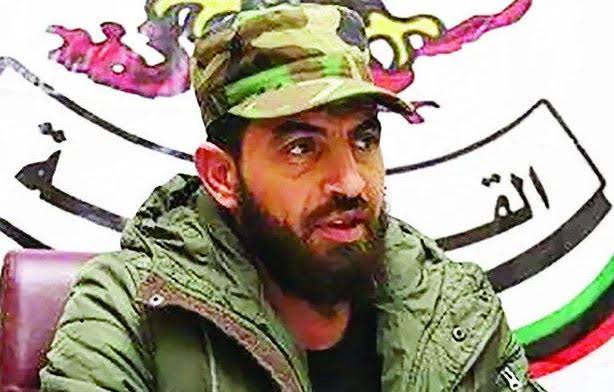
Libyan authorities have arrested two of the suspects in connection with the murder of Mahmoud al-Werfalli, a militia leader wanted by the International Criminal Court (ICC). 

This is even as the country’s government has also announced increased security measures in the second-largest city, Benghazi.

Mahmoud al-Werfalli, a member of forces loyal to eastern renegade commander Khalifa Haftar, was shot dead on Wednesday along with his cousin in the city, the cradle of the country’s 2011 revolution.

Security is precarious in Benghazi, eastern Libya, with frequent tit-for-tat violence and executions.

It was plunged into chaos after a NATO-backed uprising in 2011 and toppled and killed longtime strongman Muammar Gaddafi.

For years, the country was split and controlled by two competing administrations: An internationally-recognised government in the western city of Tripoli and a rival administration in the east allied with Haftar.

Fighting only came to a halt last year and a formal ceasefire in October was followed by the establishment of a unity government led by interim Prime Minister Abdul Hamid Dbeibah.

The ICC issued the first warrant for al-Werfalli’s arrest in August 2017, accusing him of having ordered or personally carried out seven separate rounds of executions of 33 people in 2016 and 2017.

In July 2018, the ICC issued a second arrest warrant for al-Werfalli for his “alleged responsibility for murder as a war crime”.

Colonel Ali Madi, the head of Benghazi’s military prosecution linked to Haftar, identified the suspects in al-Werfalli’s killing as Mohamad Abdeljalil Saad and Hanine al-Abdaly.

The latter is the daughter of lawyer and rights activist Hanan al-Barassi, who was gunned down in broad daylight last November in Benghazi.

Military authorities in Benghazi said al-Abdaly was arrested while “threatening a fellow citizen with a handgun”, according to video footage of the alleged incident.

Possession of the handgun in itself is considered a crime, they said.

Meanwhile, the head of security in Benghazi, General Abdelbasit Bougheress, told reporters on Saturday that on “instructions” from Haftar, all shops must install surveillance cameras before Tuesday.

Cars with tinted windows will be banned in the city, as well as vehicles without licence plates, he added, among other measures.

Earlier this month, the bodies of 11 people bearing gunshots wounds were found at the southern entrance of the city, a security source said, suggesting they had been “executed”.

In October 2017, the bodies of 36 suspected fighters, including 19 foreigners, were found in a vacant lot in the city bearing signs of torture.

A year earlier, the bodies of 10 young Libyans were found in a rubbish dump in Benghazi.

read more
News & Announcements

Myanmar Forces Shoot At Mourners During Funeral Of 114 Persons Killed Saturday

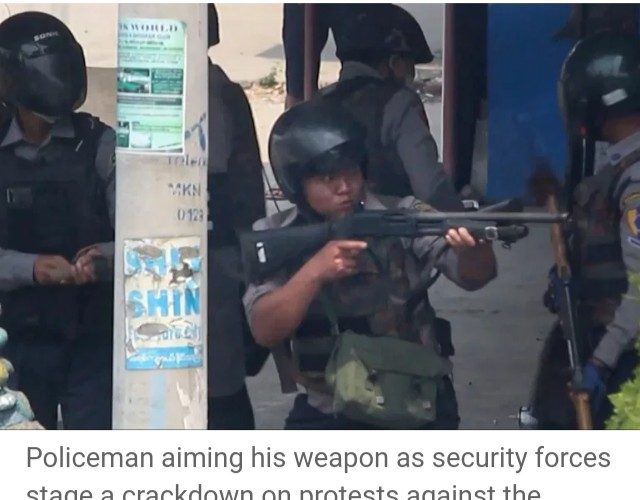
Myanmar security forces have opened fire on people gathered for the funeral of one 114 people killed on Saturday in the bloodiest day since the February 1 coup, as the defence chiefs of 12 countries condemned the military for its deadly crackdown on demonstrators.

According to the Aljazeera report, there were no immediate reports of casualties in the shooting at the funeral on Sunday in the town of Bago, near the commercial capital Yangon, according to three people who spoke to Reuters news agency.

“While we are singing the revolution song for him, security forces just arrived and shot at us,” said a woman called Aye, who was at the service for Thae Maung Maung, a 20-year-old student who was shot on Saturday, Myanmar’s Armed Forces Day. “People, including us, run away as they opened fire.”

Two people were killed in firing on protests on Sunday in separate incidents elsewhere, witnesses and news reports said. One person was killed when troops opened fire overnight on a group of protesters near the capital Naypyidaw, Myanmar Now news reported.

So far on Sunday, there were no reports of large-scale protests in Yangon or in the country’s second city, Mandalay, which bore the brunt of the casualties on Saturday. Funerals were held in many places.

At least six children between the ages of 10 and 16 were among those killed on Saturday, according to news reports and witnesses.

Japan, South Korea, the United Kingdom and the United States signed a joint statement on Sunday denouncing the military’s crackdown.

“A professional military follows international standards for conduct and is responsible for protecting – not harming – the people it serves,” the defence chiefs said. “We urge the Myanmar armed forces to cease violence and work to restore respect and credibility with the people of Myanmar that it has lost through its actions.”

The other countries that signed the statement were Australia, Canada, Denmark, Germany, Greece, Italy, the Netherlands, and New Zealand.

Several funerals were held on Sunday for some of the victims of the crackdown. In Mandalay, the family of Aye Ko, a father-of-four, commemorated his life at a service after he was killed overnight.

“We are told by the neighbours that Aye Ko was shot and thrown into the fire,” a relative told AFP news agency.

“He was the only one who fed the family, losing him is a great loss for the family.”

The General Strike Committee of Nationalities (GSCN), one of the main protest groups, paid tribute to those who died, saying in a Facebook post: “We salute our heroes who sacrificed lives during this revolution”. It added, “We Must Win This REVOLUTION.

“Saturday had also brought some of the heaviest fighting since the coup between the army and the ethnic armed groups that control swaths of the country.

Military jets killed at least three people in a raid on a village controlled by an armed group from the Karen minority, a civil society group said on Sunday, after the Karen National Union faction earlier said it had overrun an army post near the Thai border, killing 10 people.

The air raids sent villagers fleeing into the jungle.

There was no immediate comment from the Myanmar military.

The violence came as the military staged a major show of might for its annual Armed Forces Day.

Senior General Min Aung Hlaing, the coup leader, said during a parade in Naypyidaw that the military would protect the people and strive for democracy. The general deposed Aung San Suu Kyi’s elected government, alleging fraud in an election that returned her National League for Democracy to power last November.

The European Union’s delegation to Myanmar said that the 76th Myanmar Armed Forces Day “will stay engraved as a day of terror and dishonour”.

“The killing of unarmed civilians, including children, are indefensible acts,” it added.Myanmar’s Commander-in-Chief Senior General Min Aung Hlaing views an army parade on Armed Forces Day in Naypyidaw, Myanmar, Saturday, March 27, 2021 [AP Photo]

This handout phoarch 27, 2021, shows protesters making Ambassador Thomas Vajda in a statement said: “security forces are murdering unarmed civilians”.

“These are not the actions of a professional military or police force,” he wrote. “Myanmar’s people have spoken clearly: they do not want to live under military rule.”

Separately, the US Embassy said shots were fired Saturday at its cultural centre in Yangon, though no one was wounded.

UN Special Rapporteur Tom Andrews said it was time for the world to take action – if not through the UN Security Council then through an international emergency summit. He said the military government should be cut off from funding, such as oil and gas revenues, and from access to weapons.

“Words of condemnation or concern are frankly ringing hollow to the people of Myanmar while the military junta commits mass murder against them,” he said in a statement. “The people of Myanmar need the world’s support. Words are not enough. It is past time for robust, coordinated action.”

The death toll in Myanmar has been steadily rising as authorities grow more forceful in suppressing opposition to the February 1 coup.

Up through Friday, the Assistance Association of Political Prisoners, a monitoring group, said it has verified 328 deaths in the post-coup crackdown. More than 2,400 people are in detention, it said.

Myanmar Now news portal said the 114 killed on Saturday included a 13-year-old girl in Myanmar’s second city of Mandalay and a 13-year-old boy in the central Sagaing region.

At least 40 were killed in Mandalay and at least 27 were killed in the commercial hub of Yangon, it said.

Phil Robertson, deputy Asia director for New York-based Human Rights Watch, said Saturday’s events showed that the military, known in Myanmar as the Tatmadaw, should be prosecuted in international courts of law.

“This is a day of suffering and mourning for the Burmese people, who have paid for the Tatmadaw’s arrogance and greed with their lives, time and time again,” he said.

New US and European sanctions this week increased external pressure on the military. But Myanmar’s generals have enjoyed some support from Russia and China, both veto-holding members of the UN Security Council that could block any potential UN action.

Russia’s Deputy Defence Minister Alexander Fomin attended Saturday’s military parade in Naypyidaw, having met senior military leaders a day earlier.

Diplomats said eight countries – Bangladesh, China, India, Laos, Pakistan, Russia, Thailand and Vietnam – sent representatives, but Russia was the only one to send a minister to the parade on Armed Forces Day, which commemorates the start of the resistance to Japanese occupation in 1945.

Dr Sasa, a spokesman for the Committee Representing Pyidaungsu Hluttaw (CRPH), an anti-coup group set up by deposed politicians, said the decision by the eight countries to attend the parade was “disgraceful” and “unacceptable”. He also urged the global community to designate Myanmar’s military as a “terrorist organisation”.

“It is impossible for us to express the pain that we feel when we saw those foreign diplomats joining hands with those celebrations of military generals. All those weapons they displayed today is to only kill the people of Myanmar,” Sasa told Al Jazeera.

“How many people need to die before the international community takes action? … If there’s no action, only words, I’m afraid my country will have to go through the greatest civil war, the likes of which we have never seen before.”

read more
News & Announcements

Ten Killed In Inferno At Indian COVID-19 Treatment Center

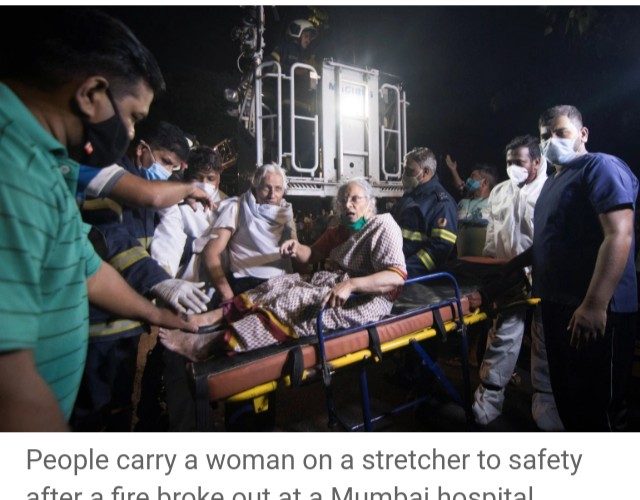
A fire has killed at least 10 people in a shopping mall that housed a private hospital treating coronavirus patients in India’s financial capital of Mumbai, officials said.

The fire broke out late on Thursday night inside the mall’s Sunrise Hospital in Mumbai’s Bhandup area, a municipal spokesman said.

Uddhav Thackeray, chief minister of Maharashtra state where Mumbai is situated, said 68 patients had been evacuated and shifted to other hospitals.

News Agency reports that some missing people appear to have gone home and been being tracked, Thackeray said.

Around 78 people were at the hospital on Thursday, according to its records.

It was not immediately clear how many of the dead were COVID-19 patients, as the bodies were being identified by relatives.

An investigation has been opened into the cause of the fire, which started on the ground floor of the building as smoke filled the hospital on an upper floor, local media reported.

The fire comes amid an upsurge in coronavirus cases in Mumbai, which reported 5,504 new infections on Thursday, it’s highest number since the outbreak began, according to Reuters news agency.

India’s new coronavirus infections rose 59,118 overnight, the highest daily rise since October 18, health ministry data showed on Friday.

The country’s overall caseload stood at 11.85 million, the world’s third-largest after the United States and Brazil.

India reported 257 new deaths from coronavirus, taking the overall tally to 160,949, the data showed.

India plans to widen its coronavirus vaccination campaign soon to include more younger people, the health minister said on Friday.

The world’s biggest vaccine-making nation has held back large exports of the AstraZeneca shot to meet growing domestic demand. But there is no outright ban, a government source said, and vaccine supply will be staggered.

All people above the age of 45 are eligible for vaccination from April 1, the government said, and it is now working to meet demand by many states for the inclusion of all adults after new infections nearly quadrupled this month.

“The government is already planning to widen the umbrella of COVID-19 vaccine beneficiaries in the near future to cover other sections of our population,” Health Minister Harsh Vardhan told a virtual summit organised by the Economic Times newspaper.

India has injected 55 million doses, the third-highest figure after the US and Brazil, although much lower as a proportion of its population of 1.35 billion, the website Our World in Data showed.

After criticism mounted over its vaccine exports, India is diverting more supplies from vaccine maker the Serum Institute of India to inoculations at home. Its other vaccine maker, Bharat Biotech, is struggling to boost output.

read more
News & Announcements

Five Family Members Killed During Late President Magufuli’s Funeral Buried

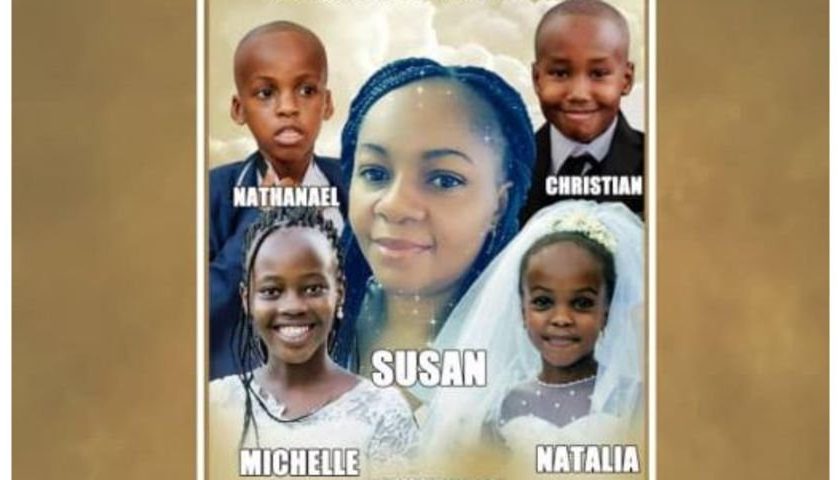
The remains of five members of the same family who died after being trampled on at the funeral procession of the late Tanzanian President John Magufuli at Uhuru Stadium in Dar es Salaam have been laid to rest.

The relatives are Susan Mtuwa and her two children Nathan (6) and Natalia (5) along with two children of her in-laws, Chris (11) and Michelle (8).

According to a report from the Nation Africa, the whereabouts of the domestic helper who was with the five is still yet to be established and it is not known whether she was among the injured or dead.

“We expect to bury them here at home after obtaining a permit because we have a large area. The bodies will spend a night at home before we bury them, ” said a family member.

The government was forced to change tack in how it handles the public mourning ceremonies after the chaos that was witnessed in Dar es Salaam. Thousands of people thronged Uhuru Stadium to pay their last respects to Magufuli but in the process, chaos erupted after some mourners forced their way into the venue.

It was in that process that the Mtuwa family from Kimara Mwisho, Dar es Salaam ended up losing its kin in a stampede.

read more
News & Announcements

UK Varsity Set To Return Looted Benin Bronze To Nigeria

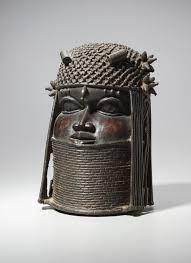
The University of Aberdeen says it will return a Benin Bronze to Nigeria within weeks, one of the first public institutions to do so more than a century after Britain looted the sculptures and auctioned them to Western museums and collectors.

The university said on Thursday that the sculpture of an Oba, or ruler, of the Kingdom of Benin, had left Nigeria in an “extremely immoral” fashion, leading it to reach out to authorities in 2019 to negotiate its return.

According to stories from News Agency, pressure has mounted to return to their places of origin the Benin Bronzes – actually copper alloy relief sculptures – and other artifacts taken by colonial powers.

Neil Curtis, Aberdeen’s head of museums and special collections, said the Bronze, purchased in 1957, had been “blatantly looted” 124 years ago by British soldiers.

“It became clear we had to do something,” Curtis said.

Britain’s soldiers seized thousands of metal castings and sculptures from the Kingdom of Benin, then separate from British-ruled Nigeria, in 1897.

The university called it “one of the most notorious examples of the pillaging of cultural treasures associated with 19th-century European colonial expansion”.

“It would not have been right to have retained an item of such great cultural importance that was acquired in such reprehensible circumstances,” said university vice-chancellor George Boyne.

Nigeria’s Minister of Information and Culture Lai Mohammed called the move a “step in the right direction” and urged other holders of Nigerian antiquity “to emulate this”.

Professor Abba Isa Tijani, director-general of Nigeria’s National Commission for Museums and Monuments, said the importance of displaying the Bronze inside Nigeria for the first time in more than 120 years was inexpressible.

“It’s part of our identity, part of our heritage… which has been taken away from us for many years,” Tijani said.

The British Museum, which holds hundreds of the sculptures, has alongside several other museums formed a Benin Dialogue Group to discuss displaying them in Benin City. It has said discussions are ongoing.

Germany is in talks to return 440 Benin Bronzes as early as the autumn, according to newspaper reports, while the University of Cambridge’s Jesus College said it had finalised approvals in December to return one Bronze. Tijani said US museums would also return two more Bronzes.

The governor of Edo state, of which Benin City is the capital, plans to build a centre to store and study the returned artefacts by the end of 2021, and a permanent museum by 2025.

Artist and Edo state native Victor Ehikhamenor said he hoped the decision would prompt others to follow suit.

“Because some of these things are missing from our environment, people are not able to contextualise where we are coming from,” Ehikhamenor said.

read more
News & Announcements

The US Mulls Keeping Its Counterterrorism Troops In Afghanistan Beyond May 1 Deadline

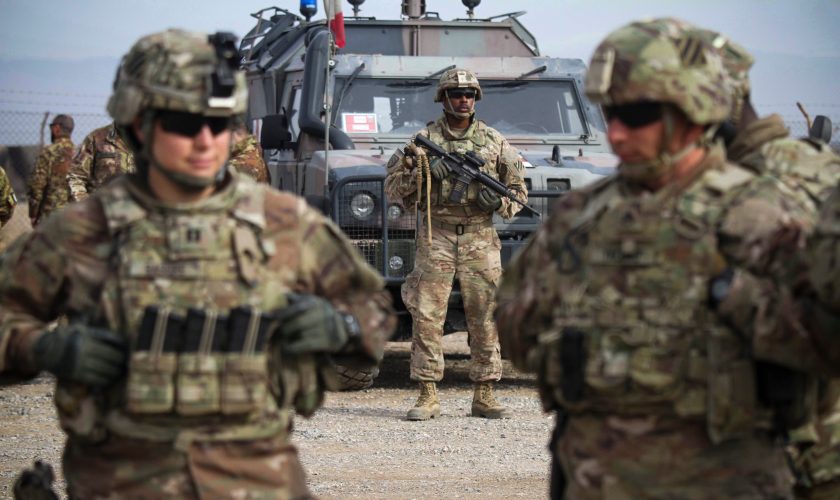
The United States is looking to keep US troops in Afghanistan passed a May 1 deadline while exploring a deal in which the Taliban would allow a US counterterrorism force to remain as they confront their ISIL (ISIS) foes, a US legislator has said.

House of Representatives Armed Services Committee Chairman Adam Smith’s comments provided new details of US President Joe Biden’s handling of the Afghanistan peace process, which he inherited from the Trump administration.

According to Reuters, the state department referred questions to the White House. The White House and the Pentagon did not immediately respond to requests for comment.

US officials said Biden has made no decision on the deadline to withdraw the last US troops from the US’s longest war.

Biden has said it would be “tough” to meet the deadline set in a February 2020 deal struck with the Taliban.

Addressing an online Foreign Policy magazine forum, Smith on Wednesday said he spoke to National Security Advisor Jake Sullivan and Secretary of Defense Lloyd Austin about the withdrawal.

“I think there’s a general feeling that May 1 is too soon, just logistically,” he said. “We have got … closer to 3,500 troops in Afghanistan. Our allies have around 7,000.”

“You cannot pull out 10,000-plus troops in any sort of way in six weeks.”

He added that the US administration’s “job one” is talking to the Taliban about allowing the US-led force to remain a little longer.

He noted the Taliban demand that all foreign troops leave. If that remains their position, he said: “I don’t see that we have much choice but to leave,” removing all forces, including the counterterrorism ones.

“What the Biden administration wants to do is negotiate past May 1 and then at least explore the option: Has the Taliban changed its mind as they … are fighting ISIS almost as much as they are fighting the Afghan government,” Smith continued.

“Might their position change about a US presence? I doubt it. But I think the administration is thinking it’s worth the conversation,” he said.

The Taliban has been fighting ISIL’s local affiliate, and US air raids have proved critical to helping them rout their rivals.

But, experts say, the ISIL remains a serious threat.

The Taliban have indicated they will resume attacking foreign forces if Biden fails to meet the May 1 deadline, and some experts doubt they would allow any US forces to stay.

read more
News & Announcements

Third Wave COVID-19: Pakistan Extends School Closures

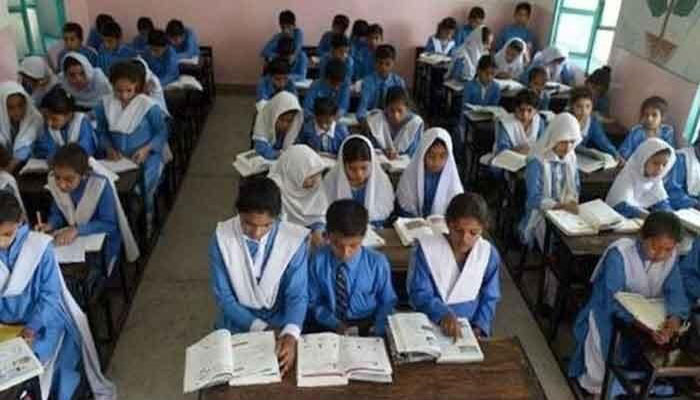
Pakistan’s government has ordered educational institutions in 18 high-risk districts to remain closed until April 11, the education minister said as the country continues to battle the third wave of coronavirus infections.

Speaking to the press in the capital Islamabad on Wednesday, Education Minister Shafqat Mahmood said the decision to extend closures first ordered on March 15 had been taken as virus infection numbers had stayed high.

“We will continue to review the state of the [pandemic],” he said. “We are very aware that closing schools significantly harms the education of children, but our children’s health is our first priority and we cannot take a risk with that.”

Aljazeera reports that the districts subject to the closures include 10 regions in the central province of Punjab, Pakistan’s most populous area, and eight regions in northwestern Khyber Pakhtunkhwa province. The capital Islamabad is also subject to closures.

Mahmood said provincial governments had the prerogative to increase the number of areas where the restrictions were being tightened if they deemed it necessary.

Further, he said, high-school students will have to sit for annual board examinations at the end of the school year, as opposed to last the year when students were granted an automatic pass based on performance baselines.

Pakistan is battling a third wave of infections, with 3,496 new cases of the coronavirus reported in the last 24 hours, as per the latest government data – the highest number of daily infections since the country was battling its first wave in July 2020.

There were 63 deaths due to the coronavirus on Wednesday, taking the death toll from the pandemic to 14,028, according to government data.

Pakistan has seen a spike in both new infections and its test-positive rate, a key indicator that the true number of infections is likely far higher than the reported cases. On Thursday, the test-positive rate stood at 10.15 percent, its highest level this year.

Last week, authorities said they were tightening restrictions and imposing stricter local lockdowns in order to curb the spread of the virus.

Lockdowns have largely been poorly enforced, however, and overall regulations still allow for large gatherings such as outdoor wedding functions attended by up to 300 people.

read more
News & Announcements

Ethiopian Troops Executed 4 Civilians In Tigray – MSF

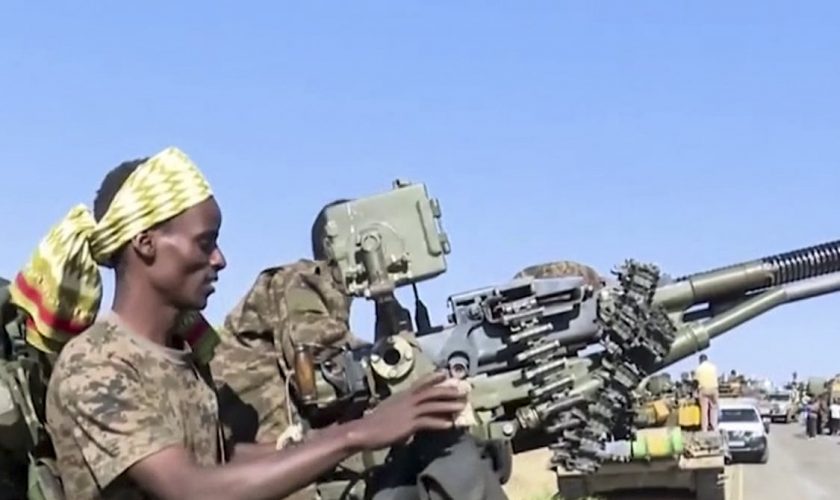
The international medical charity, Doctors Without Borders (Medecins Sans Frontiers or MSF), has said its staff witnessed Ethiopian soldiers killing “at least four” civilians in the country’s embattled Tigray region.

In a statement, the organisation said three staff members had been travelling in a “clearly marked” MSF vehicle on Tuesday on the road from regional capital Mekelle to Adigrat, some 120km (75 miles) further north when the attack occurred.

“Along the journey, they encountered what appeared to be the aftermath of an ambush of an Ethiopian military convoy by another armed group, in which soldiers were injured and killed. Military vehicles were still on fire,” MSF said on Wednesday in the statement attributed to Karline Kleijer, it’s head of emergency programmes.

“Ethiopian soldiers at the scene stopped the MSF car and two public transport mini-buses driving behind it. The soldiers then forced the passengers to leave the mini-buses. The men were separated from the women, who were allowed to walk away. Shortly afterwards, the men were shot,” it added.

“The MSF team was allowed to leave the scene but saw the bodies of those killed on the side of the road.”

A short distance away, soldiers then stopped their vehicle again, pulled their driver out and beat him with the back of a gun, threatening to kill him, the charity said. Eventually, the driver was allowed back in the vehicle and the team returned to Mekelle.

“This horrific event further underscores the need for the protection of civilians during this ongoing conflict, and for armed groups to respect the delivery of humanitarian assistance, including medical aid,” MSF said.

“Our teams are still reeling from witnessing the senseless loss of lives from this latest attack.”

Al Jazeera contacted the office of Ethiopian Prime Minister Abiy Ahmed for a comment but did not receive a response by the time of publication.

Abiy, the winner of the 2019 Nobel Peace Prize, ordered a ground and air offensive campaign in Tigray in November 2020 after blaming the region’s governing party, the Tigray People’s Liberation Front (TPLF), for attacks on federal army camps. He declared the fighting over in late November with the capture of Mekelle, but it has continued.

The exact death toll in the conflict remains unclear, but thousands of people are believed to have been killed. Hundreds of thousands have been displaced. Residents of Tigray, home to more than five million people, have described massacres, widespread sexual violence and indiscriminate killings of civilians.

After months of denials, Abiy admitted on Tuesday that forces from neighbouring Eritrea were in Tigray and conceded that atrocities had been committed.

“Battle is destructive, it hurts many, there is no question about it. There have been damages that happened in the Tigray region,” he said.

Abiy said soldiers who raped women or committed other war crimes will be held responsible, even though he cited “propaganda of exaggeration” by the TPLF.

The prime minister accused the TPLF’s leaders of drumming “a war narrative” while the area faced challenges such as a destructive invasion of locusts and the COVID-19 pandemic.

“This was misplaced and untimely arrogance,” he said.

On Wednesday, the state-appointed Ethiopian Human Rights Commission corroborated reports by rights groups that a massacre had taken place in Axum in November, saying more than 100 people had been killed by Eritrean troops.

read more
News & Announcements

Study Says Africa Experienced 30% COVID-19 Rise during 2nd Wave

Africa experienced a 30 percent rise in infections in its second wave of coronavirus last year but implemented fewer public health measures than in the first, research showed on Thursday.

Writing in The Lancet medical journal, researchers said the loosening of public health measures such as distancing and intermittent lockdowns probably contributed to higher death tolls during the second wave.

The study looked at COVID-19 case, death, recovery and test data carried out across all 55 African Union member states between February 14 and December 31 2020.

Using publicly available data, it also analysed health control measures such as school closures and travel restrictions.

At the end of 2020, the continent had reported nearly 2.8 million COVID-19 cases – three percent of the global total – and just over 65,000 deaths.

Daily new cases during the first wave numbered 18,273. During the second wave, this figure stood at 27,790 – a 30-percent rise.

Among the 38 nations that experienced a pronounced second wave and for which control measures were available, the study found that almost half had fewer measures in place compared with the first.

“This first comprehensive analysis of the pandemic in Africa provides greater insights into the impacts of COVID-19 on the continent as a whole, and within its diverse regions,” said Dr Justin Maeda, from Africa Centres for Disease Control and Prevention (Africa CDC).

“Better understanding of the challenges posed at national, regional, and continental levels are essential for informing ongoing efforts to tackle current outbreaks and future waves of infections.”

The researchers said it was highly likely new variants had contributed to higher caseloads across the continent’s second wave.

The highest incidences of cases per 100,000 population were recorded in Cape Verde (1,973), South Africa (1,819), Libya (1,526), Morocco (1,200), and Tunisia (1,191), the study showed.

And while African COVID-19 cases were not overall more deadly than the global average, this varied greatly between nations.

Of the 53 countries that reported more than 100 virus cases, one-third had case-fatality ratios – the proportion of deaths compared with total cases – higher than the global average of 2.2 percent.

“These insights reveal a need to improve testing capacity and reinvigorate public health campaigns,” said John Nkengasong, a study author and virologist who is also director of Africa CDC.

read more
1 269 270 271 272 273 322
Page 271 of 322