News & Announcements Archives | Page 270 of 322 | The Lafete Magazine
close

News & Announcements

News & Announcements

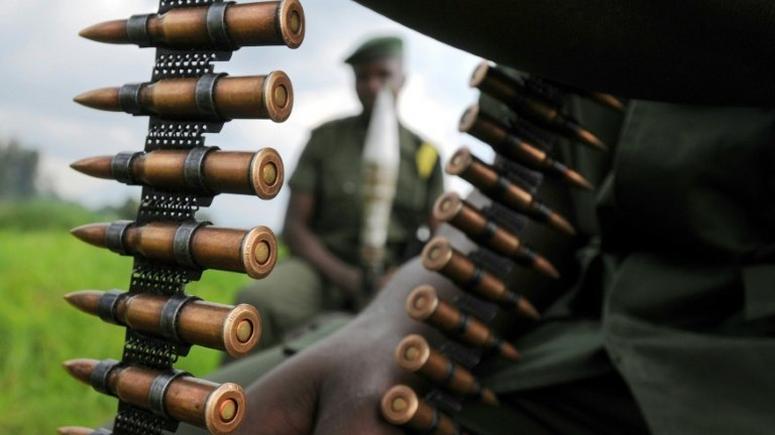
UN Alarmed At Homan Right Abuses By Russian Troops In CAR

United Nations experts have expressed alarm over reports of “grave human rights abuses” by Russian mercenaries in the Central African Republic, where they have supported the embattled government’s military.

The alleged abuses identified by the Working Group on mercenaries include mass summary executions, arbitrary detentions, torture, forced disappearances, forced displacement of civilians, indiscriminate targeting of civilian facilities and attacks on humanitarian workers.

“The experts have received, and continue to receive, reports of grave human rights abuses and violations of international humanitarian law, attributable to the private military personnel operating jointly with CAR’s armed forces and in some instances UN peacekeepers,” the UN experts said in a statement on Wednesday, naming Russian companies.

“Unacceptably, there seem to be no investigations and no accountability for these abuses,” the experts said.

The Russian military, which supervises the presence of the contractors in the CAR, and CAR’s government spokesman did not immediately comment.

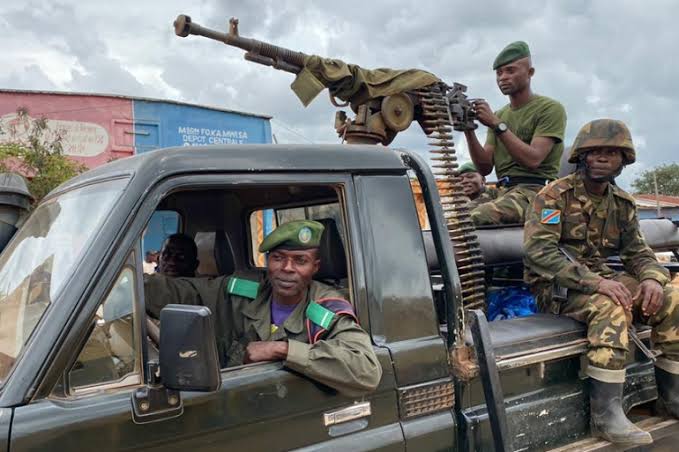
Russia first sent security contractors to the CAR in 2018. It stepped up its support late last year to help the government fend off a rebel advance launched before the December 27 presidential election.

Since then, the contractors have accompanied national forces as they retake towns from the rebels, CAR’s government has said. The rebels have been in retreat since a January 13 attack on the capital Bangui was thwarted.

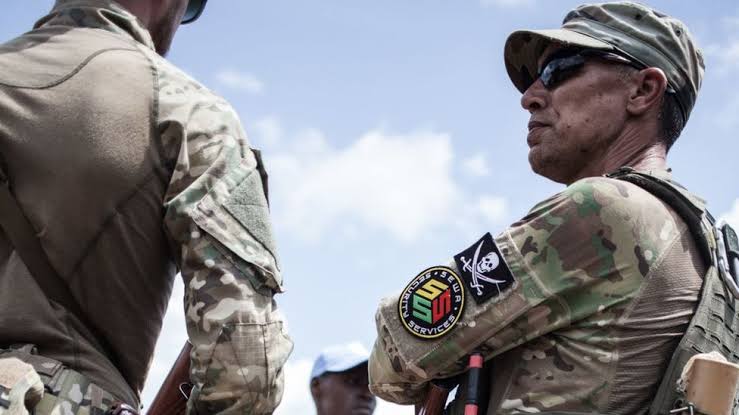
The contractors include members of Russia’s Wagner Group, the UN experts said.

Violence in recent months is the latest flare-up in a civil war that has lasted eight years since the removal of President Francois Bozize, who said this month that he had taken control of the “Coalition of Patriots for Change” rebel alliance.

Thousands of people have died in the CAR since 2013 and more than a quarter of the population of 4.9 million have fled their homes.

Of them, 675,000 are refugees in neighbouring countries.

Government forces have been bolstered by 12,000-strong UN peacekeeping forces as well as hundreds of Russian and Rwandan paramilitaries and soldiers deployed in late December.

The UN experts said they were “deeply disturbed by the interconnected roles of Sewa Security Services, Russian-owned Lobaye Invest SARLU, and the Russian-based Wagner Group.

They spoke of concerns over their connection “to a series of violent attacks” since the December 27 presidential election.

They also said they were “disturbed to learn of the proximity and interoperability between those contractors” and the UN forces.

What is more, “there seem to be no investigations and no accountability for these abuses”, the expert group said, adding they had relayed their concerns to Moscow, Bangui and “to the extent possible” to the companies.

Russia has denied Wagner paramilitaries have been deployed to the CAR, saying only military instructors have been sent to train local soldiers.

Believed to be linked to a powerful ally of President Vladimir Putin, Yevgeny Prigozhin, the Wagner Group has reportedly been involved in conflicts across the Middle East and Africa.

Prigozhin, 59, who has been hit with US sanctions for meddling in the US presidential election in 2016, denies any association with Wagner.

Although private military companies are illegal in Russia, Wagner has in recent years played an increasingly important role in realising the Kremlin’s overseas ambitions, observers say.

Members of the group were reportedly dispatched alongside Russian warplanes and ground troops following Moscow’s intervention in the Syrian war in September 2015 on the side of President Bashar al-Assad.

Moscow has never confirmed reports of Wagner mercenaries, but this month three campaign groups launched a criminal case in Russia against alleged members of the contractor outfit over the 2017 beheading of a man believed to have deserted the Syrian army.

European officials have also taken note of Wagner’s role in conflicts beyond Syria, slapping sanctions on Prigozhin last year for destabilising Libya.
read more
News & Announcements

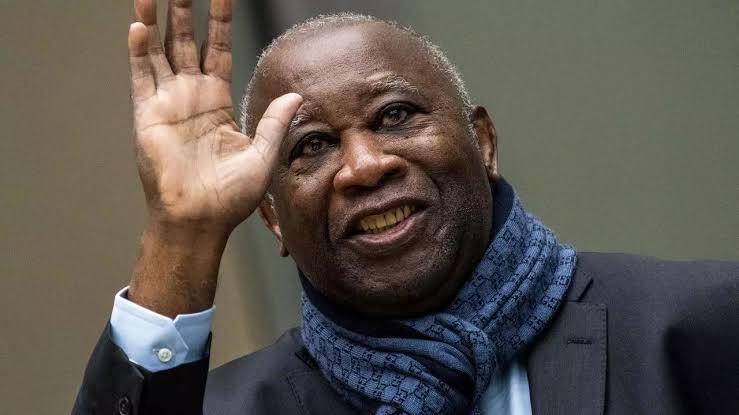
IOC Upholds Acquittal Of Ivory Coast’s Ex-President Gbagbo

The International Criminal Court on Wednesday upheld the 2019 acquittal of former Ivory Coast President Laurent Gbagbo and ordered all conditions of his release removed.

Prosecutors had argued that grave errors were made by war crimes judges who found they failed to prove their case against Gbagbo and co-accused former minister Charles Ble Goude.

“The appeals chamber, by a majority, has found no error that could have materially affected the decision of the trial chamber,” said presiding Judge Chile Eboe-Osuji, reading the panel’s ruling.

“The appeals chamber hereby revokes all remaining conditions on the release of Mr Gbagbo and Mr Ble Goude as a result of this judgement.”

Trial judges acquitted both on charges of crimes against humanity for their alleged role in post-election violence in Ivory Coast in 2010-11. They ended the trial after the prosecution finished its case and before the defence began, saying evidence submitted was not enough to support a conviction.

Gbagbo still has strong support in Ivory Coast and his followers say they have been left out of the country’s reconciliation process in the years since his removal from power. They supported his run for president last year, but his candidacy was not approved.

The 75-year-old had been released conditionally to Belgium. Judges on Wednesday ordered all restrictions on his release removed, paving the way for his possible return to Ivory Coast.

Dozens of supporters of Gbagbo hugged and cheered outside the court building after the decision.

“Gbagbo is free!” a woman sang in French while waving an Ivory Coast flag.

Gbagbo served as president from 2000 until his arrest in 2011 after his refusal to concede electoral defeat to current President Alassane Ouattara. The civil conflict that followed killed 3,000 people.

Amnesty International West Africa researcher Michele Eken said the victims “will be disappointed again today”.

Eken said the acquittal means “the court has held no one responsible for atrocity crimes committed during this period”.

Ouattara, who has been in power for nearly a decade, was re-elected in November for a controversial third term strongly contested by opposition leaders. He maintains the two-term limit for presidents does not apply to him because of a constitutional referendum passed in 2016.

read more
News & Announcements

Suspected ADF Militia Fighters Kill 23 In Eastern DRC

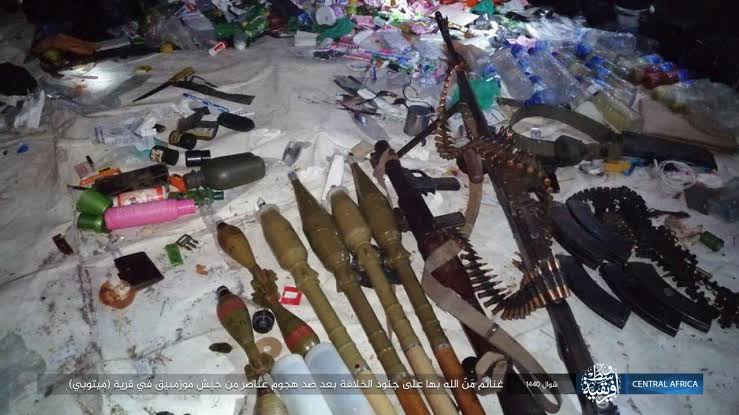
In what is yet another massacre in the eastern Democratic Republic of Congo, suspected militia fighters of Allied Democratic Forces (ADF) have killed 23 persons in that region.

The fighters attacked Beu Manyama-Moliso village in the Beni region late on Tuesday night, North Kivu provincial Governor Carly Nzanzu Kasivita told the AFP news agency.

The army intervened, killing two assailants, he said.

The death toll was still provisional as the search for bodies continued, the governor’s office said on Twitter on Wednesday.

“We are in mourning, the ADF carried out a raid and killed more than 20 people,” said Noella Katongerwaki Muliwavyo, president of an association of grassroots groups in Beni.

Beu Manyama-Moliso is a small village located in remote forests in the Beni region, close to the boundary with Ituri province.

The ADF, which originated in the 1990s in western Uganda with the aim of establishing an Islamic state, is one of more than 100 rebel groups that plague the eastern provinces of the vast country.

About a year ago, the Congolese army launched a large-scale campaign against the ADF.

The ADF is linked to the ISIL (ISIS) group, the United States said earlier this month. United Nations experts, however, have not found evidence of any direct relationship between the two groups.

According to the Kivu Security Tracker, an NGO that monitors violence in the DRC’s troubled east, the group has killed more than 1,200 civilians in the Beni area alone since 2017.

On March 19, the UN said a surge of ADF attacks since the start of the year had killed nearly 200 people and forced 40,000 to flee their homes.

At least 17 were killed in separate attacks on March 23.

Last year, the UN said the group’s attacks could constitute crimes against humanity and war crimes.

The ADF makes money through wood trafficking and DRC officials suspect some military personnel are complicit in its violent raids.

read more
News & Announcements

Mozambique Intensifies Rescue Efforts For trapped Persons After Rebels Attack

Efforts to evacuate people trapped after an attack by rebel fighters in Palma city in Mozambique are continuing despite the tense situation, as Human Rights Watch (HRW) said a massive humanitarian crisis was underway after thousands had been forced to flee the northeastern city.

Rebel fighters attacked Palma in Cabo Delgado province near the border with Tanzania on Wednesday, killing dozens and injuring scores of others. Several people are still unaccounted for.

“We have rescued 120 people who had run away and hidden in camps,” Lionel Dyck, CEO of Dyck Advisory Group, which was contracted to help the Mozambican government and gas companies fight rebels there, told South African broadcaster SABC.

Dyck said his group also managed to escort numerous people, who could not board their helicopters, to places of safety.

“There are numerous dead bodies lying on the streets, some decapitated. We are currently not counting bodies but focusing on the living,” he said, adding that the situation in the area is still quite chaotic.

The Southern Africa Director of HRW, Dewa Mavhinga, said hundreds of thousands are in need of support.

“It is utter chaos and people are living in fear and there is no security and the Mozambican authorities have not come forward with a solution to guarantee the safety of civilians in Cabo Degado,” he told Sky News.

Omar Saranga, spokesperson for the Mozambique Defence and Security Forces, confirmed in a statement on Sunday that dozens of people, including locals and foreigners, had been killed.

The government also said “dozens of defenceless people” were killed in the coordinated raid that saw the attackers fire indiscriminately at people and buildings in the coastal town.

Among the victims were seven people caught in an ambush during an operation to evacuate them from a hotel where they had fled to in order to escape Wednesday’s attack.

Portugal has said it will send around 60 troops to its former colony Mozambique following the deadly attack.

“It will support the Mozambican army in training special forces,” Foreign Minister Augusto Santos Silva said in an interview with the state TV channel RTP late on Monday.

The armed group, locally known as al-Shabab but with no established links to the rebel group in Somalia, has wreaked havoc in northern Mozambique since late 2017, killing hundreds, displacing communities and capturing towns.

It has been able to exploit the extreme poverty and unemployment in the area to recruit in large numbers.

Dyck said the fighters were previously a group of “bandits” until they claimed affiliation to ISIL (ISIS) and have since become a serious threat.

“This was a very well planned and coordinated attack,” the retired soldier said, adding that the group even has heavy weaponry now.

On Monday, South Africa’s ambassador to Mozambique said his country was in talks with the Southern African Development Community (SADC), a regional block of 15 countries, to seek solutions to end the violence in Mozambique.

He said many South Africans who were working in Palma have now been moved to Pemba, a town nearby, and some crossed into Tanzania.

On Monday, a small UN plane carrying adults and children – including an injured one-year-old baby – arrived at Pemba airport.

According to the Lusa news agency, a bullet hit the baby’s leg while he was in his mother’s arms as they ran from the rebels.

A survivor, Nelson Matola, described what happened in the town as a “massacre”. Matola said some tried to escape in a convoy of 17 vehicles on Friday.

“We went to Amarula [Hotel Amarula] where we stayed for two or three days. In Amarula, we were surrounded by al-Shabab and after four days without eating, we decided to leave and go to the forest and escape. Some colleagues lost their lives,” said Matola.

Palma is at the centre of a multibillion-dollar investment by Total, the France-based oil and gas company, to extract liquefied natural gas from offshore sites in the Indian Ocean.

The gas deposits are estimated to be among the world’s largest and the investment by Total and others is reported to be $20bn, one of the largest in Africa.

read more
News & Announcements

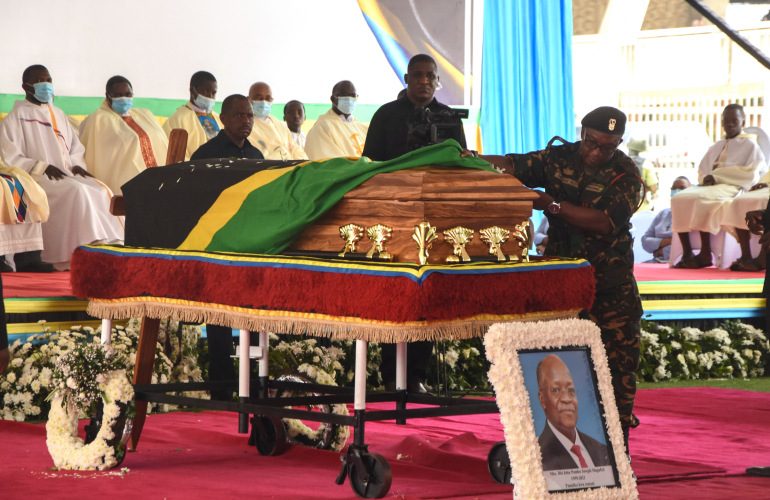
Tanzanian Police Says 45 People Died In Stampede At President Magufuli’s Lie-In-State

Tanzanian police say 45 people died during a stampede in Dar-es-Salaam on March 21 as mourners paid their last respects to the late President John Magufuli.

The stampede took place when thousands of grieving citizens tried to push their way into a stadium in the city to bid farewell to their leader, whose sudden death after a mysterious absence was announced on March 17. 

“There were a lot of people who wanted to get in the stadium, and some were not patient. They tried to force their way in and that resulted in a stampede. Forty-five died in the accident,” Dar-es-Salaam regional police commander Lazaro Mambosasa told the AFP news agency on Tuesday.

Five of the deceased were from the same family, Mambosasa said. A woman and four children were earlier reported crushed in the accident at Uhuru Stadium, although the true toll of the stampede was not announced at the time.

Mambosasa said tens of people were also injured in the crash but most had been released from the hospital.

Magufuli’s body was transported to the major cities of Dar-es-Salaam, Dodoma, Zanzibar, Mwanza and Geita, before being finally laid to rest in his ancestral village of Chato in the country’s northwest on March 26.

Tens of thousands came out to pay their respects, lining roads, weeping and running alongside the coffin as a military motorcade moved through the cities.

The stampede took place on the second day of tributes at Uhuru Stadium in Dar-es-Salaam, when the public was allowed in to pay their respects.

Magufuli died at the age of 61 from what authorities say was a heart condition, after a mysterious absence of almost three weeks, and questions remain over the true cause of his death, which the opposition says was from COVID-19.

His deputy Samia Suluhu Hassan was sworn in as the country’s first female President and led the ceremonies bidding him farewell.

A state funeral held in the capital Dodoma the day after the stampede was attended by African leaders from across the continent.

Magufuli was hailed for massive infrastructure projects and his fight against corruption but was criticised for the stifling of democracy and crackdowns on the media, civil society and the opposition.

His legacy is also marred by his COVID denial, which saw Tanzania refuse to issue data or take any measures to curb the spread of the virus.

Hassan has promised to “start where Magufuli ended” and all eyes are on potential changes to the country’s COVID policies.

On Tuesday, she nominated finance minister Philip Mpango as her deputy, which needs to be endorsed by Parliament.

Mpango last month appeared coughing and gasping at a press conference outside a hospital to dispel rumours he had died of COVID-19.

read more
News & Announcements

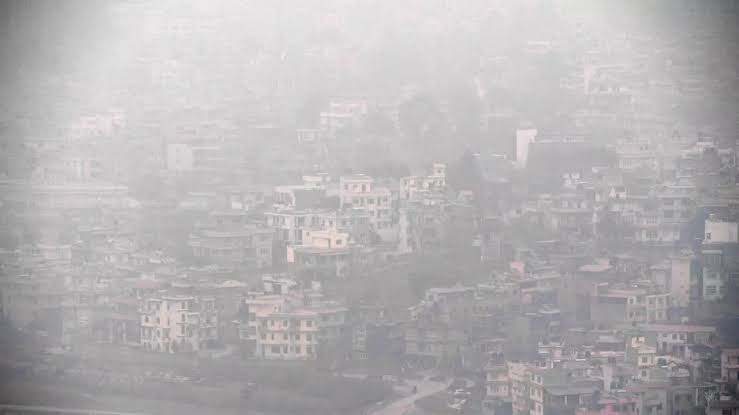
Nepal Shuts Down Schools Following Heightened Air Pollution

Nepal has ordered schools to close for four days after air pollution climbed to hazardous levels, forcing millions of students to stay home across the country.

The country of 30 million people lies in the Himalayas between China and India, two of the world’s biggest polluters.

Air pollution is a chronic problem in the rapidly growing capital city of Kathmandu and an additional headache for the government, which is struggling to contain the coronavirus pandemic.

Over the weekend, pollution levels hit their highest in the capital since the government began keeping records in 2016, government official Shankar Paudel told Reuters news agency.

Education ministry spokesman Deepak Sharma said about eight million students have been affected by the closures.

The 24-hour average level of PM2.5, fine particulate matter that can reach deep into the lungs, was 214 micrograms per cubic metre in the upscale area of Bhaisepati in Kathmandu on Sunday, Department of Environment data showed. The government’s standard level is 40 micrograms per cubic metre.

Air quality in the capital has deteriorated recently but average pollution readings were not available.

Dust from construction works, exhaust from old, poorly maintained vehicles and smoke from coal-burning brick kilns blend in a murky haze that hangs over the ancient city of four million people, raising the risk of cancer, stroke, asthma and high blood pressure, experts say.

“This also adds to the risk of COVID-19,” said Sher Bahadur Pun, a doctor at a tropical and infectious disease hospital in the capital.

Speaking to Reuters, Arjun Khadka, 65, who owns a grocery store in Kathmandu, said he experienced itching and burning sensations in the eyes and nose which could be due to pollution.

“I don’t remember this level of pollution in Kathmandu in the past.”

People must stay safe indoors and not come out except for emergencies, the health ministry said.

Officials at Nepal’s only international airport in Kathmandu said poor visibility, which was down to 1,000 metres on Monday, widely disrupted flights.

read more
News & Announcements

Celebrities Urge Black Britons To Take COVID-19 Vaccine

A group of celebrities is urging Black Britons to take a COVID-19 vaccine as concerns mount over a lag in uptake rates.

Figures published on Monday by the United Kingdom’s Office for National Statistics (ONS) showed that more than 90 percent of people over the age of 70 nationwide had received their first dose of vaccine as of March 11.

But among those who identified as Black African, that rate was 58.8 percent, marking the lowest level among all ethnic minority groups. In the Black Caribbean community, the rate stood at 68.7 percent.

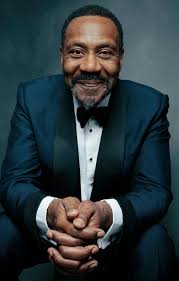
Taking up the issue on Tuesday, actor and comedian Lenny Henry wrote an open letter co-signed by several other Black public figures – including historian David Olusoga, author Malorie Blackman and actress Thandie Newton – calling on Black people to accept the offer of a vaccine when it comes.

He warned that continued low uptake could leave the Black community at risk of being further “disproportionately impacted by this terrible disease”.

Aljazeera reports that among white British people aged 70 and over, the uptake was 91.3 percent. For people of Bangladeshi, Pakistani and Indian origin, the rate was 72.7 percent, 74 percent and 86.2 percent respectively. The rate among elderly people of Chinese ancestry was 76.6 percent.

“We want you to be safe and we don’t want you to be left out or left behind,” Henry wrote.

He also addressed some of the factors behind vaccine hesitancy, such as mistrust in authorities due to discrimination and misinformation about the jabs and their side effects.

“You have legitimate worries and concerns, we hear that. We know change needs to happen and that it’s hard to trust some institutions and authorities,” Henry wrote.

“But we’re asking you to trust the facts about the vaccine from our own professors, doctors, scientists involved in the vaccine’s development, [and] GPs, not just in the UK but across the world including the Caribbean and Africa.”

Throughout the pandemic, ethnic minorities in the UK have been hit particularly hard by the virus, with higher rates of infections, hospitalisations and deaths in many communities. Experts have blamed systemic racism for this disproportionate impact.

COVID-19 death rates have been higher among the Black community than any other ethnic group in the UK, and research suggests Black people are twice as likely as white people to contract the coronavirus.

The pandemic has killed more than 126,000 people nationwide, marking Europe’s worst death toll.

Layla Moran, a Liberal Democrat member of parliament and chair of an all-party parliamentary group on COVID-19, described the ONS figures as “deeply alarming”.

She called on the government to “urgently step up efforts to tackle vaccine hesitancy among ethnic minority groups”, who was known to be vulnerable to serious disease from the coronavirus.

“That means building on some of the successful community-led initiatives we have seen, rather than relying on national campaigns from central govt,” she tweeted.

Overall, more than 30 million people in the UK – almost 60 percent of adults – have received the first dose of vaccine to date. The immunisation drive is the fourth-fastest in the world after Israel, the United Arab Emirates and Chile.

Prime Minister Boris Johnson’s government is aiming to give everyone over the age of 18 at least one shot by the end of July.

Efforts are currently focused on vaccinating adults in their fifties, after which attention will shift to those in their forties in line with the UK’s strategy to roll out doses in descending age order.

read more
News & Announcements

Biden Hasn’t Intention Of Meeting North Korean Leader – White House

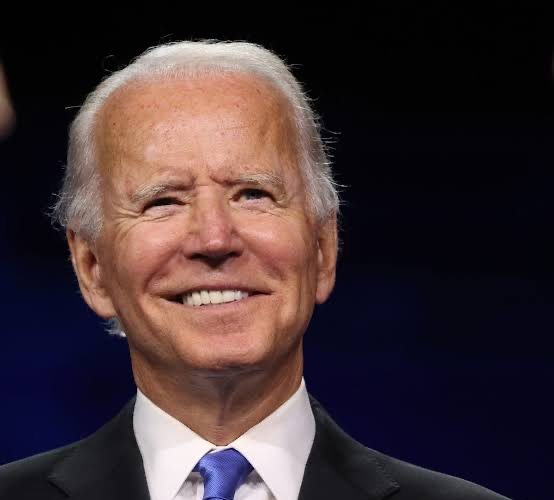
President Joe Biden of the United States does not intend to meet North Korean leader Kim Jong Un, the White House says.

Asked on Monday if Biden’s diplomatic approach to North Korea would include “sitting with President Kim Jong Un” as former President Donald Trump had done, White House press secretary Jen Psaki said: “I think his approach would be quite different and that is not his intention.”

Last week, North Korea launched a new type of tactical short-range ballistic missile, prompting Washington to request a meeting request of the UN Security Council’s (UNSC) sanctions committee, which criticised the test.

Pyongyang, according to News Agency, is banned from testing ballistic missiles by UN resolutions and has previously been slapped with tough international sanctions to deter it from continuing to develop rockets that could be equipped with nuclear warheads.

On Thursday, Biden said the US remained open to diplomacy with North Korea despite the tests, but warned there would be responses if Pyongyang escalates matters.

On Saturday, North Korea said the Biden administration had taken a wrong first step and revealed “deep-seated hostility” by criticising what it called a self-defensive missile test.

Trump had three high-profile meetings with Kim and exchanged a series of letters, but relations later grew frosty and the nuclear-armed state said it would not engage further unless the US dropped its hostile policies.

Meanwhile, on Tuesday, Pyongyang branded South Korean President Moon Jae-in shameless after he criticised last week’s missile tests by North Korea.

After Pyongyang test-fired what it described as “new-type tactical guided missiles” on Thursday, Moon said in a speech that “actions
providing difficulty for the mood for dialogue is undesirable”, according to Yonhap news agency.

Moon also acknowledged that “people are greatly concerned” by North Korea’s missile launches, calling for more dialogue between Washington, Pyongyang and Seoul.

Kim Yo Jong – the influential sister of the North Korean ruler – called Moon “a parrot raised by America” after the speech, accusing him of “shamelessness” in a statement published on Tuesday by state news outlet KCNA.

“Such illogical and brazen-faced behaviour of South Korea is exactly the same as the gangster-like logic of the US faulting the right of
[North Korea] to self-defence as a violation of the UN ‘resolutions’ and ‘threats’ to the international community,” Kim Yo Jong was quoted as saying.

The launches came in the wake of joint military exercises by South Korean and US armed forces.

The nine-day command exercise, which did not include field training, ended in mid-March.

read more
News & Announcements

19 Persons Killed In Fresh Crackdown On Myanmar Protesters

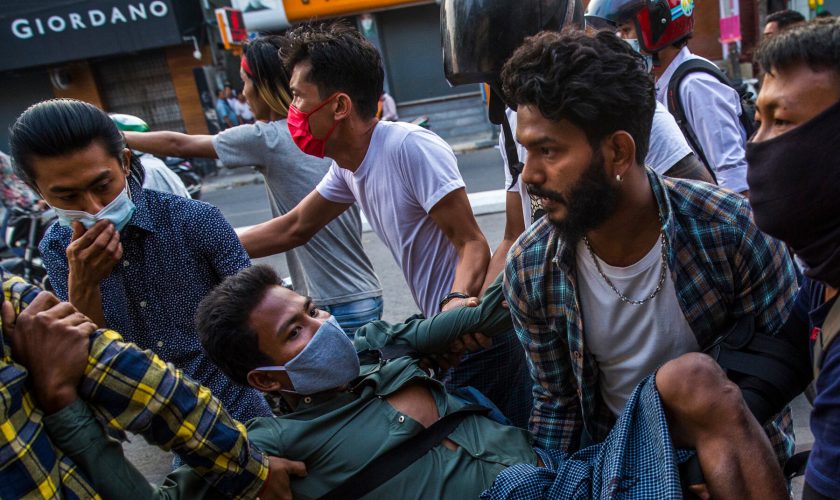
Myanmar security forces killed at least 19 protesters on Saturday, witnesses said, in violent crackdowns on demonstrations across the country as the military regime staged a major show of force for its annual Armed Forces Day parade.

The nation has been in turmoil since the generals ousted and detained civilian leader Aung San Suu Kyi in February, triggering a major uprising demanding a return to democracy.

The country’s capital Naypyidaw saw a grand parade of troops and military vehicles in the morning, with a speech by junta leader Min Aung Hlaing warning that acts of so-called “terrorism” was unacceptable.

By afternoon, as protesters continued to come out across Myanmar, AFP verified at least 19 people were killed — through local media put the death toll at far higher.

The embassies of both the European Union and the United Kingdom condemned the bloodshed.

Violence erupted all over the central Mandalay region as security forces opened fire at protesters, killing at least nine in four different cities — one of them a doctor in Wundwin and a 14-year-old girl in Meiktila, according to rescue workers on the ground.

“Four men were brought to us dead,” an emergency worker from Mandalay city, Myanmar’s second-largest, told AFP, as she frantically tried to treat dozens of injured.

A protester in Myingyan, who witnessed a man killed when he was shot in the neck, said the death toll will likely grow as security forces have continued shooting across his city.

In the northeastern Shan state, security forces opened fire on university students — killing at least three — while in the tourist city of Bagan, a march through ancient pagodas turned into mayhem when one of The protesting tour guide was shot dead.

“This 76th Myanmar Armed Forces day will stay engraved as a day of terror and dishonour,” the European Union delegation in Yangon said on social media on Saturday evening.

“The killing of unarmed civilians, including children, is indefensible acts.”

Former colonial power Britain also blasted security forces as having “disgraced themselves by shooting unarmed civilians”.

Saturday’s bloodshed adds to the current toll of nearly 330 killed in demonstrations against the coup, according to the Assistance Association for Political Prisoners monitoring group.

Across Yangon, plumes of smoke rose above the former capital which has emerged as a hotspot for unrest in recent weeks.

An overnight gathering in front of a police station in the city’s south — where demonstrators called for the release of their friends — became violent around midnight, and the shooting only stopped around 4:00 am, said a resident.

At least five died, one of them a 20-year-old boy in her a neighbourhood whose funeral she will attend.

“The conditions on the ground are very scary,” she told AFP.

A baby playing on the street in a northern Yangon township was hit in the eye with a rubber bullet when police opened fire at nearby protesters. She was rushed to the hospital by her parents.

Further north near the notorious Insein prison, a pre-dawn rally — which had protesters wearing bicycle helmets and shielded by sandbag barricades — devolved into chaos when soldiers started shooting.

At least one was killed — a 21-year-old police officer, Chit Lin Thu, who had joined the anti-coup movement.

“He was shot in the head and died at home,” his father Joseph told AFP.

“I am extremely sad for him, but at the same time, I am proud of my son”.

During a speech at the parade, junta leader General Min Aung Hlaing once again defended the coup and pledged to yield power after new elections.

But he also issued another threat to the anti-coup movement that has gripped the country since he took charge, warning that acts of “terrorism which can be harmful to state tranquillity and security” were unacceptable.

“The democracy we desire would be an undisciplined one if they pay no respect to and violate the law,” he said.

Armed Forces Day commemorates the start of local resistance to the Japanese occupation during World War II, and usually accompanies a military parade attended by foreign officers and diplomats.

The junta announced that eight international delegations attended Saturday’s event, including China and Russia — with state media broadcasting Russian deputy defence minister Alexander Fomin in the audience.

According to Russian news agency Interfax, the defence the ministry announced that Russian-made military equipment — tanks, fighter jets, and helicopters — were included in the parade.

A group of ousted parliamentarians working underground against the junta — The Committee Representing Pyidaungsu Hluttaw (CRPH), the Burmese word for “parliament” — condemned the show of might after a bloody seven weeks.

“We should not allow these military generals to celebrate after they killed our brothers and sisters,” said its UN special envoy, who goes by the moniker Dr Sasa.

read more
News & Announcements

Many Still Trapped In Mozambique Hotel After Friday’s ISIL Attack

More than 180 people including foreign workers are trapped inside a hotel in a northern Mozambique town under siege for three days by fighters linked to the ISIL (ISIS) group, workers and security sources said Friday.

Several people were dead, according to witnesses said after the attack in Palma near a liquified natural gas (LNG) site in Cabo Delgado province.

French oil giant Total is the principal investor in the $20bn project – Africa’s largest – with six other international firms including ExxonMobil involved in the area.

ISIL-linked fighters began a raid on the coastal town on Wednesday afternoon, forcing terrified residents to flee into the surrounding forest as LNG and government workers sought shelter at the Amarula Palma hotel.

“Almost the entire town was destroyed. Many people are dead,” said a worker on the LNG site speaking on the phone Friday evening after he was evacuated to Afungi.

“As locals fled to the bush, workers from LNG companies, including foreigners, took refuge in hotel Amarula where they are waiting to be rescued,” he said, asking not to be named.

Human Rights Watch said the attackers are linked to a group known locally as al-Shabab, which has no known direct link to the Somali armed group with a similar name.

“Several witnesses told Human Rights Watch that they saw bodies on the streets and residents fleeing after the Al-Shabab fighters fired indiscriminately at people and buildings,” the rights group said in a statement on Friday.

South African news website News24 reported that one South African national had died during the attack.

Another worker from a company subcontracted by Total said helicopters flew over the hotel earlier on Friday trying to find “a corridor to rescue the approximately 180 people trapped in the hotel”.

“But until nightfall, many people remained on the premises while militants tried to advance towards the hotel,” he said.

In an unverified short video clip shared on social media, an unidentified man filmed the hotel lobby showing several people milling around the patio.

With the buzzing sound of a chopper in the background, he described the situation in Palma as “critical.”e don’t know

The fresh round of attacks began on Wednesday hours after Total announced a gradual resumption of work at the LNG project, which had been hampered by the continuing rebellion in the region.

Armed fighters affiliated with ISIL have raided villages and towns across the province, causing nearly 700,000 to flee their homes.

The violence has left at least 2,600 people dead, half of them civilians, according to the US-based data collecting agency Armed Conflict Location and Event Data (ACLED).

In a statement Friday, the US embassy in Maputo condemned the attack on Palma, pledging its commitment “to working with the government of Mozambique to counter violent extremism”.

read more
1 268 269 270 271 272 322
Page 270 of 322