News & Announcements Archives | Page 269 of 322 | The Lafete Magazine
close

News & Announcements

News & Announcements

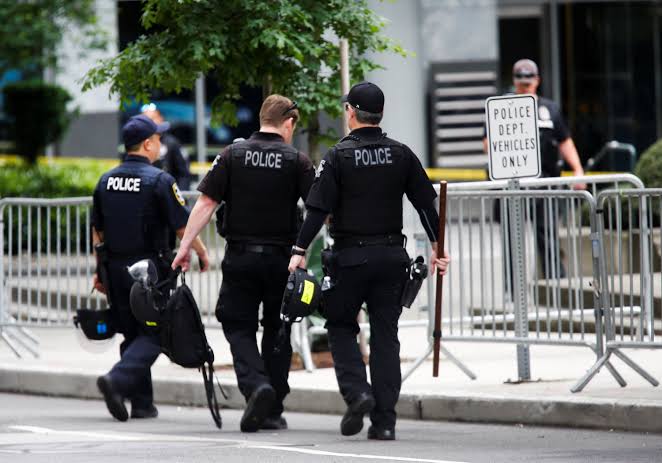
Seven Officers Fired In the US Over Involvement In Death Of Black Jail Inmate

Seven officers involved in the custodial death of a Black jail inmate in the US state of Texas have been fired.

The officers violated sheriff’s office policies and procedures leading up to the death of Marvin Scott III, Collin County Sheriff Jim Skinner said in a news release on Thursday. An eighth officer resigned.

Scott, 26, was arrested on March 14 at a mall in Allen on a cannabis possession charge, according to media reports.

Officers took Scott to a hospital because he was reportedly acting erratically.

He was released and police took him to the county jail where Scott began to exhibit “some strange behaviour”, Skinner said at a March 19 news conference.

Detention officers placed Scott on a restraint bed, used pepper spray and covered his face with a spit mask.

Scott became unresponsive at some point and was later pronounced dead at a hospital.

Family members told news outlets that Scott had schizophrenia and may have been suffering a mental health crisis.

A statement by family lawyer Lee Merritt said Scott’s funeral took place on Wednesday.

“Just one day after the funeral of Marvin Scott III, the Collin County Sheriff has fired 7 detention officers in connection with his death,” the statement said. “We are pleased with this decision and consider this progress.”

The statement asked the fired officers to “be arrested and brought to justice”.

Skinner’s statement said the Texas Rangers were continuing to investigate Scott’s death.

The firings come as the Minneapolis trial of officer Derek Chauvin, who has been charged with murder and manslaughter for kneeling on the neck of George Floyd, an unarmed Black man, for nearly nine minutes in May last year.

Video of Floyd’s death sparked racial justice protests across the US.

On Thursday, Chauvin’s supervisor said there was no justification for the officer to keep his knee on Floyd’s neck as long
read more
News & Announcements

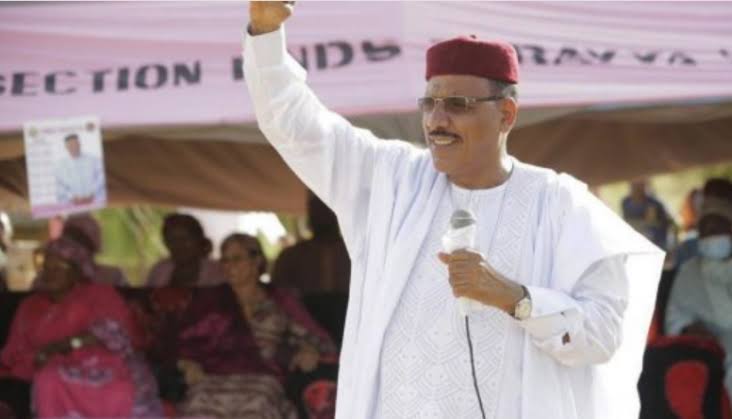
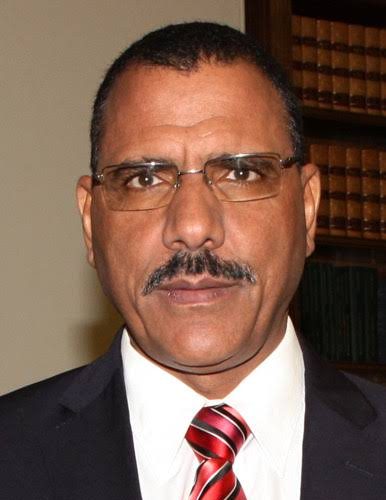
Niger President-Elect Takes Oath Of Office Amidst Coup Scare

President-elect of the Niger Republic, Mohamed Bazoum, has been sworn in as the leader of the country in the midst of a coup Scare following Thursday’s shooting near the presidential palace, which caused anxiety of a possible coup d’etat.

The inauguration on Friday marks the first-ever transition between elected presidents in Niger’s six decades of independence from France, a historic moment that has been widely praised.

But the Sahel country’s instability and insecurity have been deeply underscored in the run-up to Friday’s ceremony.

In the early hours of Wednesday, after gunfire broke out near the presidency in the capital Niamey, the government announced an “attempted coup” had been thwarted, a “cowardly and regressive act which sought to threaten democracy and the state of law”.

The alleged coup leader is an air force officer in charge of security at Niamey’s airbase and is being “actively sought”, a source within Niger’s security services told AFP news agency on Wednesday.

Another security source said, “a few members of the army” had been behind the coup but had been prevented from approaching the presidential palace by the elite Presidential Guard.

“Some arrests” were made, the source said.

Al Jazeera’s Ahmed Idris, reporting from Niamey, said Bazoum will inherit all the problems that [outgoing President] Mahamadou Issoufou has been dealing with over the years, in addition to the newest threat which is political instability and threat to the democratically elected government following Wednesday’s attempted coup.

UN Secretary-General Antonio Guterres was among worried foreign leaders, calling the armed forces “to strictly abide by their constitutional obligations”.

Bazoum, 60, is a former interior minister and right-hand man of outgoing President Mahamadou Issoufou, 68, who has voluntarily stepped down after two five-year terms.

But his most formidable rival, former Prime Minister Hama Amadou, was banned from running because of a conviction for baby trafficking, a charge he has branded politically motivated.

There have been growing attacks by armed groups and political tension in the country following Bazoum’s victory with more than 55 percent of the ballot in a February presidential election runoff. Former President Mahamane Ousmane, who lost in the runoff, has rejected the results alleging fraud.

Last week, Niger’s top court confirmed Bazoum’s win, allowing the governing party candidate to be sworn in on April 2.

Niger is one of the poorest countries in the world, according to the benchmark of the UN’s 189-nation Human Development Index (HDI).

The West African nation has suffered four coups in its history, most recently a February 2010 putsch that toppled then-President Mamadou Tandja.

A week ago, gunmen on motorcycles attacked villages located near the border with Mali, killing at least 137 people in the deadliest violence to strike Niger in recent memory.

Those attacks came on the same day that the Constitutional Court certified Bazoum’s electoral victory.

In January, at least 100 people were killed in villages, the same day that Niger announced the presidential election would go to a second round on February 21.

read more
News & Announcements

COVID-19: Tanzanian Hospital To Continue Steaming Therapy

Tanzania’s national referral hospital, Muhimbili, has stated that the steam booths that were placed at its facility in Dar es Salaam would remain intact, an indication that the key hospital may continue to provide steam therapy as one of the ways to help fight Covid-19. 

Steam therapy, whose efficacy experts are divided on, was launched earlier this year as part of a national campaign by the Tanzanian government to fight coronavirus.

Muhimbili National Hospital’s (MNH) response follows an appeal allegedly made by a Member of Parliament, Dr. Hamis Kigwangalla, calling on the referral, facility to remove the steam inhalation machines on the grounds that they portray the hospital in a bad light.

However, MNH has maintained that the steam machines are among effective remedies against Covid-19, adding that the disease still has no cure despite research being conducted by numerous countries.

According to the hospital, approximately 1,1000 individuals have used the machines and expressed satisfaction with the results as a mitigating factor. However, some global health experts, including the World Health Organization, have disputed the effectiveness of steaming as a viable treatment for Covid-19.

Further, on his Twitter account, Dr. Kigwangalla called on the government to consider taking more stern measures against the virus, such as pushing government officials to start wearing face masks and also green light importation of Covid-19 vaccines into Tanzania.

Tanzania last reported Covid-19 case figures in April 2020 when it announced 509 confirmed cases.

read more
News & Announcements

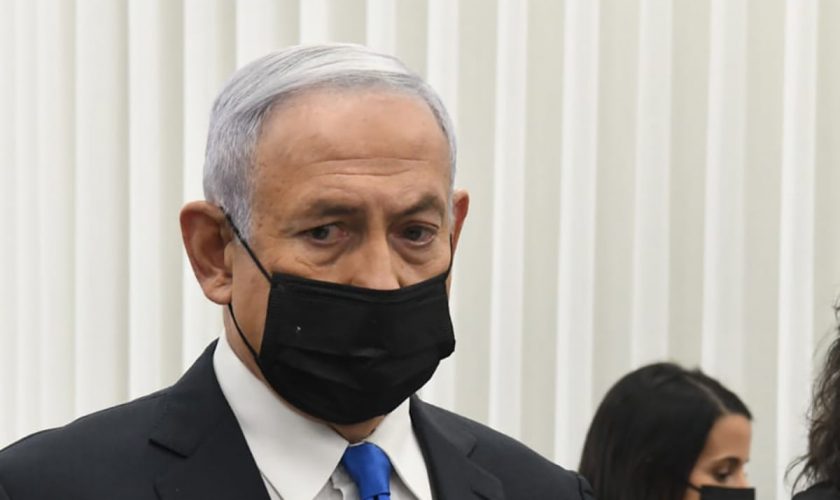
Netanyahu’s Corruption Trial Begins Amid Heavy Accusations From Prosecutors

The corruption trial of Prime Minister Benjamin Netanyahu of Israel has begun, even as the country’s prosecutors, on Monday, accused him of treating favors as “currency” at the opening of the corruption trial which, along with an inconclusive election, has clouded his prospects of remaining in office.

Netanyahu, who has pleaded not guilty to charges of bribery, breach of trust and fraud came to Jerusalem District Court in a dark suit and black protective mask, conferring quietly with lawyers as his supporters and critics held raucous demonstrations outside.

“The relationship between Netanyahu and the defendants became currency, something that could be traded,” prosecutor Liat Ben-Ari said in presenting so-called Case 4000, concerning the premier’s alleged ties to the owners of an Israeli news-site.

“This currency could distort a public servant’s judgment.”

Netanyahu left before the first prosecution witness testified in the first such trial of a sitting Israeli prime minister. He has described himself as the victim of a politically motivated witch-hunt.

Meanwhile, Israeli President Reuven Rivlin began consulting with party heads on who might form the next coalition government – a toss-up after the March 23 election, the fourth in two years gave neither Netanyahu nor his rivals a clear mandate.

Rivlin told delegates from Netanyahu’s conservative Likud the party that ethical considerations could factor in his decision, apparently alluding to Netanyahu’s trial.

“I do not see a way in which a government can be established,” Rivlin told representatives of centrist Yesh Atid, the largest opposition party, which hopes to unseat Netanyahu.

“The people of Israel should be very concerned that we may be dragged into a fifth election.”

At Jerusalem District Court, prosecutors sought to establish that Netanyahu granted regulatory favours to Israel’s leading telecommunications company, Bezeq Telecom Israel BEZQ.TA, in return for more positive coverage of him and his wife Sara on a company news website known as Walla.

Yeshua testified that he had been “barraged” by emailed and text message demands, from both the Walla owners and Netanyahu confidants, to improve reporting on the prime minister while playing down or attacking his political rivals.

“How much can you lie?” Iris Elovitch, wife of Walla’s owner at the time and a co-defendant in Case 4000, shouted at Yeshua.

read more
News & Announcements

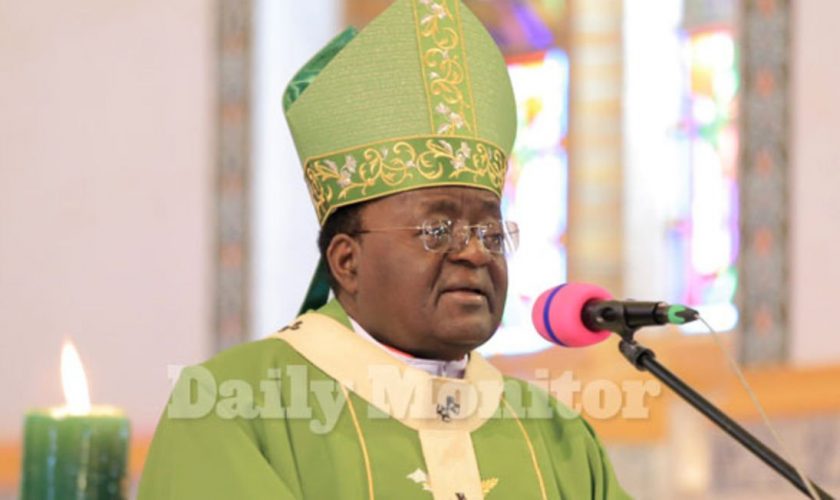
Kampala Archbishop Cyprian Lwanga Found Dead In His Room

The Archbishop of the Archdiocese of Kampala, Dr. Cyprian Kizito Lwanga has died, the Catholic Church has said. 

During a sermon on Good Friday in April 2018, Dr Lwanga revealed that his life had been threatened by an anonymous caller who claimed the State had received information linking him to a plot to overthrow the government. He was reportedly found dead in his house on Saturday, reports nation, Africa.

“With deep sorrow, I hereby inform you that our beloved Shepherd, the Archbishop of the Kampala Archdiocese, His Grace Dr Cyprian Kizito Lwanga has been called to the House of the Lord. The Archbishop was found dead in his room this morning. We pray that the almighty and merciful God may grant him eternal rest,” Fr Pius Male Ssentumbwe said in a statement released on Saturday afternoon.

“Further arrangements will be communicated later,” he added.

Dr Lwanga was last seen in public on Friday as he led a mass at Rubaga Catholic Church, where he led the homily of Good Friday celebrations.

Archbishop Lwanga removes his mask to talk to the NUP president, Mr Robert Kyagulanyi, during a service at the Lubaga Cathedral on January 1, 2021

In December last year, the Archbishop was in the spotlight for calling for the postponement of the January 2021 elections.

Addressing journalists in Kampala, Dr Lwanga, who appeared with some members of the Uganda Joint Christian Council (UJCC) which he chaired, suggested that the presidential elections be postponed for three years to contain the spread of the coronavirus.

“We know the Constitution says if elections are postponed, the Speaker of Parliament takes over the government. Article 259 of the Constitution allows Parliament to amend laws. We are asking Parliament to sit down and amend the Constitution to allow President Museveni to continue ruling and guiding the country during the three-year postponement of elections,” Dr Lwanga said on December 24, 2020.

He attracted public backlash especially from the opposition politicians who accused him of hobnobbing with members of the ruling government.

Later, Dr Lwanga said his suggestion had been misinterpreted by the public and decried growing cases of misinformation on social media, which he said several Ugandans were misusing.

During a sermon on Good Friday in April 2018, Dr Lwanga revealed that his life had been threatened by an anonymous caller who claimed the State had received information linking him to a plot to overthrow the government.

The caller reportedly told him the government had recruited informants within the church set-up, who had surrendered information to the President on the alleged plot.

“A few days ago, I got a telephone call … on the telephone, you can see the number of the person but it said ‘private’, so I didn’t know [who was calling]. This person had an accent from western Uganda and this is what he told me – that ‘there are many lies being told to the President’. Two, that ‘even members of these organisations have recruited your priests, sisters,  brothers … even catechists and seminarians.’ And I said, ‘what?’

“Even this man [anonymous caller] told me last week that ‘be careful, my Grace’. You might be the next [Janan] Luwum. I said ‘my goodness’. If God wants me to die that way, I will. But if I am going to die for wrong accusations, that is criminal. You know, for murdering people there are two things; you can shoot a person over what they call character assassination. So some members of ESO, ISO, CMI etcetera …they are character assassinating people and that is not good. But fortunately, for those of you who are believers, there is still a period of lent which we are concluding tomorrow…I kindly call upon you to repent and stop telling lies [sic],” Dr Lwanga pleaded.

“I call upon all of you to stop telling lies. Stop misleading our President. Mr President, we love you very much. That is why we have been electing you. These people are your enemies. They’re going to make you fail because your mind is poisoned and you act on such information.”

Archbishop Cyprian Lwanga and President Museveni are pictured at State House, Nakasero, in April 2018 during a private meeting.

Days later, President Museveni summoned him to State House, Nakasero, where they held talks.

“I held private fruitful deliberations with His Grace, the Archbishop of Kampala Archdiocese, the Most Reverend Cyprian Kizito Lwanga, at State House Nakasero,” a statement on President Museveni’s Facebook page read.

Born in January 1953, Dr Lwanga was appointed as Archbishop of Kampala on August 19, 2006.

Lwanga attended Kyabakadde Primary School. He entered Nyenga Seminary in 1964. Between 1972 and 1974, he studied at Katigondo National Major Seminary, in present-day Kalungu District.

He then studied Theology at Ggaba National Seminary, in Kampala. In 1979, he joined the University of Clermont-Ferrand in France, where he studied administration and languages, with particular emphasis on administration.

Later, he studied at the Pontifical University of the Holy Cross in Rome, wherein 1994, he earned a doctorate in Canon Law.

He has ordained a priest on April 8, 1978, at Rubaga Cathedral by Cardinal Emmanuel Kiwanuka Nsubuga. He served as a priest of Kampala Archdiocese until November 30, 1996.

He was appointed the first bishop of the Diocese of Kasana-Luweero on November 30, 1996, and consecrated bishop on March 1, 1997, at Kasana-Luweero.

The ceremony was performed by Cardinal Emmanuel Wamala, Archbishop of Kampala, assisted by Bishop Joseph Bernard Louis Willigers, Bishop of Jinja and Bishop Paul Lokiru Kalanda, Bishop of Fort Portal.

On August 19, 2006, he was appointed the third Archbishop of the Archdiocese of Kampala and was installed on September 30, 2006, at the Rubaga Cathedral, succeeding Cardinal Emmanuel Wamala, who resigned.

On February 2, 2020, Dr Lwanga issued a decree that Catholics in the Archdiocese of Kampala could only receive Holy Communion on the tongue, not on the hand.

read more
News & Announcements

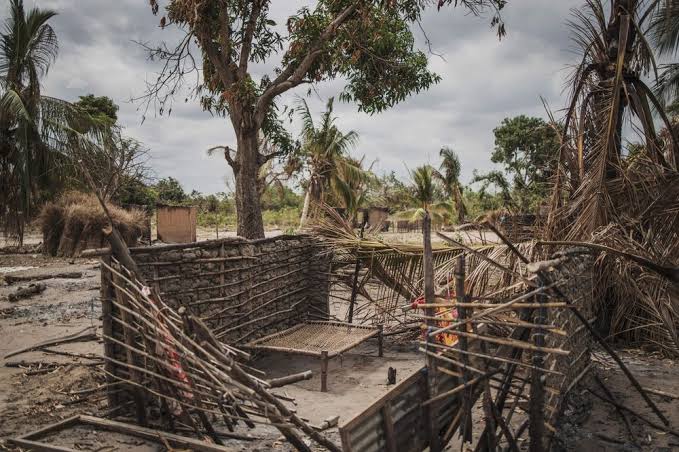
South Africa Repatriates Remains Of National Killed In Mozambique’s Terrorists Attack

The South African authorities have Repatriated the body of its national killed in the deadly terrorists attack in Mozambique last week.

This is even as six more South African nationals were successfully evacuated on Tuesday.

The Department of International Relations and Co-operation has extended gratitude to Mozambique’s government for its assistance to South African citizens affected by the attacks, its spokesman Clayson Monyela said after the evacuation conducted by the South African Air Force (SAAF).

“The SAAF plane flew from Mozambique to KwaZulu-Natal province and thereafter to Gauteng. Officials from the department of health conducted Covid-19 tests on the passengers on their arrival in KwaZulu-Natal,” Monyela said.

“The South African High Commission in Maputo remains seized with the situation in northern Mozambique and will continue to render consular services to any more distressed South Africans needing assistance.”

On Monday, Monyela said the embassy in the Mozambican capital had managed to account for 43 nationals caught up in the recent attacks in the northern parts of that country.

He said some of the South Africans had returned home while others had been moved to safe areas within Mozambique.

International Relations Minister Naledi Pandor has sent condolences to the family of South African Adrian Nel who was among those people killed in the insurgency being waged by militant Islamists.

Nel was part of a convoy trying to escape the town of Palma in the volatile northern Cabo Delgado

read more
News & Announcements

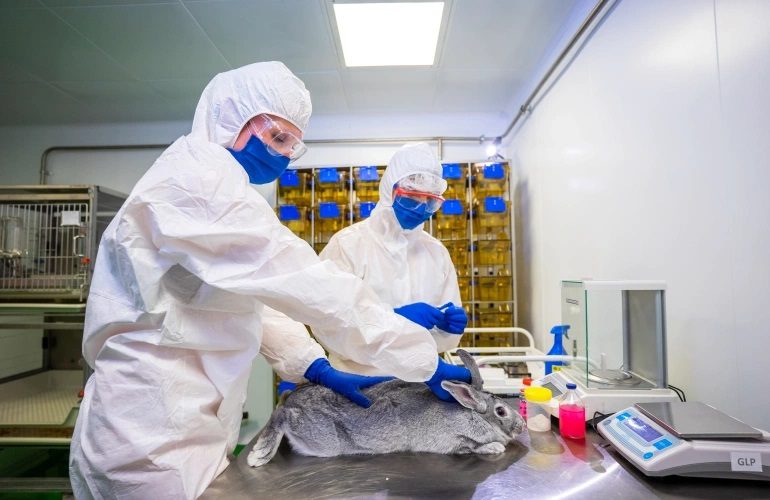
Russia Registers First COVID-19 Vaccine For Animal

Russia’s agriculture safety watchdog, Rosselkhoznadzor, has said the country has registered the world’s first vaccine against Coronavirus in animals.

Russia already has three coronavirus vaccines for humans, the most well known of which is Sputnik V, named after Sputnik, the world’s first satellite launched by the Soviet Union.

Moscow has also given emergency approval to two other Russian made vaccines – EpiVacCorona and CoviVac.

The vaccine for animals, developed by a unit of Rosselkhoznadzor, was named Carnivac-Cov, the watchdog said.

“The clinical trials of Carnivac-Cov, which started last October, involved dogs, cats, Arctic foxes, minks, foxes and other animals,” said Rosselkhoznadzor’s Deputy Head Konstantin Savenkov.

“The results of the trials allow us to conclude that the vaccine is harmless and highly immunogenic as all the vaccinated animals developed antibodies to the coronavirus in 100 percent of cases.”

Immunity lasts for six months after vaccination, but the shot’s developers are continuing to analyse this, the watchdog said.

Mass production of the vaccine could start as early as April, Rosselkhoznadzor added.

Rosselkhoznadzor said the development of its shot would help prevent mutations in animals and cited Denmark’s decision to cull 15 million mink last year after some were found to be carrying a mutated virus variant.

“The use of the vaccine, according to Russian scientists, can prevent the development of virus mutations,” the watchdog said.

It added that animal-breeding facilities and private companies from countries including Greece, Poland, Austria, the United States, Canada and Singapore had expressed interest in Carnivac-Cov.

Military officials in Russia’s second city Saint Petersburg announced earlier this week that army dogs would undergo mandatory vaccination before being deployed at airports and participating in nationwide World War II commemorations in May.

read more
News & Announcements

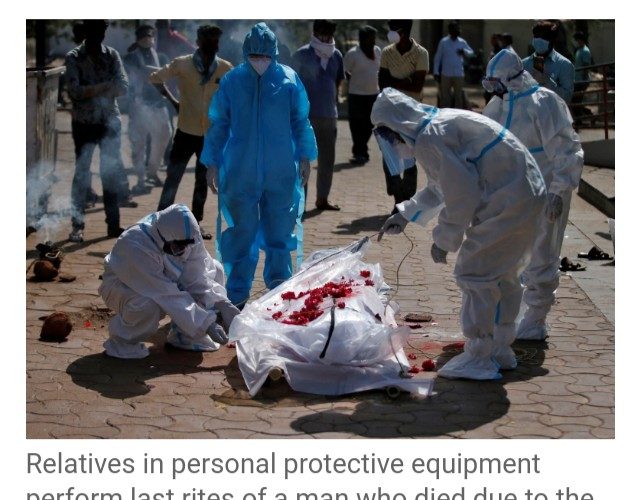
Indian Experiencing Worse COVID-19 Situation, Says Official

The situation with the COVID-19 pandemic in India is going “from bad to worse,” a senior government official has said.

“We are facing an increasingly severe and intense situation, more so surely in some districts. But the whole country is potentially at risk,” Vinod K Paul, chairman of the government’s expert panel on vaccine administration said at the weekly health ministry briefing on Tuesday.

India on Wednesday reported 53,480 new cases of the coronavirus, health ministry data showed – the second day that cases have risen less than the day before.

But the number of deaths was at its highest since mid-December, according to a Reuters news agency tally, with 354 people dying of the coronavirus in the last 24 hours, the ministry said, taking total mortalities to 162,468.

News Agency reports that India has been reporting a spike in cases this month, with its richest state of Maharashtra, home to the financial capital of Mumbai, accounting for most of its caseload.

More than 68,000 new coronavirus cases were reported on Monday, the highest in a single day in five months. On Tuesday, at least 56,000 fresh cases were reported across India, with Maharashtra accounting for more than 31,000 of them.

Paul said it was not likely that mutated strains were behind the surge after a significant tapering down in January.

On Tuesday, India’s health secretary bluntly told the federal states to get a grip on lax coronavirus prevention measures “right now” to prevent healthcare systems from being overwhelmed by a surge in infections.

“The current rise in cases … has the potential of overwhelming healthcare systems unless checked right now,” Rajesh Bhushan said in a letter to the states.

“Many districts in the country are seeing clusters of cases emerging because of specific events and/or places where crowding happens, or where a large number of people are in close contact coupled with a lack of a COVID-appropriate behaviour.”

With more than 12 million cases of the coronavirus reported since the beginning of the outbreak last year, India is the third-worst affected country in the world, after the United States and Brazil.

Bhushan asked states to enforce mask-wearing and physical distancing, and to increase testing, tracing and quarantining, or else face “heavy costs”.

Despite the warnings, top politicians including Prime Minister Narendra Modi himself have been addressing rallies and meetings of tens of thousands of people, sitting or standing shoulder-to-shoulder, with only a handful wearing masks.

Multi-phase elections in four big states began last week and will run through next month.

Maharashtra is considering imposing stricter curbs from Thursday, but opposition parties and industrialists have opposed a lockdown, saying it hurts the poor the most.

India has accelerated its nationwide immunisation campaign, simplifying the process, opening more vaccination centres and restricting exports after criticism that more of its production was going abroad than to India’s own population.

read more
News & Announcements

Facebook Says It’s Out To Combat Hate Speech In India

Facebook has said it is taking steps to combat hate speech and misinformation in India as the world’s biggest democracy holds months-long multi-phase elections in four states and federal territory.

“We recognise that there are certain types of content, such as hate speech, that could lead to imminent, offline harm,” the social networking giant said in a blog post dated March 30.

Reuters reports that India is Facebook’s biggest market by users. Its WhatsApp chat service is among the most popular in the country, counting about 500 million users alone.

Facebook has been under fire globally for alleged lapses in controlling hate speech.

In the United States, the social media giant put a months-long freeze on political, electoral and social advertisements to crack down on misinformation and abuses around the November 3 presidential elections.

In India, the company’s top lobbyist quit last year after a Wall Street Journal report suggested the way the social media network regulated political content in the country favoured Prime Minister Narendra Modi’s Bharatiya Janata Party (BJP).

Opposition parties questioned the company’s policy following the report, but the California-based company maintained it “remains committed to being an open and transparent platform”.

Elections in the states of Tamil Nadu, West Bengal, Assam, Kerala and the union territory Puducherry are a test of Modi’s popularity amid a raging protest by farmers against new agricultural laws that have sparked an outcry at home and abroad.

“To decrease the risk of problematic content going viral in these states and potentially inciting violence ahead of or during the election, we will significantly reduce the distribution of content that our proactive detection technology identifies as likely hate speech or violence and incitement,” Facebook said.

The company said it has also designed Election Day reminders to give voters accurate information and encourage them to share it with friends on Facebook and WhatsApp.

read more
News & Announcements

Heavy Gunfire Erupts Near Nigerien Presidency Two Days To Inauguration

Two days to the Inauguration of President-elect of Niger Republic, Mohamed Bazoum, heavy gunfire was heard near the country’s presidency in the capital, Niamey, in the early hours of Wednesday, prompting fears of a coup attempt and further instability.

Heavy gunfire started around 3 am local time (02:00 GMT) and lasted for about 30 minutes, Reuters news agency reported.

Online newspaper actuniger.com reported that calm had returned by around 4 am. In short video clips posted on social networks, only several seconds in length, sporadic bursts of gunfire could be heard in the darkness. It was not possible to independently verify the location and timing of the videos.

The government of Niger was not immediately available for comment.

The US Embassy in Niamey put out a security alert saying it would be closed on Wednesday “due to gunshots heard near our neighbourhood.”

“All personnel are encouraged to stay home until further notice,” it said.

Al Jazeera’s Ahmed Idris reporting from Abuja in neighbouring Nigeria said the situation was now calm in Niamey. “Questions are being asked as to whether the attack was by armed groups or was it a military coup,” Idris said.

“A lot of people in Niger believe it was an attempted coup that has been put down. The national television and radio stations are broadcasting their normal programmes without any interruption,” the Al Jazeera correspondent said.

A source who spoke to AFP news agency said security forces detained several people in connection with the incident.

“There were some arrests among a few members of the army who are behind this attempted coup,” said the source, speaking on condition of anonymity.

“The Presidential Guard retaliated, preventing this group of soldiers from approaching the presidential palace,” the source added.

There have been growing attacks by armed groups, and political tensions in the country following Bazoum’s victory in a February presidential election runoff. Former President Mahamane Ousmane, who lost in the runoff, has rejected the results, alleging fraud.

Aljazeera reports that Ousmane had called for “peaceful marches” across the country, but a planned opposition protest on Wednesday in the capital was banned a day earlier by authorities.

Last week, Niger’s top court confirms Bazoum’a victory in the presidential runoff, allowing the ruling party candidate to be sworn into office on April 2. Bazoum’s inauguration on Friday will mark the West African country’s first transfer of power from one democratically elected leader to another.

Bazoum, a former interior minister, was the preferred successor and right-hand man of outgoing President Mahamadou Issoufou, who stepped down after two five-year terms.

Niger, one of the poorest countries in the world, has suffered numerous coups in its history, most recently a February 2010 putsch that toppled then-President Mamadou Tandja.

Just over a week ago, gunmen on motorcycles attacked a series of villages located near the border with Mali, leaving at least 137 people dead in the deadliest violence to strike Niger in recent memory.

Those attacks came on the same day that the constitutional court-certified Bazoum’s electoral victory.

In January, at least 100 people were killed in villages, the same day that Niger announced the presidential election would go to a second round on February 21.

Niger’s armed forces – who number 25,000 – are poorly equipped and trained. The plan is to double this to 50,000 men within five years, but funding is key. Last year, violent protests broke out over a military procurement scandal officially estimated to have cost nearly $55m.

On March 8, Issoufou, the outgoing president, was awarded the coveted Ibrahim Prize – Africa’s top prize for leadership.

read more
1 267 268 269 270 271 322
Page 269 of 322