News & Announcements Archives | Page 267 of 322 | The Lafete Magazine
close

News & Announcements

News & Announcements

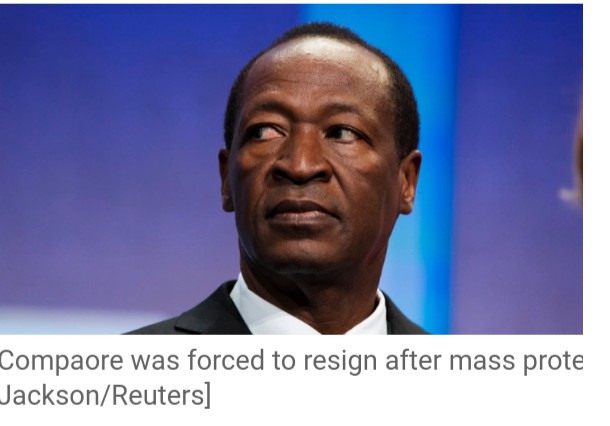
Burkina Faso Military Court Indicts Ex-President Compaore In 1987 Murder Of Thomas Sankara

A military court in Burkina Faso’s capital has indicted former President Blaise Compaore in connection to the 1987 murder of his charismatic predecessor, Thomas Sankara.

A statement issued by the court on Tuesday cited “complicity in the assassination” and an “attack on state security” by Compaore, who ruled the country until 2014 when he was forced to resign in the face of mass demonstrations against an attempt to extend his 27-year rule

Thirteen others – including Gilbert Diendere, Compaore’s right-hand man, and Hyacinthe Kafando, his security chief – were also indicted on charges ranging from “assassination” to “concealment of corpses”.

Benewende Stanislas Sankara, a lawyer representing the relatives of the slain former president, described the indictment as “a victory and a step in the right direction”.

“It’s with a sigh of relief the family can now go ahead with all the guarantees that surround Burkinabe justice,” he told Al Jazeera. “We can now calmly go to trial.”

Burkina Faso’s communications minister said an official government statement on the indictment will likely be issued on Wednesday. Eddie Komboigo, leader of the Compaore-founded Congress for Democracy and Progress (CDP) party, declined to comment on the court’s announcement.

Compaore, who has been in exile in neighbouring Ivory Coast since 2014, has always denied involvement in Sankara’s assassination.

Sankara took power in 1983, but he was killed aged 37 along with 12 other government officials during a coup led by Compaore on October 15, 1987.

Many Burkinabes regard Sankara as a national hero. A prominent pan-Africanist, he is sometimes also referred to as the continent’s “Che Guevera”, in reference to the Argentinian Marxist revolutionary who led a number of armed struggles, including in Cuba.

In 2015, authorities exhumed what are thought to be Sankara’s remains from a grave in Dagnoen, on the outskirts of Ouagadougou. Sankara’s widow said an autopsy revealed his body was “riddled with more than a dozen bullets”.

To this day, graffiti calling for “Justice for Sankara” is a common sight throughout the capital.

“It is a matter for the Burkinabe people – and, I have to say, the African people. So this transcends Thomas Sankara’s family,” said Benewende Sankara.

Following his re-election last year, President Roch Kabore appointed a minister for national reconciliation, Zephirin Diabre, who pledged to address the issue of justice for Sankara.

In 2015, Burkinabe courts had issued an international arrest for Compaore, but Ivorian President Alassane Ouattara has prevented his extradition back to Burkina Faso despite an extradition treaty between the two countries.

During his election campaign in the lead-up to the November 2020 polls, Kabore had also said he would be open to Compaore returning to the country to live out retirement.

A national debate ensued over whether the former president, now 70, should face trial upon his return or be effectively pardoned in the interests of national reconciliation.

“The warrant can be executed at any time if Cote d’Ivoire and Burkina Faso implement the existing agreements between the two states properly,” Benewende Sankara said. “I must specify that it can happen very quickly.”

Tuesday’s indictment may put further pressure on Ivory Coast to follow through on the extradition treaty.

It is unclear when the trial will take place.

Sankara’s relatives initially brought the case to the courts in 1997. It was closed soon after, before being reopened by the country’s then-transitional government in 2015.

“We can say that the Sankara case has now passed all the stages needed to see judgement,” Lassane Sawadogo, executive secretary of the ruling People’s Movement for Progress Party (MPP) told Al Jazeera.

“This represents a decisive step forward for the manifestation of the truth.”
read more
News & Announcements

Hundreds Of Indians Defy COVID-19 Protocols, Join Hindu Ritual Bath

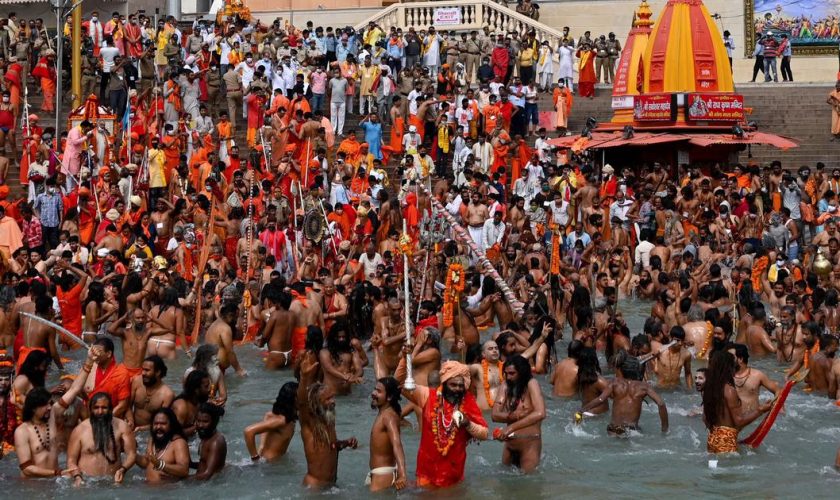
Hundreds of thousands of Hindu devotees gathered by the Ganges River for special prayers, many of them flouting social distancing practices as the coronavirus spread in India with record speed.

The Kumbh Mela – or pitcher festival, one of the most sacred pilgrimages in Hinduism – runs through April and comes during India’s worst pandemic surge, with a record daily tally of 168,912 COVID-19 infections reported on Monday.

The faithful, according to Aljazeera report, congregate in the northern city of Haridwar in Uttarakhand state and take a dip in the waters of the Ganges, which they believe will absolve them of their sins and deliver them from the cycle of birth and death.

While the authorities have made virus tests mandatory for those entering the area, officials said they were battling to hold back crowds.

“The crowd here is surging… the police are continuously appealing to people to maintain social distancing,” said police official Sanjay Gunjyal at the site.

“We are continuously appealing to people to follow COVID-19 appropriate behaviour. But due to the huge crowd, it is practically not possible.”

Few wore masks as they jostled for a dip in the waters on a day considered auspicious in the Hindu calendar.

Authorities in Haridwar say the duration of the festival has been curtailed from previous years but have found it extremely difficult to implement social distancing measures due to the huge gatherings. Coronavirus tests are mandatory for those entering the area.

Uttarakhand has reported 7,323 cases of coronavirus infections and 1,760 deaths from COVID-19 so far.

Amid concerns, the Kumbh Mela could turn into a superspreader the event, the state’s chief minister, Tirath Singh Rawat, last week said “the faith in God will overcome the fear of the virus”.

Critics of Prime Minister Narendra Modi and his Hindu nationalist Bharatiya Janata Party (BJP) say the festival was allowed at a time when coronavirus cases are skyrocketing because the government wasn’t willing to anger Hindus who are the party’s biggest supporters.

Hindu pilgrims congregate to take a ritual bath in the Ganges river during the Kumbh Mela [Anushree Fadnavis/Reuters]

They compare the government’s response to that of last year when Indian Muslims faced rising Islamophobia following accusations that the initial surge in infections was tied to a three-day meeting of an Islamic missionary group, the Tablighi Jamaat, in New Delhi.

Some leaders from Modi’s party and India’s freewheeling TV channels, which have long favoured the government’s Hindu nationalist policies, labelled Muslims as “jihadis” and “super spreaders” in March 2020 when the seven-day rolling average of coronavirus cases in the country was not even 200 per day.

The blame triggered a wave of violence, business boycotts and hate speech towards Muslims, who account for 14 percent of India’s 1.35 billion population and are the largest minority group in the Hindu-majority nation.

“With 1.2 million active cases, and the daily number reaching 200,000, it’s bizarre to have poll rallies and a full Kumbh Mela,” political commentator Shekhar Gupta said in a Twitter post.

“This will take the virus deeper into villages and small towns. This is the calamity we dodged with a crippling lockdown in the first wave. Now we’re inviting it back.”

More recently, the government has also received flak for carrying on huge election rallies where maskless people flout basic social distancing protocols.

With its explosive surge in recent days, India’s confirmed infections surpassed Brazil’s total on Monday to become the second-worst hit country in the world.

India now accounts for one in every six daily infections worldwide, with a seven-day rolling average of more than 130,000 cases per day.

A death toll of 904 overnight was the highest since October 18, taking the total figure to 170,179, data showed on Monday. Hospitals are becoming overwhelmed with patients, and experts worry the worst is yet to come.

Policemen ask people to sit while waiting to enter the Lokmanya Tilak Terminus railway station in Mumbai [Niharika Kulkarni/Reuters]

The western state of Maharashtra, home to the financial capital Mumbai has recorded nearly half of the country’s new infections in the past two weeks.

Officials in the state said they were considering a broader lockdown after large closures over the weekend.

The state, India’s richest and an industrial powerhouse, tallied 63,294 new infections on Sunday, led by a surge in its key cities of Mumbai, Nagpur and Pune.

“It is necessary to break the cycle (of infections),” said a senior state official who attended a meeting with state leaders on Sunday and sought anonymity. “We are working on identifying industries and services that need to be exempted.”

The state is among many that have demanded more doses of vaccines for immunisation campaigns.

India has injected more than 100 million doses since mid-January, the highest figure after the United States and China, but much lower as a share of its population than many countries.

With fewer than 4 percent estimated to have been vaccinated among a population of 1.35 billion, experts say the situation could have a long way to go before it starts getting better.

“After cases declined in January-February, we were very comfortable,” said a panel of high court judges in the western state of Gujarat, calling on authorities to take urgent steps to rein in the outbreak.

“Almost everyone forgot that there was ever corona,” added the panel, headed by Chief Justice Vikram Nath.

read more
News & Announcements

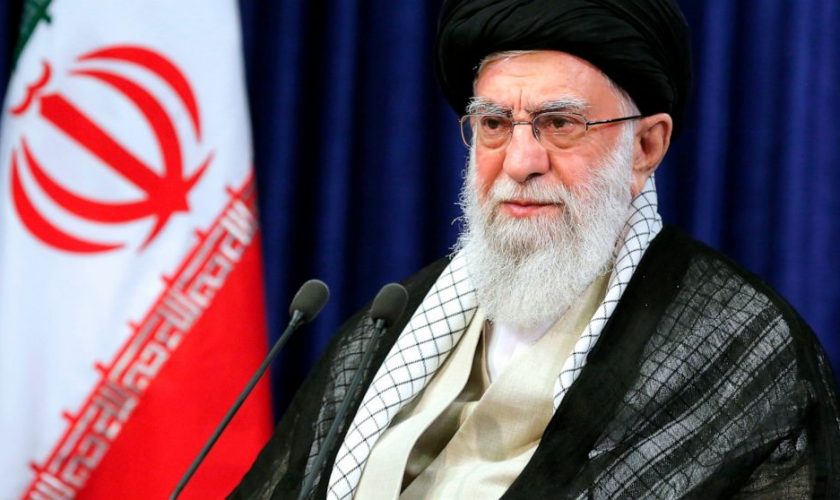
Iran Fingers Israel Over Sabotage On Its Nuclear Site

Iran blamed Israel on Monday for a sabotage attack on its underground Natanz nuclear facility that damaged the centrifuges it uses to enrich uranium, warning that it would avenge the assault.

Israel has not claimed responsibility for the attack. However, suspicion fell immediately on it as Israeli media widely reported that the country had orchestrated a devastating cyberattack that caused the blackout.

Sunday’s assault and Foreign Ministry spokesman Saeed Khatibzadeh’s comments blaming Israel could imperil ongoing talks in Vienna with world powers about saving a tattered accord aimed at curbing Iran’s nuclear program.

If Israel was responsible, it would further heighten tensions between the two nations, already engaged in a shadow conflict across the wider Middle East. Israeli Prime Minister Benjamin Netanyahu, who met Sunday with U.S. Defense Secretary Lloyd Austin has vowed to do everything in his power to stop the reviving of the nuclear deal.

At a news conference at Israel’s Nevatim airbase Monday, where he viewed Israeli air and missile defence systems and its F-35 combat aircraft, Austin declined to say whether the Natanz attack could impede the Biden administration’s efforts to re-engage with Iran in its nuclear program.

“Those efforts will continue,” Austin said. The previous American administration under Donald Trump had pulled out of the nuclear deal with world powers, leading Iran to begin abandoning its limits.

According to AFP, details remained scarce about what happened early Sunday at the facility. The event was initially described as the blackout caused by the electrical grid feeding its above-ground workshops and underground enrichment halls.

“The answer for Natanz is to take revenge against Israel,” Khatibzadeh said. “Israel will receive its answer through its own path.” He did not elaborate.

Khatibzadeh acknowledged that IR-1 centrifuges, the first-generation workhorse of Iran’s uranium enrichment, had been damaged in the attack, but did not elaborate. State television has yet to show images from the facility.

A former chief of Iran’s paramilitary Revolutionary Guard said the attack had also set off a fire at the site and called for improvements in security. In a tweet, Gen. Mohsen Rezaei said that the second attack at Natanz in a year signalled “the seriousness of the infiltration phenomenon.” Rezaei did not say where he got his information.

Iranian Foreign Minister Mohammad Javad Zarif separately warned Natanz would be reconstructed with more advanced machines. That would allow Iran to more quickly enrich uranium, complicating talks on the deal.

“The Zionists wanted to take revenge against the Iranian people for their success on the path of lifting sanctions,” Iran’s state-run IRNA news agency quoted Zairf as saying. “But we do not allow (it), and we will take revenge for this action against the Zionists.”

Officials launched an effort Monday to provide emergency power to Natanz, said Ali Akbar Salehi, the head of Iran’s civilian nuclear program. He said the sabotage had not stopped enrichment there, without elaborating.

The IAEA, the United Nations body that monitors Tehran’s atomic program, earlier said it was aware of media reports about the blackout at Natanz and had spoken with Iranian officials about it. The agency did not elaborate.

Natanz has been targeted by sabotage in the past. The Stuxnet computer virus, discovered in 2010 and widely believed to be a joint U.S.-Israeli creation once disrupted and destroyed Iranian centrifuges there during an earlier period of Western fears about Tehran’s program.

In July, Natanz suffered a mysterious explosion at its advanced centrifuge assembly plant that authorities later described as sabotage. Iran now is rebuilding that facility deep inside a nearby mountain. Iran also blamed Israel for the November killing of a scientist who began the country’s military nuclear program decades earlier.

Multiple Israeli media outlets reported Sunday that an Israeli cyberattack caused the blackout. Public broadcaster Kan said the Mossad was behind the attack. Channel 12 TV cited “experts” as estimating the attack shut down entire sections of the facility.

While the reports offered no sourcing for their information, Israeli media maintains a close relationship with the country’s military and intelligence agencies.

“It’s hard for me to believe it’s a coincidence,” Yoel Guzansky, a senior fellow at Tel Aviv’s Institute for National Security Studies said of the blackout. “If it’s not a coincidence, and that’s a big if, someone is trying to send a message that ‘we can limit Iran’s advance and we have red lines.’”

It also sends a message that Iran’s most sensitive nuclear site is penetrable, he added.

Netanyahu late Sunday toasted his security chiefs, with the head of the Mossad, Yossi Cohen, at his side on the eve of his country’s Independence Day.

“It is very difficult to explain what we have accomplished,” Netanyahu said of Israel’s history, saying the country had been transformed from a position of weakness into a “world power.”

Israel typically doesn’t discuss operations carried out by its Mossad intelligence agency or specialized military units. In recent weeks, Netanyahu repeatedly has described Iran as the major threat to his country as he struggles to hold onto power after multiple elections and while facing

read more
News & Announcements

Twitter Makes First African Recruitment From Ghana

Twitter has announced that it was recruiting eleven people in Ghana, the company’s first hire on the African continent, and plans to open an office there later.

The social media giant joins Facebook and other tech companies moving into Africa, where founder Jack Dorsey spent a month in 2019.

“Africa will define the future,” Dorsey said at the time, after visiting Nigeria, Ghana, Ethiopia and South Africa.

The jobs advertised in Ghana include positions for engineering, marketing and communications specialists.

According to Twitter, the move is motivated by the company’s mission to serve the public conversation and to increase the number of people who feel comfortable participating in it.

 “Today, in line with our growth strategy, we’re excited to announce that we are now actively building a team in Ghana. To truly serve the public conversation, we must be more immersed in the rich and vibrant communities that drive the conversations taking place every day across the African continent,” wrote Twitter on its blog Monday.

Twitter said that its new team members would be working remotely under work-from-home policies while it explored “the opportunity to open an office in Ghana in the future.”

Ghana’s support for free speech and online freedoms made it the company’s choice for its first African location, Twitter said.

It added that the Secretariat of the African Continental Free Trade Area (AfCFTA) base in the Ghanaian capital Accra had played into the decision.

“The choice of Ghana as HQ for Twitter’s Africa operations are EXCELLENT news,” Ghana’s President Nana Akufo-Addo said on Twitter on Monday.

“This is the start of a beautiful partnership between Twitter and Ghana, which is critical for the development of Ghana’s hugely important tech sector.”

Facebook has several offices in Africa, including in Ghana’s neighbour Nigeria, where Mark Zuckerberg has been on a visit.

read more
News & Announcements

Nepal Battles Worst Forest Fire

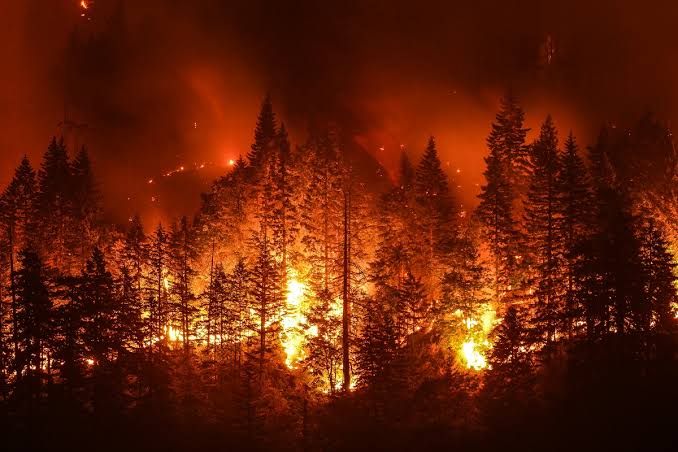
Nepal has been battling its worst forest fires in years, officials said, with smoke wafting across its mountains and souring the air as it settles into the bowl that holds the capital city of Kathmandu.

Five people have died so far trying to put out the fires that have been raging since January, said Sundar Sharma, a senior official of the National Disaster Risk Reduction and Management Authority, on Friday.

Wildfires were burning in at least 60 places across 22 of Nepal’s 77 administrative districts, he said, adding to the growing levels of pollution across the country that lies nestled between India and the Tibet region of China.

Details on losses from the fires are still being collected, Sharma said. This has been the worst fire season by number since 2012, when the government started keeping records.

“Forest fires are the main reason for the rising air pollution in Kathmandu and many other places,” Sharma told Reuters news agency.

“Wildfires could hit the peak later this month if the ongoing dry spell continued,” he said.

Nepal ordered schools to close for four days at the end of March after air pollution climbed to hazardous levels, forcing millions of students to stay home.Forest fires often erupt in Nepal during the January-May dry season, when villagers burn dry leaves in the woodlands to prompt fresh grass growth for their cattle.

Sharma said the number of fires this year was 15 times the number of fires in 2020. He did not immediately have a reason for the increase.

In Makwanpur, 50km (32 miles) south of Kathmandu, 46-year-old Tara Pakhrin watched the fires on a hill next to her home.

“The smoke blinded me and I could not see who started the fire,” she said.

The air quality index (AQI) in Kathmandu was at an unhealthy level of 174 on Friday, according to data published on iqair.com, a site that monitors air quality. An AQI level below 50 is considered good.

“The pollution levels have come down in many places but this is not adequate enough for healthy breathing,” said Indu Bikram Joshi, a spokesman for the Department of Environment.

Across the border, in India’s Uttarakhand state, forest fires have been burning since October, killing four people, according to the state government.

In April alone, there have been 657 incidents of forest fires in Uttarakhand, a bulk of them in the state’s Garhwal region near Nepal.

read more
News & Announcements

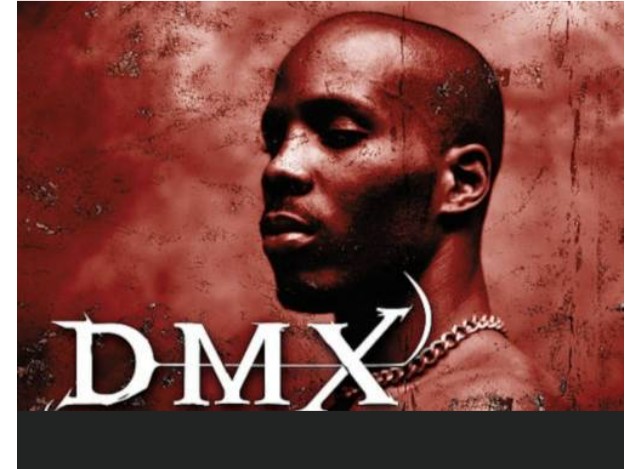
DMX, Celebrated American Rapper, Dies

American rapper, DMX has died.had reportedly tested positive for coronavirus while in the hospital fighting for his life.

The Grammy-nominated performer died after suffering “catastrophic cardiac arrest,” according to the hospital in White Plains, New York, where he died. He was rushed there from his home on April 2.

The raspy-voiced hip-hop artist who produced the songs “Ruff Ryders’ Anthem” and “Party Up (Up in Here)” and who rapped with a trademark delivery that was often paired with growls, barks and “What!” as an ad-lib, has died, according to a statement from his family on Friday. He was 50.

Associated Press reports that the rapper, whose real name is Earl Simmons, had struggled with drug addiction since his teenage years. His lawyer, Murray Richman, had earlier said he could not confirm reports that DMX overdosed.

He was reported without oxygen for like 30 minutes while unconscious when police arrived on the scene on April 2 and transported him to the hospital.

DMX was reportedly on life support and in a coma in the hospital’s ICU for some time. 

read more
News & Announcements

Jordan Bars Media Coverage Of Crisis Rocking The Kingdom

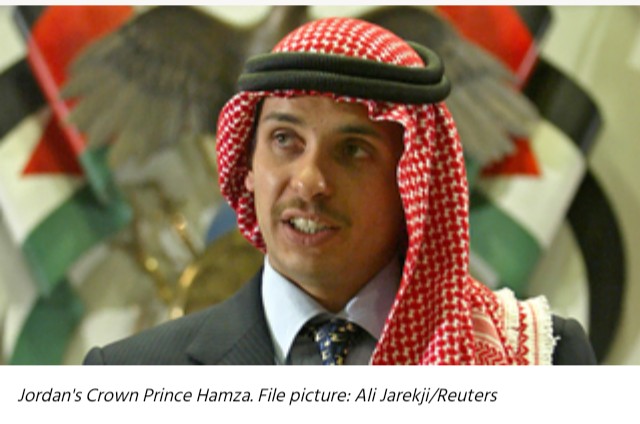
Jordan’s Prince Hamza, accused of plotting against the kingdom’s “security and stability”, disappeared from the local press Wednesday following a prosecutor’s order banning coverage of the kingdom’s worst crisis in decades.

There is a “wicked plot” aimed at overthrowing King Abdullah II, and in the streets, Jordanians voiced relief.

“When the crisis erupted on Saturday, there was no one in the streets. People were afraid,” said Shady, 41, who owns a clothing store in the capital Amman.

“But thank God, it was resolved within the royal palace.”

According to AFP, Amman prosecutor Hassan al-Abdallat on Tuesday banned the publication of any information about the alleged plot said to involve Prince Hamzah, the king’s half-brother, in order to keep the security services’ investigation secret.

The government had accused Hamza – a former crown prince who was sidelined as heir to the throne in 2004 – of involvement in a conspiracy to “destabilise the kingdom’s security” and arrested at least 16 people.

But on Wednesday the front pages were dominated by the visit of Saudi Foreign Minister Faysal Bin Farhan with a message from King Salman and developments in the coronavirus outbreak ravaging the country.

Hamza had made extensive use of the media to lash out against his situation, accusing Jordan’s rulers of corruption, nepotism and ineptitude in a video message published by the BBC on Saturday.

But on Monday, following mediation by an uncle, he pledged loyalty to the king.

“Thank God, things are back to normal,” said Mustafa Al-Riyalat, editor-in-chief of pro-government newspaper Addustour.

“Jordanians all feel reassured because it’s as if nothing happened.”

Shady said he was “very happy that the case has ended amicably”.

“We are already facing a critical situation with the pandemic, and we couldn’t bear an additional crisis,” he said.

But Ahmed Awad, of the Phenix Center for Economics and Informatics Studies, warned that the crisis was not yet over.

“There was a solution within the royal family, but not a solution to the political crisis,” he said.

“The real political crisis… will continue until there are more democratic reforms.”

Hamzah was appointed crown prince in 1999 in line with his father’s wishes, but Abdullah stripped him of the title in 2004 and named his eldest son in Hamzah’s place.

The monarchy ruling Jordan – a country long regarded as a pro-Western anchor of stability in a turbulent region – declared it was settling the matter “within the framework of the Hashemite family”.

The crisis has laid bare divisions in a country usually seen as a bulwark of stability in the Middle East.

Jordan borders Israel and the occupied West Bank, Syria, Iraq and Saudi Arabia. It hosts US troops and is home to millions of exiled Palestinians and more than half a million Syrian refugees.

For normal Jordanians, information on the leaders of their nation has faded from view.

“We’re ordinary people concerned about our livelihoods, and we have no idea whether what we see in the media or read in the newspapers is correct,” said Youssef, a 42-year-old worker at a transport company, who asked not to give his full name.

“An order is given to the newspapers to publish something and they publish it. Then comes a decision not to publish – and we no longer find anything in the press,” he said.

Press freedom watchdog Reporters Without Borders (RSF) condemned the “gag order” on reporting about the tensions.

“This is a new obstacle to the right to information after restrictions on publishing on the death of patients due to mismanagement at hospitals,” it tweeted, referring to the deaths of seven patients last month in a hospital in the city of Salt.

But many Jordanians AFP spoke to said they were relieved.

On social media, some Jordanians posted photos of Hamzah, congratulating him for what he had done, while others paid tribute to King Abdullah II and his son, the Crown Prince.

Youssef said Jordanians were unlikely to learn more about the affair.

“It’s like a switch. With the blackout imposed… we won’t see anything more on this matter.”

read more
News & Announcements

China Warns US Against Boycotting Winter Olympics In Beijing

China’s government warned the United States on Wednesday not to boycott next year’s Winter Olympics in Beijing after the Biden administration said it was talking with allies about a joint approach to complaints of human rights abuses.

A Foreign Ministry spokesperson rejected accusations of abuses against ethnic minorities in the Xinjiang region. He warned of an unspecified “robust Chinese response” to a potential Olympics boycott.

“The politicization of sports will damage the spirit of the Olympic Charter and the interests of athletes from all countries” said the spokesperson, Zhao Lijian. “The international community including the U.S. Olympic Committee will not accept it.”

Human rights groups are protesting China’s hosting of the games, due to start in February 2022. They have urged a boycott or other measures to call attention to accusations of Chinese abuses against Uyghurs, Tibetans and residents of Hong Kong.

The U.S. State Department suggested an Olympic boycott was among the possibilities but a senior official said later a boycott has not been discussed. The International Olympic Committee and the U.S. Olympic and Paralympic Committee have said in the past they oppose boycotts.

read more
News & Announcements

Anxiety As Police In Kashmir Ban Live Media Coverage Of Gun Battles

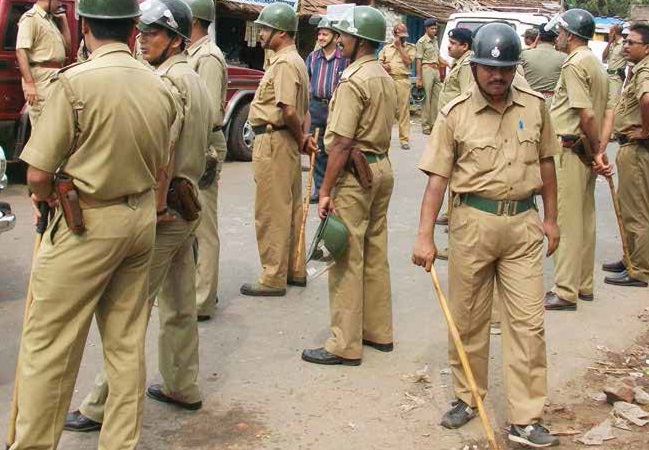
Journalists and media organizations in Indian-administered Kashmir say they are concerned over a new directive issued by the police prohibiting reporters from approaching the sites of gun battles and covering “law and order” situations, saying it puts the “national security in jeopardy”.

In the directive issued late on Tuesday, reports Aljazeera, the disputed region’s police chief, Inspector General Vijay Kumar, asked media personnel “not to come closer to encounter sites” and “not carry live coverage of any encounter” with armed rebels, who for decades have been fighting for either an independent Kashmir state or its merger with neighbouring Muslim-majority Pakistan.

The region’s police said “freedom of speech and expression is subject to reasonable restrictions” and asked the media not to “interfere in professional and bonafide duty” of police and security forces at the sites of “encounter”, as gunfights with rebels are called.

“No operational content should be carried which is likely to incite violence or contains anything against maintenance of [law and order] or which promotes anti-national sentiment,” said the directive.

The order has been criticised by a dozen Kashmiri journalist groups. “If this is a part of the official policy of police then it appears to be a tactic to coerce journalists into not reporting facts on the ground,” the groups said in a joint statement.

“It also seems to be a part of the string of measures taken by the authorities to suppress freedom of the press in the region. Summoning journalists to police stations, filing FIRs and seeking informal explanations for their work has intensified in the past two years,” it added.

The statement said Kashmiri journalists “have worked under tremendous pressure for the past several decades and despite facing threats to life, liberty and property, they upheld the principles of journalism and reporting”, adding that “such attacks on press freedom and journalism is highly distressful”.

Last week, a photojournalist was kicked by a policeman during the coverage of a gun battle in southern Kashmir; a video of the incident was widely shared on social media, triggering criticism over the treatment of journalists by the Indian authorities.

Farooq Javed Khan, president of Kashmir Press Photographers Association, a local union of photojournalists in the region, told Al Jazeera the new directives will impact their work.

“We do not go close to the gunfights; we always cooperate with the authorities. Our cameras show the reality, they capture what they see, we don’t create anything of our own,” he said. “We shoot and leave the spot, that’s all we do.”

After India stripped its only Muslim-majority region of its special constitutional status in August 2019, a crippling security lockdown and communications blackout was imposed for months, preventing local journalists from doing their jobs.

To further muzzle the press, which already operates in one of the world’s most militarised regions, the Indian government last year introduced a new media policy that allows it to determine what is “fake news” and “anti-national” content.

In the last two years, many Kashmiri journalists have been summoned and booked by the police. At least 19 journalists have been killed in the Kashmir conflict since an armed rebellion against Indian rule began in the 1990s.

In March 2020, the International Press Institute said journalism in Indian-administered Kashmir is under “a dramatic state of repression”.

“The state is using a mix of harassment, intimidation, surveillance and online information control to silence critical voices and force journalists to resort to self-censorship,” said the media watchdog.

Laxmi Murthy, co-founder of Free Speech Collective, an organisation that advocates freedom of expression told Al Jazeera the “recent strictures, coming as they do in the backdrop of a lack of transparency and lack of access to official sources for verification will further impede accurately reporting”.

“Reporters in Kashmir do the important job of verifying events on the ground and informing the public. Free flow of verified news is crucial to a functioning democracy and the latest advisory does not bode well for genuine journalism in the public interest.”

read more
News & Announcements

Sri Lanka Arrests ‘Mrs. World’ Over On-Stage Assault

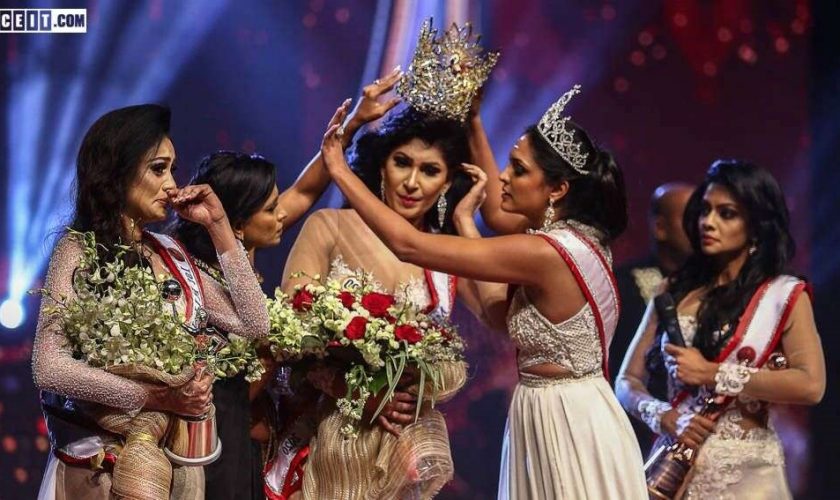
Colombo police have arrested the current Mrs. World, Caroline Jurie, on charges of assault over an on-stage fracas in which she pulled the crown off the head of the new Mrs. Sri Lanka.

Jurie yanked the crown off Pushpika de Silva minutes after she was declared Mrs Sri Lanka 2020 at a gala at Colombo’s Nelum Pokuna Theatre on Sunday.

She was the previous year’s Mrs. Sri Lanka and had gone on to win the Mrs. World competition.

De Silva, according to News Agency, needed hospital treatment after the incident, seen by stunned spectators in a packed theatre as well as a live social media audience.

“We have arrested Jurie and [her associate] Chula Manamendra in connection with a charge of assault and causing damage to Nelum Pokuna [theatre],” senior police official Ajith Rohana said.

De Silva told reporters outside the Cinnamon Gardens police station in Colombo on Thursday that she was ready to drop charges if Jurie made a public apology, but she had refused.

“I tried to end this out of court, but she has refused,” de Silva said. “I can forgive, but not forget.”

There was no immediate comment from Jurie or her lawyer.

Police sources told AFP news agency a court hearing was likely next week and Jurie and her associate, who crashed onto the stage on Sunday could be granted bail later on Thursday.

Jurie had come onto the stage claiming that de Silva was divorced and therefore not eligible for the prize.

To qualify for the title, contestants must be married. De Silva is estranged from her husband, but they are still legally married.

Organisers said they were claiming compensation from Jurie for damages to the stage and backstage dressing rooms where several mirrors had been smashed.

Jurie has also been accused by organisers of bringing disrepute to the event.

The local franchise holder for the pageant, Chandimal Jayasinghe said they were “deeply disturbed and sincerely regret” Jurie’s behaviour.

read more
1 265 266 267 268 269 322
Page 267 of 322