News & Announcements Archives | Page 272 of 322 | The Lafete Magazine
close

News & Announcements

News & Announcements

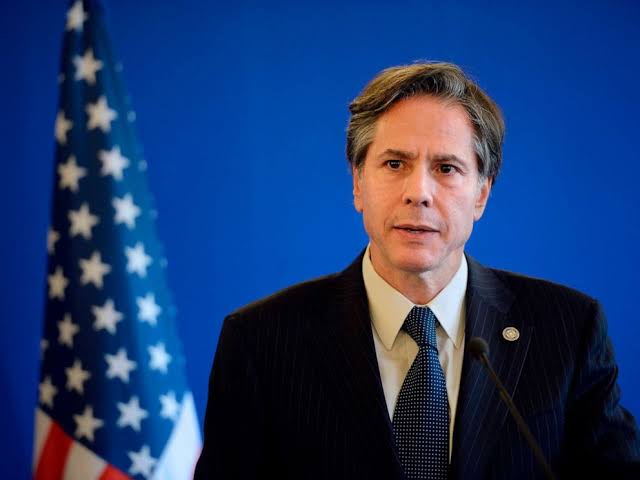
US Secretary Of State Pledges To Rebuild Transatlantic NATO Military Alliance

US Secretary of State Antony Blinken has pledged to rebuild and revitalize the transatlantic NATO military alliance and to share Washington’s “initial thinking” on any possible withdrawal from Afghanistan during his first visit to the alliance’s headquarters.

Blinken, speaking in Brussels on Tuesday at the start of two days of meetings with his European counterparts, added that he planned to warn Germany over the Nord Stream 2 pipeline being built from Russia to Germany, which he said ran counter to the EU’s own interests and could undermine Ukraine.

Accompanied at a brief news conference by NATO Secretary-General Jens Stoltenberg, Blinken said NATO was at a pivotal moment in facing threats around the world.

“I’ve come here to express the United States’ steadfast commitment [to NATO],” Blinken said.

“The United States wants to rebuild partnerships, first and foremost with our NATO allies, we want to revitalise the alliance.”

Tuesday’s statements were a stark shift in tone from the four years of friction under Donald Trump, who said the alliance was obsolete, reportedly considered withdrawing from it, and repeatedly alleging European parties were not paying their fair share of NATO defence spending.

NATO’s European allies have been widely receptive to the new approach of President Joe Biden’s administration.

Stoltenberg said the alliance needs US support as it works to modernise several areas over the medium term, including climate measures and more sustainable funding of military operations.

Blinken’s visit comes as the US is weighing a May 1 deadline for US troop withdrawal from Afghanistan, which was established in a deal struck between the Trump administration and the Taliban armed group last year.

US troops in Afghanistan were slashed to 2,500 under Trump slashed, the lowest in nearly two decades, and questions have been raised over the future of the 9,600-strong NATO mission operating in the country.

Blinken said a US review of options was still underway and he would share the administration’s “initial thinking” with during the upcoming meetings. He added any exit would be done in coordination with NATO.

“We went in together, we have adjusted together and when the time is right, we will leave together,” Blinken said.

Blinken also said he would raise concerns over the Nord Stream 2 pipeline when he meets his German counterpart Heiko Maas during the visit.

Germany is pushing for the pipeline’s completion, despite sustained US opposition for more than a decade.

The US fears Russia could use Nord Stream 2 as leverage to weaken EU states by increasing dependency on Moscow.

“President Biden has been very clear, he believes the pipeline is a bad idea, bad for Europe, bad for the United States, ultimately it is in contradiction to the EU’s own security goals,” Blinken said.

Nord Stream 2 will bypass Ukraine, a Western ally, potentially depriving it of valuable transit fees.

It will also increase European energy dependency on Russia and compete with shipments of US liquefied natural gas.

The pipeline is already about 95-per cent built, and could be finished by September, analysts who monitor tracking data say.
read more
News & Announcements

400 Still Missing As 15 Persons Die In Bangladesh Refugee Camp Fire

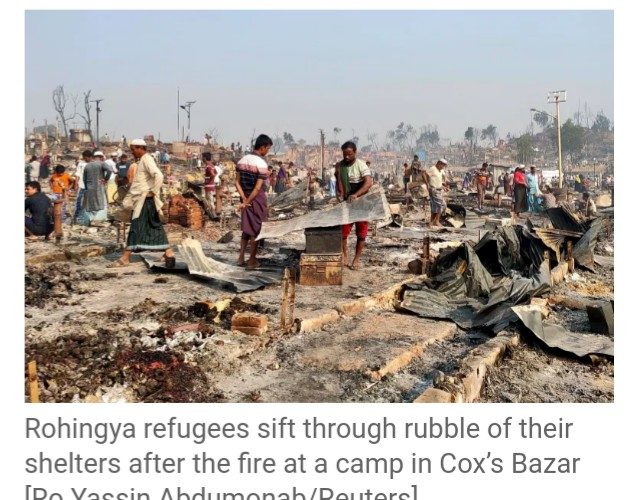
At least 15 people have been killed in a massive fire that ripped through a Rohingya refugee camp in Bangladesh, while 400 remain missing, the United Nations refugee agency said.

“It is massive, it is devastating,” said the UNHCR’s Johannes van der Klaauw, who joined a Geneva briefing virtually from Dhaka on Tuesday.

“We still have 400 people unaccounted for, maybe somewhere in the rubble,” he said, adding that the UNHCR has reports of 560 people injured and 45,000 people displaced.

Bangladeshi officials said they are investigating the cause of the massive as officials sifted through the debris looking for more victims.

The fire ripped through the Balukhali camp near the southeastern town of Cox’s Bazar late on Monday, burning through thousands of huts as people scrambled to save their meagre possessions.

The vast majority of the people in the camps fled Myanmar in 2017 amid a military-led crackdown on the Rohingya that UN investigators said was executed with “genocidal intent”, a charge Myanmar denies.

Police Inspector Gazi Salahuddin said the fire – the biggest in the cramped settlements since 2017 – ripped through flimsy bamboo-and-tarpaulin shelters ripped and grew after cylinders of cooking gas exploded.

Mohammad Yasin, a Rohingya helping fight the fire, told AFP news agency the blaze raged for more than 10 hours and was the worst he had seen.

“People ran for their lives as they spread fast. Many were injured and I saw at least four bodies,” said Aminul Haq, a refugee.

A volunteer for Save the Children, Tayeba Begum, said: “Children were running, crying for their families.”

“The cause of the fire is still unknown,” Zakir Hossain Khan, a senior police official, told Reuters news agency by telephone from the camps. “Authorities are investigating to determine the cause of the fire.”

Sanjeev Kafley, head of the International Federation of Red Cross and Red Crescent Societies delegation in Bangladesh, said more than 17,000 shelters had been destroyed in the blaze, and tens of thousands of people had been displaced.

The fire spread over four sections of the camp housing roughly 124,000 people, about one-tenth of the more than one million Rohingya refugees in the area, he added.

“I have been in Cox’s Bazar for three and a half years and have never seen such a fire,” he told Reuters. “These people have been displaced two times. For many, there is nothing left.”

Some witnesses said the barbed wire fencing around the camp trapped many people, hurting some and leading international humanitarian agencies to call for its removal.

Humanitarian organisation Refugees International, which estimated that 50,000 people had been displaced by the fire, said the extent of the damage may not be known for some time.

“Many children are missing, and some were unable to flee because of barbed wire set up in the camps,” it said in a statement.

John Quinley of Fortify Rights, a rights organisation working with Rohingya, said he had heard similar reports, adding the fences had hampered the distribution of humanitarian aid and vital services at the camps in the past.

“The government must remove the fences and protect refugees,” Quinley said. “There have now been several large fires in the camps including a large fire in January this year… The authorities must do a proper investigation into the cause of the fires.”

It was the third blaze to hit the camps in four days, fire brigade official Sikder, who only goes by one name, told AFP.

Two separate fires at the camps on Friday destroyed scores of shelters, officials said. Two big fires had also hit the campa in January hit, leaving thousands homeless and gutting four UNICEF schools.

Amnesty International’s South Asia campaigner, Saad Hammadi, tweeted that the “frequency of fire in the camps is too coincidental, especially when outcomes of previous investigations into the incidents are not known and they keep repeating”.

“It is not clear why these fire incidents are happening repeatedly in the camps. It needs proper and complete investigation,” Rohingya leader Sayed Ullah said.

The government has meanwhile been pushing for the refugees to be relocated to a remote island in the Bay of Bengal, saying the settlements were too crowded.

So far, 13,000 Rohingya have been moved to the flood-prone island, which critics say is also in the path of deadly cyclones.

read more
News & Announcements

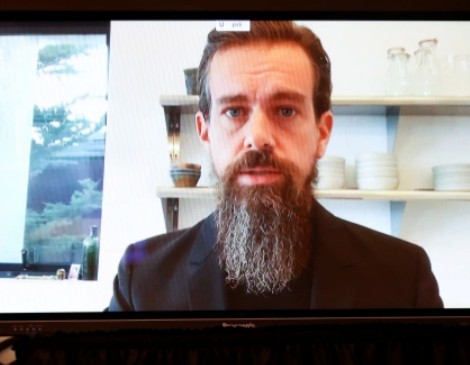
Twitter Boss Jack Dorsey Sells His First Tweet For $2.9m

Twitter boss Jack Dorsey has sold his first tweet from over a decade ago in the form of a unique digital asset for slightly more than $2.9m.

The tweet was sold on Monday as a non-fungible token (NFT) – a kind of digital certificate that has exploded in popularity so far in 2021. The token is a digital seal of authenticity that confirms an item is one of a kind and real.

Each NFT has its own blockchain-based digital signature, which serves as a public ledger, allowing anyone to verify the asset’s authenticity and ownership. They can be attached to digital art or pretty much anything else that comes in digital form – audio files, video clips or animated stickers.

NFTs have recently swept the online collecting world where they are being used to solve a problem central to digital collectables: how to claim ownership of something that can be easily and endlessly duplicated. Digital artwork by the artist Beeple sold for more than $69.3m in an online auction by a British auction house earlier this month, with an NFT as a guarantee of its authenticity.

Dorsey’s tweet – “just setting up my twttr” – made on March 21, 2006, was his first.

The NFT was sold via auction on a platform called Valuables, which is owned by US-based company Cent. It was bought using the cryptocurrency Ether (ETH), for 1630.5825601 ETH, which was worth $2,915,835.47 at the time of sale, Cameron Hejazi, the CEO and co-founder of Cent confirmed.

Cent confirmed the buyer is Sina Estavi. Estavi’s Twitter profile, @sinaEstavi, says he is based in Malaysia and is CEO of blockchain company Bridge Oracle. When asked for comment about the purchase, Estavi told the Reuters news agency he was “thankful”.

On March 6, Dorsey, who is a Bitcoin enthusiast, tweeted a link to the website where the NFT was listed for sale. He then said in another tweet on March 9 that he would convert the proceeds from the auction into Bitcoin and donate them to people affected by COVID-19 in Africa.

‘Everyday – The First 5000 Days’ by the digital artist Beeple features what is known as a non-fungible token that digitally attaches the artist’s signature to it [Christie’s Images Ltd via Reuters]Dorsey receives 95 percent of the proceeds of the primary sale, while Cent receives 5 percent.

Dorsey tweeted the Bitcoin receipt Monday afternoon and said the funds were sent to the charity, GiveDirectly’s Africa Response.

“Incredible – huge thanks @jack and @sinaEstavi – looking forward to getting this $ into recipients’ hands soon,” GiveDirectly tweeted following Dorsey’s announcement.

Cent’s Hejazi said his platform allows people to show support for a tweet that goes beyond the current options to like, comment and retweet.

“These assets might go up in value, they might go down in value, but what will stay in the ledger and the history of ‘I purchased this from you at this moment in time,’ and that’s going to be in both the buyer, the seller and the public spectators’ memory,” Hejazi said, adding that assets such as these are “inherently valuable.”

read more
News & Announcements

Coup: European Union Sanctions Myanmar Junta

The European Union (EU) has sanctioned Myanmar’s top junta chief and 10 other officials on Monday after demonstrators took to the streets for fresh anti-coup protests against the military.

Myanmar’s junta has unleashed deadly violence on protesters who have risen against the military’s ousting of civilian leader Aung San Suu Kyi last month.

The crackdown has drawn international condemnation and in a fresh bid to step up the pressure, the European Union placed Myanmar junta chief Min Aung Hlaing on an assets freeze and visa ban blacklist Monday.

Min Aung Hlaing is “responsible for undermining democracy and the rule of law in Myanmar”, the bloc’s official journal said.

The bloc also hit nine other senior military officers and the head of Myanmar’s election commission with sanctions in the form of travel bans and asset freezes.

Germany earlier condemned the level of violence in Myanmar as “completely unacceptable”.

More than 2,600 people have been arrested and 250 killed since the February 1 coup, according to the Assistance Association for Political Prisoners (AAPP), a local monitoring group that has warned fatalities could be even higher.

One of those held, Aung Thura, a journalist with the BBC’s Burmese service was freed on Monday, the broadcaster said in a news story on its website.

He had been detained by men in plainclothes while reporting outside a court in the capital Naypyidaw on Friday.

A second journalist detained at the same time, Than Htike Aung from the local outlet Mizzima was still in custody.

The junta has sought to stem the flow of news about the protests and crackdown, revoking the licenses of independent local media — including Mizzima — raiding newsrooms and arresting journalists.

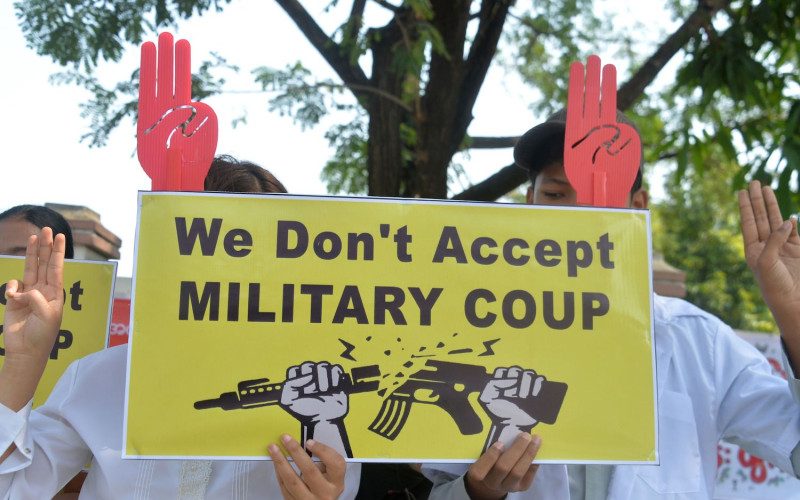
Scores of people, including teachers, marched on Monday through the pre-dawn streets of Mandalay, the country’s second-largest city, some carrying placards calling for UN intervention in the crisis.

Mandalay has seen some of the worst violence of the crackdown and recorded eight more deaths on Sunday, a medical source told AFP, adding that as many as 50 people were injured.

Machine gunfire rang out late into the night across the city of 1.7 million.

“People were really scared and felt insecure the whole night,” a doctor told AFP by phone.

To protest the brutality of the crackdown, a group of doctors in Mandalay staged a “placard only” demonstration by lining up signs in the street, Voice of Myanmar reported.

There were also early morning protests in parts of Yangon, the commercial capital and largest city, where drivers honked their horns in support of the anti-coup movement.

Residents in Yangon’s Hlaing Township released hundreds of red helium balloons with posters calling for a UN intervention to stop atrocities, according to local media.

One man was also killed during daytime clashes with security forces in the central city of Monywa Sunday and hundreds turned out to protest a day later, local media reported.

International concern has been growing over the junta’s brutal approach as the death toll climbs, with a senior UN expert warning the military is likely committing “crimes against humanity”.

But so far the generals have shown little sign of heeding calls for restraint as they struggle to quell the unrest.

As EU foreign ministers gathered in Brussels to sign off on the sanctions, Germany’s Heiko Maas said the violence must stop.

“The number of murders has reached an unbearable level, and that is why we will not be able to avoid imposing sanctions,” he told reporters.

Myanmar’s regional neighbours have also weighed in, with Indonesia and Malaysia calling for an emergency summit of the 10-country Association of Southeast Asian Nations to discuss the crisis.

Following the call, Singapore’s Foreign Minister Vivian Balakrishnan embarked on a whistle-stop diplomatic tour including meetings in Brunei, Malaysia and Indonesia.

On the commercial front, French energy giant EDF announced that a $1.5-billion hydropower dam project in Myanmar had been suspended in response to the coup.

Australia and Canada have meanwhile confirmed they are providing consular assistance to two business consultants detained in Myanmar.

It is understood that Matthew O’Kane and Christa Avery, a dual Canadian-Australian citizen, is under house arrest after trying to leave the country on a relief flight Friday.

read more
News & Announcements

AstraZeneca Says Its Vaccine 80% Effective On Elderly, Denies Blood Clot Issue

AstraZeneca’s Covid-19 vaccine is 80 percent effective at preventing the disease in the elderly and does not increase the risk of blood clots, the biotech firm said Monday, following its US phase III efficiency trials.

It was 79 percent effective at preventing symptomatic Covid-19 in the overall population and 100 percent effective at preventing severe disease and hospitalization, it said.

Several countries had advised against administering the jab to older people due to a lack of data among elderly participants in previous trials. Earlier this month several countries also paused the use of the AstraZeneca shot over fears it may cause blood clots.

The US phase III trial of the vaccine developed by AstraZeneca and Oxford University involved 32,449 participants, with two thirds receiving the jab, the pharmaceutical firm said in a statement.

Around 20 percent were 65 or older, and about 60 percent had health conditions associated with a higher risk of severe Covid-19, such as diabetes, severe obesity or cardiac disease.

“These findings reconfirm previous results observed in AZD1222 trials across all adult populations but it’s exciting to see similar efficacy results in people over 65 for the first time,” said Ann Falsey, professor of medicine at the University of Rochester School of Medicine and co-lead the principal investigator for the trial.

“This analysis validates the AstraZeneca Covid-19 a vaccine as a much-needed additional vaccination option, offering confidence that adults of all ages can benefit from protection against the virus.”

The trial’s independent data safety monitoring board found no increased risk of thrombosis among the 21,583 participants who received at least one dose, the statement said.

Some leading EU countries have resumed AstraZeneca vaccinations after the European Medicines Agency said Thursday the jab was “safe and effective” and was not linked to an increased risk of blood clots.

European leaders address concerns about the AstraZeneca-Oxford vaccine by getting the shot amid a third wave of the coronavirus, much of it propelled by variants.

AstraZeneca said it was preparing to submit its findings to the US Food and Drug Administration to authorize the shot for emergency use.

“These results add to the growing body of evidence that shows this vaccine is well tolerated and highly effective against all severities of Covid-19 and across all age groups,” said Mene Pangalos, executive vice president of biopharmaceuticals R&D.

“We are confident this vaccine can play an important role in protecting millions of people worldwide against this lethal virus.”

The results also suggested that administering the second shot more than four weeks after the first could further increase

read more
News & Announcements

China Detains Three Tourists For Vandalising Great Wall

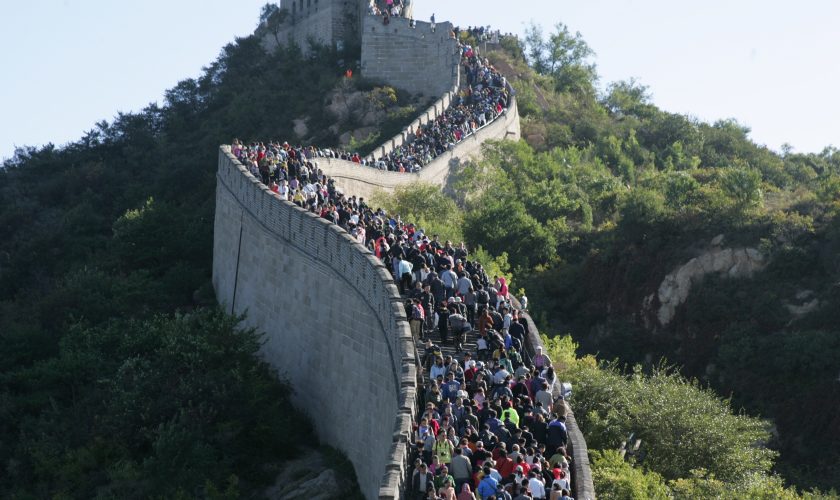
The Chinese authorities, on Sunday, detained two men and a woman after scrawling their names on the wall with a key, wire, and other sharp objects, administrators of the Badaling special tourism zone said in a statement.

Around 70 kilometres (43 miles) from Beijing, Badaling is the most popular section of the wall for tourists.

The statement did not offer details on the amount they were fined or the length of their detention.

Under China’s law for protecting cultural relics, the fine for carving or scrawling on a historic building is less than 200 yuan ($31), but for serious damage offenders can be detained for up to 10 days and fined 500 yuan.

Construction of the Great Wall began in the third century BC to stave off Mongol invasions, and it spans over 21,000 kilometres.

Today it attracts around 10 million tourists per year — but the swell of visitors, combined with age and weathering, has left swathes of it in ruins.

This isn’t the first time the relic has been damaged by misbehaving tourists.

A visitor was caught on camera defacing the historic site with a key last March, on the first day, the Great Wall opened up for tourists after being closed for two months during the height of the pandemic, state-run Global Times reported.

The Beijing municipal government introduced a blacklist last April and threatened to name and shame tourists who damaged the wall.

Visitors who are blacklisted are also be banned from revisiting the site, but it is unclear for how long.

The latest incident led to an uproar on Chinese social media.

“Why do these uncultured idiots visit cultural sites?” wrote one commentator.

“Perhaps they wanted to be immortal by carving their names on the Great Wall, but now they are just infamous,” said another.

read more
News & Announcements

Family In Dar es Salaam Loses Five Members At Magufuli’s Farewell

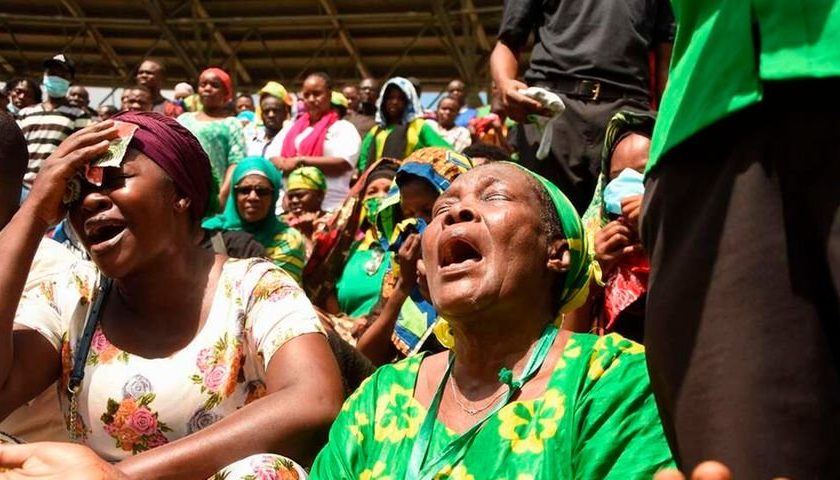
A family in Dar es Salaam is mourning the deaths of five members who were killed in the chaos that erupted as residents paid their last respects to President John Magufuli.

Reports indicated that several people collapsed while others died in the chaos that erupted as some mourners defied the advice of security personnel and forced their way into the stadium.

Sunday was a hectic day for first aid providers and security personnel as thousands of people thronged Uhuru Stadium in Tanzania’s commercial capital,  Dar es Salaam, for the event.

Reports indicated that several people collapsed while others died in the chaos that erupted as some mourners defied the advice of security personnel and forced their way into the stadium.

It was amid the melee that the Mtuwa family of Kimara Mwisho in Dares Salaam ended up registering its biggest loss The five relatives who died were identified as Natalia (five), Nathan (six), Michael (eight), Chris (11) and Suzan Ndana Mtuwa (30s). Mtuwa’s eldest son, Gerald, said Suzan was his sister-in-law.

“Suzan and my younger brother, Dennis, have three children. Two of them (Natalia and Nathan) died during yesterday’s chaos,” he told The Citizen at the family’s home in Dar es Salaam. He did not give the name and the age of the third child. Michael and Chris were the children of Gerald Mtuwa’s young brothers.

“Our father (Mtuwa) bought a large piece of land, where we (his family) have built our houses. We live in the same compound as a family,” he said.

He said the housemaid who accompanied the five to the stadium has been missing since Sunday.

“We have not seen her since yesterday despite searching for her throughout Temeke Hospital, so we are not sure whether she died or fled,” he said.

Suzan, the housemaid and the four children left their home in a family vehicle for Uhuru Stadium at 5.45 am to view President Magufuli’s body and pay their last respects.

Michael’s mother, Huruma Mpiluko, said that on the night before the tragic day, her daughter and several children in the family persistently asked to go to Uhuru Stadium, so Suzan decided to take them there.

“They arrived at Uhuru Stadium early in the morning and sent us pictures they took there. At around noon, my brother-in-law (Suzan’s husband) called Suzan but she didn’t pick up the phone,” she said.

He said someone later answered the phone and informed him that its owner had fainted. He directed the family to go to the office of the Temeke District Commissioner (DC) to collect Suzan’s belongings.

Henry Mtuwa, a family member, said that at the DC’s office, they were told to go to Temeke Referral Hospital to see Suzan.

“We went to the hospital and searched all patients’ wards but couldn’t find her and the five children. Later, the doctors told us to look for them in the mortuary,” he said.

They found the five bodies there. Funeral arrangements are being made at the family home in Kimara Mwisho.

read more
News & Announcements

Court Affirms Election Of Bazoum As Niger President

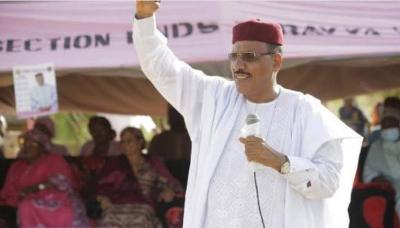
Niger’s top court has confirmed Mohamed Bazoum’s victory in last month’s presidential runoff, allowing the ruling party candidate to be sworn into office next month.

Bazoum’s inauguration on April 2 will mark the West African country’s first transfer of power from one democratically elected leader to another.

“The court confirms and declares the definitive results of the second-round presidential poll of February 2, 2021,” Bouba Mahamane, president of the Constitutional Court, said on Sunday. He said Bazoum received 55.6 percent of the vote while turnout was 62.9 percent.

The results were contested by the opposition contestedand two people died during violence that broke out in the capital Niamey during opposition protests. More than 400 people were arrested during the protests. The court said Mahamane Ousmane, a former president, garnered 44.34 percent of the votes cast.

The court said in a statement that it had cancelled the results from 73 polling stations, without saying why. That very slightly reduced Bazoum’s vote tally which had stood at 55.75 percent to Ousmane’s initial 44.25 percent.

The statement did not directly respond to Ousmane’s allegations that the vote was marred by fraud. Bazoum, a former interior minister, was the preferred successor and right-hand man of outgoing president Mahamadou Issoufou.

President Mahamadou Issoufou is stepping down after two five-year terms.

read more
News & Announcements

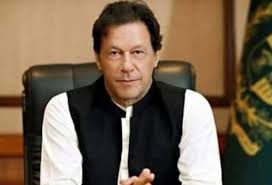
Pakistani Prime Minister Tests Positive For COVID-19

Pakistan’s Prime Minister Imran Khan has tested positive for COVID-19, his office said, just two days after he was vaccinated against the disease.

“At this point, the prime minister’s office can only confirm that the honourable prime minister has tested positive for COVID-19 and has self-isolated, we will release more details in due course,” his office said on Saturday.

Khan, 68, according to News Agency, received a shot of the Chinese-produced Sinopharm vaccine on Thursday, as the country battles a third wave of the virus.

Khan has been holding regular and frequent meetings lately, including attending a security conference held in the capital, Islamabad, that was attended by a large number of people.

He addressed the conference without wearing a mask and attended another gathering to inaugurate a housing project for poor people in a similar fashion on Friday.

The South Asian nation of 220 million is seeing a sharp rise in coronavirus infections.

According to numbers released by the government on Saturday, 3,876 people tested positive in the last 24 hours  – the highest number of daily infections since early July – taking the total number of infections in the country past 620,000.

There were also 42 more deaths, taking the total to 13,799.

Pakistan launched vaccinations for the general public on March 10, starting with elderly people after seeing a poor response from front-line health workers, who expressed concerns about Chinese vaccines.

Chinese Sinopharm and CanSinoBIO, Oxford-AstraZeneca, and Russia’s Sputnik V vaccines have been approved for emergency use in Pakistan.

read more
News & Announcements

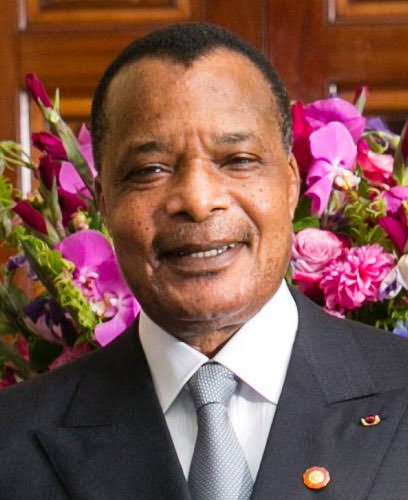
Nguesso Seeks Re-Election As Congo Goes To Poll Sunday

President Denis Sassou Nguesso of the Republic of Congo will be seeking re-election as the country goes to the poll on Sunday.

The election is, however, is marred by a boycott from the main opposition party as President Nguesso seeks to extend his 36 years of rule in the oil-producing country.

The 77-year-old incumbent faces six opposition challengers but is widely expected to win.

According to a report carried by Aljazeera, Nguesso first served as president from 1979 until 1992, when he finished third in the Congo’s first multiparty vote. But he retook power in 1997, following a brief civil war in which his rebel forces removed then-President Pascal Lissouba, and has ruled ever since.

He was elected in 2002 and then again in 2009, for what was to be his second and final seven-year term. But in 2015, Nguesso pushed through constitutional reforms that removed the 70-year age limit that would have barred him from contesting polls the following year. The referendum also removed the two seven-year term limit and introduced three five-year terms.

The 2016 polls were then followed by violence leading to the deaths of at least 17 people after the opposition accused Nguesso, who garnered 67 percent of the votes cast, of rigging the poll. Two opposition figures, Jean-Marie Michel Mokoko and Andre Okombi Salissa were later found guilty of “undermining the internal security of the state”.

“The lessons learnt from the 2016 presidential election have led the authorities to protect themselves against any unpleasant surprise,” Alphonse Ndongo, a Brazzaville-based analyst, told Al Jazeera. “Nguesso will be re-elected, but the problems that people face on a daily basis will remain.”

In late January, the Pan-African Union for Social Democracy (UPADS), the country’s main opposition party, said it had decided not to field a candidate in Sunday’s vote, arguing conditions were not conducive for polls and that an election would only lead to more divisions in the country.

Instead, UPADS – the party of the late Lissouba, the winner of the 1992 elections – proposed a transitional period and polls in 2023, with long-serving Nguesso not on the ballot.

More than 2.5 million people have registered to take part in the election. Polls will open at 7am (06:00 GMT) and close at 5pm (16:00 GMT). Members of the security forces cast their ballots on Wednesday.

Hoping to unseat Nguesso is Guy Brice Parfait Kolelas, leader of the Union of Humanists Democrats. A 61-year-old economist by training and former minister, Kolelas finished a distant second with 15 percent of the vote in the 2016 election. His father, Bernard Kolelas, was briefly Congo’s prime minister in 1997 during the civil war.

Mathias Dzon, a former finance minister under Nguesso, is also contesting the election on the Patriotic Union for a National Renewal ticket. The 73-year-old registered to take part in the 2009 poll but pulled out days before the election day alleging issues with the voter register. Dzon boycotted the 2016 vote, claiming it would not be free and fair.

Albert Oniangue, an evangelical pastor, is also seeking the country’s top seat. The former army colonel is a newcomer to the political scene, contesting the presidency for the first time and has branded himself as the candidate for change.

Three other candidates are also on the ballot: Joseph Kignoumbi Kia Mbougou, a former UPADS member; Anguios Nganguia Engambe and Dave Mafoula, who, at 38, is the youngest challenger.

But analysts and civil society leaders say the six candidates have no chance of beating Nguesso.

“The election is organised by the Independent National Elections Commission, which is anything but independent,” Fonteh Akum, executive director at the Institute for Security Studies, told Al Jazeera. “The ruling [Labour] party will continue to be in power and will govern by divide and rule tactic which it has perfected over 36 years,” he added.

“This election is not seen as one that could usher in a change. Since 2016, there has been a consolidation of power by the ruling Labour Party. The political space, especially for human rights activists, has shrunk.”

Joe Ebina, a human rights campaigner, also said the outcome of the vote is already pre-determined.

“Congo is a dictatorship. It is impossible to have a free and fair election. Two former presidential candidates are in prison. Journalists and civil society leaders have also been jailed,” Ebina told Al Jazeera. “There is no credibility whatsoever in this election. Everyone knows the president will win,” he added.

The election comes at a time when the coronavirus pandemic and a drop in energy prices have battered the oil-reliant Congolese economy, which contracted by 8 percent last year, according to the International Monetary Fund. Congo’s ever-increasing debt burden is also weighing heavily on the economy. In 2019, the IMF estimated the debt at nearly $9.5bn.

The presidential candidates have all promised to improve the economy and lift more people out of poverty. According to the World Bank, 72 percent of the population in 2018 was surviving on less than $1.90 a day.

“Factories have shut down and unemployment has shot up. Also, the scars of the civil war are still been felt in the country’s breadbasket region,” Akum said.

“But Nguesso has learnt his lesson when a struggling economy, trade unions and the dissenting army forced his hand in 1992. Many trade unions and civil groups are thought to have been compromised now. Force and repression are also another way he will continue to retain power,” he added.

Corruption is another major problem, with Transparency International ranking Congo 165 out of 180 countries in its 2020 Corruptions Perceptions Index.

In 2019, Global Witness, an anti-corruption campaign group, accused the president’s son, Denis Christel Sassou-Nguesso, of embezzling $50m between 2013 and 2014.

The group also accused the president’s daughter, Claudia Sassou-Nguesso, of spending $7m of state funds to buy a luxury apartment in the Trump International Hotel and Tower in New York. The Nguesso family denies the allegations.

All the candidates, including Nguesso, have promised to tackle corruption.

“It’s hard to think that he [Nguesso] will change things in five years after he has been managing the Congo for 36 years,” Ndongo, the analyst in Brazzaville, said.

read more
1 270 271 272 273 274 322
Page 272 of 322