News & Announcements Archives | Page 273 of 322 | The Lafete Magazine
close

News & Announcements

News & Announcements

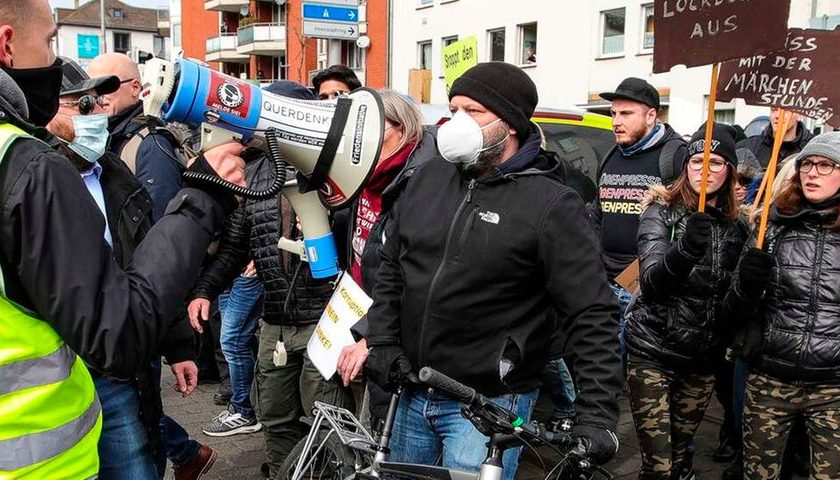
Thousands Protest COVID-19 Restrictions Across Europe

Thousands of protesters, angry at Covid-19 restrictions, rallied in cities across Europe on Saturday as several nations re-imposed partial lockdowns to fight new surges in infections.

The coronavirus, which has killed more than 2.7 million people have been spreading faster recently, with the number of new infections up globally by 14 per cent in the last week, according to AFP data.

That has forced governments to impose social distancing and movement restrictions again, even as vaccines are rolled out, with residents in Poland, parts of France, and Ukraine’s capital the latest to face fresh curbs.

But populations have grown increasingly wary of the economically painful restrictions, and frustrations spilt over in cities across Europe with thousands marching in Germany, Britain and Switzerland.

Demonstrators in the German city of Kassel held up signs including “End the Lockdown” and “Corona Rebels”, as they participated in a protest organised by activists from both the far-left and the far-right, as well as peddlers of baseless conspiracy theories about the pandemic and vaccines.

Authorities used water cannon, batons and pepper spray to disperse the Kassel protesters, which a Kassel police spokesman said numbered between 15,000 and 20,000 — one of the largest such rallies so far this year.

Thousands also demonstrated in London against virus curbs, including many carrying signs promoting coronavirus conspiracy theories. The Metropolitan Police said 36 people were arrested, most for breaking those restrictions, with a spokesperson adding that a group of around 100 demonstrators threw missiles at officers.

There were also anti-restrictions protests in Amsterdam, Vienna, the Bulgarian capital of Sofia, and the Swiss town of Liestal.

Across the Atlantic, American authorities imposed a state of emergency and a curfew on Saturday in Miami Beach, Florida, to deal with uncontrollable throngs of people partying during spring break.

This year, with approximately 13 percent of US residents vaccinated, the atmosphere in the city is particularly festive and the illusion that the pandemic is now under control in the world’s worst-hit nation is pervasive.

“Just go get your vaccine y’all so that you could come out here and have a good time like us because we vaccinated, baby,” Jalen Rob, another student from Texas, told AFP.

Despite the vaccine rollout, health experts have stressed that people still need to remain cautious — or there may be more spikes in infections.

“I’m really concerned if we declare victory prematurely that’s the same thing that’s going to happen,” top US expert Anthony Fauci said Saturday on NBC’s “Today” show.

“Vaccines are coming on really well… If we can just hang on a bit longer, the more people get vaccinated, the less likely that there is going to be a surge.”

Like many other parts of the world, US authorities are also battling vaccine scepticism and even denial, fuelled by the spread of baseless misinformation about the pandemic.

“If they (authorities) try to make me get it, they’re just going to (have to) put me in jail,” Todd Engle, 58, told AFP from the porch of his home in Martinsburg, West Virginia.

Hopes of ending the pandemic have been boosted with rollouts starting in some poorer parts of the world as well, including the Palestinian Territories, where authorities said they would start giving out shots on Sunday.

The row in Europe over the AstraZeneca jab meanwhile showed no signs of abating, with European Union chief Ursula von der Leyen threatening to halt exports of the vaccine if the bloc does not receive its de-liveries first.

With more than 400 million vaccine doses already administered globally, organisers of the Tokyo Olympics had previously billed this summer’s already delayed Games as a chance to provide “proof of humanity’s triumph over the virus”.

But on Saturday, Olympics chiefs announced that overseas fans would be banned as it remains too risky to invite large international crowds to Japan.

“It was an unavoidable decision,” said Tokyo 2020 chief Seiko Hashimoto.

The unprecedented ban will make the Tokyo Games the first ever without overseas spectators.
read more
News & Announcements

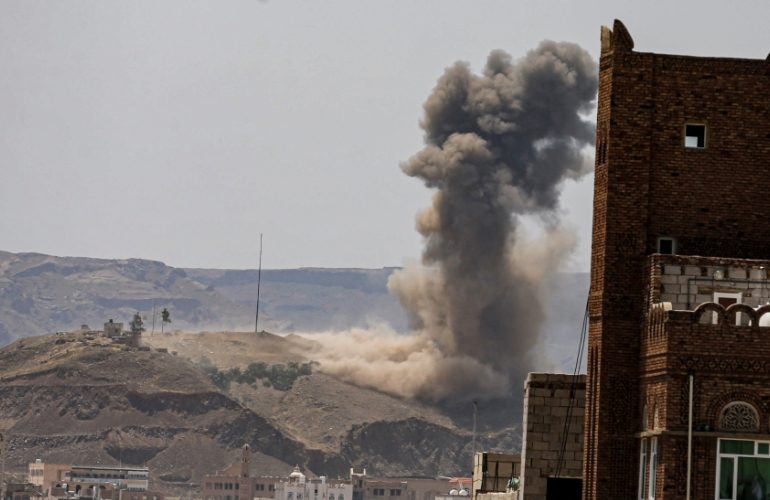
Saudi Coalition Launches Air Raids On Yemen’s Houthi-held Capital

The Saudi-led coalition battling Yemen’s Houthi rebels struck military targets belonging to the Iran-aligned movement in the capital, Sanaa, in the early hours of Sunday, residents said.

The raids come after the Houthis claimed responsibility for drone attacks on an oil refinery in the Saudi capital, Riyadh, on Friday, which caused a fire that was brought under control.

Residents in Sanaa told Reuters news agency that coalition warplanes bombed areas housing Houthi military camps in southern Sanaa and the military manufacturing site in the north of the city.

Houthi-run Al Masirah television also reported coalition air strikes on the capital, including on Sanaa airport.

The rebels have stepped up attacks inside Saudi Arabia, the world’s top oil exporter, in recent weeks. Saudi Arabia says it intercepts most of the drones and missiles that the Houthis launch at airports, airbases and energy infrastructure, but some do inflict damage.

The Saudi-led coalition has been battling the Houthis since March 2015, months after the group seized Yemen’s capital, Sanaa. The war has ground into a deadlock since then, with Saudi Arabia facing international criticism for its indiscriminate airstrikes.

The United Nations has described the situation in Yemen as the world’s worst humanitarian disaster with mass hunger, disease and poverty, largely caused by the war. The conflict has killed about 130,000 people – including more than 12,000 civilians.

In renewed diplomatic efforts to end the war, the United Nations and the United States have urged the Houthis – who are also pressing an offensive against the government-held city of Marib in Yemen – to turn to negotiations rather than military escalation.

Analysts say the Houthi push into Marib – which until recently been relatively peaceful and stable because of well-protected oilfields nearby – threatens to ignite more fighting elsewhere in Yemen.

Meanwhile, government-allied forces have ramped up attacks in other areas recently in an apparent attempt to force the Houthis to spread out their resources and make them more vulnerable.

read more
News & Announcements

Leading Opposition Candidate In Hospital Over COVID-19 As Congo Goes To Poll

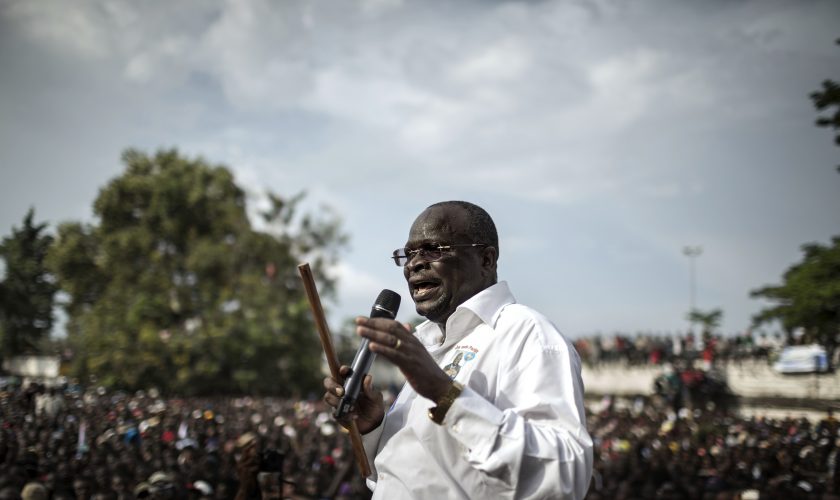
The leading opposition presidential candidate in the Republic of Congo, Guy Brice Parfait Kolelas, was receiving oxygen at a private hospital after being diagnosed with COVID-19, a family member said, casting Sunday’s election into doubt on the eve of the vote.

The election’s outcome was already all but certain even before confirmation of Kolelas’s illness.

President Denis Sassou Nguesso has been in power for more than 36 years, last winning 60 percent of the vote in 2016. But the Central African country’s constitution stipulates that an election can be delayed if a candidate dies or is unable to participate in the vote.

Kolelas, the president’s leading opponent, skipped his final campaign event on Friday after telling some reporters a day earlier that he feared he had malaria. A relative who spoke to The Associated Press on condition of anonymity due to the sensitivity of the matter said plans were underway for Kolelas to be evacuated abroad for further treatment.

AP reports that the 61-year-old is diabetic and at higher risk of complications from COVID-19. A video circulating on social media dating Friday showed Kolelas wearing an oxygen mask and with a blood pressure cuff on his arm as he lay in a hospital bed.

“My dear compatriots, I am in trouble. I am fighting death,” the candidate says in a weak-sounding voice after removing his oxygen mask. “However, I ask you to stand up and vote for change. I would not have fought for nothing.”

A campaign spokesman confirmed the authenticity of the video and Kolelas’ hospitalisation. Two people at the hospital who had seen Kolelas’s test results confirmed to the AP late on Saturday that he had tested positive for the coronavirus.

There was no immediate reaction to the developments from the government late on Saturday.

Kolelas placed second to Sassou Nguesso in the country’s 2016 presidential election with about 15 percent of the vote. The opposition figure has been particularly critical of the incumbent leader in recent days, declaring that the Republic of Congo had become “a police state”.

Sassou Nguesso is the third-longest serving president in Africa, governing from 1979-1992 and then again since 1997 in this nation often overshadowed by its vast neighbour, the Democratic Republic of Congo.

The Republic of Congo has had fewer than 10,000 confirmed cases of COVID-19 since the pandemic began, with 134 confirmed deaths.

read more
News & Announcements

Saudi Oil Facility In Flames After Drone Attack

Saudi Arabia said drones struck an oil facility in the capital of Riyadh on Friday, igniting a fire at the installation.

The official Saudi Press Agency quoted an official in the energy ministry as saying the dawn attack caused no injuries or damage and did not affect oil supplies.

“The Riyadh oil refinery was attacked by drones, resulting in a fire that has been brought under control,” the ministry said in a statement.

It called on the world to stand against what the ministry described as “these terrorist and subversive aggressions and those carrying them out or supporting them”.

Earlier on Friday, Yemen’s Iran-aligned Houthi rebels reported they launched six drones at a facility belonging to Saudi Aramco, the kingdom’s oil giant that now has a sliver of its worth traded publicly on the stock market, in Riyadh.

Saudi Arabia condemned the attack saying the assault targeted “the security and stability of the world’s energy supplies”.

Aramco did not immediately respond to a request for comment but said it would do so “at the earliest opportunity”.

Authorities did not name the impacted facility. Aramco, the kingdom’s oil giant, does have a refinery just southeast of Riyadh. That refinery produces gasoline, diesel, jet fuel and other products for consumption around the kingdom’s capital.

“Our armed forces carried out at dawn today an operation … with six drones which targeted the Aramco company in the capital of the Saudi enemy, Riyadh,” said Yahya Sarea, a Houthi military spokesman, without describing the targets he said were hit.

Sarea said operations against Saudi Arabia will continue and escalate as long as Saudi “aggression” against Yemen continues. He also warned “foreign companies and citizens” to avoid military sites and key infrastructure.

A Saudi-led coalition has been battling the Houthis since March 2015, months after the rebels seized Yemen’s capital, Sanaa. The war has ground into a stalemate since then, with Saudi Arabia facing international criticism for its airstrikes killing civilians.

The United Nations has described the situation in Yemen as the world’s worst humanitarian disaster with mass hunger, disease, and poverty largely caused by the war. Now mired in stalemate, the conflict has killed about 130,000 people — including more than 12,000 civilians.

Saudi Arabia says it intercepts most of the drones and missiles that the Houthis launch at airports, airbases and energy infrastructure, but some do inflict damage.

On March 7, the coalition said a barrage of drones and missiles were intercepted en route to targets including an oil storage yard at Ras Tanura, the site of a refinery and the world’s biggest offshore oil-loading facility.

A residential compound in Dhahran used by Saudi Aramco was also targeted.

In renewed diplomatic efforts to end the war, the United Nations and the United States have urged the Houthis – who are also pressing an offensive against the government-held city of Marib in Yemen – to turn to negotiations rather than military escalation.

read more
News & Announcements

More Than 200 Killed, 40,000 Displaced IN DRC Since January – UN

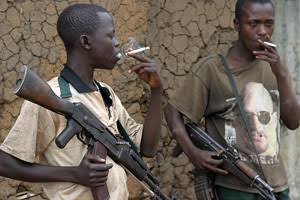
The United Nations has said more than 200 persons have been killed and about 40,000 displaced in the Democratic Republic of Congo (DRC) since January in attacks linked to armed groups affiliated to ISIL (ISIS).

The UN refugee agency reported on Friday an “alarming increase” in attacks by the Allied Democratic Forces (ADF), a historical Ugandan group in the eastern DRC since 1995.

Since the start of the year, attacks blamed on the ADF “have killed nearly 200 people, injured dozens of others, and displaced an estimated 40,000 people in DRC’s Beni Territory in North Kivu province as well as nearby villages in Ituri province,” UNHCR spokesman Babar Baloch said.

“In less than three months, the ADF has allegedly raided 25 villages, set fire to dozens of houses and kidnapped over 70 people,” he told reporters in Geneva.

The ADF has a reputation of being the bloodiest of the 122 militias that plague the eastern DRC. It killed an estimated 465 people last year.

According to the Kivu Security Tracker (KST), an NGO that monitors violence in the DRC’s troubled east, the group has killed more than 1,200 civilians in the Beni area alone since 2017.

The massacres have become more frequent since the army launched an offensive in October 2019, forcing the ADF to break up into smaller, highly mobile units, say experts.

Baloch, the News Agency reports, said the latest surge in attacks appeared to be due to reprisals by armed groups, their search for food and medicine, and accusations against communities of sharing information on ADF positions.

The UN agency expressed concern for those displaced, whom it said were at increased risk due to food and medicine, particularly in the context of the current coronavirus and Ebola outbreaks in the region.

Those forcibly displaced this past month had fled to the towns of Oicha, Beni and Butembo.

“The majority are women and children, as men stay behind to protect properties, exposing themselves to the risk of further attacks,” Baloch said.

Even before the recent mass displacement, some 100,000 internally displaced people were already in need of shelter and protection in Beni, according to UNHCR figures.

But funding shortages were seriously limiting the agency’s ability to provide shelters and other aid, Baloch warned.

Last year, UNHCR was able to build more than 43,000 family shelters in eastern DRC, but this year, it so far has funding to build just a tenth of that.

“Only 4,400 families can be assisted out of hundreds of thousands in need,” Baloch said, adding that a vital cash programme for displaced women at risk had also been cut due to lacking funds.

The UN refugee agency urgently needs $2m (1.7 million euros) to beef up its response in Beni and Irumu Territory in Ituri, he said.

As of now, the $33m the agency has requested to provide assistance throughout eastern DRC in 2021 is only 5.5 percent funded.

read more
News & Announcements

Trial For Cameroon Massacre Suspects Resume Friday

The trial of suspects in connection to the killing of twenty one people in Cameroon’s troubled North West Region in February last year will resume on Friday.

This is even as lawyers of the family members of the 21 people have expressed concerned about the distance their clients have to travel the courtroom, Human Rights Watch said on Thursday.

The international human rights organisation said the trial of three members of Cameroon’s security forces that were accused of involvement in the killings in Ngarbuh village was set to resume on Friday.

The trial, which began on December 17 last year, and adjourned twice, takes place before the military court in the capital Yaoundé, about 380km from Ngarbuh, making it difficult for family members of the victims to attend. They would prefer the trial be held at the military court in Bamenda, closer to Ngarbuh.

“Our clients don’t have the financial means to travel to Yaoundé,” Richard Tamfu, one of the lawyers, told HRW. “The court sitting in Bamenda would fit with the key principle of meaningful access to justice, bringing it closer to the victims.”

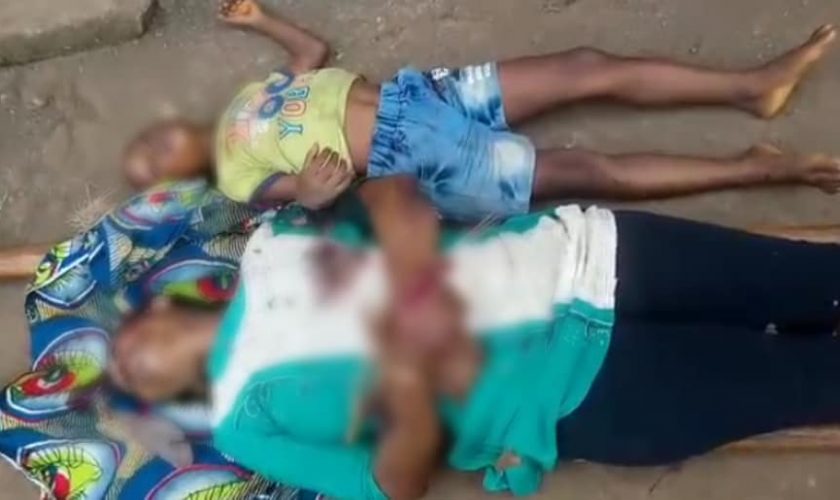
The attack on the village of Ngarbuh on February 14, 2020, was one of the worst by Cameroonian soldiers since the crisis in the Anglophone regions began in late 2016. Soldiers killed 21 civilians, including 13 children and a pregnant woman, and burned five homes in a reprisal attack aimed at punishing residents suspected of harbouring separatist fighters, the organisations said.

Two soldiers and a gendarme were arrested in connection with the massacre and charged with murder, arson, destruction, violence against a pregnant woman and disobeying orders. Seventeen members of a vigilante group and a former separatist fighter was also charged but remain at large.

At the time, the army denied what it called “outrageous and misleading allegations” but later acknowledged the incident, saying it was an unfortunate situation that happened when fuel containers exploded during a firefight with separatists, according to international news broadcaster Al Jazeera.

On February 3, some families of the Ngarbuh victims received food items and 5 million CFA (US$9,000) each as compensation for the destruction of their property from the governor of the North-West Region on behalf of President Paul Biya, a move criticised by the families’ lawyers, who said it was up to the court to decide on reparations.

“The participation of victims of gross human rights violations in criminal proceedings is an essential way of giving them a voice. Cameroonian authorities, with the support of international partners, if necessary, should ensure that the victims’ families can attend and participate in the trial so that their rights to justice and reparations are upheld,” HRW said.

read more
News & Announcements

Pakistan Seeks Corporation With India Over Past Regional Conflicts

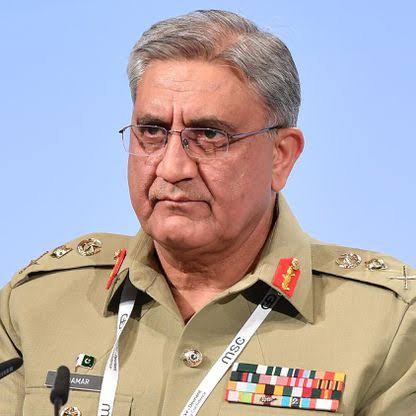
Pakistan’s powerful army chief has called on arch-rivals India and Pakistan to “bury the past” and move towards cooperation, an overture towards New Delhi that follows an unexpected joint ceasefire announcement last month between the two countries militaries.

General Qamar Javed Bajwa stressed however that the burden was on India to create a “conducive environment” and said the United States had a role to play in ending regional conflicts.

“We feel it is time to bury the past and move forward,” Bajwa said on Thursday while addressing a gathering of scholars and experts discussing national security issues at a seminar in the capital, Islamabad.

“But our neighbour (India) will have to create a conducive environment, particularly in Indian-occupied Kashmir,” he said, referring to the part of the Himalayan territory India administers.

Unsettled disputes between the two South Asian nuclear rivals, according to Aljazeera, are “dragging this region back to the swamp of poverty and underdevelopment,” said Bajwa at the conference meant to highlight the Pakistani government’s new security policies.

There was no immediate comment from India.

Pakistan’s powerful army has ruled the country for nearly half of its 73-year existence, and the military has long controlled foreign and security policies.

The disputed Himalayan region of Kashmir is split between Pakistan and India but claimed by both in its entirety. The two countries have fought two of their three wars over Kashmir since gaining independence from Britain in 1947.

Relations deteriorated in 2019 after New Delhi stripped its part of Kashmir of the special status it long had under the Indian constitution.

Bajwa said the economic potential of South and Central Asia had “forever remained hostage” to the India-Pakistan disputes.

“It is important to understand that without the resolution of the Kashmir dispute through peaceful means, the process of sub-continental rapprochement will always remain susceptible to the derailment,” he said.

Bajwa’s call came after the armies of the two countries released a rare joint statement on February 25, announcing a ceasefire along their de facto border in Kashmir, known as the Line of Control (LoC), after having exchanged deadly fire hundreds of times in recent months.

The US immediately welcomed the move and encouraged the two to “keep building on this progress”.

Bajwa said Pakistan had “hope” in the form of President Joe Biden’s new administration, which he said could help facilitate peace in the region.

Also speaking at the gathering was Pakistani Foreign Minister Shah Mahmood Qureshi, who said “if India took one step forward for peace, Pakistan will take two”.

He, however, claimed, “India chose to take several steps backwards … (with) South Asia once again teetered on the brink”.

Pakistan wants India to reverse the 2019 move under which New Delhi stripped Kashmir’s semi-autonomous status and imposed a slew of administrative changes through new laws, touching off anger on both sides of the frontier.

India accuses Pakistan of arming and training anti-India rebels in Kashmir and also helping them by providing gunfire as cover for incursions into the Indian side, a charge Pakistan denies. Rebels in Indian-administered Kashmir have been fighting Indian rule since 1989.

read more
News & Announcements

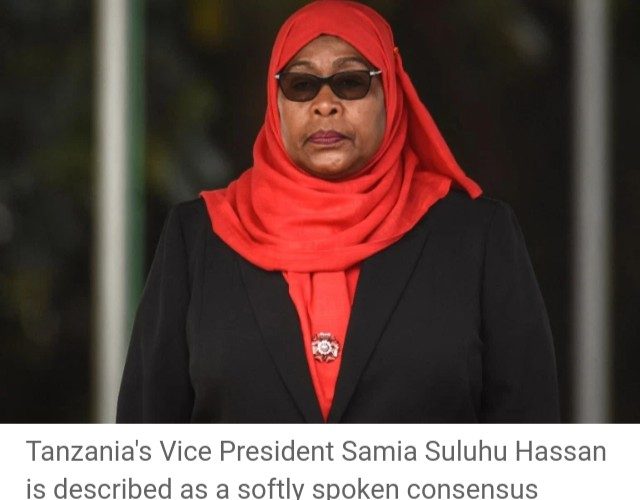
Samila Sworn In As Tanzanian First Woman President

Following the death of President John Magufuli of Tanzania, his vice, Hamia Suluhu Hassan, was on Friday sworn in as the East African country’s first female President.

“I, Samia Suluhu Hassan, promise to be honest and obey and protect the constitution of Tanzania,” said Hassan, dressed in a black suit and red headscarf before dignitaries at a ceremony in the commercial capital, Dar es Salaam.

In her first public address as president, the 61-year-old leader announced 21 days of mourning for Magufuli and public holidays on March 22 and on March 25, the day the late president will be buried.

“It’s not a good day for me to talk to you because I have a wound in my heart,” said Hassan. “Today I have taken an oath different from the rest that I have taken in my career. Those were taken in happiness. Today I took the highest oath of office in mourning,” she said, after being sworn on Friday.

Hassan ascended to the presidency after President Magufuli’s death due to heart disease was announced by the government on Wednesday, more than two weeks after he was last seen in public.

Magufuli’s absence since February 27 had fuelled speculation about his health and sparked rumours he had contracted COVID-19, although officials had denied he was ill.

According to Tanzania’s constitution, the vice president serves out the remainder of the term of a president who dies in office. Magufuli, who was first elected in 2015, secured a second five-year term in polls in October last year.

The constitution also states that after consultation with their party, the new president will propose a deputy, the choice to be confirmed by the votes of no fewer than 50 per cent of the National Assembly.

Al Jazeera’s Catherine Soi, reporting from Kenyan capital Nairobi, said: “She has just given her maiden speech and it was a very emotional tribute to her predecessor John Magufuli.”

“I’ve been speaking to people in Tanzania to get a sense of what she is about and what they’re telling me is that her leadership style is very different from the late president. They say she listens to counsel more and is not one to make unilateral decisions.”

Described as a softly spoken consensus builder, Hassan has become the country’s first female president and the first to be born in Zanzibar, the semi-autonomous island in the Indian Ocean that forms part of the union of the Republic of Tanzania.

She said that Magufuli “who always liked teaching” had prepared her for the task ahead. “Nothing shall go wrong,” she said, urging all the country’s people to work to unite the nation.

“This is the time to stand together and get connected. It’s time to bury our differences, show love to one another and look forward with confidence,” she said.

“It is not the time to point fingers at each other but to hold hands and move forward to build the new Tanzania that President Magufuli aspired to,” she said, amid opposition claims about the cause of Magufuli’s death.

Exiled opposition leader Tundu Lissu insists the president died of COVID-19.

Hassan rose through the ranks over a 20-year political career from local government to the national assembly. A stalwart in the ruling Chama Cha Mapinduzi (CCM), she was named Magufuli’s running mate in the 2015 presidential campaign.

The pair were re-elected in October last year in a disputed poll marred by allegations of irregularities.

Her leadership style is seen as a potential contrast from Magufuli, a brash populist who earned the nickname “Bulldozer” for muscling through policies and who drew criticism for his intolerance of dissent.

Magufuli was a vocal COVID-19 sceptic who urged Tanzanians to shun mask-wearing and denounced vaccines as a Western conspiracy, frustrating the World Health Organization (WHO).

Al Jazeera’s Catherine Soi said that Hassan did not talk about coronavirus.

“A lot of people are looking to see if she will change strategy. Magufuli had faced a lot of criticism for how he handled the disease. He never put the country on lockdown and never encouraged people to wear masks or sanitise,” she said.

“People are waiting to see how she is going to deal with this disease and if she’s going to change the policy that had been in place by Magufuli.”

Hassan’s swearing-in will assuage opposition fears of a constitutional vacuum.

“The VP has to be sworn in immediately,” opposition leader Zitto Kabwe told Reuters by phone from Dar es Salaam on Thursday. “The constitution doesn’t allow a vacuum … I will be concerned if the day passes without her being sworn in.

read more
News & Announcements

India Insists On AstraZeneca Vaccine Despite European Apathy

India is not worried about some European Union countries suspending the use of the AstraZeneca COVID-19 vaccine and will continue to roll out the shot in its huge immunisation programme “with full vigour”, a senior official said.

The AstraZeneca shots are produced by India’s Serum Institute and known in the country as Covishield. The vaccine accounts for most of the 35 million coronavirus jabs administered in the country so far.

But the European nations, including France, Spain and Germany, have suspended the vaccine’s use because of worries it causes blood clots.

This is despite the World Health Organization saying that the vaccine is safe and the EU’s medicines regulator is “firmly convinced” that the benefits outweigh the risks of side-effects.

Vinod K Paul, a member of the Indian government’s advisory body, NITI Aayog, said on Wednesday that Indian authorities were reviewing data but that there was nothing to suggest a “causal relationship” between the vaccine and blood clots.

“(I) again assure you that we have no signal of concern in this regard and therefore clearly, our programme (with the vaccine)… will go on with full vigour,” Paul told reporters.

India was “watching the information being made available from other sources, but today there is no concern at all”, he said.

The Serum Institute – the world’s largest vaccine producer – has already supplied tens of millions of doses of the AstraZeneca vaccine to dozens of mostly poorer countries around the world.

Meanwhile, Indian Prime Minister Narendra Modi on Wednesday ordered ramping up surveillance and testing to stop an emerging second peak of coronavirus infections.

During a virtual conference with leaders of Indian states, Modi warned that the country was at risk of a nationwide outbreak if authorities did not curb the localised surges.

“If we don’t stop this increasing pandemic right now, then we can face a nationwide outbreak situation. We will have to immediately stop the second peak of coronavirus cases that is now forming. And to do so, we need to take quick and decisive steps,” he said.

India reported 35,871 new coronavirus cases on Thursday, the highest in more than three months, with the worst-affected state of Maharashtra alone accounting for 65 percent of that.

Total infections have now risen to 11.47 million, the highest after the United States and Brazil. Deaths rose by 172 to 159,216, data from the health ministry showed.

read more
News & Announcements

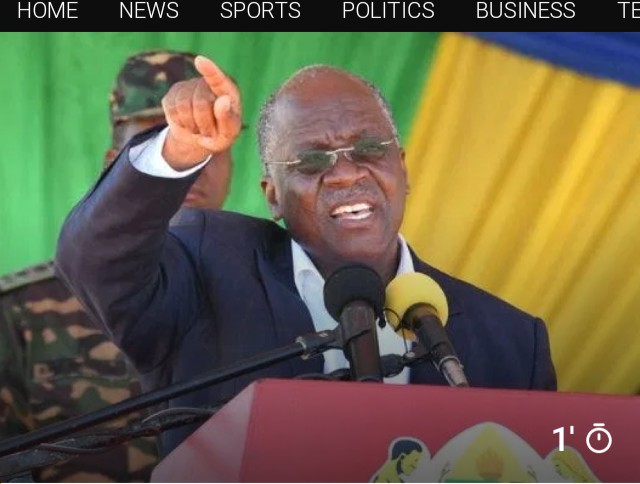
Tanzanian President, John Magufuli, Dies From Heart Condition

Tanzanian President, John Magufuli, has died from a heart condition, his vice president said in an address on state television Wednesday, after days of uncertainty over his health and whereabouts.

“It is with deep regret that I inform you that today on the 17th of March, 2021 at 6 pm we lost our brave leader, the President of the Republic of Tanzania, John Pombe Magufuli,” said vice-president Samia Suluhu Hassan.

read more
1 271 272 273 274 275 322
Page 273 of 322