News & Announcements Archives | Page 278 of 322 | The Lafete Magazine
close

News & Announcements

News & Announcements

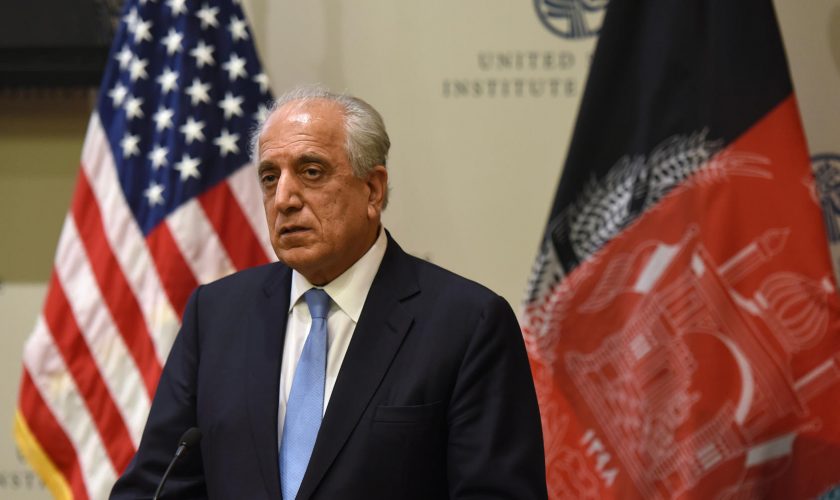
US Peace Envoy To Visit Afghanistan, Qatar For Further Peace Talks

The United States has said its envoy to the Afghan peace the process will travel to the capitals of Afghanistan and Qatar to resume talks with Afghan leaders, government officials and representatives of the Taliban.

In a statement on Sunday, the US Department of State said Zalmay Khalilzad will meet Afghan leaders and Taliban delegates in Kabul and Doha and hold “discussions on the way ahead”.

He will also visit other regional capitals “whose interests are best served by the achievement of a just and durable political settlement”, as well as a “permanent and comprehensive ceasefire”, in Afghanistan, it said. The Department of State did not provide dates or other details.

Its statement, according to Aljazeera, came a year after the administration of former President Donald Trump and the Taliban signed a historic accord in the Qatari capital, Doha, in which Washington agreed to withdraw all of its troops from Afghanistan in exchange for promises from the armed group to stop hosting al-Qaeda fighters and the launching of peace negotiations with the Afghan government.

Those talks began in September last year, but progress has since slowed and violence has risen with uncertainty about whether international forces will pull out their forces by May as originally planned.

Some 2,500 US troops remain in Afghanistan, alongside 10,000 NATO personnel.

The Taliban also issued a statement marking the anniversary of the Doha accord, saying it has fulfilled its commitments under an agreement, ceasing attacks on the provincial capitals and the targeting of major military and intelligence centres.

It also reiterated its demands for the withdrawal of all US troops from Afghanistan, the removal of the Taliban’s leaders from a United Nations blacklist, as well as the release of more of its prisoners.

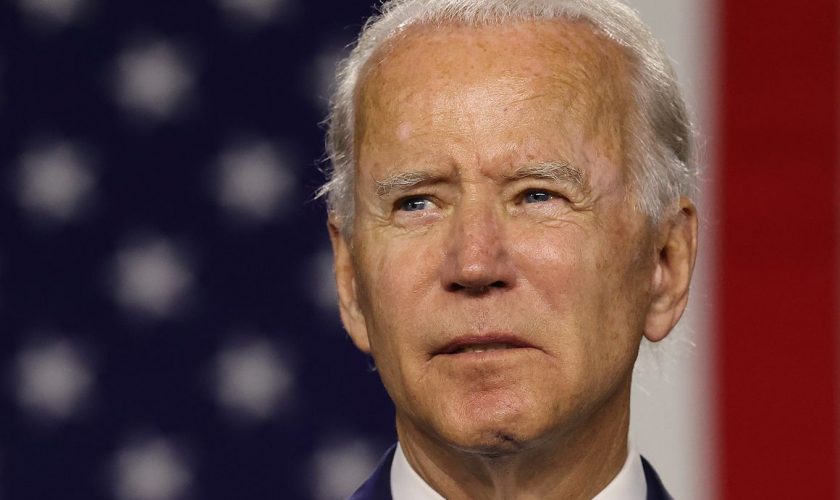
The new administration of US President Joe Biden is now reviewing the February 2020 agreement, but his defence secretary, Lloyd Austin, said last week that the US troop pullout hinges on progress in intra-Afghan peace talks and a reduction in Taliban attacks.

The US “will not undertake a hasty or disorderly withdrawal from Afghanistan” that puts NATO forces at risk, Austin told reporters during his first news conference as Pentagon chief, adding that “no decisions about our future force posture has been made”.

The US invaded Afghanistan in 2001, accusing the Taliban government of providing sanctuary to the al-Qaeda armed group, which it accused of carrying out the September 11, 2001 attacks in New York and Washington, DC from its base in the South Asian country.

In a report to the US Congress in early February, a bipartisan group of experts said the Taliban was yet to demonstrate “that it is able or even willing” to fulfil its commitment to part ways with al-Qaeda and continues to “accept assistance” from the group.

A complete US troop withdrawal without a durable peace agreement would allow armed groups to gradually rebuild their capabilities “such that they might be able to attack the US homeland” within 18 months to three years, the Afghan Study Group said.

The US “should not … simply hand a victory to the Taliban,” it said, adding, “A return to conflict in the wreckage of the political process would leave the United States in a difficult position: wanting to withdraw; yoked to a disunited government; and facing, with far fewer resources on the ground than before, an emboldened insurgency,” it added.
read more
News & Announcements

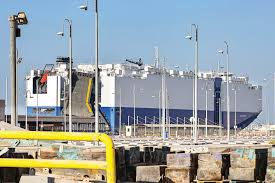
Israel Says Iran Behind Blast On Its Ship

Prime Minister Benjamin Netanyahu has accused Iran of being behind last week’s blast on an Israeli-owned ship in the Gulf of Oman days after Israeli officials, including the defence minister, pointed fingers of blame at Tehran.

Netanyahu made the accusation in an interview that aired Monday with Israeli public broadcaster Kan – but offered no evidence for his claim.

The MV Helios Ray, a vehicle-carrier ship, was hit overnight on Friday by a blast above the waterline that a US official said ripped holes in both sides of its hull. The vessel docked at Dubai’s port for repairs on Sunday. It remains unclear what caused the blast.

Defence Minister Benny Gantz said on Saturday that an initial assessment found Iran was responsible for the explosion, while the Israeli ambassador to the US and United Nations appeared to blame Tehran for the blast, which has revived security concerns in the region.

Israeli defence officials have flown to Dubai to investigate the incident, Haaretz newspaper reported.

The hawkish Israeli prime minister, who is seeking re-election in the country’s fourth election within two years, sidestepped a question on whether Israel will retaliate.

When asked if Israel would retaliate, Netanyahu, a strident critic of Tehran’s nuclear programme, repeated previous statements about his determination to prevent Iran from developing nuclear weapons.

“Iran is the greatest enemy of Israel, I am determined to halt it. We are hitting it in the entire region,” the Israeli prime minister said.

Kan said the interview was recorded on Sunday night, before Syria accused Israel of carrying out missile attacks around southern Damascus.

Israeli media reports said the alleged air raids were on Iranian targets in response to the ship attack. The Israeli military declined to comment.

Israel has struck hundreds of Iranian targets in Syria in recent years, and Netanyahu has repeatedly said Israel will not accept a permanent Iranian military presence in its neighbour.

Meanwhile, Iran’s foreign ministry “strongly rejected” Netanyahu’s claim and said his recent remarks stem from his “obsessive” behaviour towards the country.

“The source of these allegations itself lacks credibility the most,” said Saeed Khatibzadeh, the foreign ministry’s spokesman, said in a press conference in Tehran on Monday.

He said Iran considers recent Israeli actions in the region “suspicious” and reserves the right to respond decisively.

Khatibzadeh also reiterated Iran’s stance that it never has and never will seek nuclear weapons.

Earlier Iran’s hardline Kayhan daily alleged the Helios Ray was “possibly” on an “espionage” mission in the region, without offering any evidence to support the claim.

Iran has also blamed Israel for a recent series of attacks, including a mysterious explosion last summer that destroyed an advanced centrifuge assembly plant at its Natanz nuclear facility and the killing of Mohsen Fakhrizadeh, a top Iranian scientist who founded the country’s military nuclear programme 20 years ago.

Tehran has repeatedly promised to avenge Fakhrizadeh’s killing.

Iranian threats of retaliation have raised alarms in Israel following the country’s normalisation deals with the United Arab Emirates and Bahrain.

read more
News & Announcements

UN Projects $3.85bn To Rescue Yemen From Worsening Famine

The United Nations has said it hopes to raise $3.85bn to prevent large-scale famine in Yemen, warning that life in the war-ravaged nation was unbearable, with children enduring a “special kind of hell”.

More than 100 governments and donors will take part in a virtual donor conference on Monday – co-hosted by Sweden and Switzerland – as Yemen’s Houthi rebels push to seize the government of President Abd-Rabbu Mansour Hadi’s last northern stronghold of Marib.

But with aid funding dropping in 2020 amid the coronavirus downturn, resulting in the closure of many humanitarian programmes, the situation in the country has become even worse.

The UN, which has described the situation in Yemen as the world’s worst humanitarian crisis and its partners received $1.9bn last year – about half of what was required.

It called on Monday for “immediate funding” to support 16 million people in Yemen, where some two-thirds of the population is in need of some form of aid to survive.

“For most people, life in Yemen is now unbearable. Childhood in Yemen is a special kind of hell. This war is swallowing up a whole generation of Yemenis,” said UN Secretary-General Antonio Guterres.

“We must end it now and start dealing with its enormous consequences immediately. This is not the moment to step back from Yemen,” he said in a statement.

The United Arab Emirates, which was part of the Saudi-led military coalition until 2019, pledged on Friday to give $230m.

According to the latest UN data, more than 16 million Yemenis – about half the 29-million population – will face hunger this year, and nearly 50,000 are already starving to death in famine-like conditions.

It warned that 400,000 Yemeni children under the age of five could die from acute malnutrition.

The UN said in September that critical aid had been cut at 300 health centres across Yemen due to lack of funding, with more than a third of its major humanitarian programmes in the country either reduced or shut down entirely.

The conference is being held amid US efforts to shift the Yemen conflict back to diplomacy after Washington removed Yemen’s Houthi rebels from a “terror” list and ended support to the devastating Saudi-led military offensive in the Middle East’s most impoverished nation.

Former US President Donald Trump had placed the Houthis, who have been battling the Saudi-led military coalition since 2015, on the “terror” list during his last days in office.

In recent weeks, Houthi fighters intensified their campaign to seize the Saudi-backed government’s stronghold, Marib, drawing intense air raids from the Saudi-led coalition.

The UN has warned of a potential humanitarian disaster if the fight for Marib continues, saying it has put “millions of civilians at risk”.

Until early last year, life in Marib was relatively peaceful despite the civil war, and it drew many people from more unstable areas.

But as the front lines shift, there is new peril for civilians, including hundreds of thousands sheltering in camps in the surrounding desert.

“We are at a crossroads with Yemen,” said Mark Lowcock, the UN undersecretary-general for humanitarian affairs.

“We can choose the path to peace or let Yemenis slide into the world’s worst famine for decades.”

read more
News & Announcements

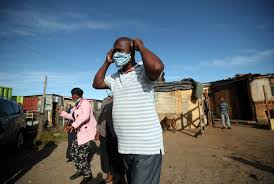
COVID-19: South Africa Eases Lockdown Restrictions

South African cabinet has eased lockdown restrictions from alert level three to level one, allowing political and religious gatherings, President Cyril Ramaphosa said on Sunday night.

“In the week that has just passed, the country recorded just under 10,000 new infections,” Mr Ramaphosa said. 

“A month ago, in the last week of January, the country recorded over 40,000 new cases and a month before that, in the last week of December, the country recorded close to 90,000 new cases.”

Due to the decline in infections, the country can now “cautiously” ease some of the restrictions on movement and activities, he said.

Religious, social, political and cultural gatherings will be permitted, subject to limitations on size, adherence to social distancing and other health protocols.

The sale of alcohol will be permitted, according to normal licence provisions.

However, night vigils or other gatherings before or after funerals are still not permitted. Nightclubs will remain closed. The 33 land border posts that have been closed throughout this period will remain closed. The wearing of masks in public places is still mandatory.

President Ramaphosa said the return to Level 1 means that most of the remaining restrictions on economic activities have been removed.

“We expect this to lead to higher consumption spending, bolstered by the steady recovery in employment.”

The president said South Africa has now clearly emerged from the second wave which “was far more devastating and caused greater loss of life than the first wave.”

He believed the dramatic decline in cases over eight weeks is due to a combination of the public health measures introduced and accumulating immunity in those who became infected.

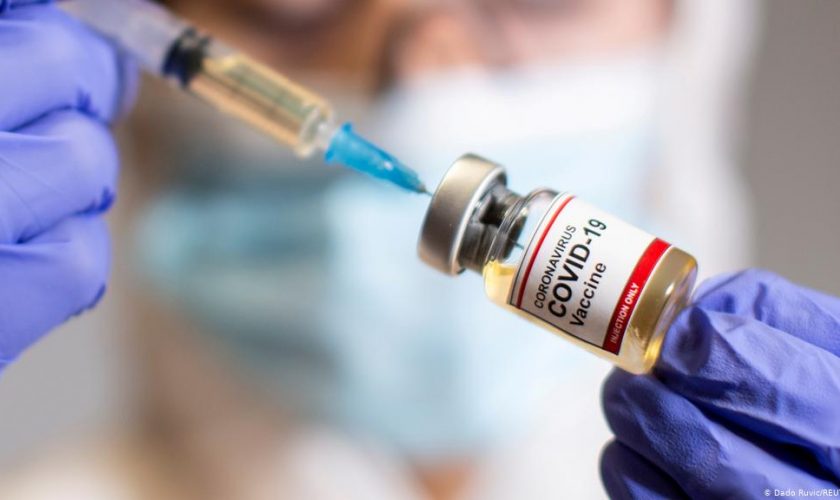
The President said more than 67,000 health workers who are on the frontline of fighting against Covid-19 have been vaccinated in the last ten days.

“We are steadily increasing the number of doses administered each day. All provinces have established vaccination sites and have put in place plans for the expansion of the programs as it gains momentum,” he added.

He said phase two of the vaccine rollout would begin in April or May, after the vaccination of medical workers, is completed.

“Phase two will include the elderly, essential workers, persons living or working in institutional settings and those with co-morbidities,” he said.

Ramaphosa said South Africa has secured 11 million doses of COVID-19 vaccines from Johnson & Johnson, 20 million doses from Pfizer, 12 million doses from Covax — a multinational vaccine-sharing initiative backed by the World Health Organization — and is in the process of finalizing dose allocation from the African Union.

“We are in constant contact with various other vaccines manufacturers to ensure that we have the necessary quantities of vaccines when we need them,” he added.

read more
News & Announcements

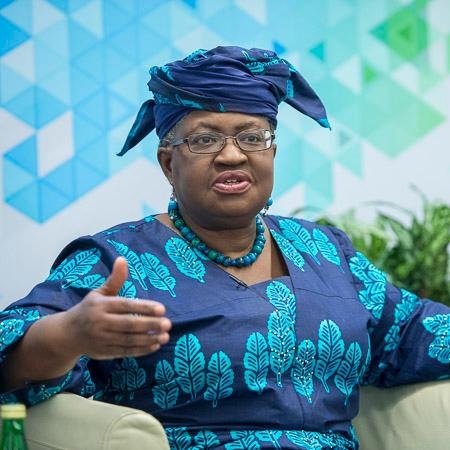
Okonjo-Iweala Formerly Resume As WTO Supremo

The World Trade Organization’s (WTO) first female and first African director-general, Ngozi Okonjo-Iweala, started work on Monday, ending a six-month leadership void as she aims to revive the global trade watchdog in the advance of an important yearend meeting.

After a long campaign that was derailed in the latter stages by a Trump administration veto, the 66-year-old Nigerian was confirmed as boss last month, pledging to “forget business as usual” at the body which is struggling to strike new deals and whose arbitration functions are paralysed.

“It feels great. I am coming into one of the most important institutions in the world and we have a lot of work to do. I feel ready to go,” Okonjo-Iweala told a reporter on arrival at the WTO’s lakeside Geneva headquarters where she donned a mask and elbow-bumped officials.

The first day with the former finance and foreign minister at the helm of the WTO coincides with a closed meeting of its top decision-making body, the General Council.

Delegates from its 164 member states joined virtually and agreed to hold the next important ministerial conference in Geneva, Switzerland, beginning on November 29. The WTO later confirmed the date.

The meeting was originally due to be held in Kazakhstan in 2020 but was delayed due to the pandemic. Okonjo-Iweala has said she hopes it will be the venue for clinching deals on ending fisheries subsidies and reforms for the WTO’s top appeals body which was paralysed by the Trump administration.

“Things are not easy when members are negotiating and there are still a lot of critical issues that need to be sorted out. But we are hopeful,” she said, speaking next to an ice statue of fish erected by environmental groups outside the WTO.

Okonjo-Iweala has previously said that agreeing on trade rules to facilitate COVID-19 vaccine distribution is also a priority.

Her predecessor, Brazilian Roberto Azevedo, stepped down on August 31, a year early.

Since the director-general role holds few executive powers, some analysts question Okonjo-Iweala’s ability to revive the body in the face of so many challenges including persistent US-China trade tensions and growing protectionism heightened by the pandemic.

read more
News & Announcements

Chad Opposition Leader Withdraws From Presidential Race

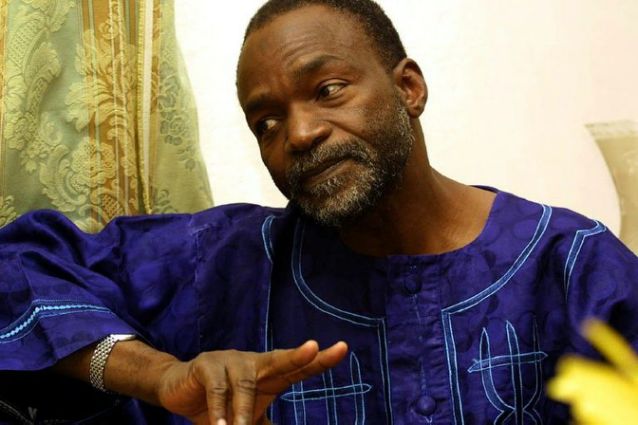
Chad’s main opposition figure, Saleh Kebzabo, on Monday announced he was withdrawing from the country’s upcoming presidential elections, accusing veteran leader Idriss Deby Itno of using force to intimidate rivals after a deadly shootout at the home of another candidate.

In a statement, Kebzabo said his party had decided “purely and simply” to quit the race, a day after two people were killed when security forces tried to arrest another candidate, Yaya Dillo Djerou.

Deby has ruled the huge Sahel state for over 30 years and is running for a sixth term on April 11.Kebzabo condemned what he called a “military attack” on Yaya Dillo’s home.

“The climate of insecurity… will definitely overshadow the electoral campaign of candidates confronting (Deby’s) Patriotic Salvation Movement (MPS),” he said.

By withdrawing from the race, said Kebzabo, he was refusing to “provide cover for a large-scale masquerade.”

Kebzabo, a former journalist who in the late 1990s was a minister under Deby, has contested the presidency four times. He came in second in the 2016 elections with 12.8 percent of the vote.

On Sunday, a gun battle erupted at Yaya Dillo’s home in the capital N’Djamena when security forces came to arrest him.

He had holed up with “armed individuals” after refusing to obey two arrest warrants, filed last year for allegedly slandering the president’s wife, Hinda Deby Itno, according to the government.

The government said two fatalities occurred when the security forces came under fire from his home and were forced to respond. Five people were wounded, three of them soldiers, it said.

But in a string of posts on social media, Yaya Dillo said his home had been surrounded and his mother and several relatives had been killed.

In his final messages, he said an armoured vehicle had smashed down the door and urged the public to “rise up.”

Yaya Dillo’s account could not be independently confirmed, and the authorities did not respond when asked by AFP. His whereabouts were also unknown, and phone calls went unanswered.

Several armoured vehicles, as well as gendarmes and members of the elite presidential guard, were deployed on the roads leading to his home, but there was no visible increase in security at the presidency or the defence ministry, an AFP journalist saw.

However, mobile phone services were slow and access to the internet in N’Djamena was also disrupted.

The authorities have barred public demonstrations for the past several weeks as the elections have neared.

Amnesty International has hit at what it calls “unnecessary and disproportionate restrictions” on the right of peaceful assembly, as well as “arbitrary arrests.”

Yaya Dillo, a former rebel chief, once served as a minister and advisor to Deby, who is also his uncle and fellow member of the Zaghawa ethnic group.

Deby, a 68-year-old former armed forces chief, has been Chad’s ruler since December 1990, when he ousted the autocratic leader Hissene Habre.

He has been re-elected every five years since then, thanks to constitutional changes approved by a referendum in 2005 to remove limits on presidential terms.

During his long rule, Deby has been accused of authoritarianism and nepotism as well as failing to address the poverty that afflicts many of Chad’s 13 million people.

read more
News & Announcements

The US Calls On Eritrea, Ethiopia To Withdraw Troops From Tigray

The US Government has urged Eritrea and Ethiopia to immediately withdraw their deployed forces from the war-torn Tigray region.

In a statement issued over the weekend, the US State Department said that it is “gravely concerned” over reported atrocities and the overall deteriorating situation in the northern Tigray the region bordering Eritrea. 

“We strongly condemn the killings, forced removals and displacements, sexual assaults, and other extremely serious human rights violations and abuses by several parties that multiple organisations have reported in Tigray,” said Antony J. Blinken, US Secretary of State.

This comes days after Amnesty International reported that hundreds of people were massacred by Eritrean troops in the historic city of Axum.

The withdrawal of Eritrean and Amhara forces from Tigray is a significant step forward towards normalising the worrying situation in the region, the statement said.

“This should be accompanied by unilateral declarations of cessation of hostilities by all parties to the conflict and a commitment to permit unhindered delivery of assistance to those in Tigray,” Blinken said. 

He also urged all parties to refrain from using force and exercise maximum restraint in a bid to allow humanitarian access to millions of people who are in desperate need.

Since the Tigray conflict broke out in early November, Asmara and Addis Ababa has repeatedly denied the involvement of Eritrean forces in the ongoing war.

However, officials from Tigray’s interim government last week reportedly admitted that Eritrean forces’ presence was “undeniable”

Amnesty International said in a detailed report on Friday that mass killings by Eritrean soldiers in Axum could be a crime against humanity, adding that the death toll in Axum could be higher.

The Ethiopian Ministry of Foreign Affairs, however, has criticised the report as “incomplete and inaccurate”. Similarly, Eritrea has downplayed the rights group’s reports.  

read more
News & Announcements

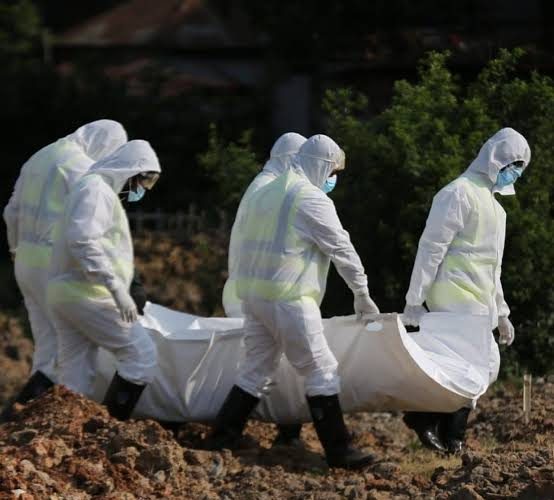
Sri Lanka Lifts Ban On Burial Of COVID-19 Victims

The Sri Lankan Government has lifted a controversial ban on the burial of bodies of people whose deaths were caused by the COVID-19 disease, a health ministry spokesman said.

The ban, according to a report on Al-Jazeera, was lifted on Friday after months of protests mainly by Muslim groups and international pressure.

In March last year, the government imposed regulations that said the bodies of COVID-19 victims could only be cremated.

The rules banned burial, saying the virus could spread by contaminating groundwater.

But Muslim groups insisted the government’s decision had no scientific base and wanted the ban lifted as cremating a body went against their Islamic faith.

On Wednesday, Muslim parliamentarians urged Pakistani Prime Minister Imran Khan who was visiting the country to take up the issue with the Sri Lankan political leaders.

In response to the policy change, Khan thanked his Sri Lankan counterparts.

“I welcome the Sri Lankan govt’s official notification allowing the burial option for those dying of Covid 19,” he said on Twitter.

After the 57-member Organisation of Islamic Cooperation raised the forced cremation policy at the at the Human Rights Council in Geneva this week, the chairperson of the Office of the High Commissioner for Human Rights (OHCHR), Michelle Bachelet, referred to the issue in a statement on Wednesday.

“The policy of forced cremation of COVID-19 victims has caused pain and distress to the minority Muslim and Christian communities,” she said.

Muslim groups on Tuesday also held a large protest outside the president’s office calling for the ban on the burials to be lifted.

The World Health Organization and Sri Lankan doctors’ groups had said COVID-19 victims can either be buried or cremated.

Sri Lanka has witnessed 459 deaths due to the coronavirus, with more than 82,000 people testing positive since January last year.

The island nation is a predominantly Buddhist country where it is customary for Buddhists and Hindus, the second-largest religious group, to cremate the dead.

Muslims, who traditionally bury their dead facing Mecca in Saudi Arabia, account for about 10 percent of the country’s population of 21 million.

In December, authorities ordered the cremation of at least 19 Muslim COVID-19 victims, including a baby, after their families refused to claim the bodies from a hospital morgue.

Muslim community leaders say more than half the country’s 459 COVID-19 victims were from the Muslim minority.

They attribute the disproportionate number of fatalities to a fear of seeking treatment, and in particular, to the fear of being cremated should they die of the disease.

read more
News & Announcements

COVID-19: Palestine Wants Two-Week Lockdown In West Bank

The Palestinian Health Ministry has recommended a two-week lockdown amid a surge in coronavirus infections across the West Bank.

Palestinian Authority’s Health Minister Mai al-Kaila suggested Prime Minister Mohammad Shtayyeh implement a comprehensive closure as positive cases had increased by some 20-30 percent, while hospital beds in several places are nearing full capacity, according to a statement on the ministry website.

“This is the third wave of the coronavirus outbreak in Palestine,” al-Kaila told local media on Friday. “And it is the most difficult period we have experienced since the beginning of the pandemic.”

The marked increase in the number of infected people is linked to the appearance of the new strains first reported in the United Kingdom and South Africa, the minister said, adding that cases related to the Brazilian strain have not been detected so far.

Coronavirus cases in the occupied West Bank and Gaza Strip have reached nearly 180,000, while more than 2,000 people have died, according to Johns Hopkins University.

The PA started its vaccination campaign in the West Bank on February 2 following the arrival of 2,000 doses from Israel, in addition to 10,000 doses from Russia.

The Gaza strip followed suit with a limited inoculation roll-out that began on Monday thanks to vaccines donated by Moscow and the United Arab Emirates.

Palestinians’ vaccine shortages stand in stark contrast to Israel, where 50 percent of its 9.3 million population has already received the first shot of a two doses vaccine. Palestinians citizens of Israel are among those vaccinated.

Israel has become a real-world test laboratory since it signed an agreement with Pfizer, promising to share medical data with the drug manufacturer in exchange for the continued flow of its vaccine.

United Nations officials and human rights groups have voiced concerns over the inequity in vaccine distribution and said Israel, as an occupying power, has an obligation to help the Palestinians.

Israel says that under interim peace accords, the PA is responsible.

On Thursday, the PA condemned Israel’s promise to send coronavirus vaccines to far-away countries while ignoring the five-million Palestinians living under its occupation. Honduras was the first one to receive a shipment of COVID-19 vaccines, after Israeli media reported earlier this week the government’s intention to send vaccines to the Central American country, in addition to Guatemala, Hungary and the Czech Republic.

In a report published on Monday, the World Bank urged Israel to consider donating surplus doses to the Palestinians to help accelerate a vaccine roll-out in the occupied West Bank and Gaza.

The report added that Palestinians’ COVID-19 vaccination plan faces a $30m funding shortfall, even after factoring in support from a global vaccine scheme for poorer economies.

read more
News & Announcements

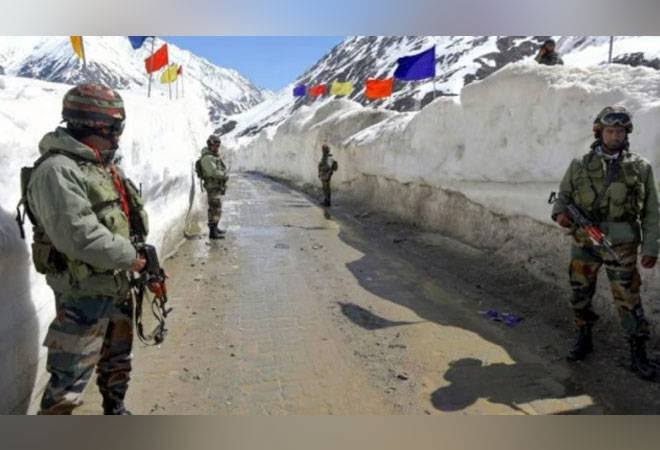
India, China Discuss Troop Pullout From Disputed Border

India and China’s foreign ministers have discussed further de-escalating tensions at a disputed border after a pullback of troops in response to a deadly clash last year, New Delhi and Beijing said Friday.

The nuclear-armed neighbours fought a border war in 1962 and last June their worst skirmish in decades left 20 Indian troops and four Chinese dead on the inhospitable frontier between Ladakh and Tibet, the Line of Actual Control.

Both sides have sent thousands of extra troops and military hardware to the area since the clash.

But India on Sunday said the two countries had completed a “disengagement” of troops and tanks from one part of the disputed zone around the high-altitude Pangong Tso lake, following nine rounds of military talks.

In a 75-minute call with counterpart Wang Yi on Thursday, Indian Foreign Minister S. Jaishankar said they “should now quickly resolve the remaining issues”, according to his office.

“(Jaishankar) said that once disengagement is completed at all friction points, then the two sides could also look at broader de-escalation of troops in the area and work towards the restoration of peace and tranquillity,” a statement said.

Wang said the situation on the ground in the Pangong Tso lake area had “significantly eased”, according to a report from China’s official Xinhua news agency.

“The two sides must cherish the hard-won progress, jointly consolidate the achievements and maintain the momentum of consultation, so as to further ease the situation,” he was quoted as saying.

Xinhua reported that Wang said the border issue “is not the whole story of China-India relations, and should be placed in a proper position in their relationship”.

But he added that India “has vacillated and even moved backward over its policy on China, which has affected and disrupted bilateral pragmatic cooperation”.

The two sides said they had agreed to establish a hotline, although one is already in place between senior military commanders.

read more
1 276 277 278 279 280 322
Page 278 of 322