News & Announcements Archives | Page 276 of 322 | The Lafete Magazine
close

News & Announcements

News & Announcements

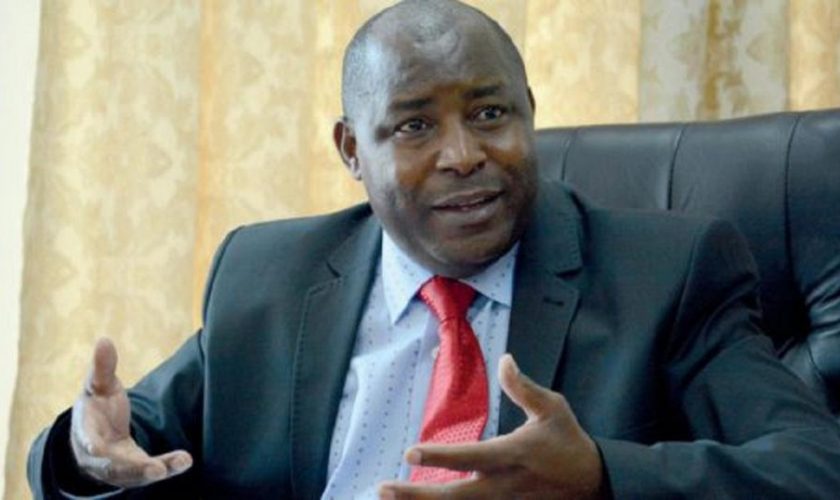
Burundi President Pardons 5,225 Inmates To Clear Jails

Burundi is to free 5, 255 prisoners, as part of a presidential pardon aimed at emptying overcrowded jails, according to a decree seen by AFP on Monday.

The Burundian branch of the international NGO Action by Christians for the Abolition of Torture (ACAT) noted that this amounts to 40 percent of an estimated 13 200 prisoners.

The East African country’s prisons have a capacity of 4 100.

In the decree, President Evariste Ndayishimiye says he is “convinced that an exceptional measure of clemency is needed to de-congest prisons and improve conditions of detention.”

The prisoners to be pardoned are those serving sentences of up to five years, with certain exceptions such as participation in an armed group or threatening national security.

Also to be freed are those convicted of corruption, on the condition that they pay back misappropriated funds as well as damages and interest ordered by the courts.

“Any measure of pardon is to be praised, given the overpopulation in Burundi’s prisons. But unfortunately, these criteria exclude many of the political prisoners arrested since the start of the 2015 crisis in Burundi,” said Pacifique Nininahazwe, an exiled member of civil society.

Ndayishimiye was elected in May last year, raising hopes that the iron-fisted and repressive state would open up, which have since been dashed.

He succeeded the late president Pierre Nkurunziza, whose insistence on the third term in office in 2015 plunged the country into a serious and prolonged political crisis marked by summary executions, disappearances, arbitrary arrests and torture of dissidents.
read more
News & Announcements

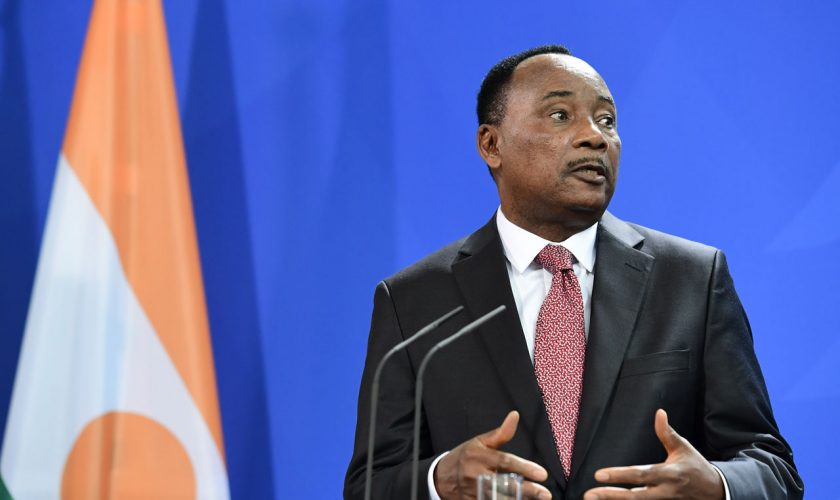
Outgoing Niger President Issoufou Wins Mo Ibrahim Leadership Award

The outgoing president of the Niger Republic, Mahamadou Issoufou, who is stepping down on Monday, won Africa’s top prize for leadership.

He was awarded the 2020 Mo Ibrahim Prize for facing “seemingly insurmountable challenges”, ranging from deep poverty to jihadism and desertification.

Nation Africa reports that despite these enduring problems, “Issoufou has led his people on a path of progress”, said a statement by award committee chairman Festus Mogae, who is also the former president of Botswana.

“Today, the number of Nigeriens living below the poverty line has fallen to 40 percent, from 48 percent a decade ago,” the statement said.

“While challenges remain, Issoufou has kept his promises to the Nigerien people and paved the way for a better future.”

President Issoufou, 68, is stepping down next month after 10 years in office.

His decision to quit after two terms has enabled Niger to have the first democratic transition between elected leaders since it became independent from France more than 60 years ago.

The handover has been contrasted with that of other countries in West Africa, where presidents have overseen constitutional changes enabling them to extend their time in office — often at the cost of violent protests.

Issoufou’s preferred successor and right-hand man, Mohamed Bazoum, won last month’s runoff, although the results were contested by the opposition and violence in the capital Niamey claimed two lives.

The Ibrahim Prize for Achievement in African Leadership is based on principles of sound government, respect for term limits and democratic elections.

It has been handed out by a foundation, set up by British-Sudanese telecoms tycoon Mo Ibrahim, since 2007.

Mr Issoufou is the sixth recipient — the prize has not been awarded in some years because of a lack of a suitable winner.

Past winners include former Liberian president Ellen Johnson Sirleaf and South African apartheid fighter and former president Nelson Mandela, both of whom were also Nobel Peace laureates.

Winners receive $5 million spread over 10 years, and then a life endowment of $200,000 for the rest of their lives.

In a statement on Twitter, Issoufou thanked the Mo Ibrahim Foundation, and said he considered the award an “encouragement to continue to think and act to promote democratic values and good governance, not only in Niger but also in Africa and throughout the world”.

Niger is the world’s poorest nation, according to the UN’s benchmark of human development, and is struggling with soaring population growth.

read more
News & Announcements

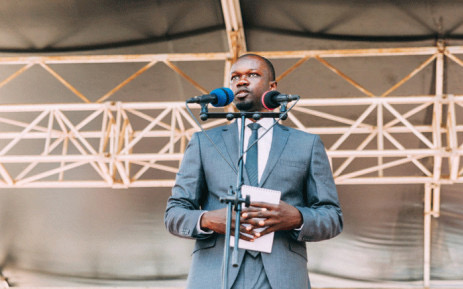
Senegal Opposition Leader Set To Appear In Court Amid Intense Protest

Ousmane Sonko, the detained opposition leader in Senegal will likely be appearing in court even as his supporters have been urged to mobilise for another round of protest against the government.

Sonko, who was arrested after an employee of a beauty salon accused he of raping her is due before the court in Dakar on Monday to answer questions about the rape charge, which he says is politically motivated.

Schools in the capital have been ordered closed for a week, as the opposition called for three more days of protests beginning on Monday.

The education ministry said in a statement that it “strongly recommends that students’ parents keep a close eye on their children and keep them from the risks that come from the protests”.

The unrest has alarmed the United Nations and Senegal’s neighbours, who have appealed for all sides to show restraint, and President Macky Sall – yet to publicly address the situation – is facing mounting pressure to speak out.

Sonko, a fierce critic of the governing elite in Senegal, was arrested on Wednesday on charges of disturbing public order.

Scuffles between opposition supporters and security forces had broken out while Sonko was on his way to court in Dakar to answer the separate rape charge.

People torched cars, looted shops and hurled stones at police during the protests, which have highlighted longstanding grievances over living standards and economic exclusion in the West African state.

Clashes had abated by Saturday, but the call from the opposition to take to the streets again has led to concerns the violence could escalate.

Political pressure has mounted on President Sall, whose presidency has been plagued by accusations that he unjustly torpedoes political rivals and worries that he may seek to extend his rule beyond his allotted two-term limit.

The economic devastation caused by the COVID-19 pandemic and a nightly curfew to contain its spread have only stoked frustrations.

Ahead of the new protests, 19 foreign embassies in Dakar issued a joint statement on Sunday urging non-violence and dialogue.

The 15-nation Economic Community of West African States also called for a peaceful solution to tensions, noting that it had “significant concerns”.

Al Jazeera’s Nicolas Haque reporting from the capital, Dakar said security was tight in anticipation of protesters taking to the streets.

“Security forces have … have set up roadblocks,” Haque said.

“Earlier, we saw the military’s been deployed and patrolling the streets of the capital. Very unusual scenes for this country, which has enjoyed political stability for decades. The military is there to dissuade protesters from taking to the streets,” he added.

Meanwhile, the protest leaders told Al Jazeera they will continue with the demonstrations until the government listens to their demands.

“Our democracy is in danger. The government has incarcerated a large number of young people and the opposition leader without any grounds,” Yassine Fall, a founding member of the Movement to Protect Democracy, told Al Jazeera.

“The government took on a private matter and made it a public and political matter. And we feel our democracy is at stake. Senegal is a peaceful country, we cannot let that happen,” Fall added.

read more
News & Announcements

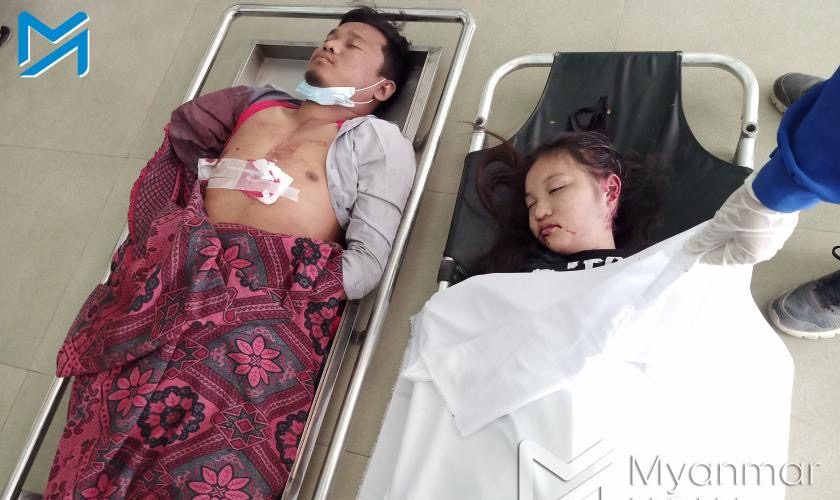
Two Killed As Anti-Govt Protest Intensifies In Myanmar

As the army continues to clampdown on protesters clamouring for the return of the country to civil rule after the recent military takeover, two protesters were reportedly killed by gunshot wounds to the head as Myanmar’s biggest trade unions began a nationwide strike in the latest attempt to pressure the country’s generals to step down after they seized power in a coup last month.

Photos posted on Facebook on Monday showed the bodies of two men lying on the street in the northern town of Myitkyina.

One witness, who said he helped move the bodies, told Reuters news agency two people were shot in the head and died on the spot. Three people were wounded.

“How inhumane to kill unarmed civilians,” said the witness, a 20-year-old man. “We must have our right to protest peacefully.”

The killings came as shops, factories and banks in the main city of Yangon closed, responding to a call by 18 labour organisations that urged workers, “union and non-union alike”, to stop work to reverse the February 1 coup and restore Aung San Suu Kyi’s elected government to power.

“The time to take action in defence of our democracy is now,” said the unions, which represent industries including construction, agriculture and manufacturing.

“No one can force any Myanmar citizen to work. We are not slaves to the military junta now and we never shall be.” They added that the nationwide stoppage would continue until “we receive our democracy back”.

Witnesses reported the sound of gunfire and stun grenades in different parts of Yangon during the night.

Soldiers were also deployed to public buildings around the country, sparking confrontations with protesters, the Myanmar Now news agency reported. State media said on Monday that security forces were maintaining a presence at hospitals and universities across the country, as part of their law enforcement efforts.

Physicians for Human Rights said it was appalled by these moves, calling them a violation of international law.

“One eyewitness account detailed armed security forces entering and seeking to occupy West Yangon General Hospital by force,” the group said, adding it had reliable information that five other Yangon hospitals were being similarly occupied elsewhere in Myanmar. “Even though medical personnel vacated their government posts to initiate the civil disobedience movement, many returned to government hospitals in response to escalating violence against peaceful protesters.”

At least 50 people have been killed since the demonstrations began, according to the United Nations.

Women’s groups called for a htamein (sarong) movement to mobilise in force and mark International Women’s Day while condemning the generals.

Protest leader Maung Saungkha on Facebook urged women to come out strongly against the coup on Monday, while Nay Chi, one of the organisers of the sarong movement, described the women as “revolutionaries”.

“Our people are unarmed but wise. They try to rule with fear, but we will fight that fear,” she told the Reuters news agency.

At least three protests were held in Yangon on Sunday, despite raids on campaign leaders and opposition activists by security forces late on Saturday.

Khin Maung Latt, an official and local campaign manager from Suu Kyi’s National League for Democracy (NLD), died in police custody.

Ba Myo Thein, a deposed legislator, said reports of bruising to Khin Maung Latt’s head and body raised suspicions that he had been “tortured severely”.

Police in Pabedan, Yangon, where Khin Maung Latt was arrested, declined to comment. A spokesman for the military did not answer calls seeking comment.

People flash three-finger salutes as they attend the funeral of Khin Maung Latt, 58, an NLD ward chairman in Yangon who died in military custody on Sunday [Stringer/Reuters]

The army has said it is dealing with the protests lawfully. In a statement on Monday, the military said it had arrested 41 people the previous day.

An announcement by the military carried on the front page of the state-run Global New Light of Myanmar newspaper on Monday threatened unspecified “action” against anyone who directly or indirectly works for a committee of deposed legislators that has declared itself the country’s legitimate authority.

The announcement said the committee was illegal and had committed “high treason”.

The killings have drawn anger among the governments of liberal democracies, and the United States and others have tightened sanctions on the generals.

Australia on Monday said it was ending cooperation with the Myanmar military as a result of the increased violence and death toll. Campaigners had been urging it to do so since the brutal crackdown on the Rohingya in 2017, which was led by military chief Min Aung Hlaing, the coup leader.

Myanmar’s giant neighbour China on Sunday said it was prepared to engage with “all parties” to ease the crisis and was not taking sides.

The Assistance Association for Political Prisoners, which is tracking arrests since the coup, says 1,790 people had been detained as of March 7. A total of 1,472 remain in custody

read more
News & Announcements

Blaze Kills Eight Persons In Yemeni Capital

At least eight people, including guards, died and more than 170 were injured after a fire ripped through an immigration holding facility in the Yemeni capital, Sanaa, the United Nations migration agency said.

The total death toll from the fire on Sunday, whose cause remains unclear, could be higher, International Organization for Migration (IOM) Regional Director for the Middle East and North Africa Carmela Godeau said in a Twitter post.

IOM was providing emergency healthcare for the injured, more than 90 of whom were in serious condition, and distributing food to those affected, Godeau added.

Associated Press news agency reported that the immigration detention centre, which is believed to be holding about 700 people, is run by the Houthi rebels – who control vast swaths of Yemen, including Sanaa since they overthrew the internationally recognised government in late 2014.

The Houthis said civil defence teams managed to extinguish the fire and investigations were ongoing to determine its cause.

A UN official said the fire broke out in a hangar close to the detention centre’s main building.

Most of the detained people were arrested in the northern province of Saada while trying to cross into Saudi Arabia, said the official, who spoke on condition of anonymity because she was not authorised to brief the media.

“This is just one of the many dangers that migrants have faced during the past six years of the crisis in Yemen,” said IOM’s Godeau.

It is believed thousands of refugees and migrants are stranded in Yemen, which has been wracked by a devastating six years of war.

The narrow waters between the Horn of Africa and Yemen have been a popular migration route despite the ongoing conflict.

Tens of thousands of migrants, desperate to find jobs as housekeepers, servants and construction workers, try to make their way through Yemen every year to the oil-rich Gulf countries.

Some 138,000 migrants embarked on the journey from the Horn of Africa to Yemen in 2019, a number that decreased to 37,000 last year because of the coronavirus pandemic. More than 2,500 migrants reached Yemen from Djibouti in January this year, according to the IOM.

The UN has called Yemen the world’s worst humanitarian crisis, with 80 percent of the population reliant on aid.

read more
News & Announcements

Nigerian Begins COVID-19 Vaccination

Nigeria has officially rolled out the Covid-19 vaccination with four frontline health workers receiving jabs of the AstraZeneca-Oxford vaccine at the National Hospital, Abuja.

The vaccines were administered after undergoing final assessment by the National Agency for Food and Drug Administration and Control (NAFDAC), the country’s regulatory agency, with positive results.

The first set of health care workers to receive the vaccine in Nigeria are Dr. Ngong Cyprian, Nurse Faith E. Eragbai, Dr. Nuru Joseph and Dr. Thairu Yunusa.Vanguard reports that flagging off the exercise, the Chairman, Presidential Task Force (PTF) on COVID-19 and Secretary General to the Federation, Mr Boss Mustapha, described the event as a watershed.

“Nobody is safe until everyone is vaccinated. We must believe our government on the safety and efficacy of the vaccines.

“I salute the commitment of all health workers in saving and ensuring the protection of all Nigerians. This is a novel roll-out and the only authorised source is the Federal Government”.

Mustapha urged Nigerians not to patronise fraudsters who are out to defraud.

“We must understand that nobody is safe until everyone is vaccinated. We must believe our government on the safety and efficacy of the vaccines brought to Nigeria,” he noted.

The Minister of Health.  Dr Osagie Ehanire, confirmed that NAFDAC had declared the vaccine doses safe for use on Nigerians.

He said: “The vaccination campaign we kick off today will be in four phases, and will align with the planned arrival of vaccines in batches. Each phase targets a specific segment of our eligible population, to ensure equity in vaccine deployment.”

“The vaccines (COVID-19) are our common assets and the responsibility is on every person to protect them and ensure proper use.

“I will like to emphasis that we are not out of the woods. Yes, there is light at the end of the tunnel but we are still in the tunnel.”

According to the Executive Director of the National Primary Healthcare Development Agency, NPHCDA, Dr Faisal Shuaib: “It’s a momentous occasion today as we administer the first dose to one of our foremost frontline medical doctors in the fight against COVID-19.

“Defined frontline health workers are prioritized globally, for vaccination against COVID-19, due to their exposure to the risk infection with COVID-19 virus in the course of duty.”

On his own part, the Speaker, House of Reps. Femi Gbajabiamila, said: “We must not play politics with the health of our neighbour. We have to be mindful of the person that has not been vaccinated… you need to protect your neighbours.”

“This is a time for everyone to rally round the government. The vaccines being introduced in Nigeria are safe and effective”.

read more
News & Announcements

Ivory Coast Oppositions Return For Parliamentary Election

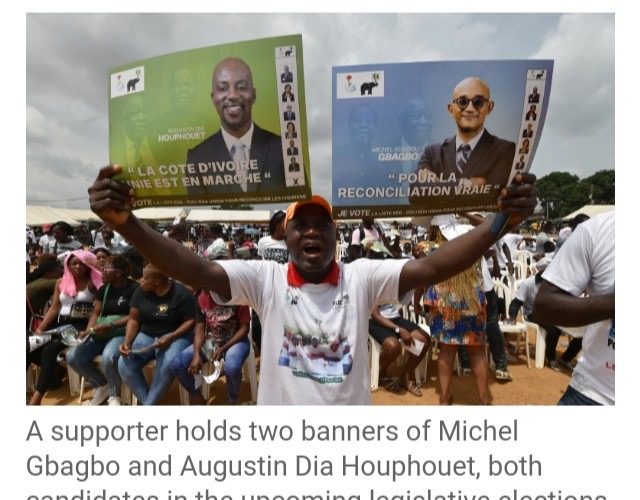
Ivory Coast’s parliamentary election on March 6 will see President Alassane Ouattara’s party challenged by two opposition parties led by former presidents.

The vote on Saturday is the first test for Ouattara since last year’s turbulent presidential election that saw him re-elected with a landslide and was marred by deadly violence.

The governing party, Rally of Houphouetists for Democracy and Peace (RHDP), faces challenges from both Henri Konan Bedie’s Democratic Party of Ivory Coast (PDCI) and Laurent Gbagbo’s Ivorian Popular Front (FPI), which both boycotted the presidential vote.

According to the Aljazeera report, this is the first election that Gbagbo’s faction will contest since 2011 when the former leader was sent to The Hague to stand trial on charges of crimes against humanity over a wave of violence that followed the 2010 election. The violence, sparked by his refusal to concede defeat to Ouattara, led to about 3,000 deaths. Gbagbo was acquitted in 2019.

“We believe this is the time for us to return to the political scene, and for the opposition to return to power,” said Michel Gbagbo, Laurent Gbagbo’s 50-year old son, during a rally in Abidjan’s Yopougon neighbourhood on Thursday.

The parties are vying for power in West Africa’s biggest economy and the world’s top cocoa producer. Under Ouattara, a 79-year-old former central banker and senior International Monetary Fund official, Ivory Coast has seen an economic growth average of more than 8 percent in the past 10 years.

Chic shopping centres have popped up across the country’s largest city and economic hub, Abidjan, and investment has poured into infrastructure and agriculture. Last year, the economy avoided a recession despite a night-time curfew and restrictions on travel and businesses to contain the coronavirus pandemic.

A faction of the FPI loyal to Gbagbo and Bedie’s PDCI, hoping to unseat Ouattara’s RHDP in several constituencies, are running with a joint list of candidates.

Michel Gbagbo, who is running in the populous Yopougon, traditionally an FPI stronghold, said he hoped for a high voter turnout, echoing a call by the 86-year-old Bedie. The former president last week took to Facebook to urge party supporters to vote massively.

“I believe this is the time for the opposition to retake the majority in parliament and also restore some faith in the electoral process,” said Yasmina Ouegnin, a candidate for the PDCI party in Abidjan’s Cocody neighbourhood.

Ivory Coast is still recovering from the short civil war that led to Ouattara’s 2010 election victory. His latest election win was preceded by clashes between political supporters and security forces. At least 85 people died in the violence surrounding the vote, with the opposition accusing Ouattara of defying presidential term limits.

Ivory Coast’s constitution limits presidents to two terms, but Ouattara argued a new constitution reset the clock, allowing him to run again.

Campaigning for the legislative elections has mostly been smooth. Residents have gathered at rallies on dusty football pitches to see candidates hand out T-shirts, and sometimes cash while reminding voters of their achievements. Still, some voters said last year’s tense presidential poll had raised their concerns ahead of the vote.

“This political bickering isn’t good for Ivory Coast,” Brigitte Koffi, a vendor outside an election rally in Abidjan, said above blaring zouglou, Ivorian style music. “We don’t want violence. On Saturday, I’ll vote for my candidate and for peace and stability.”

The March 6 poll will be more representative of the political landscape in Ivory Coast than any election since the 2010 post-election crisis, according to Tochi Eni-Kalu, an Africa analyst with the Washington-based Eurasia Group.

“These elections are less about cementing the majority’s power than about demonstrating Ouattara’s commitment to de-escalating political tensions given ongoing talks with the opposition,” Eni-Kalu said.

It will allow the parties to see where “they stand” and also be an important step for continued dialogue, said Kobenan Kouassi Adjoumani, a governing party spokesman.

“This time around the opposition understood it’s important they take part. We welcome their participation in peaceful elections,” Adjoumani said.

The challenge now will be to ensure that the election results are seen as credible by all actors, said William Assanvo, an Abidjan-based analyst with the Institute for Security Studies.

“It’s a return to a less disrupted political scene compared to previous elections. With all parties participating for the first time since 2011 this vote is a real test in terms of credibility for the electoral commission to organise the vote, for the participating parties and for the voters” as the country moves forward.

read more
News & Announcements

US Hits China Over New Veto Powers On China

The United States has called China’s moves to change the Hong Kong electoral system “a direct attack” on its autonomy and democratic processes, saying Washington is working at “galvanising collective action” against Chinese rights abuses.

The US condemnation came on Friday, shortly after Beijing proposed legislation that would tighten its increasingly authoritarian grip on Hong Kong by making changes to the electoral committee that chooses the city’s leader, giving it new power to nominate legislative candidates.

The measure, set to be approved during a week-long session of China’s rubber-stamp parliament, would further marginalise a democratic opposition decimated after Beijing imposed national security legislation following anti-government protests that rocked Hong Kong in 2019.

Aljazeera reports that the US condemns China’s “continuing assault on democratic institutions in Hong Kong”, State Department spokesman Ned Price told a regular news briefing.

Price called Beijing’s moves “a direct attack on Hong Kong’s autonomy … freedoms and the democratic processes”.

“If implemented these measures would drastically undermine Hong Kong democratic institutions,” he said.

Price said Washington was working to rally allies and partners to speak with one voice in condemning China’s abuses against minority Muslims in Xinjiang and the “repression” taking place in Hong Kong.

“I don’t think anyone is satisfied yet, with the international response to what has taken place in Xinjiang. And that’s precisely why we are, in many ways, galvanising the world, galvanising collective action, to make clear that these sort of abuses against human rights in Xinjiang and elsewhere will not be tolerated,” he said.

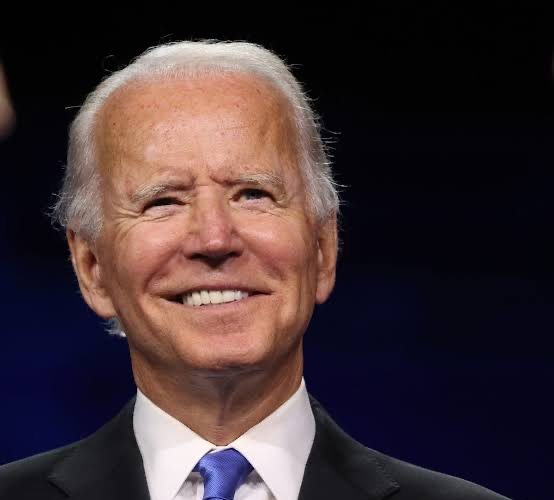
US President Joe Biden’s administration, which took office in January, has endorsed a determination by the former US administration that China is committing genocide in Xinjiang and said that Washington must be prepared to impose costs on Beijing for its actions there, its crackdown in Hong Kong and threats towards Taiwan.

Robert Scott, a senior international economist at the Economic Policy Institute, told Al Jazeera that the US has limited options to put pressure on China.

“Certainly we can sanction China in international arenas. We can consider putting limits on their diplomats, limit their voting rights in international forums like the International Monetary Fund where China has sought increased representation,” he said.

Scott said the key was to curtail China’s growing economic power which the US had failed to do for over two decades as China filled up enormous trade surpluses and it has used these to fuel its growing influence around the world.

“There are sanctions that the United States can put in place on businesses operating in Hong Kong, especially Chinese businesses,” he said.

“Unfortunately, China has decided that it does not need the financial power that was tested in Hong Kong before it is powerful enough itself. China is sitting on some $5 trillion in foreign exchange reserves.

“It has become one of the largest foreign investors in the world. So it is going to be less damaged by the fact that businesses may move from Hong Kong to Taiwan or to Singapore and other countries.

read more
News & Announcements

Kamala-Harris To Netanyahu: US Opposes To ICC War Crime Probe In Palestine

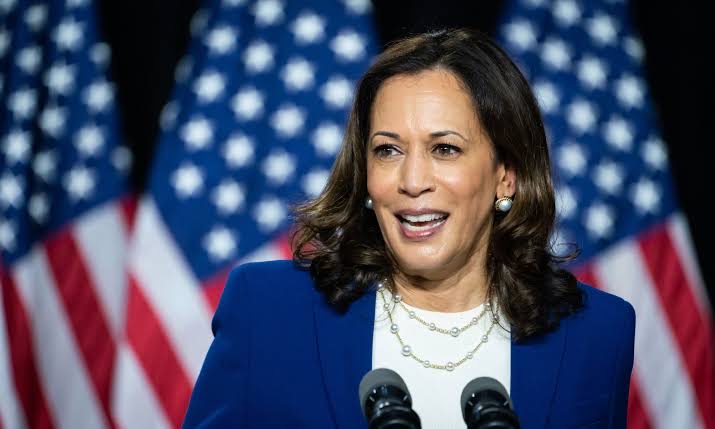
US Vice President Kamala Harris, in a call with Israeli Prime Minister Benjamin Netanyahu, has reaffirmed the United States’s opposition to an International Criminal Court (ICC) investigation into possible war crimes in the Palestinian territories, the White House said.

The call, the first between the two since Harris and President Joe Biden took office in January, followed the ICC’s announcement of the investigation on Wednesday.

The court determined in February that the occupied Palestinian territories fall under its jurisdiction, paving the way for an investigation of war crimes committed by Palestinians and Israelis.

Chief Prosecutor Fatou Bensouda has promised the inquiry will be conducted “independently, impartially and objectively, without fear or favour”.

Bensouda, who will be replaced by British prosecutor Karim Khan on June 16, said in December 2019 that war crimes had been or were being committed in the West Bank and Gaza Strip.

Bensouda named the Israel army and armed Palestinian groups such as Hamas as possible perpetrators.

During Thursday’s call, Harris and Netanyahu noted their governments’ “opposition to the International Criminal Court’s attempts to exercise its jurisdiction over Israeli personnel,” the White House said.

A day earlier, US Secretary of State Antony Blinken also said that Washington “firmly opposed and deeply disappointed”by the ICC decision.

“Israel is not a party to the ICC and has not consented to the Court’s jurisdiction, and we have serious concerns about the ICC’s attempts to exercise its jurisdiction over Israeli personnel,” Blinken said in a statement.

Harris and Netanyahu also agreed to continue to cooperate on regional security issues, specifically Iran’s nuclear programme and its “dangerous” behaviour, the White House statement said.

Harris “emphasised the United States’ unwavering commitment to Israel’s security,” the statement added.

Biden’s bid to revive a 2015 nuclear agreement between Iran and world powers, however, sets him and Netanyahu on a potential collision course.

The Israeli prime minister opposed the nuclear deal and had applauded former President Donald Trump’s decision to abandon it in 2018.

Harris also congratulated Netanyahu on Israel’s coronavirus vaccine programme and they agreed to increase cooperation on the coronavirus, water, green energy and other initiatives, the White House said.

Israel has released the world’s fastest vaccination campaign, administering at least one dose to more than half its 9.3 million people and the required two doses to about one-third of its population in less than two months.

In contrast, the Israeli-occupied Palestinian territories have struggled to have their people vaccinated due to lack of access and financial means.

Critics contend that Israel is responsible for vaccinating the Palestinians under occupation.

The Palestinian Authority (PA) earlier condemned Israel’s plan to send coronavirus vaccines to far-away countries while ignoring the five-million-strong Palestinian population living kilometres away under its military occupation as an “immoral measure”.

read more
News & Announcements

Ebola: WHO Expresses Fears Over Possible Spread To Guinea’s Neighbors

World Health Organization (WHO) officials say the risk of an Ebola outbreak spreading to Guinea’s neighbours is “very high” and that some of those countries are not prepared for vaccination campaigns.

WHO’s Guinea representative Georges Alfred Ki-Zerbo told a virtual briefing on Friday that so far 18 Ebola cases had been identified, and four of those infected had died.

So far, 1,604 people have been vaccinated against Ebola in the new outbreak in Guinea, the first resurgence of the virus there since a 2013-2016 outbreak – the world’s worst – which spread to several other West African countries and killed more than 11,300 people.

The Ebola virus causes severe vomiting and diarrhoea and is spread through contact with bodily fluids.

According to an Aljazeera report, officials said a readiness assessment for Guinea’s neighbours – Senegal, Guinea-Bissau, Mali, Ivory Coast, Sierra Leone and Liberia – showed gaps in their preparedness.

“There are six neighbouring countries to Guinea and we conducted an assessment of readiness. Two of the countries are not ready and one is borderline and there are three countries more or less ready,” the WHO’s Regional Emergency Director Abdou Salam Gueye said by videoconference from Guinea.

He said none of the neighbouring countries was completely ready to start Ebola vaccinations, should they be required, and that there were not enough vaccines doses available in any case to begin vaccinating preventively.

“But those neighbouring countries agreed on cross-border cooperation and coordination to control the outbreak,” he said.

Ebola vaccines, like some COVID-19 shots, require ultra-cold chain storage, which presents logistical challenges. Guinea received COVID-19 vaccine doses donated from China this week.

“We are dealing with quite fragile health systems including (lack of) capacity to address many public health challenges so dealing with both COVID and Ebola remains a challenge,” said the WHO’s Michel Yao, director of strategic health operations.

Separately, the International Organization for Migration (IOM) on Thursday launched an appeal to raise $8m for efforts to stop the resurgence of the Ebola virus in Guinea.

The funds will be used to support essential outbreak preparedness and response activities, as well as critical coordination efforts at the national and prefectural levels and key border crossings, the United Nations body said in a statement.

“We have witnessed the devastation that delayed action on public health emergencies can do to a community and societies at large,” Maximilian Diaz, head of IOM Guinea.

“We must stand by the people of Guinea, and we must act fast.”

read more
1 274 275 276 277 278 322
Page 276 of 322