

According to a US-based election monitoring group, National Endowment for Democracy, the upcoming presidential election in Nigeria would not be foreseeable despite political complexities.
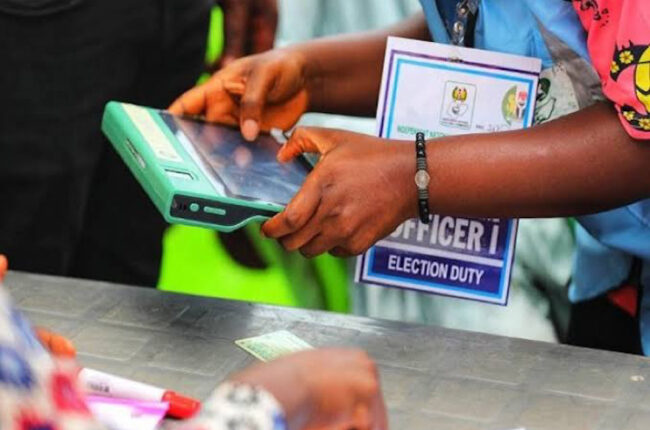
The US agency acknowledged that the Nigerian election of 2023 was “a momentous election,” praised Nigeria for its technology-driven voting system, and expressed confidence that Nigeria will be the second-largest democracy in the world by 2050.
During a conference organized by Yiaga Africa to engage with other stakeholders about the preparations for the 2023 general elections, Damon Wilson, President and Chief Executive Officer of NED, made these statements in an interview with journalists in Abuja.
According to a source, the American Congress created NED in 1983 to advance global democracy. NED is a private, non-profit foundation whose mission is to develop and expand democratic institutions all over the world.
NED awards more than 2,000 grants annually to non-governmental organizations (NGOs) operating overseas that promote democracy in more than 100 nations.
Wilson stated, “Nigeria is the fifth largest democracy in the world; it is on track that by 2050 to be the second largest democracy in the world, even bigger than the United States. But it has got a consequential election coming up in less than 40 days, building on seven elections since the transition.
“And we have seen in this time a Nigerian democracy that has ousted incumbents, where term limits have been enforced, peaceful transitions have taken place and now we have seen a country that is poised to have a more technically effective election that has bolstered the authority, the Independent National Electoral Commission, that is tapping technologies to help ensure greater credibility to vote at a time around the world, where things are kind of tough for democracy and elections in a lot of places are heading to roadblocks. Nigeria is offering an example of a world of progress and momentum.
“There is a lot of energy, a lot of enthusiasm and we are looking to understand that to learn from that and to see how we can help support that.”
He also emphasized that his organization wasn’t there to make predictions about the outcome of the elections or the possibility of a run-off.
Wilson, however, expressed worry about the poor voter turnout in Nigerian elections.
He continued by saying that the present presidential contenders had made it difficult for Nigerians to predict who would win the election and that as a result, Nigeria’s democracy was actually improving substantially.
Wilson said, “It is not really my place to determine or predict the outcome of this election. I am a really interested observer and what I do see is that I watch relatively low voter turnout and your last election.
“And just by the conversations we are having, we do see a heightened level of engagement, heightened level interest, the fact that we’re less than 40 days out, and most Nigerians don’t know who’s going to win and they don’t know whether there’ll be a runoff.
“We have seen a surge of young voters being registered, I think in the last six months, INEC said they had seen in the last period, it was 70% of those being registered were under the youth category. It’s pretty dramatic, remarkable.
“So what I have learned over and over again is even when democracies and elections are imperfect elections become an opportunity for people to organize and express themselves. I have seen over and over again surprises and so I don’t know what is going to happen.
“That is kind of a beautiful thing for Nigeria, the largest democracy in Africa, to be going into an election, and you don’t know what’s going to happen. That is democracy and action. It is exciting and we are going to watch this.”
Wilson also expressed worry about the ongoing instability that exists in the nation in the run-up to the elections.
He said, “I guess there are two things happening; one is the overall security situation which has been difficult in the country, whether it is been insurgency or terrorism or just banditry, kidnapping, other sources of instability that you know very well.
“But the truth is about 10,000 Nigerians who have died over the past years from security incidents, that is extraordinarily high, and it does create a difficult environment where will people feel that they have got the security to be able to vote?
“What I was briefed on election related violence, which is much less election related violence is serious because it is targeted towards elections that we have seen political actors who have been, in some cases killed other places intimidated, INEC offices attacked and so what was really interesting from the briefings we saw was that Nigerians are organizing to be able to track this to document it to report it, to take it to authorities to see if security forces are understanding where were their efforts to intimidate and voter turnout four years ago, they can anticipate that today.
“So while this is a major issue, no doubt that I am hearing from Nigerians. I also see a lot of Nigerians focused on this issue of how they can actually provide a greater sense of security, how they can be better prepared, how they can anticipate where there are problems.
“And so ultimately, this is going to be an issue for this election but I am hopeful that it won’t be an issue that will be so disruptive. That said, anybody needs to feel secure to express their vote. That is a sacrosanct act in any democracy.”