News & Announcements Archives | Page 32 of 322 | The Lafete Magazine
close

News & Announcements

News & Announcements

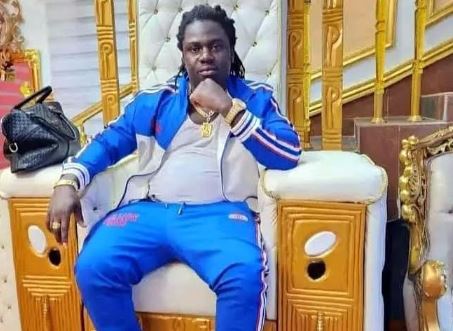
“I would have escaped, if I wish to,” Kidnapped Native Doctor Explains

Famous Anambra native doctor Chidozie Nwangwu, also known as “Akwa Okuko Tiwaraki,” has claimed that he had the means to stop the kidnapping but choose not to.

Last Sunday, Nwangwu was taken hostage and then freed early on Saturday.

He claimed that after his two bodyguards were dead, he voluntarily surrendered to his captors in order to save further losses.

He said, “What really happened was that I was there (at home) that day, at around 11:30am, when someone called me and said they were at my hotel, and that they were spending money, and had spent close to N300,000, and that they would have wanted me to be around.

“I obliged them and drove to the hotel all by myself, in my new car. No one came with me. I was there, and not up to 30 minutes later, gunshots rented the air. People started running helter-skelter. I now went out to see what was happening, and the people started shooting at me.

“They killed two of my security men. I don’t want to reveal much now, but I know that only two things can save a man. If your charms do not save you, your money will save you.

“Anyone who has charms should have money. So the people took me into their car. If I wanted to run away, I would have run away, but I have seen those that were shot and I said if I leave, they would kill many people. A lot of people were lying down, and if I wanted to leave, they would have killed many.

“The story too would have been that the whole thing started when I came in, meaning that I was the one who brought in kidnappers. I decided to follow them to show that my hands were clean. What I did was to save many souls. If you think they took me because I ate people’s money, let me tell you I did not. If I eat your money, come to me I will give you money because I have money.”

The native doctor also revealed that his ordeal was not unconnected with the sit-at-home exercise in the South-East region.

“This whole thing is related to this sit-at-home people, and they mentioned names of more people they will take, but it’s not something I can say now. They killed many in front of me. They killed up to 20 people before me. I did not take anyone’s money, they just came to kidnap and their target is people who have money. They wanted to kidnap as many as 50 people from my hotel that day, but I rather followed them,” he said.
read more
News & Announcements

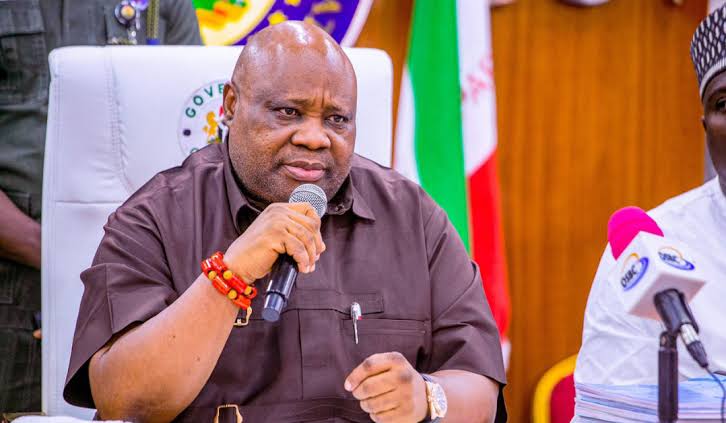
Adeleke pays third batch of unpaid employees’ half wages.

Ademola Adeleke, the governor of Osun State, has authorized the payment of a second batch of half-salary debt together with the July salaries for state employees.

Olawale Rasheed, the governor’s spokesperson, indicated in a statement acquired in Osogbo on Saturday that Adeleke had paid the half-salary obligation for the third time in accordance with the template set earlier in the year to pay the debt on a quarterly basis.

Rasheed recalled Adeleke’s election campaign vow to pay the salary debt in installments, adding that the administration had inherited from the previous administration debts totaling roughly N50 billion in pension-related obligations and about N26 billion in half-salary obligations.

Adeleke underlined his dedication to the faithful application of the template for the payment of the inherited salary obligation while remarking on the payment.

The governor added, “I want to reassure Osun workers that the payment is happening as expected. The template was an agreement among all stakeholders on how to escape the half salary rope. Despite our precarious financial circumstances, we are prioritizing the wellbeing of our employees by paying the inherited debt in installments.

“As a government of the people, by the people and for the people, we will remain focussed on human development even as we work to upgrade our infrastructure and develop our local economy. “

read more
News & Announcements

“Nigerians are using FCT emergency number to obtain loan,” CP complains.

Haruna Garba, the commissioner of police for the Federal Capital Territory, has expressed concern that certain unidentified people use loan shark companies to get loans while leaving the command’s emergency numbers out.

Additionally, he said that non-state actors had been using the emergency lines.

The CP, however, issued a warning to individuals responsible for the crimes, stating that the police would make sure they were prosecuted.

This was mentioned by Garba in a statement released on Friday by SP Josephine Adeh, the command’s spokeswoman.

It partly read, “In the same vein, the CP enjoins non-state actors who have been engaging the Police emergency lines in their mischievous posts, aimed at misleading members of the public and those submitting same to obtain loans to desist from such and only use the emergency lines for its intended purpose as deliberate steps will be taken to arrest and prosecute the purveyors of these illegal acts.”

Garba also denied a viral report that kidnappers wore police uniforms to abduct 17 residents in the Apo area of Abuja.

“The Commissioner of Police FCT hereby wish to inform members of the public that contrary to the falsehood making the rounds on media platforms alleging that kidnappers who adorned the Police uniform to perpetrate their illicit acts have kidnapped 17 persons from the Apo area in Abuja is a figment of the author’s imagination as no incident of such happened within the FCT,” the statement added.

She said the CP urged residents to cooperate with the police for improved service delivery.

“He equally tasks FCT residents to take advantage of the Police Control Room numbers in reporting suspicious activities: 08032003913, 08061581938, 07057337653, and 08028940883,” she added.

read more
News & Announcements

South Africa’s Controversial ‘Race Quota’ Law Stirs Debate

A new law to help close the racial economic gap in South Africa – which remains one of the world’s most unequal societies – has sparked public debate and seen the country’s main opposition take to the streets in protest this week.

On April 12, South African President Cyril Ramaphosa signed into law the Employment Equity Amendment Bill of 2020, which sets out “equity targets” to accelerate racial equality in the business sector.

The legislation is part of “new measures to promote diversity and equality in the workplace”, the government said. Like the principles of Black Economic Empowerment, the original act was crafted in part to promote the economic empowerment of Black South Africans who were systematically marginalized during apartheid.

Yet years later, the continent’s most industrialised economy still has “one of the highest and most persistent inequality rates in the world” which is “perpetuated by a legacy of exclusion”, according to the World Bank.

Nearly 40 percent of Black South Africans were unemployed in the first three months of 2023, while the jobless rate was 7.5 percent among white people, according to official figures (PDF).

At the higher echelons of business, inequality is also evident: Black people who make up 80 percent of the employable population account for 16.9 percent of top management jobs, while white people who comprise about 8 percent of the employable population hold 62.9 percent of top management jobs (PDF).

Twenty-five years since the enactment of the original EEA, “this is still the picture and nothing has changed,” Masilo Lefika, the Department of Employment and Labour’s deputy director for employment equity said in a statement this week.

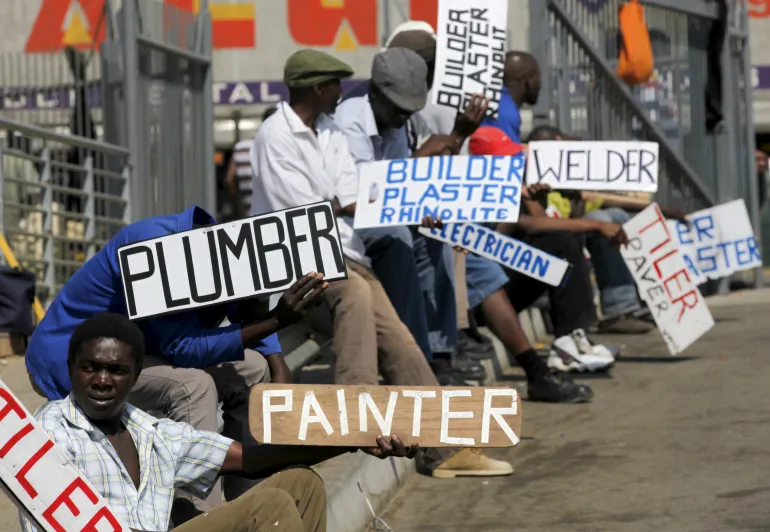
Unemployed men hold placards offering casual employment services in Johannesburg [File: Siphiwe Sibeko/Reuters]

Here is all you need to know about the new law and the debate it has stirred.

What does the law say?

The EEA amendment applies to businesses classified as “designated employers”, or those who employ more than 50 people. They are to submit plans detailing the demography of the area they operate in and how their companies will achieve stipulated equity targets.

In the previous legislation, employers would set diversity targets for themselves, and report to the labour department about how they fared in attempts to achieve a diverse workspace.

Under the new law, the Minister of Employment and Labour will identify certain sectors in need of transformation and impose a “numerical target” to achieve racial diversity – a target that employers must then comply with.

Companies seeking to do business with the state will be required to submit a certificate from the Labour Department confirming that they comply with the law; however, the EEA does not apply to the country’s security and intelligence agencies.

Using the construction industry as an example, Insights, a human capital consultancy firm, said the sectoral target “for professionally qualified Africans” in the industry is 65.2 percent within the next five years, an increase from the current 46.9 percent.

The purpose of the “equity targets” is to encourage equitable representation of people from historically disadvantaged groups. But “in an economy that is regressing rather than growing and where job opportunities are thin on the ground, businesses will find these targets very difficult to achieve,” Insights noted.

What are the criticisms?

South Africa’s main opposition party the Democratic Alliance (DA) criticized the new law, saying it prescribes “race quotas” for companies and would cause harm to the economy. Members of the party marched to parliament in Cape Town on Wednesday in opposition to the act.

Michael Cardo, DA shadow minister of employment and Labour, called the act “a knee-jerk, electioneering ploy” of the ruling African National Congress (ANC) ahead of the 2024 polls, and “devoid of any thoughtful consideration of the far-reaching implications.”

The DA said the act “will cause at least 220,000 white people, 85,000 coloured people, and 50,000 Indians to lose their jobs” within the next five years in Gauteng – the country’s industrial hub.

About a third of South Africa’s population of 60 million is already unemployed and soaring costs of living as well as rolling electricity cuts have exacerbated economic woes in the country, especially for its poorest demographic – Black people.

The Institute of Race Relations, a South African-based research and policy think tank, has said “race-based policies have not worked” to lift millions out of poverty and instead recommended a skills-based approach to inclusive employment.

Solidarity, a mainly white trade union, has written: “to at least 2,000 of the major companies in South Africa, urging them to record their protest against the latest race law”. According to the union, the legislation is “turning South Africa into the most racially regulated country in the world”.

Already, controversy and misunderstandings surround the implementation of the law. After the Department of Water and Sanitation released guidelines setting the minimum Black South African shareholder requirements for water licensing applications in May, agricultural groups warned that the “race quotas” would threaten food security.

But as the director of water allocation, Sipho Skosana, explained to local media, 98 percent of South Africa’s water resources have already been allocated – and the new regulation would not apply to that.

Skosana did note that of the water that has been allocated, 66 percent – or 5.83 billion cubic meters – is used in irrigation and, of that, 5.74 billion is “in the hands of white irrigators”.

“This situation is not normal; we can’t have a situation where the majority of the people in the country only have 1 percent of the water resources critical for development,” he said.

What do supporters of the law say?

South Africa’s government says the new legislation, supported by the ANC, will not cause job losses and only result in fairer representation in the workforce.

Shortly after the president signed the bill into law in the parliament in April, the Minister of Employment and Labour, Thulas Nxesi, said: “There is no empirical evidence to indicate that the employment equity amendments in relation to regulation of sector EE targets might have unintended consequences on employment.”

The Congress of South African Trade Unions (COSATU), the country’s largest Labour body, has also come out in support of the EEA.

In a statement, COSATU’s parliamentary coordinator, Matthew Parks urged the Department of Employment and Labour to “move with speed to ensure the promulgation and implementation of these long overdue provisions”.

According to the trade union, the bill is a “badly needed intervention to strengthen the government’s ability to hold employers accountable”.

According to Frans Rautenbach, a Cape Town-based Labour lawyer, “It is clear that the overall aim and object of the EEA, both old and new, is to provide equitable opportunities to Black employees and to ensure demographic representativeness. As long as an employer demonstrably and in good faith pursues those objects by implementing ‘affirmative action measures’, and follows the prescribed procedure, it will comply with the Act.”

Gilad Isaacs, director of the Institute for Economic Justice, a South African think tank, said companies mainly focus on maximising profits and making decisions that secure higher dividends for shareholders. They are less likely to invest in the diversity programmes that the EEA is proposing, hence the need for the recent amendments.

Isaacs said the business sector can react negatively to policy amendments that set “equity targets” or those geared towards affirmative action and diversity hiring. Therefore, the EEA forms part of continuing efforts to “change the nature of corporate governance,” he said.

The global trend of outsourcing and the casualization of workers is part of a weakening corporate responsibility, Isaacs added, saying companies have moved to an area where workers are no longer their problem and they require need their skills.

“What we need are strong regulations that channel investment for the long term. We need a government willing to take on such challenges,” Isaacs told Al Jazeera.

read more
News & Announcements

Senate Annouces Tinubu’s Ministerial Nominees [FULL LIST]

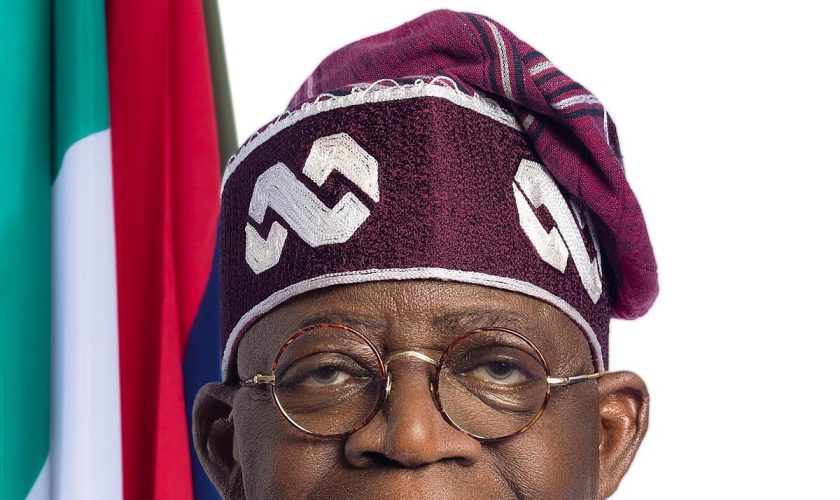
Godswill Akpabio, Nigeria’s Senate President has announced a 28-man ministerial nominees of President Bola Tinubu.

After a long wait by Nigerians, the Chief of Staff to the President, Femi Gbajabiamila, on Thursday afternoon, presented Tinubu’s ministerial list before the Senate.

Gbajabiamila, the immediate past Speaker of the House of the Representatives, presented the list to Senate President Godswill Akpabio at exactly 01:19pm.

Former Governor of Rivers State, Nyesom Wike, made President Bola Tinubu’s ministerial list read on the floor of the Senate on Thursday afternoon.

Ex-Governor of Ebonyi State, Dave Umahi; and presidential spokesman, Dele Alaka also made the list.

Akpabio thereafter read the ministerial list with 28 nominees.

See full list:
– Abubakar Momoh

– Ambassador Yusuf Maitama Tukur CON

– Arch. Ahmed Dangiwa

– Barr. Hannatu Musawa

– Chief Uche Nnaji

– Dr. Betta Edu

– Dr. Doris Aniche Uzoka

– H.E. David Umahi

– H.E. Nyesom Wike

– H.E. Badaru Abubakar CON

– H.E. Nasiru Ahmed Elrufai

– Rt. Hon. Ekperipe Ekpo

– Hon. Nkiru Onyeojiocha

– Hon. Olubunmi Tunji Ojo

– Hon. Stella Okotete

– Hon. Uju Kennedy Ohaneye

– Mr. Bello Muhammad G.

– Mr. Dele Alake

– Mr. Lateef Fagbemi SAN

– Mr. Muhammad Idris

– Mr. Olawale Edun

– Mr. Waheed Adebayo Adelabu

– Mrs Iman Suleiman Ibrahim

– Professor Ali Pate

– Professor Joseph

– Senator Abubakar Kyari

– Senator John Eno

– Senator Sani Abubakar Danladi

NOTE: Second Badge Will Be Forwarded To The Senate Soon.

read more
News & Announcements

Niger Soilders Finally Sack President Bazoum, Announce Coup

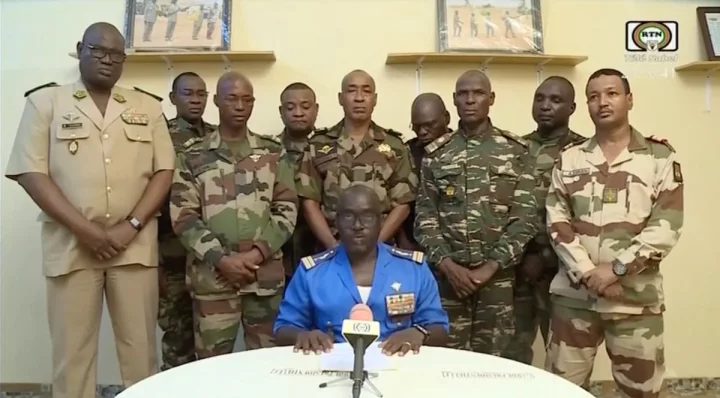
Niger Army spokesman Colonel Amadou Adramane speaks during an appearance on national television, after President Mohamed Bazoum was held in the presidential palace.

Niger military officers announced early Thursday that they had taken over power from President Mohamed Bazoum, who has been in detention since the early hours of Wednesday.

The soldiers announced the coup in televised broadcast in the early hours of Thursday.

In the broadcast, 10 senior officers said the National Council of the State Guard of the Nation had decided to “put an end to the regime you are familiar with”.

They claimed to have seized power because of deteriorating security situation as well as bad social and economic management.

“We reaffirm our support to all commitment undertaken by Niger,” the soldiers said.

They had earlier cordoned off office and residence of Bazoum with military vehicles.

Crowds had taken to the streets of the capital city, Niamey, in support of the president, but soldiers fired shots to disperse them.

The Economic Community of West African States (ECOWAS) had intervened by sending the President of Benin, Patrice Talon, to the country.

Talon proceeded after meeting with President Bola Tinubu, ECOWAS Chairman, in Abuja.

Tinubu had earlier condemned the development, warning that the regional body, as well as the global community, would not condone disruption of constitutional order within the sub-region.

read more
News & Announcements

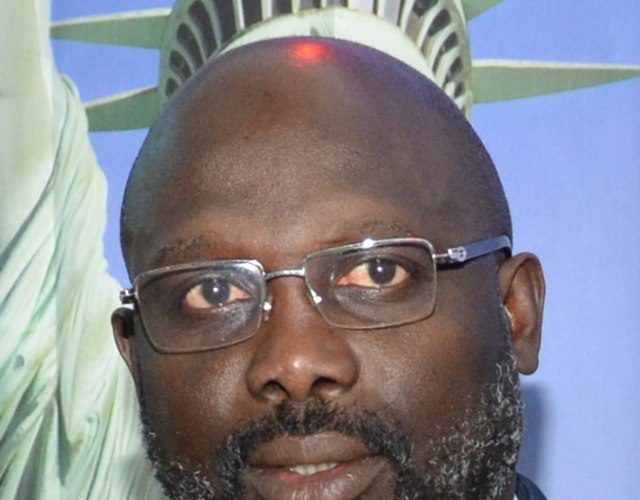
Liberian Election: Weah Promises Violent Free, Credible, Transparent, Inclusive Polls

Liberia’s President, George Weah has promised to ensure a violent free, credible, transparent and inclusive polls during the forthcoming general elections in the country scheduled for October.

Weah.gave the promise on Wednesday in Monrovia during the celebration of the country’s 176th Independence with the theme “Giving our People Hope for a Violence Free, Fair, Transparent, Inclusive and credible elections.”

Weah said that the theme for this year’s celebration was of special significance as it comes on the heels of the nation’s preparations for elections, reiterating his commitments to uphold and preserve the peaceful democracy of Liberia.

He said: “Today, we have a collective duty to uphold and defend our constitution and I pledge to do that with all my ability.

“The theme of this year’s celebration is also a reminder to do our duty to country and to God.

“And I reiterate my commitments to preserving the peace of the country which has been sustained since the singing of the Comprehensive Peace Agreement (CPA) on Aug. 18, 2003 in Accra, Ghana.

“The presidential and general elections will be credible, reflect the voice of the people of Liberia, and will meet international and national standards. 

Weah also admonished politicians contesting for various positions to follow suit in ensuring peaceful polls in their various counties, putting the interest of the people first before theirs.

He thanked Liberian citizens for their resilience and commitment to the sustained peace in the country.

“We have proven that what unites us is bigger than what divides us and we are grateful to the people of Liberia for their tenacity and commitment to preserving the peace of the country since the end of the civil war.

“We should know the value of peace now and must do all we can to sustain it,” Weah added.

President Nana Akufo-Addo of Ghana, who was a special guest of the Liberian President and honoured with a Liberian National Award, congratulated the government and people of Liberia on the occasion of their independence and their adherence to the Accra commitment.

Akufo-Addo said that it gives him great excitement to see the fruition of the Accra Agreement which was a commitment to the peace in Liberia by all factions after the brutal civil war.

He urged Liberians to hold on to the tenets of the agreement and again, preserve its democracy to a peaceful transition.

“The successful implementation of the Accra agreement twenty years after has seen to peaceful transition of power and this must be maintained.

“As you go to the polls, look beyond where you come from, deepen cohesion for peace and prosperity.

“You are Liberians first and foremost. If there must be a flight, it must be a fight to work together for the advancement of the country, political and economic gain,” Akufo-Addo said.

Akufo-Addo pledged the commitment of ECOWAS to supporting Liberia in achieving peaceful, credible and transparent elections.

President Adama Barrow of The Gambia, who also bagged a Liberian National Award, greeted the country on their independence celebration, urging them to remain united as it remains essential to recording another peaceful democratic transition.

Also present at the event was the Speaker of the ECOWAS Parliament, Sidie Tunis, representative of the ECOWAS Commission President, Omar Touray, the Foreign Minister of Ukraine Dmtyro Kuleba among other dignitaries.

read more
News & Announcements

Lawyer Kunle To Be Prosecuted For Using Police Uniform For Skit

The use of police uniforms for enjoyment by skit creator Abdulgafar Ahmad, alias Cute Abiola, has been defended by human rights attorney Inibehe Effiong.

On Thursday, the Force’s public relations officer, Olumuyiwa Adejobi, stated that the comedian would face legal action for breaking the law “with regard to the use of uniforms.”

In contrast, the human rights attorney stated in a statement on Friday that “entertainers use military and police uniforms around the world for their art and craft,” contradicting the police spokesman.

“Using ‘police uniform’ in a skit for the purpose of entertainment cannot by itself bring contempt on that uniform.

“In any event, if what’s demonstrated in the skit is a true reflection of what the police is known for, you will have a hard time proving this case.

Effiong asserts that the creator of the comedy may wish to call up to 1000 witnesses to attest that the skit accurately depicts the police’s methods of operation and is therefore not derogatory.

“By the way, the said offence is a simple offence with a punishment of only three months imprisonment or a fine of forty Naira.

“If the Magistrate Court even agrees with your argument, a fine may be imposed and I don’t see how forty Naira fine on Cute Abiola will improve the revenue of the police or the federal government.

“Rather than dissipate your energy trying to fight skit makers for depicting the police in a way you’re not comfortable with, you should use that energy to curtail the menace, lawlessness and wanton corruption of policemen whose endless abuse of power is what has actually brought the uniform and the Force into contempt.

“By the way, you will have to define what constitutes a “police uniform” as provided for by law, and also prove beyond reasonable doubt that what Cute Abiola wore in the skit is a police uniform. It is not as simple as ABC. Law is not a joke. Criminal Litigation is not skit.”

read more
News & Announcements

Delta leader was detained for molesting a young neighbor

Men from the state police command have detained a village chief in Delta State who goes by the name Oshiji after accusing him of defiling a 14-year-old girl.

According to reports, he is currently being held by the Umutu Police Division for allegedly defiling the girl in the state’s Ukwuani Local Government Area.

It was learned that the suspect had repeatedly defiled the adolescent.

According to a community source who spoke on the record on the condition of anonymity, the victim, a JSS1 student, was lured into an incomplete building for the third time with N50.

He said, “The chief has four wives and many children. From the girl’s statement, the chief has allegedly raped her twice.

“Chief Oshiji lives close to the girl’s family house and has been taking advantage of the girl. He has been raping her in an uncompleted building.

“She said the chief threatened to kill her if she tells anybody but the third attempt was what exposed him after he allegedly forced her to take drugs.”

Before she admitted to her mother, the girl was reportedly bleeding profusely, which helped to secure the suspect’s arrest.

DSP Bright Edafe, the state police public relations officer, verified the arrest on Thursday when reached.

Yes, he has been detained by the police and the inquiry is still ongoing, according to Edafe.

read more
News & Announcements

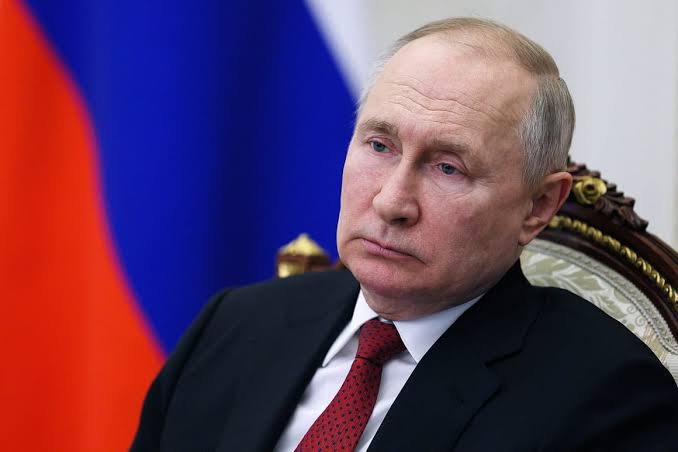
Russian Bans Medical Intervention On Sex Change

Vladimir Putin has signed legislation that bans people from officially or medically changing their gender, representing a further blow to Russia’s embattled LGBTQ+ community.

The act, passed unanimously by both houses of parliament, bans any “medical interventions aimed at changing the sex of a person”, as well as banning changing a person’s gender in official documents or public records.

The only exception will be medical intervention to treat congenital anomalies.

It also annuls marriages in which one person has “changed gender” and bars transgender people from becoming foster or adoptive parents.

The ban stems from the Kremlin’s crusade to protect what it views as the country’s “traditional values”.

Lawmakers say the legislation safeguards Russia against “Western anti-family ideology”, with some describing gender transitioning as “pure satanism”.

Russia’s crackdown on LGBTQ+ people started a decade ago when the president first proclaimed a focus on “traditional family values”, supported by the Russian Orthodox church.

In 2013, the Kremlin adopted legislation that banned any public endorsement of “nontraditional sexual relations” among minors. 

In 2020, Putin pushed through constitutional reform that outlawed same-sex marriage, and last year he signed a law banning “propaganda of nontraditional sexual relations” among adults.

read more
1 30 31 32 33 34 322
Page 32 of 322