News & Announcements Archives | Page 282 of 322 | The Lafete Magazine
close

News & Announcements

News & Announcements

Criminal Behind Kidnap Of Hundreds Of Schoolboys In President Buhari’s State Surrenders

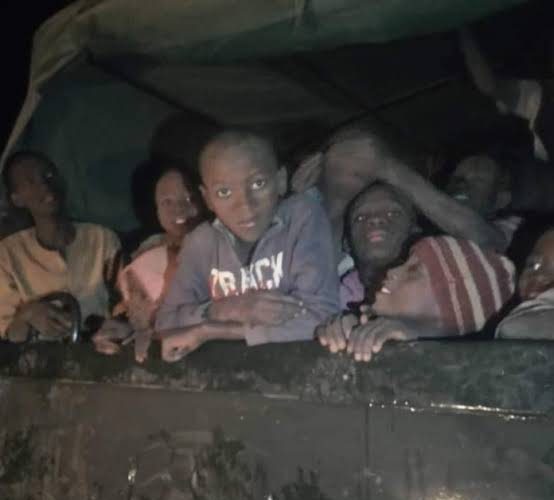
A Nigerian criminal gang leader behind the kidnapping of hundreds of schoolchildren in northwest Katsina state in December has surrendered to authorities in an amnesty deal, officials said on Tuesday.

Auwalun Daudawa led dozens of gunmen who snatched students from their school hostels in the town of Kankara in a crime that sparked global outrage and highlighted growing instability in the country’s northwest.

The abductions happened when President Muhammadu Buhari was visiting his home state of Katsina. Some students managed to escape and officials said around 340 were freed days later after negotiations.

Daudawa surrendered to local officials on Monday with six of his gang members, the local government spokesman said in a statement.

“In a brief ceremony at the premises of the Governor’s office…. Auwalun Daudawa handed over the weapons and also… swore with the Holy Quran not to revert to his old ways,” spokesman Zailani Bappa said.

Daudawa and his comrades surrendered 20 Kalashnikovs and other weapons.

Northwest Nigeria has been terrorised by criminal gangs who raid villages, stealing cattle, kidnapping for ransom and burning homes after looting supplies.

Nineteen people were killed at the weekend when armed men raided two villages in northwest Kaduna state. The gangs also attack travellers at bogus checkpoints on the highway and abduct them. Hostages are usually released after a ransom payment.

Most of the Kankara children were released after days in captivity following negotiations between the abductors and officials of Zamfara and Katsina states.

The bandits hide in camps in Rugu forest which straddles Zamfara, Katsina, Kaduna, and Niger states. Despite the deployment of troops in Zamfara and Katsina states deadly attacks persist.

The state government has sought instead to broker peace deals with the bandits, offering them amnesty in exchange for surrendering their arms.

Daudawa’s surrender was part of the amnesty offered to bandits, said the statement.

Security analysts have warned of infiltration of criminal gangs in the region by jihadists who are conducting a decade-long insurgency in the northeast.

Following the schoolboys’ abduction, Boko Haram leader Abubakar Shekau claimed responsibility in a video showing some of the children in a bush.

Security sources told AFP the abductions were carried out by Daudawa in collaboration with two bandits with a strong following, on the orders of Shekau.

Daudawa, 43, was an armed robber and a cattle rustler before he turned to gun-running, security sources said.

He began bringing in weapons from Libya, where he had received training from jihadists, selling them to bandits, the sources told AFP.

He forged an alliance with Boko Haram and became their gunrunner, taking weapons the group seizes from the Nigerian security forces in raids and ambushes and selling them to bandits.
read more
News & Announcements

WHO China Mission Fails To Find COVID-19 Origin

The WHO mission to China to uncover the origins of the coronavirus failed to identify the source of a pandemic which has swept across the world, but the team Tuesday ruled out the Wuhan lab-leak theory propagated by Donald Trump.

Experts believe the disease, which has killed more than 2.3 million people worldwide, originated in bats and could have been transmitted to humans via another mammal.

WHO foreign expert Peter Ben Embarek said identifying the animal pathway remains a “work in progress”, adding the absence of bats in the Wuhan area dimmed the likelihood of direct transmission.

It was “most likely” to have come from an intermediary species, he said, before backing up China’s position that there was no evidence of “large outbreaks in Wuhan” before December when the first official cases have been recorded.

Liang Wannian, head of the China side of the joint mission, said animal transmission remained the likely route, but “the reservoir hosts remain to be identified”.

Ben Embarek also quashed the theory that a leak from a virology lab in Wuhan could have caused the pandemic.

“The laboratory incident hypothesis is extremely unlikely,” he said, adding it “is not in the hypotheses that we will suggest for future studies”.

The mission was a diplomatically knotty one — presaged by fears of a whitewash — with the US demanding a “robust” probe and China firing back with a warning not to “politicise” the investigation.

The WHO experts spent a month in China including two weeks in quarantine.

Liang said studies showed the virus could be “carried long-distance on cold chain products”, appearing to nudge towards the possible importation of the virus — a theory that has abounded in China in recent months.

Beijing is desperate to defang criticism of its handling of the chaotic early stages of the outbreak.

It has refocused attention at home — and externally — on its handling and recovery, and also floated the theory the virus emerged abroad and was brought into China possibly via frozen foods.

Reporters were largely kept at arms’ length from the experts during their closely-monitored visit, but snippets of their findings crept out via Twitter and interviews.

But, already over a year after the virus emerged, some of it was of questionable relevance to their stated aim of finding the virus source — including a visit to a propaganda exhibition celebrating China’s recovery from the pandemic.

The group spent just an hour at the seafood market where many of the first reported clusters of infections emerged over a year ago.

They also appeared to spend several days inside their hotel, receiving visits from various Chinese officials without venturing out into the city.

Deeper research was carried out at the Wuhan virology institute where they spent nearly four hours and said they met with Chinese scientists there including Shi Zhengli, one of China’s leading experts on bat coronaviruses and a deputy director of the Wuhan lab.

Scientists at the laboratory conduct research on some of the world’s most dangerous diseases, including strains of bat coronaviruses similar to Covid-19.

Former US president, Donald Trump, frequently repeated a controversial theory that a lab leak may have been the source of the pandemic.

read more
News & Announcements

Pope Francis Appoints More Women In Vatican

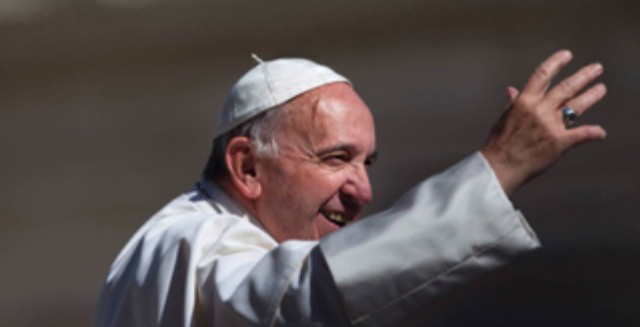
According to a report from the Vatican, Pope Francis has appointed two women to Vatican posts previously held only by men, in back-to-back moves giving women more empowerment in the male-dominated Holy See.

He appointed Nathalie Becquart, a French member of the Xaviere Missionary Sisters, on Saturday as co-under secretary of the Synod of Bishops, a department that prepares major meetings of world bishops held every few years on a different topic.

The previous day, Francis named Italian magistrate Catia Summaria as the first woman Promoter of Justice in the Vatican’s Court of Appeals.

Becquart’s position, effectively a joint number two spot, will give her the right to vote in the all-male assemblies, something many women and some bishops have called for. She is52, relatively young by Vatican standards.

Women have participated as observers and consultants in past synods but only “synod fathers”, including bishops and specially appointed or elected male representatives, could vote on final documents sent to the pope.

During a synod in 2018, more than 10 000 people signed a petition demanding that women get the vote.

“A door has been opened. We will see what other steps could be taken in the future,” Cardinal Mario Grech, the synod’s secretary-general, told the official Vatican News website.

While upholding the Church’s tradition barring female priests, Francis has set up commissions to study the history of women deacons in the early centuries of the Catholic Church, responding to calls by women that they are allowed to take up the role today.

Last year, in one fell swoop, Francis appointed six women to senior roles in the council that oversees Vatican finances.

He has also appointed women to the posts of deputy foreign minister, director of the Vatican Museums and deputy head of the Vatican Press Office.

read more
News & Announcements

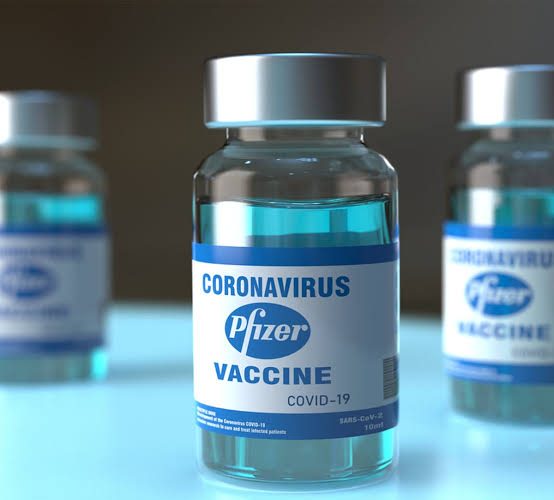
COVID-19: Danger Looms as WHO Disqualifies Nigeria, Eight Others From Vaccine

The World Health Organisation-led COVAX global initiative has failed to shortlist Nigeria for the Pfizer vaccines following its inability to meet the standard requirement of storing the vaccines at the required -70 degrees Celsius.

The Nigerian government had stated that it was expected to receive 100,000 doses through the COVAX initiative, which was set up to ensure rapid and equitable access to COVID-19 vaccines for all countries, regardless of income level.Speaking at a virtual press conference which, which was reported by PUNCH, however, the Director, WHO, African Region, Dr Matshidiso Moeti, said only four African countries were shortlisted for the Pfizer vaccine out of the 13 that applied.

Moeti said WHO could not risk the Pfizer vaccines being wasted.

She said, “Around 320,000 doses of the Pfizer-BioNTech vaccine have been allocated to four African countries – Cape Verde, Rwanda, South Africa and Tunisia. This vaccine has received WHO Emergency Use Listing but requires countries to store and distribute doses at minus 70 degrees Celsius.

“To access an initial limited Pfizer vaccine volume, countries were invited to submit proposals. Thirteen African countries submitted proposals and were evaluated by a multi-agency committee based on current mortality rates, new cases and trends, and the capacity to handle the vaccine’s ultra-cold chain needs.

“This announcement allows countries to fine-tune their planning for COVID-19 immunisation campaigns. We urge African nations to ramp up readiness and finalise their national vaccine deployment plans. Regulatory processes, cold chain systems and distribution plans need to be in place to ensure vaccines are safely expedited from entry ports to delivery. We can’t afford to waste a single dose.”

The Director-General of the Nigerian Institute of Medical Research, Professor Babatunde Salako, had told this newspaper that there was not enough space at the moment to store the Pfizer vaccines at that temperature.

But the Executive Director of the National Primary Health Care Development Agency, Dr Faisal Shuaib, had described the report as fake, saying Nigeria could store the vaccines and had taken journalists on a tour of its facility in Abuja.

Nigeria was expected to be on the list of African countries to receive the first set of Pfizer vaccines because of its infection rate, which is now the sixth-highest on the continent.

Only South Africa, Morocco, Tunisia, Egypt and Ethiopia have higher infection rates than Nigeria. But Morocco and Egypt have already independently obtained vaccines and begun distribution. In contrast, South Africa, which has the highest burden of the disease in Africa, has already procured one million doses of the Oxford-AstraZeneca vaccine, produced in India but has yet to begin distribution.

However, Nigeria has received no COVID-19 vaccine even as its rate of infection has continued to surge.

Unlike the other vaccines on the market, the BioNTech/Pfizer vaccine, which has the highest WHO rating, is expected to be stored at 70 degrees Celsius which Nigeria could not meet.

However, the WHO regional director said countries that failed to make the Pfizer list could get the Oxford-AstraZeneca vaccine later in the month, although the health organisation has not yet endorsed it.

This newspaper learnt that the Oxford-AstraZeneca vaccine does not need to be stored in a cold facility.

Moeti said, “Nearly 90 million of the Oxford/AstraZeneca vaccine could start arriving on the continent later this month. This is subject to the WHO listing the vaccine for emergency use. The review is ongoing and its outcome is expected very soon.”

The WHO director said it was time for African countries to up their game in vaccines’ rollout.

She said the initial phase of 90 million doses of COVID-19 vaccines would support countries to immunise three per cent of the African population most in need of protection, including health workers and other vulnerable groups in the first half of 2021.

“As production capacity increases and more vaccines become available, the aim is to vaccinate at least 20 per cent of Africans by providing up to 600 million doses by the end of 2021,” Moeti said.

To complement COVAX efforts, the African Union has secured 670 million vaccine doses for the continent, distributed in 2021 and 2022 as countries secure adequate financing. The African Export-Import Bank will facilitate payments by providing advance procurement commitment guarantees of up to $2bn to the manufacturers on behalf of countries.

Since the AU will distribute vaccines based on population, Nigeria is expected to receive the highest shipment. However, no date has been announced for the distribution.

read more
News & Announcements

Myanmar Blocks Twitter, Instagram Access

Two days after the country directed state-owned telecommunication companies to block access to Facebook following the military coup that rocked it, Myanmar has again blocked access to micro-blogging platform Twitter and photo-sharing app Instagram on Saturday.

A statement issued by Telenor, one of the four operators in Myanmar, said all mobile operators, international gateways and internet service providers in the country received a directive from Myanmar’s Ministry of Transport and Communications to suspend social media platforms Twitter and Instagram until further notice, reports Xinhua news agency.

The Ministry’s directive asked the operators to temporarily suspend the access of Twitter and Instagram under Section 77 of the country’s Telecommunications Law, mentioning that the move is made in the name of public interest and stability.

The restriction of access to Facebook was imposed on Thursday till Sunday.

According to BuzzFeed, Facebook had designated Myanmar a “temporary high-risk location” after a coup earlier this week.

The military in Myanmar seized control of the country on Monday over the disputed results of the November 8, 2020, parliamentary polls in which the former ruling party, National League for Democracy (NLD), obtained more than 80 per cent of the seats and increased its parliamentary majority.

Before the coup, the military detained former State Counsellor Aung San Suu Kyi, former President U Win Myint, along with other senior NLD officials.

A year-long state of emergency has also been declared.

read more
News & Announcements

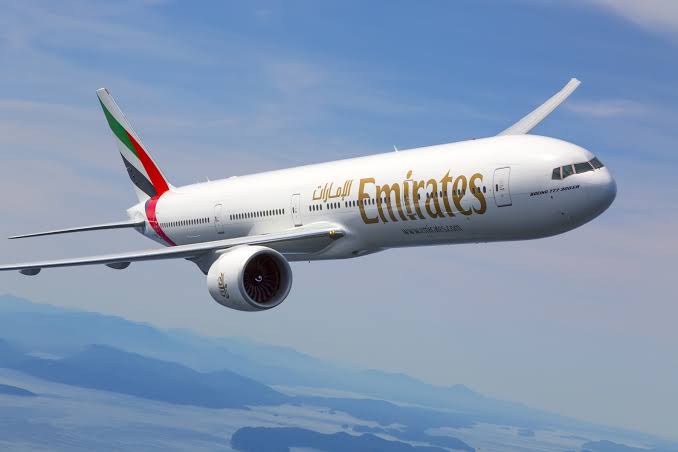
Nigeria Lifts Suspension On Emirates Airlines

Nigeria has lifted its suspension of Emirates airlines flights imposed after the carrier sought additional Covid-19 tests for passengers from Nigeria, a spokesman for the country’s aviation regulator said on Friday.

“The suspension has just been lifted because they have complied with what we want,” said the Nigerian Civil Aviation Authority (NCAA) spokesman.

He said further details would soon be made public in a statement.

An Emirates spokesperson said the company “can confirm that we will continue to operate services to Abuja and Lagos.”

An aviation ministry spokesman on Monday told a news conference that the United Arab Emirates (UAE), in addition to requiring a polymerase chain reaction (PCR) test before flying from Nigeria, was adding an extra requirement of having a rapid test four hours before departure.

He said airlines that insisted on the additional test would be suspended until an appropriate structure was put in place to conduct the second test within four hours of departure.

In a letter to the airline’s country manager, dated February 4 and titled “suspension of Emirates airlines operations to Nigeria”, the NCAA said the airline had carried passengers from Nigeria using rapid antigen tests “conducted by laboratories that are neither approved nor authorized by the appropriate regulatory bodies”.

The NCAA, in its letter, said the decision to suspend Emirates was taken because the airline failed to heed a request to either accept passengers without the rapid test until the appropriate infrastructure was in place or suspend flights to and from Nigeria until that time.

This month, UAE authorities said the airline’s passengers flying to Dubai from Nigeria would not be permitted entry if they transited via a third country and could only enter on direct flights, according to industry sources and a travel notice on the RwandAir website.

read more
News & Announcements

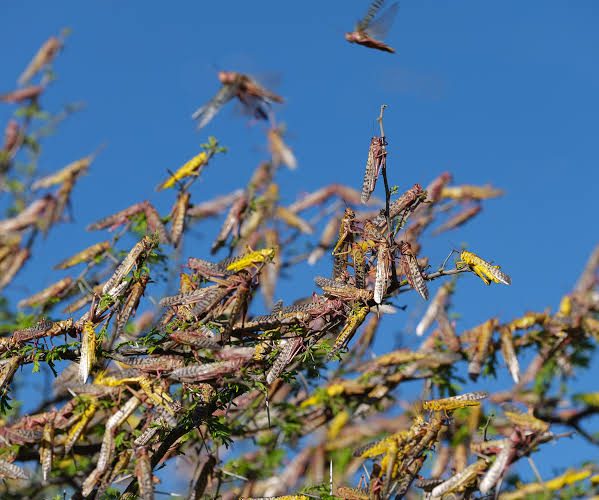
Locust Inversion Forces Somalia To Declare State Of Emergency

Somalia has declared a state of emergency over a locust invasion that is threatening to devour crops that were due for harvest from April.

Said Hussein Lid, Somalia’s Minister for Agriculture and Irrigation, said the government has identified a large invasion in the southern federal states of Hirshabelle, South West and Jubbaland.

The declaration, The Nation reports, means Somalia is seeking targeted funding and efforts to tame swarms attacking a region that is already food poor, according to a situational report by the UN Office for the Coordination of Humanitarian Affairs (UNOCHA).

The decision came on Thursday after Mr Lid met with representatives of the Food and Agriculture Organisation and ministers from the three southern states of Somalia.

The officials “acknowledged the need to amplify efforts in the coming weeks and months, to mitigate damage in food security and livelihoods in Somalia due to desert locust infestation,” said a bulletin issued on Thursday.

Somalia is the first country in the region to declare a state of emergency, even though the locusts have ravaged most of the Horn of Africa region.

In Kenya, officials said at least 15 of the 47 counties had been affected since the second wave of invasion began in November. They include Garissa, Wajir and Mandera which border Somalia’s south-western region. However, unlike Somalia, Kenya has been able to make aerial sprays on farms, targeting to kill the insects before they could jump to other fields.

Peter Munya, the Kenyan Cabinet Secretary for Agriculture, said 75 different swarms entered Kenya from Somalia and Ethiopia and authorities had dissipated 66 of them in an area of about 19,000 hectares using nine aircraft.

“Funding is needed to increase control efforts over the coming months, with sustained efforts needed in Northern and Central Somalia as we monitor the development of potential new swarms,” said a joint statement by the FAO and Somalia government officials on Thursday.

Officials said the risk of crop damage for 2021 “remains high and alarming” from the desert locusts.

FAO says it may need up to $38 million to keep the planes spraying chemicals in Kenya and Somalia. 

read more
News & Announcements

Nigeria’s Okonjo-Iweala Inches Closer To Becoming WTO DG

The coast is now clear for Dr Ngozi Okonjo-Iweala to become the director-general of the World Trade Organisation (WTO).

The 66-year-old former Nigeria Finance Minister is highly favoured after her sole opponent, US-favoured South Korean, Yoo Myung-hee, is reported to have withdrawn from the race.

Yoo, a trade minister,  on Friday abandoned her bid to become head of the WTO, Seoul said, clearing the way for Dr Okonjo-Iweala to become the global body’s first woman and first African director-general.

Yoo had consulted with the United States — her prime backer — and other major countries and “decided to renounce her candidacy”, South Korea’s trade ministry said in a statement.

The process to name a successor to Roberto Azevedo had been deadlocked since October when key WTO ambassadors tapped Okonjo-Iweala as the best pick to lead the organisation.

On October 28, WTO General Council chair, David Walker, announced that, after due consultations, Dr Okonjo-Iweala was “the candidate best poised to attain consensus and become the 7th director-general”.

But the Trump administration maintained its opposition to her appointment. 

The WTO head is normally chosen by consensus, leaving the process at a standstill.

All the six past Director-Generals were selected by consensus but in 1999, the WTO could not choose between Dr Mike Moore of New Zealand and Dr Supachai Panitchpakdi of Thailand. 

Instead of voting to decide the winner, it took the unprecedented decision to split the term of office between the two, with Dr Moore serving from 1999 to 2002 and Dr Supachai from 2002 to 2005.

But the WTO regarded term-sharing as a precedent that shouldn’t be repeated, so it introduced a process of successive rounds of consultations to identify the candidate best placed to attract consensus.

Observers suggested that South Korea was under pressure from the United States — a security ally that stations 28,500 troops in the country to defend it from the nuclear-armed North — to keep Yoo in the race.

The WTO also announced later that a meeting to decide the next WTO boss had been postponed because of new Covid-19 restrictions in Geneva and “current events”, which may not have been unconnected to the US election.

At the same time, Seoul faced anger from African countries and others for not bowing out.

“Korea is stuck between a rock and a hard place,” one Western trade diplomat told AFP at the time.

The South’s decision to withdraw her candidacy comes two weeks after Joe Biden was sworn in as the new US president.

“South Korea will continue to make various contributions to rebuild and enhance the multilateral trade system,” the trade ministry statement said.

The WTO is widely seen as being in need of reform — even before the Covid-19 crisis hit, it had grappled with stalled trade talks and struggled to curb tensions between the United States and China.

The global trade body has also faced relentless attacks from Washington, which has crippled the WTO dispute settlement appeal system and threatened to leave the organisation altogether.

The WTO was destined to have its first woman director-general after the months-long consultations process whittled the candidates down to the final two.

Dr Okonjo-Iweala arrived in the US in 1973 as a teenager and studied at Harvard University, graduating magna cum laude with an AB in Economics in 1976. She acquired her PhD in regional economics and development from the Massachusetts Institute of Technology (MIT). 

She was Nigeria’s finance minister from 2003 to 2006 and from 2011 to 2015 under the leadership of Presidents Olusegun Obasanjo and Goodluck Jonathan, respectively, and also served the country as its first woman foreign minister.

Dr Okonjo-Iweala trained spent a quarter of a century at the World Bank, rising to be managing director and running for the top role in 2012, and is seen as a trailblazer in her home country.

She sits on the boards of Standard Chartered Bank. 

Similarly Yoo, 53, is known as a glass-ceiling-breaker in the South’s still male-dominated society.

An English literature graduate of the elite Seoul National University, she set aside her dreams of a literary career to become a trade ministry civil servant, later handling a number of free trade negotiations along the way.

read more
News & Announcements

COVID-19: Switzerland Turns Down AstraZeneca Vaccine

Switzerland has rejected the AstraZeneca Covid-19 vaccine as the country’s medical regulator, Swissmedic, said the available data is insufficient for approval of the vaccine.

Recall that earlier this week, France and Germany restricted the vaccine to over-65s. President Emmanuel Macron and the German Health Ministry said there was insufficient information on the vaccine’s effectiveness for the elderly.

South Africa received its first million doses of the Covid-19 Oxford University-AstraZeneca vaccine from the Serum Institute of India (SII) earlier this week. The vaccine is expected to be administered to health-care workers by the middle of the month.

Swissmedic said it was examining two authorisation applications for Covid-19 vaccines in the rolling assessment, including the AstraZeneca vaccine.

“Based on the data evaluated so far, the advisory external Swissmedic expert committee Human Medicines Expert Committee (HMEC) supported Swissmedic’s interim assessment of the AstraZeneca coronavirus vaccine. The currently available data do not yet permit a positive benefit-risk decision,“ it said.

The Swiss Federal Government has signed three agreements for the delivery of more than 11 million vaccines with German pharmaceuticals company Curevac and Novavax, and another six million vaccine doses from Moderna.

The Swiss Federal Office of Public Health said: “Given that the development and availability of vaccines are subject to such great uncertainty, the federal government continues to pursue a diversified procurement strategy covering a variety of vaccine technologies (mRNA, vector-based and protein-based) and different vaccine manufacturers”.

Swissmedic said that as soon as more results on the Astrazeneca vaccine were available, temporary approval in the rollout could be granted very quickly.

“For a final evaluation, the applicant must, among other things, submit and evaluate additional efficacy data from a phase III study that is ongoing in North and South America”, said the medical regulator.

Earlier this week results from a pre-print study from the UK, Brazil and South Africa found the AstraZeneca vaccine provided full protection against severe disease and kept people out of hospital more than three weeks after the first dose.

read more
News & Announcements

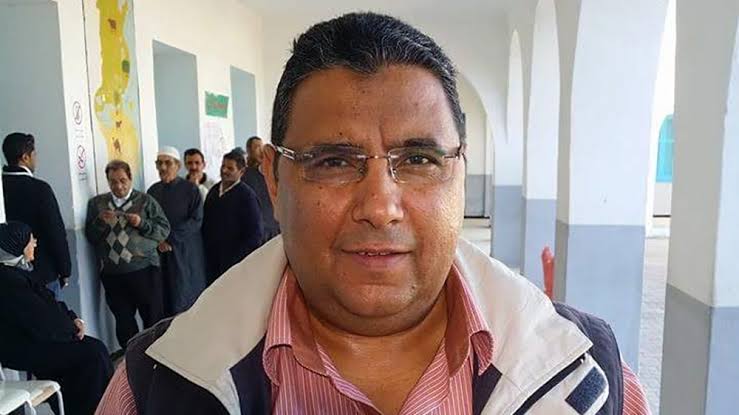
After 4 Years In Detention, Egypt Frees Al-Jazeera Journalist

Egypt has released Al-Jazeera journalist Mahmoud Hussein after more than four years in detention on accusations of publishing false news, a security source said Friday.

Hussein, an Egyptian national held under preventive detention since December 2016, was released from jail Thursday night, the source said, without giving further details.

Al-Jazeera, which has run a daily campaign for his release repeatedly, said he was being held without formal charges, a trial or conviction.

read more
1 280 281 282 283 284 322
Page 282 of 322