News & Announcements Archives | Page 253 of 322 | The Lafete Magazine
close

News & Announcements

News & Announcements

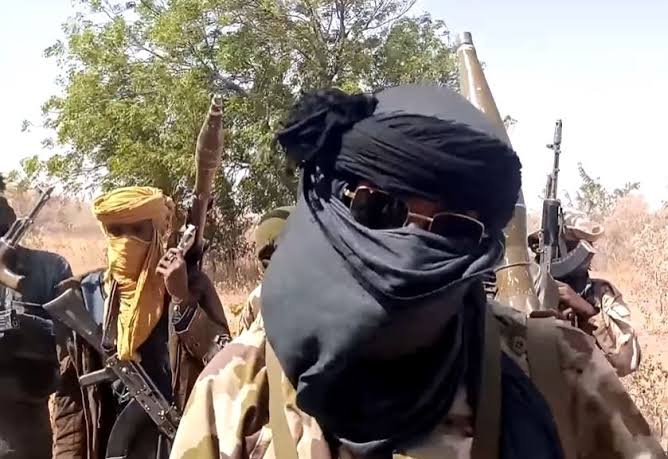
UN Says Insurgency In Nigeria’s Northeast Has Killed Almost 350,000 People

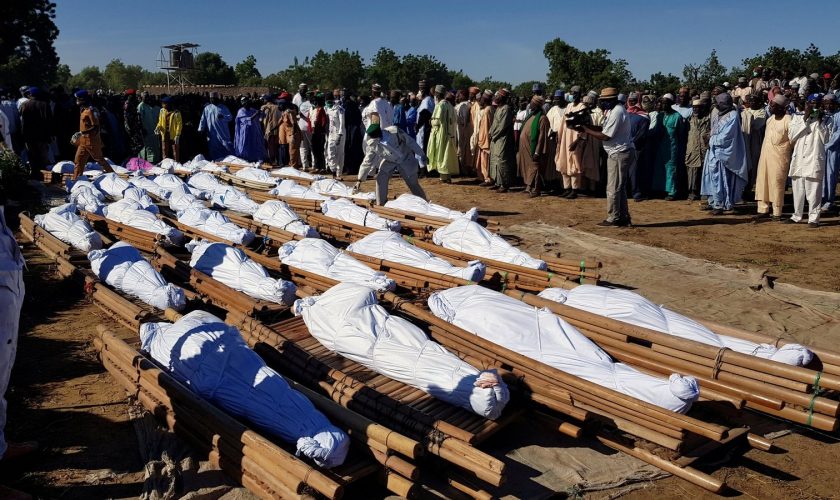
Northeast Nigeria’s conflict with Islamist insurgencies had killed nearly 350,000 people as of the end of 2020, the United Nations Development Programme (UNDP) said on Thursday.

The toll, given by the U.N. agency in a new study on the war and its impact on livelihoods is 10 times higher than previous estimates of about 35,000 based only on those killed in fighting in Nigeria since the conflict’s start 12 years ago.

“The full human cost of the war is much greater,” the UNDP said in a report, released with Nigeria’s Ministry of Finance.

“Already, many more have died from the indirect effects of the conflict,” said the UNDP, citing damage to agriculture, water, trade, food and healthcare.

Reuters reports that Nigeria’s war with Islamist insurgencies Boko Haram and Islamic State’s West Africa Province has spawned one of the world’s worst humanitarian crises, with millions of people dependent on aid. The conflict shows little sign of ending.

Children younger than five accounts for more than nine out of 10 of those killed, with 170 dying every day, the UNDP said.

If the conflict continues to 2030, more than 1.1 million people may die, the agency said.

“Destruction and displacement have set back development in the region by decades, and continued conflict will only further scar the region,” the UNDP said.

read more
News & Announcements

31 African Countries Get US’ 55 Million COVID-19 Doses

The United States has allocated 55 million doses of COVID-19 vaccines to 31 priority countries as part of plans to end the pandemic.

The Joe Biden administration had earlier promised to distribute 80 million doses from the US supply, with 25 million doses already allocated.

The allocation plan for the 55 million doses includes 41 million to be shared through COVAX, the global vaccine alliance; about 14 million of the vaccine doses will go to selected countries in Latin American and the Caribbean, 16 million in Asia, and 10 million in Africa.

Also, 41 million doses will be shared to “regional priorities and other recipients” including Nigeria and about 30 other countries. Five of those are South Africa, Kenya, Ghana, Cape Verde and Egypt.

In a fact sheet released on Monday, the US stated that its goals remain to “increase global COVID-19 vaccination coverage, prepare for surges and prioritise healthcare workers and other vulnerable populations”.

It stated: “And, as we have previously stated, the United States will not use its vaccines to secure favours from other countries.”

 “Sharing millions of U.S. vaccines with other countries signal a major commitment by the U.S. Government,” the fact sheet noted.

 “Just like we have in our domestic response, we will move as expeditiously as possible, while abiding by U.S. and host country regulatory and legal requirements, to facilitate the safe and secure transport of vaccines across international borders.

About 2.7 billion shots of the coronavirus vaccines have so far been administered globally including in the US where the vaccination rate is said to be 1.13 million doses per day.

But African countries — such as Nigeria were just one percent of the 200 million population has been vaccinated — have struggled to catch up with the vaccination process.

The World Trade Organisation has stated that there are plans to create regional vaccine manufacturing hubs in four African countries including Nigeria under consideration.

read more
News & Announcements

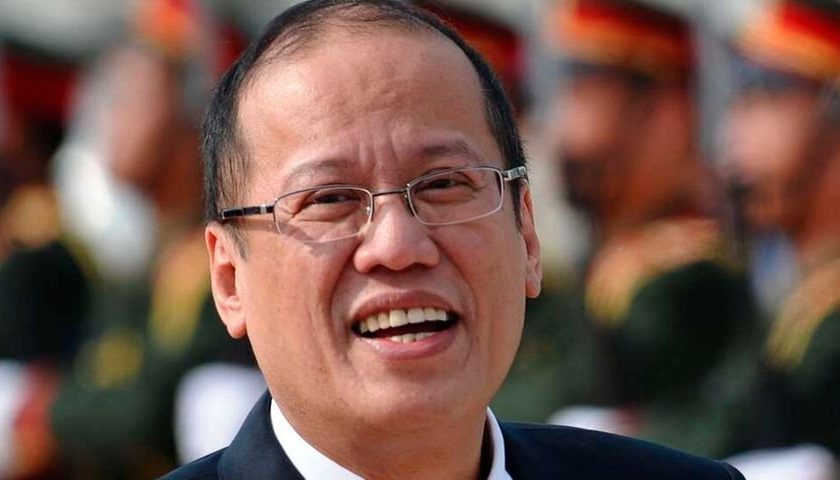
Ex-Philippines President Aquino Dies At 61

Former Philippine president Benigno “Noynoy” Aquino, the reserved 61-year-old bachelor from one of Asia’s most famous political families, died Thursday, the country’s foreign minister and several officials said.

Aquino, who ruled the archipelago nation from 2010 to 2016, was the only son of the late former president Corazon Aquino and her assassinated husband, senator Benigno “Ninoy” Aquino, both revered for leading the struggle to restore democracy in the archipelago nation.

Aquino was rushed to the Capitol Medical Centre in Manila early Thursday, local media reported.

His family was expected to issue a statement.

“I’m out of Twitter from grief over the death of a sea-green incorruptible,” Foreign Secretary Teodoro Locsin tweeted.

He said Aquino was “brave under armed attack, wounded in the crossfire, indifferent to power and its trappings, and ruled our country with a puzzling coldness but only because he hid his feelings so well it was thought he had none”.

Supreme Court Justice Marvin Leonen, who was Aquino’s former peace adviser expressed his “profound sadness” over the former leader’s death.

“I knew him to be a kind man, driven by his passion to serve our people, diligent in his duties, and with an avid and consuming curiosity about new knowledge and the world in general,” Leonen said.

Aquino, who was succeeded by President Rodrigo Duterte, waged an anti-corruption agenda during his term and ushered in key economic reforms.

read more
News & Announcements

Ten Kenyan Air Force Personnel Killed In Helicopter Crash

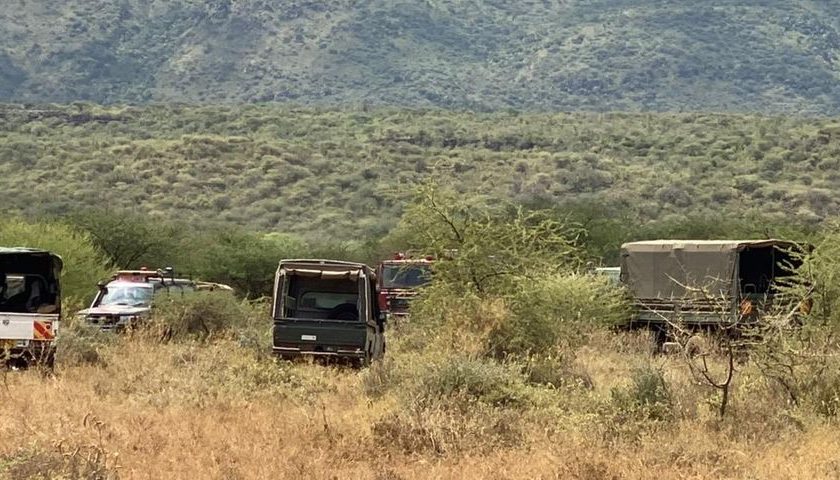
Ten Kenya Air Force personnel have died while 13 others sustained injuries after the military aircraft they were in crashed in Oltepesi, Kajiado West, during training.

According to a statement signed by the Kenya Defence Forces (KDF) Spokesperson Zipporah Kioko, the Mi 171E helicopter crash-landed around 9 am on Thursday.

Col Kioko added that those who were injured were taken to the Defence Forces Memorial Hospital in Nairobi. Bodies of the 10 soldiers who died in the crash have been moved to Nairobi.

She said aircraft accident investigators had arrived at the scene to establish the cause of the crash.

Kajiado West Deputy County Commissioner Muranga Morakwa said that KDF has been training in the area for a long time.

Prior to the crash, the helicopter circled in the air for over 20 minutes as those onboard scrambled to jump out.

read more
News & Announcements

Ethiopian Troops Deny Targeting Busy Market During Air Raid In Tigray

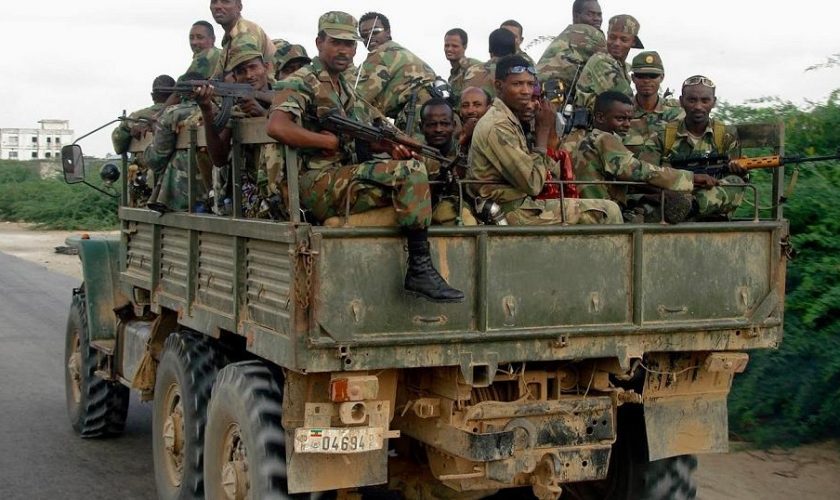
Ethiopia’s military has denied it carried out an airstrike on a busy market in Tigray, which left dozens of people dead, but it acknowledged targeting rebel fighters “in civilian clothes” in the restive region.

“We do not accept that this operation targeted civilians,” Colonel Getnet Adane, Ethiopian National Defense Force spokesman, told Reuters the news agency, adding that the combatants in the town of Togoga were dressed in civilian clothes.

A resident of the town told Reuters on Wednesday that the airstrike a day earlier had hit a market in the town west of Mekelle. That resident also said that her two-year-old daughter had been injured in the attack.

The military spokesman said the combatants were not inside the market but had gathered in the town to commemorate the anniversary of the bombing of another town in Tigray, Hawzen, in 1988. That attack, by Ethiopia’s then-ruling communist leaders, killed hundreds of people and is widely commemorated in Tigray.

The Ethiopian military has been battling forces loyal to the Tigray People’s Liberation Front (TPLF), the region’s former ruling party, since November. Fighting has displaced two million people and the United Nations have warned of a possible famine.

Asked about children injured in Tuesday’s attack, the spokesman said the TPLF uses propaganda and is known for faking injuries. He also said that doctors quoted by the media are not “real doctors”.

The remarks were the first acknowledgement by the military of the airstrike, which came after residents said new fighting had flared in recent days north of Tigray’s regional capital Mekelle.

Previously, Getnet, the military spokesman, had declined to confirm or deny the incident, saying airstrikes were a common military tactic and that government forces do not target civilians.

The UN said it was “deeply disturbed” by reports the army had blocked evacuations and called on Ethiopian authorities to conduct an urgent investigation.

“Attacks directed against civilians and indiscriminate attacks are prohibited,” said acting assistant secretary-general for humanitarian affairs, Ramesh Rajasingham.

The United States said it was “gravely concerned” by the reported fatalities and called for an urgent investigation.

“We strongly condemn this reprehensible act,” State Department spokesman Ned Price said in a statement.

European Union foreign policy chief Josep Borrell said if confirmed, the blocking of ambulances could amount to a violation of international law.

This bombing “adds to the appalling series of violations of international humanitarian law and human rights” in Tigray, he said.

read more
News & Announcements

Israel Calls New Iranian President ‘Extremist’

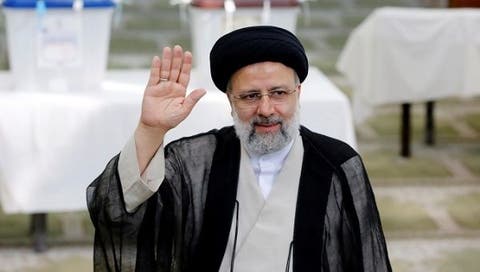
Israel has termed Iran’s newly-elected President Ebrahim Raeisi as an “extremist” leader who is committed to Iran’s nuclear ambitions.

“Iran’s new president, known as the Butcher of Tehran, is an extremist responsible for the deaths of thousands of Iranians. He is committed to the regime’s nuclear ambitions and to its campaign of global terror,” Israeli Foreign Minister Yair Lapid said.

Ministry spokesman Lior Haiat, meanwhile, said in a Twitter post that the election of Raeisi shows Iran’s “true” intentions of becoming a nuclear power.

Raeisi is an “extremist figure, committed to Iran’s rapidly advancing military nuclear program, his election makes clear Iran’s true malign intentions, and should prompt grave concern among the international community,” Haiat said, calling on the international community to “immediately” halt Iran’s nuclear program.

Raeisi, the ultra-conservative judiciary chief, garnered 17.92 million votes in Friday’s election, defeating his three rivals in a landslide victory.

Voter turnout, according to the Interior Ministry, was 48.8%, the lowest in Iran’s history.

In 2018, former US President Donald Trump unilaterally withdrew Washington from the 2015 nuclear agreement with Iran, in a move aimed to bring Tehran back to negotiations for what Trump hoped would be a “better” deal.

Talks between Iran and Western powers on reviving the pact have been ongoing in Vienna recently.

read more
News & Announcements

Teenagers At Libya Camp Allege Constant Rape From Guards

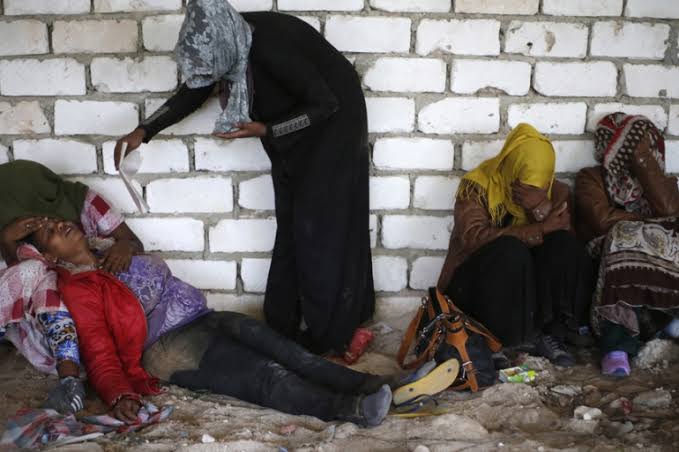
A group of teenage migrant girls housed in a government-run detention center in Libya have accused guards at the facility, funded by the European Union, of sexually assaulting them, according to a report by the Associated Press.

A 17-year-old Somali girl, whose identity has been kept anonymous, told AP that she was raped by a guard at the Shara al-Zawiya centre in the capital, Tripoli, in April. More girls from the centre have come out with similar allegations, with some sharing their ordeal with AP.

The teenager was rescued by Libyan security forces in February more than two years after she was captured by traffickers, who sexually abused her. Traffickers are notorious for extorting from, torturing and assaulting migrants and refugees like her trying to reach Europe.

But the 17-year-old said the sexual assaults against her have continued, only now by guards at the government-run centre where many of the migrants or refugees are being kept.

She and four other Somali teenagers undergoing similar abuses are pleading to be released from the Shara al-Zawiya centre.

It is one of a network of centres run by Libya’s Department for Combating Illegal Immigration, or DCIM, which is supported by the European Union in its campaign to build Libya into a bulwark against mainly African migrants crossing the Mediterranean Sea.

“While it is not the first time I suffer from sexual attacks, this is more painful as it was by the people who should protect us,” the 17-year-old said, speaking to The Associated Press by a smuggled mobile phone.

“You have to offer something in return to go to the bathroom, to call family or to avoid beating,” she said. “It’s like we are being held by traffickers.”

The Associated Press does not identify victims of sexual assault, and the young woman also asked not to be named, fearing reprisals. 

Smugglers and traffickers in Libya – many of them members of militias – have long been notorious for brutalising migrants. But rights groups and United Nations agencies say abuse also takes place in the official DCIM-run facilities.

“Sexual violence and exploitation are rife in several detention centres (for migrants) across the country,” said Tarik Lamloum, a Libyan activist working with the Belaady Organization for Human Rights.

The UN refugee agency has also documented hundreds of cases of women raped while in either DCIM detention or traffickers’ prisons, with some even being impregnated by guards and giving birth during detention, said Vincent Cochetel, the UNHCR’s special envoy for the Central Mediterranean.

The group of teens are the only migrants being kept at Shara al-Zawiya, a facility where usually migrants stay for only short periods for processing. Human rights organisations say they have been trying to secure their release for weeks.

After their rescue from traffickers in February, the 17-year-old was brought along with eight other young female migrants to Shara al-Zawiya. Four of the others were later released under unclear circumstances.

One night in April, around midnight, she said she asked a guard to let her go to the toilet. When she finished, the guard attacked her and grabbed her forcefully, she recalled.

“I was petrified and didn’t know what to do,” she told AP. The guard assaults her while she cried, struggled and pleaded for him to get off her.

“I was lucky that he was done quickly.”

The guard then ordered her to clean her clothes, she recalled, breaking down in tears.

Terrified, she returned to her cell and told one of the other girls what had happened. She soon learned she was not the only victim. All the girls, aged 16 to 18, had experienced similar or worse abuse by guards, she said.l

A 16-year-old in the same cell told the AP she started being sexually harassed a few days after arriving at the centre. When she pleaded with a guard to call her family, he gave her a phone and let her out of her cell to call her mother. Once she hung up, he stood behind her and grabbed her, she said.

She removed his hands and started to cry. The guard only stopped after realising other employees were at the centre, she said.

“Every day they do this,” she said. “If you resist, you will be beaten or deprived of everything.”

The Libyan government has not responded to requests for comment by the AP.

At least two of the girls attempted to kill themselves in late May following alleged beatings and attempted rapes, according to local rights group Libyan Crime Watch and UN agencies.

One of them, a 15-year-old, was taken to hospital on May 28 and treated by the international aid group Doctors Without Borders (Medecins Sans Frontieres, or MSF) only to be returned to the detention centre.

Maya Abu Ata, a spokeswoman for MSF Libya, confirmed that the group’s staff treated the two at its clinic.

The MSF teams “advocated for their release from detention and lobbied protection actors and different interlocutors, however, these attempts were unsuccessful,” she said.

The UNHCR said it was working with Libyan authorities for the release of the five young women still held at Shara al-Zawiya and their subsequent evacuation from Libya.

The case of the teenagers in Shara al-Zawiya also renews questions about the EU’s role in the cycle of violence trapping migrants and asylum seekers in Libya.

The EU trains equip and support the Libyan Coast Guard to intercept people trying to cross the Central Mediterranean to Europe.

At least 677 people are known to have either died or gone missing taking this route on unseaworthy boats so far this year.

Nearly 13,000 men, women and children – a record number – have been intercepted by the Libyan Coast Guard and returned to Libyan shores from the start of the year up to June 12. Most are then placed in DCIM-run centres.

At some of the 29 DCIM-run centres around the country, rights groups have documented a lack of basic hygiene, healthcare, food and water as well as beatings and torture. DCIM receives support, supplies and training, including on human rights, through the EU’s $5.1bn Trust Fund for Africa.

Libya has been applauded by the West for a ceasefire reached last year and the appointment of an interim government earlier this year, prompting visits by European leaders and the reopening of some embassies. Despite seemingly growing political stability, activists and human rights organisations say their access to migrants in detention centres is becoming more restricted.

“The guns are silent, a ceasefire is in place … but human rights violations are continuing unabated,” said Suki Nagra, representative of the Office of the United Nations High Commissioner for Human Rights in Libya, who is following the reports of abuse at Shara al-Zawiya.

Even when cases are documented and alleged perpetrators arrested, they are often released due to the lack of witnesses willing to testify for fear of reprisals. For example, Abdel-Rahman Milad, who was under UN sanctions and was arrested last year on charges of human trafficking and fuel smuggling, walked free in April without trial.

read more
News & Announcements

More Than 80 Students Abducted, Policeman Killed As Gunmen Attack Nigerian School

More than 80 students and teachers were abducted and a police officer mowed down as suspected bandits attacked a school in Kebi State, northwestern part of Nigeria, local police said.

The attack took place on the Federal Government College in the remote town of Birnin Yauri in Kebbi State on Thursday. It is the third assault by armed gangs on a school or college in Nigeria in less than a month which have been attributed by the authorities to bandits seeking ransom payments.

Usman Aliyu, a teacher at the school, said the gunmen took more than 80 students, most of the girls.

“They killed one of the (police officers), broke through the gate and went straight to the students’ classes,” he told Reuters news agency.

A spokesman for the police in Kebbi State, Nafiu Abubakar, said one officer had been shot dead during an exchange of fire between the police and the attackers, and a student had also been shot and was receiving medical treatment.

Abubakar said security forces were searching a nearby forest for the abducted students and teachers.

Police late on Thursday had not released the number of students missing, and a spokesman for the Kebbi state governor said they were conducting a tally of the missing.

Atiku Aboki, a local resident who went to the school shortly after the gunfire stopped, told Reuters he saw a scene of panic and confusion as people searched for their children.

“When we got there, we saw students crying, teachers crying, everyone is sympathising with people,” he said by telephone.

“Everyone was confused. Then my brother called me [to say] that his two children have not been seen and [we] don’t know if they are among the kidnapped

Heavily armed criminal gangs, known locally as bandits, have long targeted central and northwestern states, raiding villages, stealing cattle and kidnapping for ransom.

But they have increasingly targeted schools, snatching students or schoolchildren and herding them into forest hideouts to negotiate ransom payments.

More than 700 children and students have already been kidnapped by these gangs for ransom since December.

The raids have mostly taken place in the northwestern region. They are separate from armed operations centred on the northeast, where the Boko Haram group made global headlines in 2014 when it abducted more than 270 schoolgirls from the town of Chibok.

At the end of May, armed men seized 136 children from an Islamic seminary in central Nigeria’s Niger state.

The mass kidnappings are just one challenge for President Muhammadu Buhari’s security forces, which are also fighting an armed conflict in the northeast and rising separatist tensions in the country’s southeast.

read more
News & Announcements

After The Rain Comes The Sunshine: Leone Stars Lit Up Sierra Leone With Huge Smiles As They Beat The Squirrels of Benin To Qualify For The Nations Cup

The final group match between Benin and Sierra Leone was enshrouded in controversies ranging from Covid-19 test et al and when CAF decided to have the match played on neutral ground, the controversy continued, as key players from both teams were barred from taking part because of Covid cases however both countries reached an agreement to have the match played on the 15th of June 2021 after it was originally canceled on the Monday the 14th of June 2021.

Both teams came into the match with confidence, while the Benin Squirrels needed a draw to scale through, the Leone Stars required a win to go through. The game was barely six minutes old when Benin Steve Mounie almost nicked a goal for his side but Leone stars goal Keeper Mohammed Kamara stood to the test with his saving hands.

As both sides continued to size up each other Augustine Williams wasted a glorious chance for the Leone Stars in the 14th minute with other gluts of missed opportunities and in the 18th minute the Benin Squirrels captain Khaled Adenon handled the ball inside his box and Tunisian referee Haythem Guirat wasted no time in pointing to the penalty spot after issuing a yellow card the defender.

When Leone Stars Kai Kamara steps up to take that decisive penalty kick that would cement Sierra Leone’s participation at the next cup of Nations in Cameroun, the nation stood still in apprehension before the spot-kick, and by the time the ball kissed the back of the net, the nation went agog and at the end of the enthralling encounter at the General Lansana Conte Stadium in Guniea. Sierra Leone went berserk in celebration after 27, sojourn in the wilderness of struggling to participate in the Africa Nations Cup competition, Coach John Kester led Leone Stars of Sierra Leone to defeat the Squirrels of the Benin Republic in a fixture that initially drew bad blood and was later rescheduled on neutral ground in Guinea on June 15, 2021.

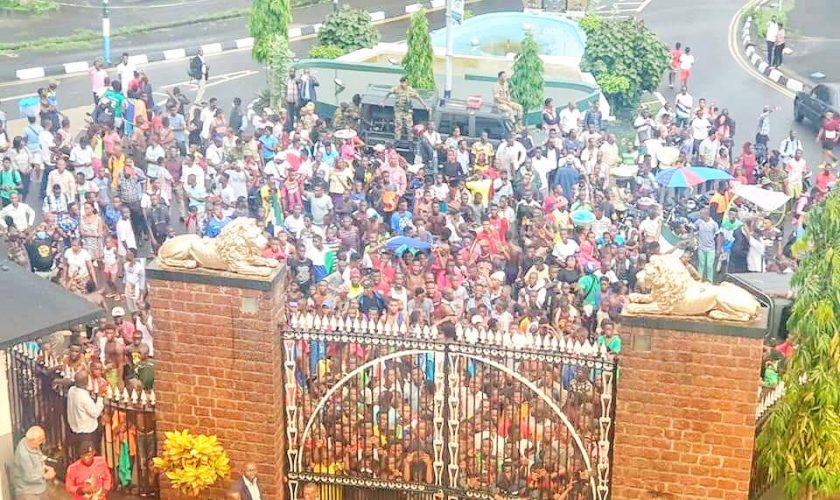
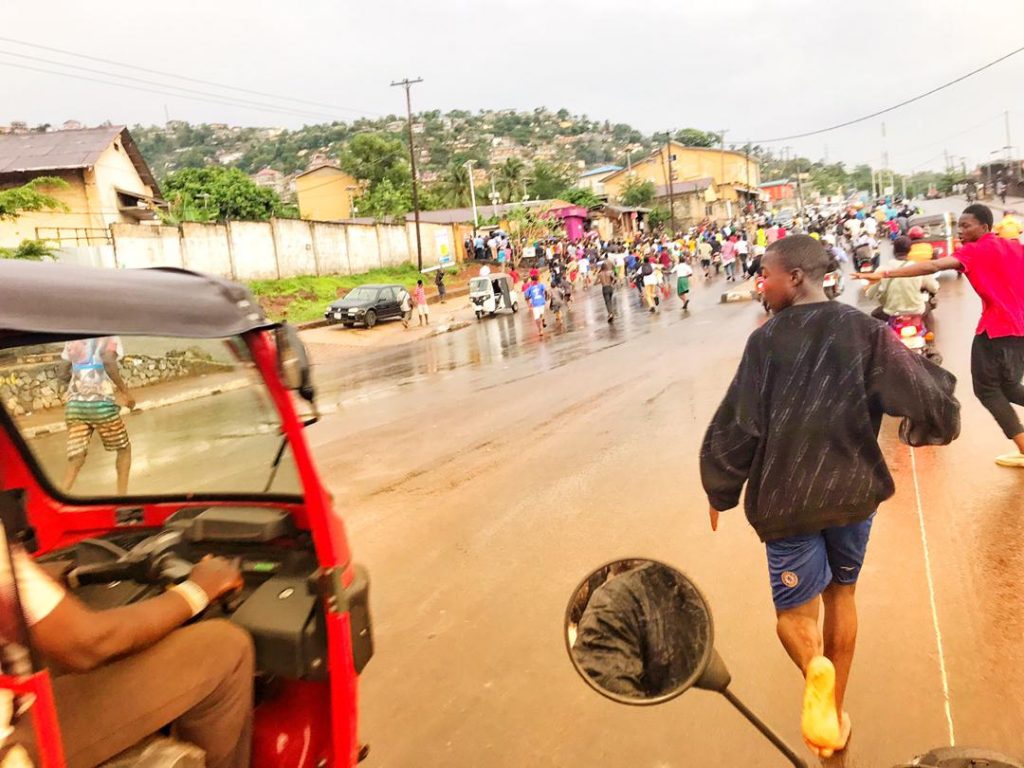
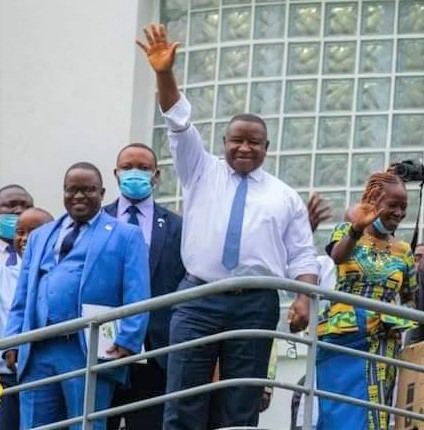
The Sierra Leone President His Excellency Retd Brig. Julius Maada Bio celebrated with Sierra Leoneans who defy the rain, and protocols to throng the statehouses in their thousands within the city. The President praised the Leone Stars for making the nation proud and promised to keep supporting the team to achieve more greatness under his regime.

read more
News & Announcements

COVID-19: World Bank, AU To Provide 400 Million Vaccines For Africa

The World Bank (WB) and the African Union (AU)’s COVID-19 Africa Vaccine Acquisition Task Team (AVATT) have announced a decision to work together to deploy vaccines for 400 million Africans.

The pledge, according to Xinhua News Agency, came after the president of the World Bank, David Malpass, met with the AVATT to discuss ways to accelerate vaccine deployment to Africa, according to a joint statement by the UN Economic Commission for Africa (UNECA).

The AVATT had previously secured up to 400 million doses of the Johnson & Johnson single-shot COVID-19 vaccine with the support of the African Export-Import Bank (Afreximbank).

The bank and the AVATT stressed the importance that countries get sufficient doses as quickly as possible and in an affordable way, according to the statement.

COVID-19 vaccines were critical for achieving the goal of vaccinating at least 60 per cent of Africans, said John Nkengasong, the director of the African Centres for Disease Control and Prevention (Africa CDC) and member of the AVATT.

Benedict Oramah, the president of Afreximbank, said his bank, by providing a 2 billion dollar guarantee on behalf of the AU member states, was able to help put Africa in a negotiating position with producers in negotiating vaccine procurement.

Under the AVATT structure, AU member states were allocated vaccines according to the size of their populations through a pooled procurement mechanism.

Once vaccines arrive across Africa, additional efforts would be required to support their deployment, which included in-country distribution (logistics and storage in line with the cold-chain requirements), securing the required systems, capacities and capabilities for vaccination.

As of Monday evening, the number of confirmed COVID-19 cases in Africa had reached 5,049,036, with 134,818 deaths and 4,524,651 recoveries, according to the Africa CDC.

African countries have so far acquired around 54.9 million COVID-19 vaccines, which may cover about 2.1 per cent of the population at the continental level, the Africa CDC said.

Some 35.9 million COVID-19 doses have been administered continent-wide, accounting for about 65 per cent of the total supply available in Africa.

With minimal access to COVID-19 vaccines across the continent, the latest figures show that only around 0.6 per cent of Africa’s population have received a full vaccine regimen.

read more
1 251 252 253 254 255 322
Page 253 of 322