News & Announcements Archives | Page 252 of 322 | The Lafete Magazine
close

News & Announcements

News & Announcements

Biden’s Support From Democrats Wanes Over Doubtful Delivery Of Election Promises

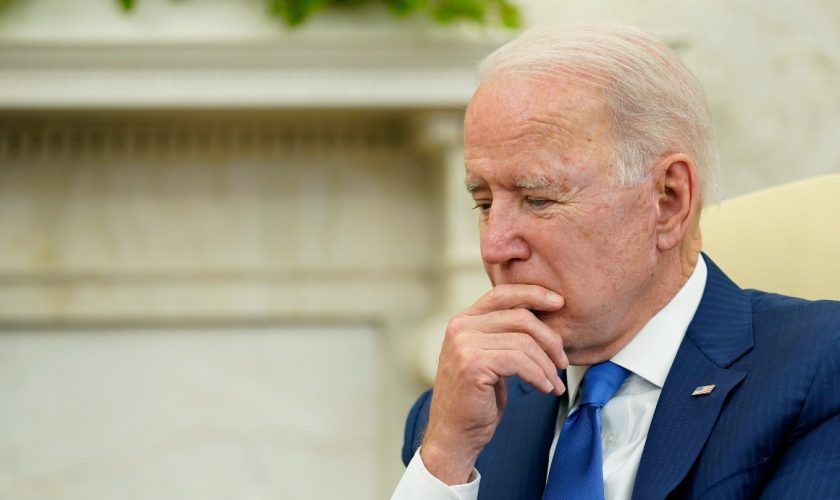
U.S. President Joe Biden has seen a decline in support since April, mostly from Democrats, as his administration wrestles with Congress to deliver on election promises and more Americans worry about an uneven economic recovery.


A national opinion poll from June 11-17 shows that Biden is still more popular than his Republican predecessor Donald Trump ever: 55% of adults approve of Biden’s performance in office and 65% like his response to the coronavirus pandemic. At that point, four years ago, about 36% of adults agreed to Trump’s job performance.


However, a growing number of Americans disapprove of Biden’s leadership in the areas of business, gun violence, and taxation, with the biggest drop occurring within Biden’s Democratic Party especially those under the age of 40, non-white Democrats, or those who have no college degree.


The economy has replaced health and illness as the main problem, with almost a quarter of adults surveyed citing this as the main problem. A majority of Americans are concerned about rising costs of living, and the public is almost evenly divided over how much the government should do to improve things, according to the survey.
Forty-eight percent of respondents said they approve of Biden’s handling of the economy, up 4 points from a similar poll in April. The number of Americans who disapproved of Biden’s economic record rose 4 points to 43%.


Democratic pollster Ryan Pougiales said many people still feel like they’re a long way from normal.
“There’s a great impatience” with the economy, said Pougiales. “Everyone has been locked in their homes. Many have lost their jobs or loved ones.”
Only 35% of the country think the US economy is going in the right direction and 44% say they are “very concerned” that prices will continue to rise, according to the Reuters / Ipsos poll.


Among Democrats, 78% said they endorse Biden’s economic agenda, 7 points less than in April, while the number of Democrats who opposed his economic plan rose 6 points to 15%. These include an 11 point drop in approval for Democrats under 40 and an 8 point drop in approval for minority Democrats and Democrats without a college degree.


Despite expected economic growth of 7% this year, government statistics show that post-pandemic job recovery has lagged the worst among racial and ethnic minorities and those without higher education.
For example, according to the Bureau of Labor Statistics, unemployment in the black community was 9.1% in May, compared with 5.1% for whites. Unemployment for college graduates was 3.2% in May, less than half the unemployment rate of 6.8% for those with only a high school diploma.

The challenge for Biden will be to find workable solutions while keeping his party together, including many Democrats who initially favoured more liberal candidates like US Senator Bernie Sanders, as well as racial minorities and people with lower higher education.
“He’s in a sensitive position economically,” says Donald Green, a political scientist at Columbia University. “His coalition ranges from people in high-tech sectors to suburban swing voters to more traditional Democrats. They all want different things from the economy.”


Meanwhile, the number of Americans approving of Biden’s stance on gun violence fell by a total of 8 points between April and June, and by 11 points among the Democrats.
The dwindling support for Biden coincides with the Democrats struggling to get large chunks of his agenda through Congress. They failed to find enough support for state voting legislation this month, and the future of a $ 1.2 trillion infrastructure plan is still in flux after months of negotiations with Republicans.


Biden also faces growing impatience from gun security activists who want the president to deliver on a series of election promises to contain an “epidemic” of gun violence. He pledged this month to track down illegal arms dealers and increase federal funding and support for local law enforcement as murder rates skyrocketed in major cities.


Elaine Kamarck, a senior fellow at the Brookings Institution, said many Americans remain fixated on coronavirus, an area where Biden remains strong. As the pandemic subsides, the economy will continue to recover, and that would be a win for Biden, Kamarck said.
“Right now the dynamic is: you handle the virus and you handle the economy,” she said.

read more
News & Announcements

IMF Approves Sudan For $56bn Debt Relief

Sudan received approval from the International Monetary Fund on Tuesday for relief on more than $56 billion in debt and new IMF funding of $2.5 billion over three years.

The IMF has accepted the East African country into the Highly Indebted Poor Countries (HIPC) initiative based on its commitment to macroeconomic reforms, meaning Sudan can finally access debt forgiveness and new funds. Sudan is the penultimate candidate for the IMF-World Bank programme and by far the largest debt holder.

Now at the programme’s “decision point,” Sudan will see its external debt drop to about $30 billion relatively soon. It will then fall to $6 billion when Sudan achieves irrevocable debt relief after an estimated three years, at the “completion point,” IMF mission head Carol Baker said.

Analysts said the HIPC decision came unusually quickly, a product of international goodwill toward Sudan’s civilian leaders sharing power with the military during a fragile political transition and acknowledgement of rapid, painful economic reforms.

“It’s not over yet but this is a really significant milestone on the country’s path to a more prosperous future,” said Ian Clark, partner at legal firm White & Case, which is advising the government on debt restructuring through the HIPC with financial adviser Lazard.

Deepened by decades of isolation and sanctions, Sudan’s economic crisis includes inflation approaching 400%, shortages of basic goods and services and a spike in food insecurity.

Recent economic reforms include the removal of fuel subsidies and a sharp exchange rate devaluation under an IMF-monitored programme required to enter HIPC.

Another condition for accessing HIPC was removal from the U.S. list of state sponsors of terrorism, achieved last year after Sudan agreed to provide compensation to victims of attacks and normalize relations with Israel.

“This is a big day for Sudan and reaffirms that all the efforts and sacrifices of the Sudanese people are recognized and rewarded,” Prime Minister Abdalla Hamdok said in a statement.

read more
News & Announcements

COVID-19: Three Billion Vaccinated Globally – Report

A total of 3 billion people have received their Covid-19 vaccines globally according to the global Covid vaccine dashboard.

According to AFP, the pandemic has killed at least 3 940 888 people since the virus first emerged in December 2019.

The figures are based on reports by health authorities in each country but do not take into account upward revisions carried out later by statistical bodies.

The World Health Organization says up to three times more people have died directly or indirectly due to the pandemic than official figures suggest.

The US is the worst-affected country with 604 467 deaths, followed by Brazil with 515 985, India with 398 454, Mexico 232 803 and Peru with 192 163

In South Africa, 2.9 million vaccine doses have been administered, with 480 000 people fully vaccinated. This accounts for 0.8% of the population.

China has administered 1.23 billion doses with 223 million people fully vaccinated.

The UK has vaccinated almost half its population.

A total of 77.3 million have received a dose, with 32.7 million people fully vaccinated. This amounts to 49.1% of the population.

The US has vaccinated 325 million people, with 154 million people fully vaccinated. This amounts to 47% of the population.

read more
News & Announcements

21 Killed As Pro-Democracy Protest Intensifies In Eswatini

As the pro-democracy protest continued unabated in Eswatini, at least 21 people were allegedly killed by the security forces on Wednesday.
This was disclosed by Swaziland Youth Congress (Swayoco).

The protests started peacefully in the Manzini region of Africa’s last absolute monarchy on June 20 when young people took to the streets in a push for the right to democratically elect the prime minister, currently appointed by King Mswati III. They have however since turned violent.

“We were off-line due to an internet shutdown. We have 21 confirmed cases of Swazi patriots killed by the state security. In honour of our fallen patriots we will soldier on until democracy,” youth movement Swayoco said on its social media platform.

This is how a tweet put it: Armed forces shooting civilians in Manzini. pic.twitter.com/POYBvjfWCv— Swazi News (@SwaziNews) June 30, 2021

Acting Prime Minister Themba Masuku on Tuesday announced a 6 pm to 5 am curfew which he said was meant to minimise unnecessary movement to ensure the safety and security of eSwatini’s people.

“This is a conscious decision to maintain the rule of law and de-escalate tension that had turned this exercise into violence and disorder,” he said.

Footage of a burning building belonging to eSwatini Beverages went viral on social media on Wednesday. The brewery, which King Mswati partly owns, was reportedly torched on Tuesday night after the government imposed the curfew and blocked internet access.

The protests took a violent turn after Masuku issued an order last week suspending the delivery of petitions from citizens, saying this had created “a breeding ground for anarchy and has been intentionally hijacked to sow seeds of division”.

The government has refuted reports that King Mswati fled to either South Africa or Mozambique in the wake of the protests.

Protesters are demanding that the king, who has ruled the southern African country previously known as Swaziland for 35 years, hand over power and allow democracy to prevail.

read more
News & Announcements

Court Jails Ex-President Zuma 15 Months For Contempt

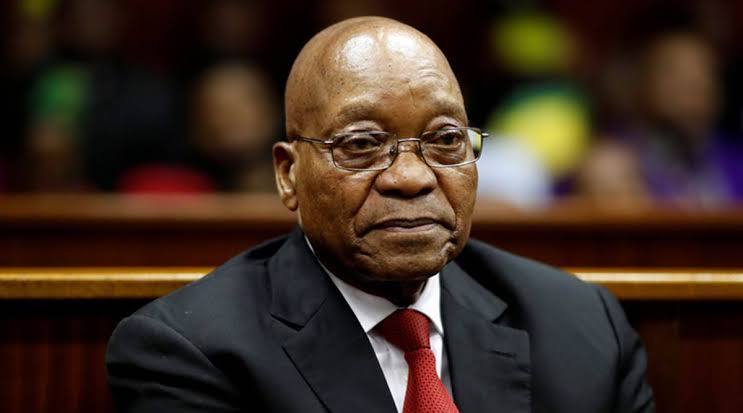
Former President Jacob Zuma of South Africa has been Jailed for 15 months by the country’s top court over contempt.

Deputy Chief Justice Sisi Khampepe said he was guilty of contempt of court after defiantly refusing to appear before a graft panel probing corruption during his term as President. 

Zuma, who was forced to step down in 2018 over corruption scandals, has snubbed an order by the Constitutional Court in January to testify before investigators.

The commission went to court seeking to have Zuma jailed for two years for defying the order.

Zuma, 79, is accused of enabling the plunder of state coffers during his nearly nine-year stay in office.

It was Zuma himself, under pressure over the scandal, who set up the inquiry shortly before he was ousted by the ruling African National Congress (ANC).

But he only testified once, in July 2019, before staging a walkout days later and accusing the commission’s chair, Deputy Chief Justice Raymond Zondo, of bias.

He has since ignored several invitations to reappear, citing medical reasons and preparations for another corruption trial.

He presented himself again briefly in November but left before questioning — prompting an exasperated Zondo to ask the Constitutional Court to intervene.

He has also refused to participate in contempt of court proceedings, and instead wrote a scathing letter to Chief Justice Mogoeng Mogoeng describing an “atmosphere of judicial hostility” and “humiliation”.

Most of the transgressions investigated by the commission involve three brothers from a wealthy Indian business family, the Guptas, who won lucrative government contracts and were allegedly even able to choose cabinet ministers.

read more
News & Announcements

Tigray Rebels Vow To Root Out Ethiopian, Eritrean Troops From Region

Tigrayan rebels vowed to hunt down Ethiopian and Eritrean troops on the run around the regional capital, Mekelle, on Wednesday after taking full control of the city in a sharp reversal of eight months of the war.

People in Mekelle said the incoming Tigrayan fighters were greeted with cheers. There were similar scenes on video footage from the northern town of Shire, where residents said government-allied Eritrean forces pulled out and Tigrayan forces re-entered.

The  Ethiopian government declared a unilateral ceasefire on Monday after the Tigray People’s Liberation Front’s (TPLF) territorial gains.

However, Getachew Reda, a TPLF spokesman, said the Ceasefire was a joke and hundreds had been killed in fighting near the border with the Afar region, information that could not be independently verified.

Getachew told Al Jazeera’s Catherine Wambua on Wednesday that rebel forces would not stop fighting until the entire region was liberated.

“Getachew says even if [Tigray] forces are making good gains and pushing back opposing forces, the Ethiopian military – backed by Eritrean forces and Amhara fighters – still control large swaths of Tigrayan territory,” Wambua said.

“The aim of the Tigrayan forces is to push back to make sure that every inch of Tigray is in their control.”

Lieutenant-General Bacha Debele told reporters on Wednesday the Ethiopian army left Mekelle because it needs to prepare for threats other than the rebels.

“The TPLF is no more a threat but we’ve got [a] more national threat that we need to shift our attention to,” Debele said, without elaborating.

The Ethiopian army could re-enter Mekelle within weeks if needed, the government said.

“Ethiopia is exposed to an attack from outsiders” because of the conflict, Redwan Hussein, spokesman for the Ethiopian government’s task force for Tigray, told reporters in an apparent reference to Sudan.

Redwan described the ceasefire as a political decision “made for humanitarian cause”. “If it is required, we can easily enter to Mekelle and we can enter in less than three weeks,” he said.

Over the next few days, TPLF forces will go after soldiers allied to the government from the neighbouring Amhara region – in the south and west – and from the neighbouring nation of Eritrea in the north and northwest of Tigray, Getachew said, adding they would cross borders in pursuit if necessary.

The fighting in Ethiopia’s northern region has killed thousands of people and displaced two million.

As the United States warns up to 900,000 people in Tigray face famine conditions in the world’s worst hunger crisis in a decade, little is known about vast areas of Tigray that have been under the control of combatants from all sides since November.

With blocked roads and ongoing fighting, humanitarian groups have been left without access.

The US said atrocities should end immediately and warned Ethiopia and Eritrea that Washington would be watching closely.

“We will not stand by in the face of the horrors in Tigray,” said Robert Godec, acting assistant secretary of state for the State Department’s Bureau of African Affairs.

State Department spokesperson Ned Price said in a statement the truce declaration could be positive if it led to steps to “to end the conflict, stop the atrocities, and allow unhindered humanitarian assistance”.

He reiterated a call for the withdrawal of Eritrean forces from Ethiopian territory as a necessary step for a durable ceasefire.

House Foreign Affairs Committee Chairman Greg Meeks said if the disaster in Tigray is not abated, “we could witness one of our closest and most powerful allies in Africa march toward civil war and, eventually, a state collapse”.

Cameron Hudson, a senior fellow at the Atlantic Council Washington, said the US is trying to preserve all options with respect to its engagement with Ethiopia.

“They’ve been trying to use diplomatic persuasion up to this point to get the Ethiopian government to relent in its pursuit of total victory in Tigray,” Hudson told Al Jazeera.

“They have not been successful in that conversation but they have withheld some of the most biting sanctions that the US has – sanctions that relate to human rights abuses that have gone on at the hands of Ethiopian government troops and their allies.”

African Union Commission head Moussa Faki Mahamat issued a statement on Tuesday welcoming what he described as a “humanitarian ceasefire,” as did the governments of China, France and the United Arab Emirates.

United Nations Secretary-General Antonio Guterres said on Monday he hoped a political solution would be possible. Diplomats said the UN Security Council would discuss Tigray this week.

Getachew, meanwhile, urged the international community to force the government to allow food and aid into the region, accusing Ethiopian Prime Minister Abiy Ahmed of blocking it.

A spokeswoman for Abiy and the head of a government task force on Tigray did not return messages seeking comment on food blockages or Getachew’s other comments. The government has previously denied blocking food aid and said it provides the majority of the food. The UN has previously said that soldiers blocked food from TPLF-controlled areas.

Ethiopia is awaiting the results of national and regional parliamentary elections held on June 21. Voting was only held in three of the nation’s 10 regions due to insecurity and logistical problems.

No voting was held in Tigray where the TPLF, an ethnically based political party that dominated Ethiopia’s national politics for nearly three decades, has been battling the central government since early November. It made major territorial gains in the past week.

The fighting has been punctuated by reports of brutal gang rapes and mass killings of civilians. At least 12 aid workers have been killed.

Last week, an Ethiopian military airstrike on a crowded market killed at least 64 people and wounded 180.

Doctors said women and children were among the dead and wounded, and that Ethiopian troops prevented ambulances from reaching the scene for more than a day. The military said all the victims were combatants.

read more
News & Announcements

Tanzania Finally Makes COVID-19 Stats Public

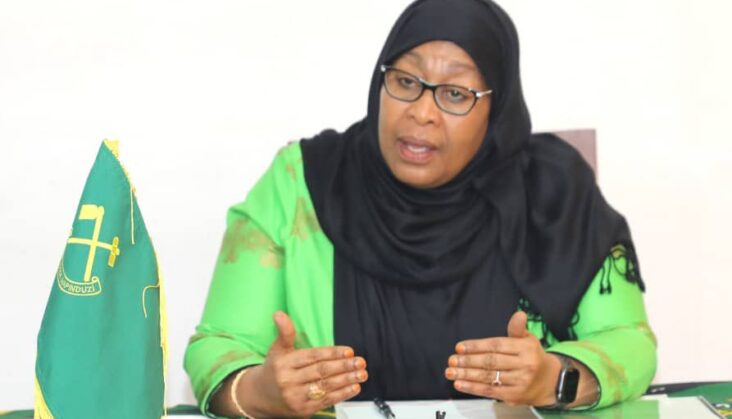
Tanzania has recorded 100 new Covid-19 cases since the third wave of the viral disease broke out across the globe, President Samia Suluhu Hassan said on Monday.

In her maiden press conference at State House in Dar es Salaam on Monday, President Hassan said 70 of the 100 patients were critical.

“About 70 are on ventilators,” she said.

It was the first time Tanzania was making made Covid-19 statistics public since May 2020.

The fifth phase administration of former President John Magufuli at some point denied the existence of Covid-19 in the country.  

President Hassan has adopted a completely different approach to deal with the pandemic since ascending to power on March 19, following following Magufuli’s death on March 17.

She said on Monday that as soon as she was sworn in as President, she embarked on ways to adopt globally-accepted measures of preventing the spread of the coronavirus, including vaccination.

Meanwhile, the Tanzanian government says it will spend at least $470 million to purchase Covid-19 vaccines and bail out sectors that were severely hit by the pandemic.

President Suluhu made the announcement during her meeting with editors and journalists at the State House in Dar es Salaam.

The President further said Tanzania has registered for the Covax package and will therefore be ready to administer the vaccine doses in the near future.

“We have $470 million to order vaccines and equipment to use in the fight against coronavirus,” she said.

She added that vaccination will be voluntary to give citizens the opportunity to choose what is best for them.

The President did not name the vaccine the country will procure given many nations have developed jabs for the killer virus which brought global economies to their knees.

Recently, the government applied for a $571 million (about Sh1.3 trillion) a loan from the International Monetary Fund (IMF) to help it tackle economic challenges resulting from the pandemic.

Tabling the government’s Sh36.3 trillion 2021/22 budget in Parliament on June 10, the government said this was a low-interest loan aimed at tackling the social and economic impacts of Covid-19.

IMF officials in Dar es Salaam and Washington were quoted by Reuters as confirming talks on the matter, noting, however, that Tanzania would have to provide information on Covid-19.

read more
News & Announcements

Ethiopian Court Sentences Killer Of Country’s Army Chief To Life In Prison

The anti-terror and constitutional affairs bench of the Ethiopian Federal High Court on Monday sentenced the killer of the East African country’s former army chief to life imprisonment.

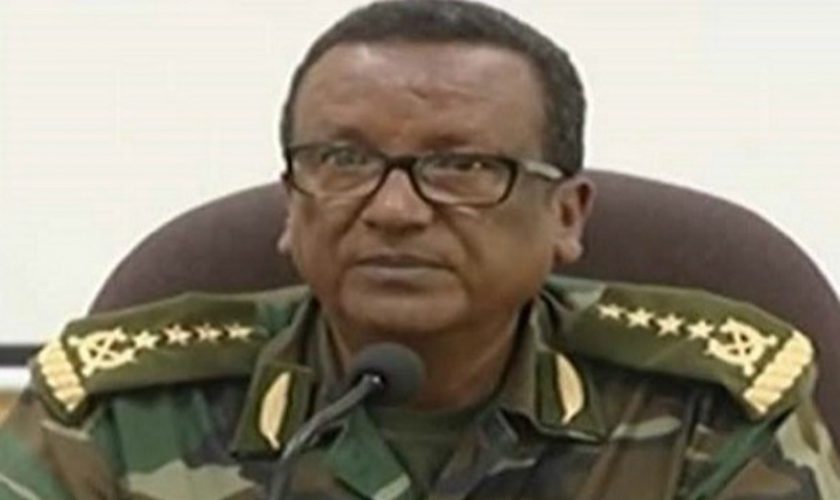
Ethiopia’s late army chief, Seare Mekonen, was killed by his bodyguard Mesfin Tigabu on June 22, 2019, as part of what Ethiopian authorities described as a coordinated effort to destabilize the government.

The Ethiopian government at the time accused the Amhara region the security chief, Asaminew Tsige, of masterminding an abortive coup to destabilize the country.

The failed coup attempt also left several other senior government officials dead, including Amhara region president Ambachew Mekonen and Attorney General of the Amhara region Migbaru Kebede.

Tsige, who went into hiding soon after the assassinations, was killed several days later in a “shootout.”

The coup attempt also triggered a 10-day internet blackout throughout Ethiopia, as the government launched a nationwide crackdown, mainly in the Amhara region and the capital, Addis Ababa.

read more
News & Announcements

Russia Says Its Army Not Involved In Killing Of Civilians In CAR

Russia has rejected claims that its military instructors in the Central African Republic have been involved in killing civilians and looting homes.

During a heated discussion at the United Nations Security Council last week, the United States, France and the United Kingdom accused Russian military contractors of committing human rights abuses and obstructing UN peacekeeping in the conflict-stricken country.

On Sunday, The New York Times cited a report to the Security council that accused the Russians of killing civilians and looting homes during fighting earlier this year.

Asked about the report, Kremlin spokesman Dmitry Peskov categorically denied the assertion.

“Russian military advisers couldn’t take part and didn’t take part in any killings or lootings,” Peskov said on Monday in a conference call with reporters. “This is yet another lie.”

The mineral-rich Central African Republic has faced deadly fighting since 2013.

A peace deal between the government and 14 rebel groups was signed in February 2019, but large-scale violence has continued.

The country’s Russia-backed president, Faustin-Archange Touadéra won a second term in December’s election but he has continued to face resistance from rebel forces linked to former President Francois Bozize.

Russia has deployed military advisers in CAR, training its military at the invitation of the government.

The Western powers linked the Russian personnel in CAR to the notorious Wagner Group, a private security company allegedly tied to Yevgeny Prigozhin, a businessman who has been indicted in the US on charges of meddling in the 2016 presidential election.

Companies linked to Prigozhin have also reportedly secured lucrative mining contracts in CAR. In 2018, three Russian journalists were killed in CAR while investigating Wagner’s activities there and no suspects have been found.

Prigozhin earned the nickname “Putin’s chef” for hosting Russian President Vladimir Putin and his foreign guests at his restaurant and catering important Kremlin events.

read more
News & Announcements

Death Row Inmates In Sri Lanka Protest Over Pardon Granted Ex-Lawmaker Condemned To Death

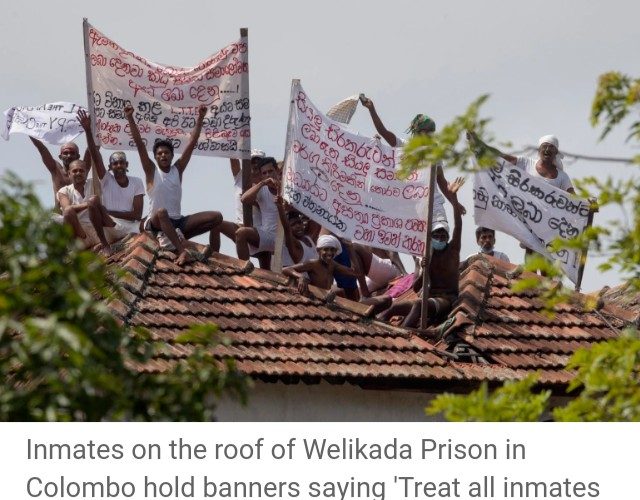
About 150 death row inmates in Sri Lanka have gone on a hunger strike to demand their sentences be commuted after the island nation’s president pardoned a former legislator who had been condemned to death for an election-related killing.

Several inmates protested on the roof of a prison in the capital, Colombo, holding up banners demanding equal treatment and bail consideration, the Associated Press reported on Friday.

“Grant pardon to us like you did to terrorists and notorious politicians,” one banner said in local script.

The former legislator’s surprise release on Thursday after he was pardoned by President Gotabaya Rajapaksa has drawn widespread criticism, including from the United Nations’ human rights office and the United States ambassador in Sri Lanka.

Duminda Silva is widely seen as a favourite of Sri Lanka’s ruling Rajapaksa family and had been sentenced to death over the murder of a rival politician from his own party in an election-related attack about 10 years ago.

The hunger strike involved about 150 inmates sentenced to death who were demanding their sentences be commuted to life terms, prison spokesman Chandana Ekanayake said.

He said the prison officials were holding talks with the justice ministry and other government officials to resolve the issue but declined to give further details.

Sri Lankan prisons are highly congested with more than 26,000 inmates crowded into facilities with a capacity of 10,000.

Unrest related to COVID-19 erupted in one of the prisons last year, and at least 11 inmates were killed and more than 100 wounded when guards opened fire to control the unrest.

Silva’s surprise release appeared to have set off the protest.

The UN human rights office said Silva’s case “is another example of selective, arbitrary granting of pardons that weakens rule of law and undermines accountability”.

US Ambassador Alaina B Teplitz in a tweet on Thursday said the pardon of Silva “undermines rule of law”.

Sri Lanka has not hanged a prisoner since 1976 even though courts routinely pass death sentences.

Rajapaksa’s predecessor, Maithripala Sirisena, had promised to end the moratorium on capital punishment and to use it against those convicted of drug crimes.

Prison officials hired two executioners to carry out the hangings, but none took place during Sirisena’s tenure.

read more
1 250 251 252 253 254 322
Page 252 of 322