News & Announcements Archives | Page 222 of 322 | The Lafete Magazine
close

News & Announcements

News & Announcements

Panic as Overland Aircraft’s Engine Catches Fire Midair

A four-member flight crew of Overland Airways made a successful landing of a distressed aircraft on the Runway 18R of the Murtala Muhammed International Airport, Lagos after the plane’s engine caught fire mid-air on Wednesday evening.


The ATR 42 aircraft, which has 37 passengers on board, was en-route Ilorin-Lagos when the plane suddenly developed a major fault.
The pilots had sent out a distress signal to the Lagos control tower.


The Lagos airport control tower consequently put the airport emergency response team, including the Federal Airports Authority of Nigeria’s fire services department, on notice, following the Mayday.
The pilot finally landed the faulty plane safely on the international airport’s runway amid a fully prepared airport emergency response team.


The aircraft’s registration number is 5N-BRQ.
Overland later issued a statement confirming the incident.
The statement partly reads, “Overland Airways wishes to inform the general public that its flight OF1188 from Ilorin to Lagos experienced an unusual high turbine temperature on one of its engines today, Wednesday, June 15, 2022, around 7:50 pm.


“This occurred in the approach phase of flight and the aircraft landed very safely as the crew skillfully implemented their standard procedures for such abnormal situations.
“All 33 passengers remained calm through the process and safely disembarked row by row in accordance with post-COVID-19 procedures after the aircraft came to a halt on the Murtala Mohammed International Airport Lagos runway 18 Right. No passenger was hurt in any way.


“Overland Airways salutes the professional interventions of the Federal Airports Authority of Nigeria, Nigerian Airspace Management Agency, Nigerian Civil Aviation Authority, and the Accident Investigation Bureau Nigeria (AIB-N) which were very prompt and reassuring.
“Overland Airways regrets any inconvenience to its passengers and assures the traveling public of its full commitment to the safety of its services and passengers.”

read more
News & Announcements

Police Uncover Hotel Where Children Are Used As S€x Slaves In Anambra

 The Anambra state police command on June 13 uncovered a hotel named Gally Gally in Nkpor where children between the ages of 14 and 17 are allegedly being used for s€x slaves, pr@stitution, and baby factory. A statement released by DSP Ikenga Tochukwu, spokesperson of the state police command, states that the operatives rescued, 35 girls, and 4 of them are pregnant. He said the police also arrested 3 persons namely: Mrs. Ifeoma Uzo age ‘F’ 35yrs, Chidiebere Alaka ‘M’ 28years, and Nweke Chidiebere.  ”We recovered three pump action guns, seven cartridges, and a cash sum of Eight hundred and seventy-seven thousand, five hundred naira (#877,500). The suspects arrested are being interrogated with a view to eliciting information on their involvement and unmasking other gang members.” the statement in part read. Tochukwu added that the police will hand over the victims to NAPTIP for the welfare and rehabilitation of the children. He said all suspects will be charged to court at the end of the investigations.

read more
News & Announcements

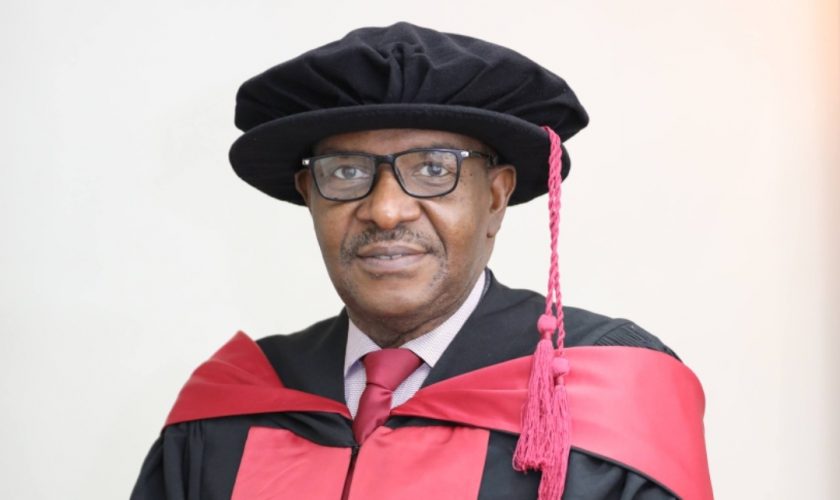
Dr. Mike Okolo: A memory positive and pleasant

Chido Nwakanma on his positive and pleasant memory of Dr. Mike Okolo, the Pan-Atlantic University don who passed on last week.

One week later, the shock of the sudden departure of Dr. Mike Okolo is wearing out. But not so the pain and bewilderment. And not the pathos.

Dr. Okolo, hitherto Dean of the School of Media & Communication, Pan Atlantic University, passed to the beyond on 6 June 2020, suddenly and without any visible or known ailment. It stunned his immediate and extended family including the university he had served for so long.

Dr Mike Okolo A memory
…focused, dedicated, and committed

Okolo was a corporate communication consultant with vast experience in all aspects of corporate/public affairs. He had a track record in Internal Communication, Issues and Crisis Management, Event Management, and Communication Audits. He also taught Public Speaking and Presentation Skills.

Okolo had a PhD Sciences from the University of Benin (1982), an MSc in Strategic Communication from the University of Central Lancashire (2014), and a 2020 Ph.D. in Communication from the University of Navarra, Spain.

He was the pioneer Corporate Affairs Manager of the Lagos Business School and also served as Alumni Relations Director. He was a classroom maestro: fair, firm, and considerate.

Visiting is painful because of seeing how this loss affected his partner, friend, and wife, Mrs. Rosemary Okolo, erstwhile Registrar of the Pan Atlantic University and faculty in the School of Management. They were the ideal couple, even sharing lunch time together.

Visit you must, though, bearing in mind the message of Solomon in Eccl. 7:2-4:

“It is better to go to the house of mourning, than to go to the house of feasting: for that is the end of all men; and the living will lay it to his heart.

3 Sorrow is better than laughter: for by the sadness of the countenance the heart is made better.

4 The heart of the wise is in the house of mourning, but the heart of fools is in the house of mirth.”

Dr Mike Okolo was the Dean of the School of Media & Communication. It was a richly deserved appointment in 2020 after the NUC forced on him a circuitous journey to a second Ph.D. that paid no heed to his contributions to setting up the school. He stepped down the first time following NUC refusal on the grounds of lacking a Ph.D. in communication, and then set out to get it.

That journey epitomized Dr. Okolo. He was focused, dedicated, and committed. When and if he sets out on a course, he stays on it until accomplishment.

He was dapper in the best traditions of the corporate world.

The Fundamental Fs of Life mattered to the late academic. The Fundamental Fs are faith, family, and friends. There are two other Fs of fame and fortune, but the Fundamental Fs speak to the essence of life.

The Three Fs that mattered to Dr. Okolo play out boldly in his passing. Even in their sorrow, the Okolo family not only affirms their faith but also evangelize. As you sign the condolence register, they offer you an Opus Dei prayer card. Okolo belonged to Opus Dei, a prelature of the Catholic Church that urges Christians to find God in their daily lives and sanctify their work. “Wherever your yearnings, your work, your affections are, that is the place for your daily encounter with Christ. It is there in the midst of the most material things of the earth, that we must sanctify ourselves, serving God and all people”, in the words of Saint Josemaria Escriva, founder.

I had the privilege of teaching two Okolo children as undergraduates. They reflected good breeding or what I now term WBU children. Well, Brought Ups (WBU) is a walking statement of the values of their families. These children were ideal students: they were studious, dedicated, and focused. They comported themselves so decorously no one could tell that their parents were part of senior management, unlike many children in such positions. No surprise that they graduated with the highest honours.

Mike Okoro a memory
…warm, friendly, and reassuring

Dr. Okolo had a stern appearance until he offers his beatific smile. His smile is warm, friendly, and reassuring. Oh, I should say was. It is still difficult to speak of him in the past tense.

Okolo led a team of postgraduate students to Birmingham City University as part of course requirements. Years of teaching professionals guided his conduct. He provided guidelines, then allowed everyone to express themselves.

Okolo was scrupulous and meticulous in every endeavor. He cared about nutrition and fitness. On that trip, he enjoyed the long walks on the campus of the University of Oxford. Walking was a regular pastime. It was thus strange to hear of a sudden cough and heart attack as the immediate cause of his death. This life is sochukwuma.

Dr Mike Okolo A memory
Chido (right) with Okolo at Oxford University

Take heart, dear Okolo family that Dr. Mike left behind. You have a solid foundation of nurture and extensive goodwill that business managers now recognize as a tangible asset with strong valuation. Take heart, SMC family, academic and professional colleagues. The memory of Dr. Mike Okolo will remain positive and pleasant.

EDITOR’S NOTE

The remains of Dr. Mike Okolo will be interred on 24 June 2022 after masses in Lagos and Asaba.

read more
News & Announcements

Fury Demands £500m To Fight Anthony Joshua

TYSON FURY has revealed it will take a cool half a £500m for him to return to professional boxing.
The Gypsy King, 33, insisted he was hanging up his gloves after knocking out Dillian Whyte at Wembley in April.


The WBC champ has left fans baffled having retired, then saying he will return for a £200m bout with Anthony Joshua, then making a U-turn on that to suggest he would only be interested in exhibition events.


He has now claimed he would take on his fellow Brit – for the audacious sum of £500m.
He revealed the figure in an interview with talkSPORT after initially raising hopes of a Battle of Britain bout when speaking to Frank Warren’s Queensbury Promotions on Tuesday.


In a confusing series of apparent U-turns, Fury appeared on Good Morning Britain today to state he IS retired and will only enter the ring for “Hollywood style entertainment”.


And he has now muddied the waters further, telling talkSPORT, “I’m 100 percent retired. Nothing’s changed. Everyone’s making all these assumptions that I’m coming back, I’ve got these dates.

read more
News & Announcements

Veteran Edo Highlife Musician Osayomore Joseph Is Dead

Foremost Edo-born highlife musician, Ambassador Osayomore Joseph. is dead.
He reportedly died on the morning of Saturday, 11 June 2022.


News of the death of the veteran musician was first sighted on social media in Benin, the State capital.
The Administrator/Governor of the Performing Musicians Association of Nigeria (PMAN), in the State, Comrade Willy Eghe-Nova, has however confirmed the passing of the veteran musician.
“Sadly, PMAN has this Saturday afternoon, June 11, 2022, lost a great member and music legend, Ambassador Osayomore Joseph.


“May his creative soul rest in peace,” Eghe-Nova wrote in a statement on Saturday.
It would be recalled that residents of Benin Monday woke up on 7 June 2021, to the rumours of the death of the popular highlife musician.


His fans had started sending condolence messages to his family when family members debunked the rumoured death of the singer.


Osayomore Joseph and his daughter, Uwa, later that day in a Facebook live post, dismissed the rumour, describing it as a “work of rumour mongers.”


“The people spreading the fake rumour are mad. I have been receiving calls from different individuals. They are mad,” Osayomore Joseph had said.
Similarly, Uwa, daughter of the now-deceased musician had while denying the death of her father, said: “My dad is not dead, you can hear and see him in this live video.


Osayomore Joseph was an electric highlife musician whose music ruled the airwaves in the late 1980s, 90s, and 2000s. Some of his favourite hits include; “Efewedo, ” “Ororo No Dey Fade” and “Soja Go Soja Come.”
One of the early pioneers of African popular highlife music, he sang in Pidgin English and his native Edo language. His music not only reached a wide audience but he also had a very large fan base.
Joseph’s music-themed was with social and political views and was known for his educational, anti-corruption, and government-critical lyrics. He never showed any interest in religion and was always proud of his heritage.


His outright denunciation of corruption, bad governance, and injustice in songs like “Son of a Thief,” “Army of Freedom,” and especially “Baba Na Wa” won him the Edo people’s long-term loyalty and love and inspired an ongoing tradition of Edo state activist musicians.

read more
News & Announcements

Risking a Society’s Retribution, Growing Numbers of Girls Resist Genital Cutting

Sierra Leone is one of a few countries in sub-Saharan Africa that have not banned cutting. Now, young women are defying mothers and grandmothers by refusing to undergo the procedure.
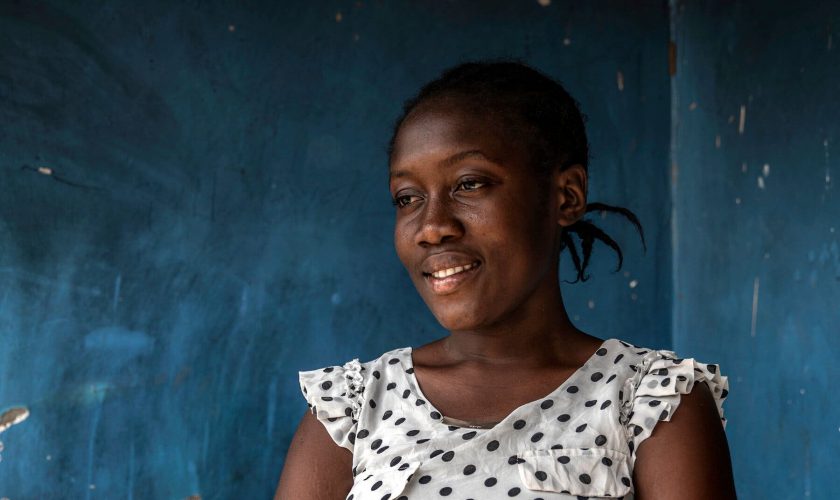
When Seio Bangura, 18, told her family she did not want to participate in a ritual ceremony that involved genital cutting, they forced her to leave home and seek refuge with friends.


When Seio Bangura’s final high school exam results arrived not long ago, she learned she had earned grades high enough to get into college. It was a thrilling moment for the daughter of farmers who never finished primary school. But Ms. Bangura is not making plans for university. Instead, she spends most days sitting on a bench, watching others head to class or work.

Ms. Bangura, 18, left home almost five years ago after her parents gave her a choice: to be initiated in a ceremony centred on genital cutting, or leave. The ceremony allows entrance to Bondo, or “the society,” a term for the gender-and-ethnicity-based groups that control much of life here.


“My mom said, ‘If you won’t do Bondo, you have to go,’” Ms. Bangura said, her voice low but her chin defiantly raised. The choice cut her off from her family’s financial support and left her unable to pay for further education or to marry.


For more than two decades, there has been a push across the developing world to end female genital cutting, a centuries-old ritual tied up in ideas of sexual purity, obedience, and control. Today, Sierra Leone is one of only a few countries in sub-Saharan Africa that have not banned it. Cutting is still practiced by almost every ethnic group in every region of the country. But the practice is now at the center of intense debate here.


Progressive groups, many supported by international organizations, are pushing to ban cutting, while conservative forces say it is an essential part of the culture that is practised across tribal and religious lines.


As that battle plays out in the media and in parliament, growing numbers of girls and young women like Ms. Bangura are taking the matter into their own hands. It is an act of defiance almost unimaginable a generation ago: They are refusing to participate in initiation, telling their mothers and grandmothers they will not join Bondo.


More than 90 percent of women over 30 in Sierra Leone have undergone genital cutting, compared with just 61 percent of those ages 15 to 19, according to the most recent household survey on the subject, conducted by UNICEF in 2019. The practice is normally carried out on girls at the onset of puberty, although there are areas of the country where it is done on girls who are much younger.

Refusing Bondo comes at a great social cost. Women who have not joined are, by custom if not by law, not permitted to marry; represent their communities in religious or cultural events; participate in celebrations or funerals, or to serve as chief or in parliament.
In most cases, the initiation involves excision of the clitoris and labia minora with a razor by a senior society member called a sowei, who has no medical training but is believed to be spiritually powerful. The ceremony is carried out in women-only encampments, which were once rural but are now sometimes in towns, known as the “Bondo bush.”


Laws against cutting have had uneven enforcement and mixed results. Some countries, such as Egypt and Ethiopia, have seen rates fall dramatically. But in others, such as Senegal and Somalia, the decline has been negligible. Globally, the number of girls at risk of being cut continues to grow, because countries without laws or enforcement against cutting have large and rapidly growing youth populations.

More fascinating tales you can’t help but read all the way to the end. Using the Vatican’s own archives, a soft-spoken scholar has become arguably the most effective excavator of the church’s hidden sins.

While Sierra Leone has one of the world’s highest rates of cutting, it is also one of the few places where the practice seems to be showing a sustained decline, as more and more young women resist.


Every morning as she gets ready for school, Isha Kamara and her grandmother, Hawa, debate Bondo. Hawa Kamara says it is high time for Ms. Kamara to be initiated. Ms. Kamara, 20, who is in her last year of high school and wants to manage a bank one day, says she’s not interested.

All her life, Ms. Kamara, who has lived with her grandmother since she was orphaned as a small child, has heard about the plans for her initiation. But after she read about cutting in a magazine and heard lectures at school — “They told us that anything God put on our bodies belongs there and should stay” — she started saying she would not join the society.


Her grandmother warned she’d have no friends. Ms. Kamara said her friends were also planning to refuse initiation. Her grandmother warned that she would die single and lonely; Ms. Kamara said she expected plenty of people would want to marry a bank manager.
Her grandmother tried bribery and promised new outfits. Ms. Kamara just cocked an eyebrow at that one.

The nagging is most fierce on the days when the sounds of the traditional drums echo through Port Loko for an initiation. Ms. Kamara has offered to do a no-cutting Bondo, a practice being promoted by some feminist groups, but her grandmother has said that is worthless.


Only one counterargument has found any resonance: “It’s a lot of money,” Hawa Kamara said, referring to the cost of the ceremony. A family must pay the sowei who leads the rites, and stage a feast or contribute to a community celebration. “I suppose we could spend it on her studies rather than calling people to come for a feast that will be eaten up quickly,” she said.
While big international organizations such as UNICEF and U.N. Women are driving the push to end cutting, the views of many girls and young women are being influenced by homegrown activism. Radio shows, billboards, and traveling drama groups have spread the message that cutting is dangerous, can cause serious difficulties for women in childbirth, undermines their sexual health and violates human rights.


Ms. Bangura, who has been living with the family of her friend Aminata since she left her family home, heard the message that cutting was dangerous from her pastor at church and from a teacher at school. Most of her friends were eager to join Bondo, she said, but, like her, some were hesitant, and they discussed it quietly among themselves. This is a significant change from years past. Everything about the society is meant to be secret, and breaking the taboo of discussing what happens there, including the initiation rites, is said to bring the risk of a curse.


Kai Samura, who owns the house where Ms. Bangura stays now, said she thought Ms. Bangura’s family was overreacting. “If they abandon her because she refuses, it’s unjust,” she said.
Ms. Samura, 39, underwent initiation at age 8 but has told her own daughters they are free to choose and should wait until they are 18 to decide. (Her husband is a vehement opponent of the practice, but says the affair is a woman’s domain.)


She reckons she and her husband are less rigid about Bondo because they live in a town and social controls are more lax, but she understands the village view:
Getting a daughter initiated is crucial for the family’s social status, and for the girl’s own future.
“People don’t hate their kids,” said Chernor Bah, who runs Purposeful, a feminist advocacy organization in Freetown that works to end cutting. “They are making what they perceive as a rational, best-interest decision for the lives of their children.”


A proposed amendment to the Child Right Act, which has been under review by Sierra Leone’s Ministry of Gender and Children Affairs, would codify cutting as a “harmful practice” and make it illegal to perform the procedure on girls under 18. This is far less than the outright ban that many opponents want. But the path to outlawing the procedure is not a clear one. Powerful individuals and institutions continue to champion the practice — some overtly, some discreetly — on the grounds that it is a key part of Sierra Leone’s culture and values. They often bolster the claim with the assertion that the anti-cutting movement is a Western import, an attempt to erode traditional values, and a push to promiscuity.

Sierra Leone’s first lady, Fatima Bio, a powerful political figure with a public profile as high as her husband’s, has said publicly that she underwent cutting and that she has seen no evidence that it is harmful, but when confronted by activists she agreed to give the issue further study.
Sierra Leone’s education minister, David Moinina Sengeh, said in an interview that he was “not aware” if education about cutting was part of the national curriculum and that he did not feel the subject should be addressed in schools.


“I don’t control what people do at home,” he said.
His position is emblematic of the contested ground of cutting. Dr. Moinina Sengeh, who holds a PhD from the Massachusetts Institute of Technology, is known as one of the most progressive figures in Sierra Leone’s government. He is credited with ending a ban on pregnant girls attending school. On cutting, however, he will not take a position. The curriculum should not “be making a moral decision on whether something is good or right” and should not say, “Get cut or don’t get cut,” he said.
 Fofanah, is a prominent Freetown entrepreneur and deputy chair of the progressive Unity Party. She said that several years ago, when she was advising a former president, Ernest Bai Koroma, on the issue, she successfully convinced most sowei leaders to endorse a ban on cutting children, which, she said, would have been a major step forward. But activists seeking a full ban blocked the move, she said.


Ms. Fofanah herself underwent the cutting at age 15 and remembers the pain and shock of the actual procedure (about which she had no forewarning). But she also said it was, overall, a positive and affirming ritual.


“It was a beautiful experience for me,” she said, recalling her grandmother leading dancers in celebration of her transition into womanhood, and being told “that nobody’s ever going to speak down to you. You’ve now become this woman.”


It wasn’t hard to reconcile what had been done to her body, because she knew her mother, her grandmother and her aunts had all been through it as well. “So you endure, and you’re just like, ‘OK, that’s done, let’s get on with it,’” she said.


Still, Ms. Fofanah, who studied Bondo initiation for her master’s thesis at the University of Westminster in England, did not take her own daughters for initiation and talked a niece out of it, telling her she “didn’t need it” because the family had sufficient resources to open other paths for her. Yet, she felt a blanket ban was ill-conceived.


“If we are saying, when it comes to this practice, women cannot express themselves and say, ‘I am 18 or I’m 21 or I’m 30, it’s my culture, I’m going to’ — where do human rights meet my rights as a woman?” she said. “Are you saying I’m not capable of making an informed decision, of saying I want to go through this practice?”


UNICEF surveys have found that the proportion of women who think that cutting should stop is rising steadily; in the most recent survey it was nearly a third, and the opinion was held across education levels. But even women who said they thought cutting should end often also said they would send their own daughters to bondo; the top reason they gave was “social acceptance.” In a third of couples, women wanted the practice to continue while their husbands said it should be ended.


When Sierra Leone experienced an epidemic of Ebola virus from 2014 to 2016, the government temporarily outlawed the practice, and traditional and faith leaders helped promote the ban. It has since ended, but activists said it made a space for a public conversation about Bondo that had never existed before, and likely contributed to a rise in young women resisting.
A number of anti-cutting groups in Sierra Leone have been trying to build support for an alternative process, what they call a “bloodless rite,” that preserves the instruction about the role and responsibility of women but does not include cutting. This approach also has the advantage of preserving an income stream, and social power, for soweis.


Kadiatu Bangura inherited the role of sowei and estimated that she cut more than 100 girls in the town of Port Loko before her daughter Zeinab, who is now 22, asked her to quit. Zeinab heard anti-cutting messages at church and confronted her mother, shocked that this was the core of the role her mother was esteemed for holding.


Kadiatu Bangura said she tried to help her daughter see the whole picture: “The bad side is the cutting — but the good side is there is dancing and celebrating and they drum for you and when you lead, they follow.” There was community and a sense of shared values in the society, and the rites without cutting did not have the same power, she said.


Nankali Maksud, who leads work on the subject for UNICEF globally, said that the public conversation about cutting in Sierra Leone, and in other countries where the practice has prominent proponents, had evolved. “As people get more educated they are challenging the blanket ‘F.GM. is bad’ messaging,” she said, using an acronym, often used by opponents of the procedure, for female genital mutilation. “UNICEF has had to regroup. We’re now having to be much more clear: We mean in children. We don’t mean in women. Women should have a right to be able to do what they want to do with their bodies.”


In other countries where cutting is practised in some communities but not in others, girls can find it easier to leave home, she said. In Kenya, for example, there are shelters and organizations that support girls who resist cutting. Sierra Leone, where the hegemony of Bondo is still entrenched, has nothing of the sort.
That leaves young women who resist the ritual, such as Seio Bangura, reliant on charity when they find it. Some turn to commercial sex work as one of the few ways a woman on her own can earn a living. Ms. Bangura sometimes sells nuts and cakes in the market, trying to save enough from the dollar or two she earns every week to pay for college. She goes to church. Mostly, she sits, waiting for Sierra Leone to catch up to her.

read more
News & Announcements

Owo Massacre: Catholic Church Announces Date For Mass Burial

The Catholic Diocese of Ondo has stated that a mass burial for the victims of the terror attack on St. Francis Catholic Church in Owo, Ondo State, last Sunday will hold on Friday, June 17, 2022. According to the church, 40 people were killed in the attack, and several others were injured.


On Monday, the Diocese of Ondo’s Director of Social Communication, Rev. Fr. Augustine Ikwu, confirmed the news to the newsmen.


The mass burial, according to the director, will take place at a new cemetery on Emure Road in Owo.
With the number of deceased worshippers still remaining at 40, the injured victims were still receiving treatment at the Federal Medical Center and the St. Louis Catholic Church both in Owo as well as in other private hospitals in the state.


After about a week since the incident occurred, no one has been arrested in connection to the attack.

read more
News & Announcements

Sports Ministry Disrespected Me – D’Tigress Coach

Head coach of D’Tigress, Otis Hughley, has said his true value had been undermined by the sports ministry following the delay of his outstanding salaries and bonuses.
It was gathered that Hughley is being owed salaries for the FIBA Women’s World Cup Qualifying tournament in Serbia held in February this year and the Tokyo 2020 Olympics.


The former Sacramento Kings assistant coach revealed to AIPS that he wanted to leave his role with the team the sports ministry failed to meet its obligations.
He said, “I have not heard anything because there have been promises that have not been met so I am just tired of dealing with it.


“The minister misled me from day one. He said he was going to do several things and he has not done anything. His office is misrepresented, they promised to do things time after time I can’t deal with that anymore.”


He also expressed his displeasure over the Federal Government’s withdrawal from international basketball for two years.
“What they have done to these girls and want to invest in grassroots is absurd,” he added.

read more
News & Announcements

Man Pours Boiling Water On Sleeping Wife

A  retiree, Mr. Isaac Ekeh, has been reported to have poured boiling water on his wife, Stella, while she was sleeping. According to the News Agency of Nigeria, the incident happened at Satellite Town, Alakija, in Amuwo-Odofin Local Government Area of Lagos State on May 31. Mrs. Ekeh, an educationist, who sustained high-degree burns, told NAN in a telephone interview, “My children, husband, and I ate dinner together on a fateful day before we went to bed.“Isaac (husband) woke up around 3 am boiled water which he used to bathe me while I was sleeping in the bedroom. My scream alerted my children who stormed my room as my body was already peeling. “My children rushed me to the National Orthopaedic Hospital, Igbobi, where I receive treatment.”What baffled me was that we did not quarrel, no fight, no disagreement that would have warranted him to scald my skin;” The mother of four added that her husband traveled to his village in Owerri, Imo State, after causing her grievous harm. When contacted, the police spokesman in the state, SP Benjamin Hundeyin, said, “I do not have a report of such; the case was not reported,” adding, “The woman should go to any police station nearest to her and report.”

read more
News & Announcements

Kola Abiola Wins PRP 2023 Presidential Ticket

Mr Kola Abiola has emerged as the presidential candidate of the Peoples’ Redemption Party (PRP) for the 2023 general election.
He won against Usman Bugaje, Patience Key, and Col. Gboluga Mosugu (retd) to pick the PRP ticket.
Kola is the first child of the late Chief M.KO Abiola, acclaimed winner of the June 12, 1993, annulled presidential election.


While Abiola got 2,097 votes from across the 36 States including the Federal Capital Territory (FCT), Bugaje came second with 813 votes while Key and Mosugu got 329 and 263 votes to emerge third and fourth, respectively.


The News Agency of Nigeria (NAN) reports that a total of 3,625 delegates were accredited with 3,519 valid votes and 141 invalid votes
The collation was witnessed by officials of the Independent National Electoral Commission (INEC),
Speaking before the collation of the results, PRP National Chairman, Mr Falalu Bello, said the delegates from the 36 states and the FCT voted for the aspirants from their respective states.


This, he said was with permission from INEC to save cost.
“We want to make the whole process nearer to the delegates. The delegates are in the states. So that is why we decided that the primary election will take place in the 36 states and the FCT.


“Definitely, having it in the states, rather than bringing them here, is more convenient for them.
“We set up 37 committees headed by the nominees from the national executive committee in the states along with the state organizing secretaries to conduct this exercise in the states,” Bello said.
Bello further said the aspirants had promised to support whoever emerged as the party’s candidate.
He added that the party decided not to zone its presidential ticket to any of the six geo-political zones across the country but to look for a candidate who was capable, competent, and enjoyed wide acceptability across the country.

read more
1 220 221 222 223 224 322
Page 222 of 322