Business Archives | Page 4 of 5 | The Lafete Magazine
close

Business

Business

Banks fight the scarcity of new naira ahead deadline

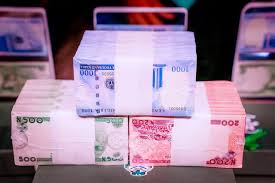
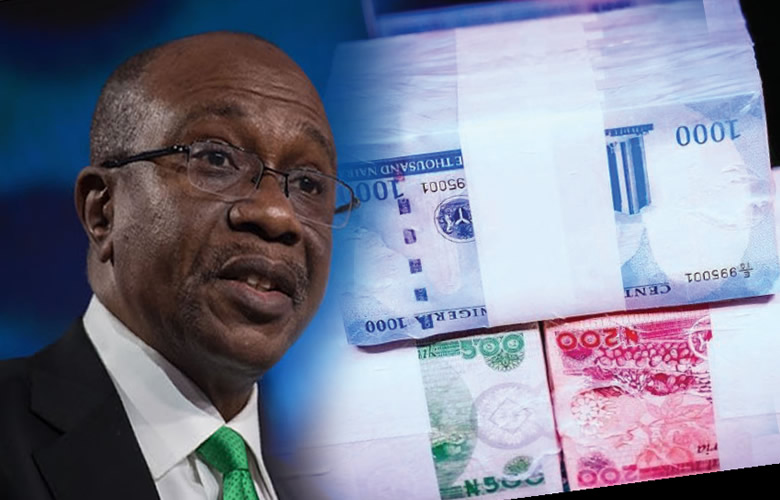
Bank Automated Teller Machines in Lagos, Abuja, and other regions of the country are still dispensing the old N1,000, N500, and N200 notes eight days before the Central Bank of Nigeria’s deadline of January 31 to stop making them legal money.

Despite assurances by the apex bank and depositing banks that Nigerians would start receiving the new naira notes via ATMs on various platforms, research as of Sunday revealed that many ATMs owned by the financial institutions were still dispensing the old notes.

Although some of the ATMs in Lagos, Abuja, Ogun, Osun, and Gombe, among other places, were found to be dispensing the new notes, it was found that banks were still stocking a sizable portion of their ATMs with the outdated notes, which the CBN plans to phase out in approximately a week.

Meanwhile, bank employees lamented the lack of new notes.

Under the condition of anonymity, the officials claimed that the development had made it difficult for them to completely adhere to the CBN directive regarding the requirement to load ATMs with new notes.

When questioned why Access Bank had not yet distributed enough new notes across its branch network, a source close to the bank responded that the bank had not yet received enough new notes to comply with the CBN’s instruction on the new note.

“The new currency is not enough for the bank to start dispensing; that is why they are still given the old currency.”

Another bank official claimed that the newly redesigned notes were scarce and added that no bank would intentionally disregard the CBN’s instruction.

He said, “The CBN has gone around our ATMs and found out that we are very compliant with their entire directive. No bank will hoard the new notes. CBN is going around and monitoring.  No bank would want to be caught flouting the rule. There is scarcity. If a bank’s ATM does not have the new notes, it means the bank does not have it.”

Also reacting to the scarcity, a top official of Zenith Bank said, “If the new currencies are exhausted from the ATMs, is it not better to fill the ATMs with old currencies so that people will have access to cash? It is still legal tender until the end of January. It is only when the branches have the new currencies that they can fill the ATMs will them.”

Banks were seen continuing to stock their ATMs with the outdated currency despite threats from the CBN to penalize disobedient banks.

Dr. Abdullahi Kure, a director at the CBN and the current managing director of NIRSAL Microfinance Bank, has previously stated that the CBN would investigate institutions that were discovered to be storing or diverting new notes while issuing old currency.

He said that there was enough cash on hand at the CBN to satisfy bank requests.

Kure stated that if banks were discovered to be issuing old notes via ATMs, the CBN would examine its “record to determine the quantity of new notes provided to banks.” Such banks would receive sanctions if we found any violations.

He advised Nigerians to exchange any old notes they have for new ones through recognized outlets.

read more
Business

FG hikes petrol price to N185 per litre

The petrol price has officially increased by 8.8% from N170 per liter to N185 per liter by the Federal Government.

Yesterday, the government ordered that the new price go into effect right away in a notice to fuel marketers.

A few gas stations affiliated with the Major Marketers Association of Nigeria MOMAN, were said to have already modified their pumps to comply with the new price rule, according to information obtained yesterday.

As a result, drivers who had been waiting in fuel lines for hours to get the product had heightened anxiety.

According to a source, the government sent an internal memo to all marketers, including the Independent Petroleum Marketers Association of Nigeria (IPMAN) and the Major Oil Marketers Association of Nigeria (MOMAN).

However, in response to the development, Mr. Chinedu Okonkwo, the President of the IPMAN, said in a statement to yesterday, “So I heard but we are waiting for the circular because without that we cannot do anything. Hopefully, by tomorrow (today) we will get a clearer picture.”

When informed that some significant oil marketers had changed their pump prices to reflect the new approved price, he responded, “Well, they can adapt as the product is now hard to get by, but with the new approved price, we hope to receive products so we can sell to consumers.”

The Independent Petroleum Marketers Association of Nigeria’s (IPMAN) National Operations Controller, Mr. Mike Osatuyi, commented on the incident by saying that his members had continued to lift the product at N240 per litre.

However, the majority of independent gas stations in Lagos have raised their pump prices to N290 or more per litre.

However, the majority of IPMAN gas stations are out of petrol, which forces the ones that do have the product to charge outrageous prices.

According to Betsy Petrol, an independent market in Alimosho LGA, Lagos, they were actually selling the final quantity they had yesterday, according to Vanguard.

“I have pity for the Keke Marwa (commercial tricycle operators) and Okada (commercial motorcycle riders) who have been coming to the filing station in search of fuel. That is why I decided to open today and sell the little stock I have”.

To establish stability in the petroleum industry’s downstream sector, the federal government had previously finalized plans for the phased elimination of fuel subsidies beginning in April 2023.

read more
BusinessNews & Announcements

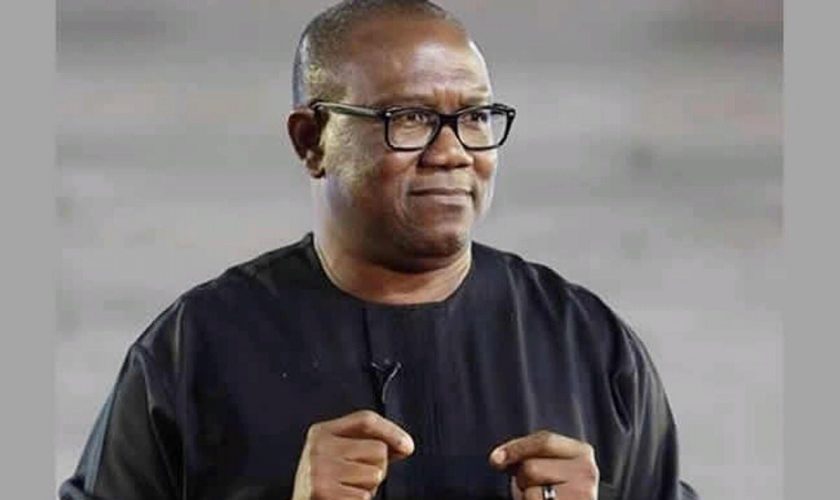
Peter Obi takes stand on CBN Governor, Emefiele’s ordeal, claims Emefiele is not the problem.

Peter Obi, the presidential candidate for the Labour Party, stated on Monday that removing Godwin Emefiele as governor of the Central Bank of Nigeria will not solve the amount of fiscal rascality driving inflation and other economic problems.

He revealed this when delivering a speech at the Chatham House in London.

He claimed that even if Emefiele is fired, Nigeria’s problem with its currency will persist.

Peter Obi has supported Emefiele despite the economy’s obvious problems, which include high interest rates, an unstable foreign currency system, and growing inflation.

He said, “People are talking about the Central Bank Governor, first let me assure you that the CBN governor will maintain his independence, he will be respected.

“Again, it is not the problem of the person there. CBN has a role in monetary policy. Then, you have the fiscal ecosystem. It’s like you go to a football match and the person who is supposed to be playing a particular wing is no longer there.

“Replacing Godwin Emefiele and putting somebody else there, with that level of fiscal rascality, which is what is fuelling our inflation and our rate of exchange today… these are some of the things we need to cut”.

Emefiele reportedly returned to work after taking an annual break, according to a statement from the director of corporate communications for the top bank, Osita Nwanisobi.

In a statement issued by its spokesperson, Peter Afunanya, the Nigerian Secret Service, DSS, refuted a claim that Emefiele’s office had been invaded upon his return on Monday.

read more
BusinessNews & Announcements

Chevron fights Itsekiri leaders over N300 million legal costs

Rita Lori Ogbebor and other individuals have been sued by multinational oil company Chevron Nigeria Limited in a Warri courtroom for allegedly violating a consent judgment by trying to withdraw or transfer money from the Itsekiri Regional Development Committee, IRDC, account, which is held at one of the new generational banks.

Alero Tenumah, Aginejune Agbonekuya, Ebigbeyi Kennedy, Lori Omatie, Aburo Mene-Ejegi, Frank Aberuoluwa, Itse Orugbo, and Richard Omare are among the additional defendants who have joined the lawsuit as the second through tenth defendants, respectively.

The company claimed that the defendants withdrew N300 million from the IRDC’s bank account located in the bank in violation of the GMOU and the mandate and terms of the operation of the IRDC’s bank accounts, ostensibly as legal fees of the 1st – 7th and the 9th – 10th defendants, while relying on a consent judgment in EHC/20/2020.

read more
Business

Federal Government begins Electronic Transfer Levy Implementation.

The Electronic Transfer Levy is now being implemented by the federal government.

The rule was signed in August 2022 by Zainab Ahmed, Minister of Finance, Budget, and National Planning, in accordance with Section 89A(3) of the Stamp Duties Act, Cap. S8, Laws of the Federation of Nigeria, 2004, as amended by the Finance Act of 2021.

The Electronic Money Transfer Levy described in the 2020 Finance Act is imposed, administered, collected, and remitted according to the regulation.

When money is sent electronically from an account with a balance of N10,000 or more to any bank or financial institution, a N50 fee is applied.

According to derivation, the EMT levy money is split between the federal government and the federal capital territory at 15%, the state governments at 50%, and the 774 local municipalities at 35%.

The levy would be applied at the rates set by the Central Bank of Nigeria for any equivalent of receipts made in foreign currencies (CBN).

The Federal Inland Revenue Service (FIRS) is designated by the regulation as the Levy’s administrator and is charged with verifying, collecting, and providing an account of the Levy.

Additionally, it requires receiving banks to gather and send funds to the FIRS the following business day or within 24 hours. If the customer has a bank account with the receiving bank, the receiving bank must deduct the levy from the account.

On Sunday, January 8, 2023, several Nigerians expressed concern on social media after discovering that their accounts had been debited in varied amounts.

They were unprepared for the debit because the charge was not mentioned in any media sources.

They contend that the fee will promote cash transactions and goes against the CBN’s cashless goal. The audit and tax consultancy firm KPMG praised the Finance Minister for putting the Levy in place.

read more
Business

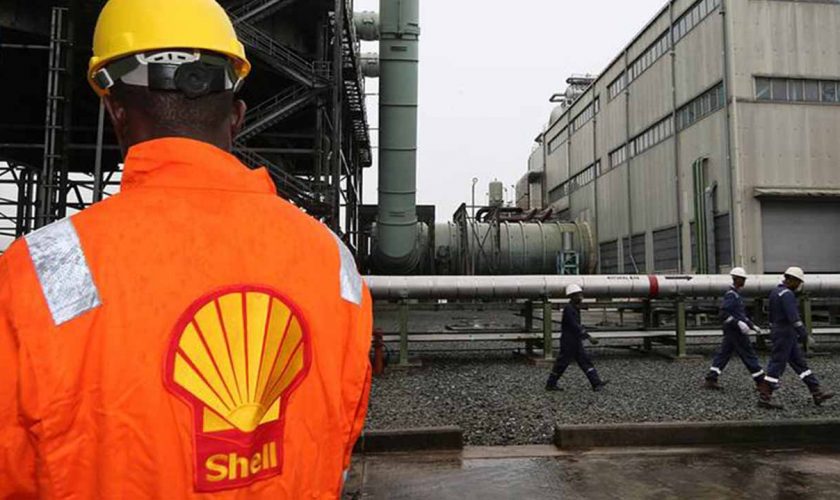
Shell To Pay €15m To Ogoni Farmers Over Pollution

A Dutch appeals court ruled last year, following 13 years of legal battles, that Shell’s Nigerian branch must pay out for a series of leaks and that the parent company must install new pipeline equipment to prevent further devastating spills.

Shell said on Friday that it had reached a deal with the Dutch environmental group Milieudefensie that has helped the affected communities.

“Under the settlement, The Shell Petroleum Development Company of Nigeria Ltd (SPDC) as operator of the SPDC joint venture, will pay an amount of EUR 15 million for the benefit of the communities and the individual claimants,” it said in a statement.

The deal also confirms the installation of a leak detection system on 20 pipeline segments in accordance with the Dutch court ruling and that remediation work has been completed.

Despite acknowledging that the settlement follows up on the Dutch court ruling, the oil firm said the agreement “is on a no admission of liability basis, and settles all claims and ends all pending litigation related to the spills”.

Four Nigerian farmers and fishermen sued Shell in the Netherlands to pay for cleaning up spills from its pipelines in the Niger Delta.

They were aided by Milieudefensie, the Dutch branch of Friends of the Earth.

Shell has always attributed pollution to sabotage and said it had cleaned up affected areas.

The legal battle has lasted so long that the original farmers have now all died, but their survivors and the affected communities pushed on.

“It is a great relief to all of us that after the years of a legal battle with Shell, we will soon be recipients of this money as compensation for all we have lost,” said Eric Dooh, one of the current plaintiffs.

Milieudefensie’s director Donald Pols said the settlement will allow the plaintiffs and their communities to finally get on with their lives.

But he said it also has a wider significance.

“If we look at the court case as a whole, the major gain is that a new standard has been set: companies will no longer be able to get away with pollution and with ignoring human rights,” he said.

“Now they can be called to account.”

read more
Business

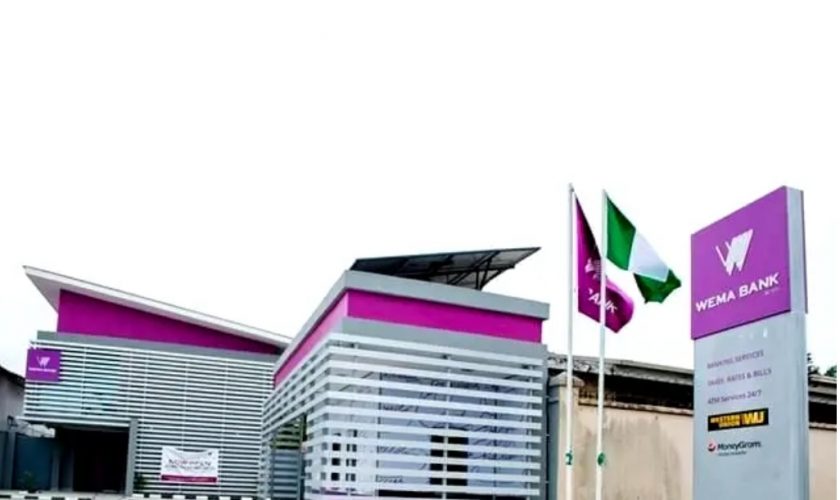
Wema Bank aids SMEs with N1bn loan for renewable energy

Small and medium businesses (SMEs) who want to buy clean and renewable energy solutions like solar panels, inverters, and batteries can now get a N1 billion loan from Wema Bank Plc.

The bank claims that the assistance is given to show its consistent support for Nigeria’s energy transformation and to assist local businesses in overcoming obstacles brought on by the nation’s rising gasoline and diesel prices.

The bank said in a statement “Many businesses in the country, including SMEs, depend on fossil fuel for power to run their operations amidst poor power supply and the incessant collapse of the national grid. Consequently, the spike in the prices of fossil fuel products has hit many businesses hard. To overcome the effects of their rising operating costs, several businesses have resorted to passing on the cost to the consumers, leading to a ripple effect on the economy”.

According to Mr. Dotun Ifebogun, Divisional Head, Retail Business, Wema Bank Plc, the loans with a focus on renewable energy will help SMEs all over the country by easing the impact of the high cost of electricity on their operations.

He said “We need to provide financial support to SMEs to encourage their roles as the engine rooms of the economy, by creating alternative power options at affordable rates and educating them on the benefits of alternative power in solar energy, to the environment.

“Therefore, beyond alleviating the effects of rising energy costs, this initiative also feeds into Wema Bank’s strategic thrust of spearheading energy transition in Nigeria and helping businesses in the country to go green. “

read more
Business

Federal Government announces ban on public accounts across Nigeria

The Federal Government has declared that all cash withdrawals from public accounts will be prohibited nationwide in Nigeria.

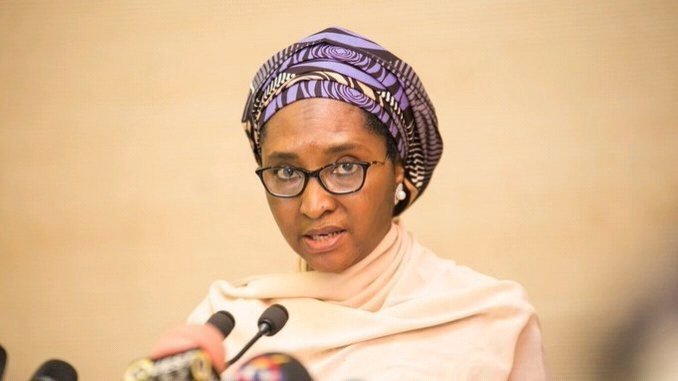
Modibbo Tukur, director of the Nigerian Financial Intelligence Unit (NFIU), made this disclosure.Mahmood Yakubu, said necessary efforts are being put in place by the FG to stop such cash withdrawals.

The statement read

“The government is putting all necessary measures in place to stop cash withdrawal from federal, states and local government accounts.

“Because of the consistent devaluation of the naira and the introduction of a new naira policy, section 1 of the money laundering prohibition act is automatically activated.”

The NFIU head also pointed out that the majority of cash withdrawals from government accounts, including payments for estacode, frequently exceed the amount allowed by the money laundering statute for cash withdrawals.

Tukur claims that the cap and policy will put government employees in danger of being imprisoned.

Tukur added that the NFIU has already produced guidelines for the secretary to the government of the federation, all governors, and local council chairs, advising them to tell all civil officials to open domiciliary and naira accounts ahead of the policy’s implementation.

read more
Business

Redesigned Naira Notes Go Into Circulation Today

The newly redesigned naira notes will go into circulation today, December 15.

Recall that the governor of the Central Bank of Nigeria, Godwin Emefiele, had in October announced that the apex bank would release re-designed N200, 500 and N1000 naira notes by December 15, 2022.

He stated that the old notes will cease to be legal tenders by January 31, 2023.

Emefiele pointed out that the redesigning of the naira notes would help to curb counterfeit notes, and reduce ransom payments to terrorists and kidnappers.

The CBN boss said it is worrisome that 85 percent of the total currency in circulation was being hoarded by Nigerians.

As such, he said the redesigning of the local currency would help to mop up the currency outside the banking sector, adding that out of about N3.3tn in circulation, close to N2.75tn is outside the banking sector.

This came about three weeks after the President, Major General Muhammadu Buhari (retd), unveiled the new bills at a weekly Federal Executive Council meeting in Aso Rock Villa.

Banks are expected to disburse the new Naira notes to their customers from today.

read more
BusinessNews & Announcements

To reduce petrol price and ease scarcity, NNPC lowers prices for marketers.

Yesterday, the NNPC set a price for lifting petrol at depots of N148 per litre.

In order to alleviate product shortages, the Nigerian National Petroleum Company Limited NNPCL, has agreed to supply unutilized stock to independent oil marketers.

The independent marketers claimed that because they had been purchasing the product at a cost of around N200 per litre from private depots, they had been unable to satisfy the Department of State Services’ (DSS) 48-hour deadline last week.

They claimed that the predicament prevented them from offering gasoline at the same price of N170 per litre as their big competitors and NNPCL.

Yesterday, it was reported that NNPCL, marketers, and all other stakeholders met to discuss and resolve the concerns.

Operations Controller, Independent Petroleum Marketers Association of Nigeria, IPMAN, Mr. Mike Osatuyi, who confirmed the development, said: “Our members have now been allowed to lift petrol at N148 per litre, meaning that we can now reduce our pump prices. We are committed to working with other parties to tackle the shortage across the country as quickly as possible.”

Recall that the House of Representatives urged NNPCL to address the ongoing petroleum product shortage within the next week in order to alleviate Nigerians’ suffering.

The Nigerian Midstream Downstream Petroleum Regulatory Authority, or NMDPRA, was also urged by the House to enlist the assistance of the DSS and Nigerian Police Force to guarantee that petrol was sold at the set price and in all retail outlets.

NNPCL and oil merchants previously received a 48-hour deadline from the Department of State Services (DSS) to make Premium Motor Spirit, also known as petrol, available to Nigerians.

read more
1 2 3 4 5
Page 4 of 5