Business Archives | Page 2 of 5 | The Lafete Magazine
close

Business

Business

Dangote Refinery Will Generate $21Billion, To Employ Over 100,000 Youths

Amid encomium from eminent personalities, which included President Muhammadu Buhari and five other African heads of state, President of the pan-African Conglomerate, Dangote Industries Limited (DIL), Aliko Dangote disclosed yesterday that the newly commissioned 650,000pbd refinery would employ over 100,000 Nigerians youths as well as generate over $21 billion, therefore saving the country huge forex, that would have been used for fuel importation.

The company, according to him, now has over 33,000 employees.

Much to the excitement of Nigerians, Dangote said the commissioning has marked the beginning of the new journey of self-sufficiency in refined petroleum products and exportation of same just as been achieved in Cement and lately fertilizer.

Dangote lamented that the current fuel crisis has had negative impact on the nation’s economy and that informed his decision to build a world class refinery that would change the trend and that though faced challenges but decided to trudge on.

He highlighted events leading to his firm deciding to build its own refinery after his attempt to acquire one of the existing moribund did not materialize noting that he decided to change marketing strategy and settle for gigantic project ever undertaken by an individual world over.

According to him, the refinery plant would be run at the highest effective and efficient level for maximum benefits to all Nigerians noting “we will replicate what we achieved in cement and fertilizer by attaining self-sufficiency and becoming a net exporter.

Dangote assured Nigerians that 40 percent of the production capacity will be available for export with the coming onstream of the plant guaranteeing raw materials for plastic, and pharmaceutical industries.

In his remark, President Buhari congratulated Dangote Group, saying “The 650,000 barrels a day of crude which will enable our country to achieve self-sufficiency in refined products and even have some supplies for export saying the government and people of Nigeria are proud of the doggedness and tenacity of Dangote as an entrepreneur.
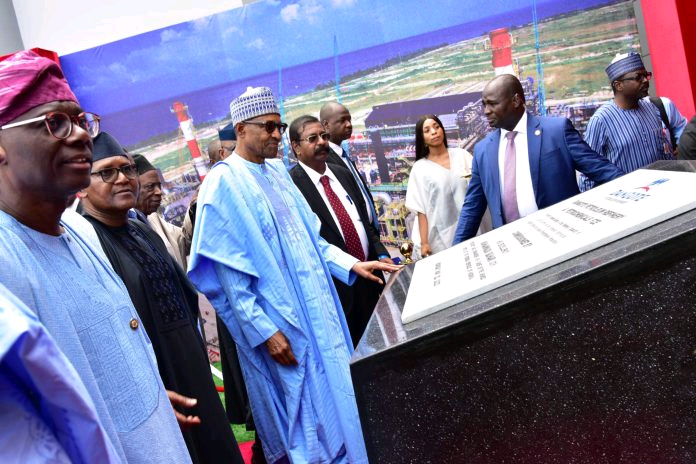
Said he; “This feat at this time of the nation’s economic development clearly made this event a notable milestone for our economy and the game changer for the downstream petroleum products not only for Nigeria but the entire African continent. Dangote Group has helped transform our economy from heavy import dependence to a net exporter in some critical industries, including cement and Fertiliser.”

He noted that the economy which has been stressed for many decades by huge deficits in economic infrastructure and over a decade of insurgency has also been severely impacted by several external crises, including the global financial crisis, the collapse of the world crisis the Coronavirus pandemic and the Russia Ukraine war.

“The consequences of these challenges constitute a severe strain on our economy and limit the government’s ability to provide basic infrastructure without resorting to borrowing. The government, therefore, decide to focus attention on creating an enabling environment for the private sector to thrive and fill the enormous gap in investments not only in infrastructure but also in all critical sectors.

“We recognize that without the active participation of the private sector and a strong commitment to a public-private partnership, the economy will not be able to continue to meet the challenge and economic growth”, while expressing the hope that the coming administration will continue to apply such innovative schemes to accelerate the fruition of critical infrastructure, in particular roads and gas pipelines.

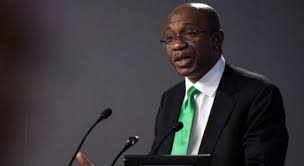
Governor of Central Bank of Nigeria (CBN), Mr. Godwin Emefiele while commending Mr. Dangote for the successful completion of the refinery project said it would not only aid that nation’s domestic petrol needs, but also help in generating export revenues for our country.

Emefiele recalled; “In September 2013, when Alhaji Aliko Dangote announced his plans for the refinery, it was estimated to cost about US$9 billion, of which US$3 billion was projected as an equity investment by the Dangote Group and the balance financed through commercial loans. Due to an array of factors, the project was eventually completed with a total of US$18.5 billion with funding distributed into 50 percent equity investment and 50 percent debt finance. I am proud to state that the commercial loan component of the project was financed majorly by our domestic banks with the balance sourced from foreign banks.

The Central Bank of Nigeria also partnered, as always, with the Dangote Group in ensuring the successful completion of the project by providing about N125 billion, to cover domestic currency requirements for the venture.

“What you may not be fully aware of, Your Excellencies, is that the Dangote Group has started repaying some of the commercial loans even before the commissioning of this facility. This reflects the commercial capability of the Group and its Chairman. I am pleased to inform everyone today that, following extensive repayments, outstanding debt has dropped appreciably from over US$9 billion to US$3 billion.”

The CBN Governor commended Nigerian banks saying they not only partnered with the project through effective financing but were keenly aware of the importance of the project for our nation.

“They provided immense support and exceptional understanding, even when interest payments and principal repayment had fallen due.”

He described the successful completion of the refinery as President Buhari’s astute vision to ensure that Nigeria produces what Nigerians consume and that we consume what we produce. 

“The refinery and petrochemical project by the Dangote Group is a testament to your vision for Nigeria. It shows that, regardless of what the world thinks, Nigeria can be self-sufficient in all products that we consume and at the same time export our excess output to the rest of the world.”

“Aside from enumerating our strategic efforts in agriculture and other critical sectors, a sterling project that we highlighted was the gigantic Dangote Refinery and Petrochemical project. The world doubted our willpower to succeed with this project. In hindsight, I could appreciate their skepticism because they do not understand how a single individual could build a refinery capable of serving an entire nation. To them, projects of this magnitude are usually only undertaken by sovereigns, not individuals.”

Group Managing Director of the Nigerian National Petroleum Company Ltd (NNPC), Mele Kolo Kyari said the NNPC was happy to partner with Dangote Refinery because the project has the potential for a smooth supply of petroleum and it would guarantee healthy competition for the benefit of the nation’s economy.

He said the NNPC Ltd. was committed to value addition to the potentials of the project noting that the new Petroleum Industry Act will provide security of supply of refined products and protect the plant.

The NNPC boss added that he was happy the refinery is coming on board at a time the subsidy on imported products has become unbearable for the government.

In their respective goodwill messages, Presidents of Ghana, Senegal, Niger, Benin Republic, and Chad expressed satisfaction that the Dangote Refinery will serve the West African region and that their countries would be beneficiaries saying the Dangote Refiner is an African company for Africa by an African entrepreneur.
                 

read more
Business

Dangote has repaid 70% of the refining loan he took out, says Emefiele

The Dangote Group has paid back 70% of the loans it received from the apex bank to build its oil refinery, according to Central Bank of Nigeria Governor Godwin Emefiele.

Speaking during the refinery’s commissioning on Monday, he noted that domestic banks provided the majority of the funding for the project’s commercial loan component while international banks provided the remaining funding.

He said that the CBN provided roughly N125 billion to meet domestic currency needs while also guaranteeing that foreign exchange (FX) was available to pay for imported machinery.

“We have it on good authority that the Dangote Group has paid off some portion of these commercial loans even before this commissioning today,” Emefiele said.

“Today, total loans outstanding have dropped from over $9 billion when this project started to N2.7 billion. This reflects the astute credit worthiness and commercial capability of the group and its chairman, Alhaji Dangote.

“I must at this juncture appreciate all the participating local Nigerian banks, who did not only partner with the project through effective financing but were keenly aware of the importance of the project for our nation.

“They provided immense support and exceptional understanding, even when interest payments and principal repayment had fallen due.”

read more
Business

World Bank intends to prolong FG’s access to a $750 million loan

The Federal Government, on behalf of the 36 state governments and the Federal Capital Territory, is about to receive a one-year extension to access the $750 million concessional loan from the World Bank for Nigeria’s COVID-19 Action Recovery and Economic Stimulus.

During the first town hall meeting for stakeholders under the NG-CARES program in Ibadan, Oyo State, Professor Foluso Okunmadewa, the World Bank Task Team Leader for the NG-CARES, confirmed the development.

During his speech at the ceremony, Okunmadewa stated that after subtracting the initial advance, 29 states and the FCT have so far received compensation. He added that seven states had not received reimbursement.

He stated that as long as state governments continue to show proof of their commitment to disbursing the money, the World Bank will continue to permit access to funds.

In his remarks, Clem Agba, the minister of state for budget and national planning, stated that the NG-CARES program had a positive impact on the lives of over two million direct beneficiaries in the nation and that this development was in line with the president’s goal of removing 100 million Nigerians from poverty within ten years.

Agba stated that the federal government was committed to recovering the livelihoods of poor and vulnerable Nigerians, saying that the extension of the program was essential to eradicating poverty in the nation. Agba was represented by the Chairman of the NG-CARES Technical Committee, Reverend Aso Vakporaye.

Recall that during the COVID-19 pandemic’s troubles, the federal government received a $750 million World Bank concessional loan on behalf of the 36 states and the FCT, with a 2021–2023 repayment period.

The goal of the loan was to boost household consumption among the weaker and more vulnerable groups of society as well as the local economy.

read more
BusinessNews & Announcements

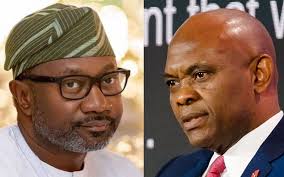
Otedola furious over the Transcorp agreement, Elumelu keeps silent.

Femi Otedola, a multibillionaire businessman, claimed on Tuesday that his offer to pay N250 billion for the Nigerian giant Transnational Corporation Plc was turned down.

Weeks after acquiring interests in Transcorp and selling the shares, Otedola made several accusations against Tony Elumelu, the chairman of the company, in a statement to TheCable.

Otedola disclosed that the reason he purchased the company’s stock was because he thought the Group had the potential to reach a price of N2 trillion.

Otedola said, “I offered to buy Transcorp Plc for N250bn, but unfortunately, my offer was rejected. My goal was to maximise the company’s potential as a Nigerian conglomerate with a market cap of at least N2tn instead of the current N40bn, but it seems some shareholders have a different vision.

“As a businessman, I believe in healthy competition and market dynamics. Two captains cannot man a ship, and I respect the majority shareholder’s decision to buy me out. This is the nature of the game.”

Going back in time, Tony Elumelu, Chairman of Transcorp, and the biggest shareholder of Geregu Power disclosed various commercial transactions.

He said, “In 2005, while Tony was the Managing Director of Standard Trust Bank, he approached me to get funds to acquire UBA. I enthusiastically gave him $20m, which was N2bn at that time to buy the necessary shares in UBA for the acquisition.

“After a short period of time, the share price moved up and I decided it was a good moment to sell and get out of the bank. However, Tony appealed to me to hold on to the shares as he was convinced that there were future prospects – so I kept the shares.”

He added that, “I became chairman of Transcorp Hotel in 2007 with a shareholding of five per cent and unknowingly, Tony gradually started buying shares quietly.

“By the following year in 2008, I went bankrupt in Nigeria. Tony proceeded to take my shares in UBA to service the interest on my loans and he also took over my shares in Africa Finance Corporation, where I was the largest shareholder.

“Shortly after, Albert Okumagba informed me that an American firm wanted to acquire my shares in Transcorp, which I then agreed to sell. However, this supposed American firm turned out to be Tony Elumelu. The revelation of this prompted me to resign as chairman of the hotel.”

He continued that, “Years later in 2012, Tony said he wanted to see me so we met in my office where I had previously had a meeting with foreign investors who had not yet departed the premises. Curious to know, he asked what sort of meeting I had had and I disclosed that I wanted to go into the power business, specifically Ughelli Power Plant. Tony quietly went ahead to bid for Ughelli and he outbidded me by offering to buy the plant for $300m.”

Otedola added that his offer to buy Transcorp was “made with the best intentions for Transcorp Plc and its shareholders. I saw an opportunity to unlock the company’s full potential and create value for everyone involved.

“It’s important for investors to understand that free entry and free exit are crucial to healthy markets. The scramble for shares after my acquisition is a testament to the value that Transcorp Plc can offer, and I hope the company continues to thrive under new leadership.”

Tony Elumelu, the chairman of Transcorp Group, was unable to comment on the situation as of the time of publication despite attempts to contact him.

read more
Business

CBN to collect unused account balances and unclaimed money

Banks should move money from accounts that have been inactive for up to ten years to a trust fund account, according to a proposal from the Central Bank of Nigeria.

The standards for the management of dormant accounts, unclaimed balances, and other financial assets in Nigerian banks and other financial institutions were recently exposed drafts.

According to a circular that was attached to the exposure draft, the CBN developed the guidelines in response to requests for clarification from banks and other stakeholders regarding the handling of dormant and inactive accounts by national banks.

The circular, which was signed by Chibuzor Efobi, the director of the top bank’s financial policy and regulation department, also requested inputs to be given within three weeks.

According to the proposal, all unclaimed funds must be transferred by banks and other financial institutions into a pool account for the Unclaimed Balances Trust Fund, which would be based at the CBN.

The balances would be invested in government assets like Treasury Bills and refunded to the beneficiaries with no later than ten days’ notice, according to the apex bank.

CBN said, “The Central Bank of Nigeria shall open and maintain an account earmarked for the purpose of warehousing unclaimed balances in eligible accounts. The account shall be called ‘Unclaimed Balances Trust Fund Pool Account.”

The proceeds of uncleared and unpresented financial instruments belonging to customers or non-customers of FIs, as well as unclaimed salaries and wages, commissions, and bonuses, are among the eligible accounts and financial assets. These include current, savings, and term deposits in local currency; domiciliary accounts; deposits toward the purchase of shares and mutual investments; prepaid card accounts and wallets.

A judgment debt for which the judgment creditor has not collected the full amount of the judgment award is another example. Other examples include proceeds of expired local and/or foreign currency drafts that beneficiaries have not presented for payment; funds received from a correspondent bank without sufficient information regarding the rightful beneficiary; and/or a recall of funds made to the remitting bank to which the Nigerian bank’s account has not been debited.

Any bank or financial organization that violates the new criteria would be subject to a fine of at least N2,000,000, according to the central bank.

It further stated that any violation of CBN’s direction would result in additional fines of N200,000 daily until the directive is followed or as otherwise determined by CBN.

The CBN said the objectives of the guidelines are to “Identify dormant accounts/unclaimed balances and financial assets with a view to reuniting them with their beneficial owners; hold the funds in trust for the beneficial owners; standardise the management of dormant accounts/unclaimed balances and financial assets; and establish a standard procedure for reclaim of warehoused funds.”

Also, the CBN announced that it would publish a yearly list of the owners of the unclaimed sums that had been moved to the pool account as well as instructions on how to retrieve funds that had been stored.

The Federal Government announced plans to borrow money from deposit money banks’ inactive account balances and unclaimed profits in the Finance Act 2020, which was just signed into law. Information was revealed in the Finance Act in accordance with Part XII of the Corporations and Associated Matters Act.

The Socio-Economic Rights and Accountability Project filed a lawsuit in 2021 after receiving backlash from stakeholders in response to the action.

read more
Business

Bitcoin platform, Paxful,with over one million Nigerian users shuts down

Paxful, a peer-to-peer Bitcoin exchange with 1.5 million customers in Nigeria, has announced that it is ceasing operations.

In a blog post published on Tuesday, co-founder and CEO Ray Youssef made this disclosure.

He said, “Today, Paxful will be suspending its marketplace. We are not sure if it will come back.

“This will probably come as a big shock to many. While I cannot share the full story now, I can say that we unfortunately have had some key staff departures. Also, regulatory challenges for the industry continue to grow, especially in the peer-to-peer market and most heavily in the U.S. While we work through these issues, we have taken the most secure option and ask you to explore self-custody and trade elsewhere.”

According to Decrypt, Youssef said during a Twitter Space that a lawsuit filed by a Paxful co-founder who is suing Paxful and Youssef after being “kicked out of the firm” over a year ago also had an impact on the decision to shut down the site.

“My co-founder sued the company and sued me. I have a lawsuit over my head right now,” he was quoted as saying on the Twitter Space.

The 2020 Geography of Cryptocurrency Study by Chainalysis ranks Nigeria ninth in crypto acceptance and usage among the 154 nations included in the study, despite the fact that bitcoin is illegal in Nigeria.

Peer-to-peer technology was introduced to Nigeria by Paxful, which contributed to the growth of the cryptocurrency sector there.

The CEO of Paxful stated that Nigeria is the company’s largest market, with 1.5 million users and a volume of over $1.5 billion to date, in an interview with Business Africa Insider in 2022. (since 2015).

In 2021, the Central Bank of Nigeria outlawed cryptocurrency exchanges and related transactions. According to CBN, cryptocurrencies are being used for a number of illicit acts, such as tax evasion, the acquisition of small arms and light weapons, financing of terrorism, and money laundering.

read more
Business

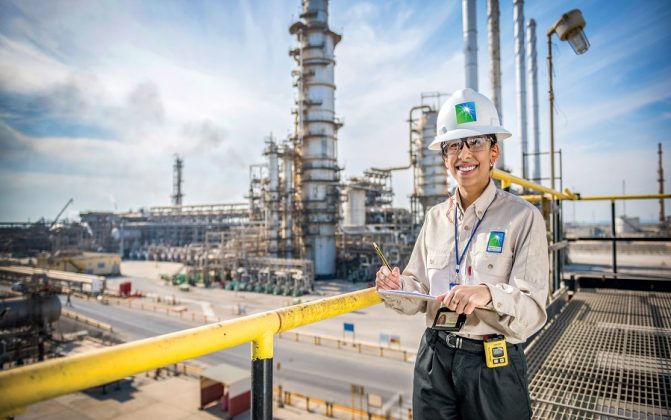
Saudi Oil Gaint, Aramco Announces $161 Billion Profit

Saudi oil giant, Aramco has announced a record profit of $161.1bn (£134bn) for 2022, helped by soaring energy prices and bigger volumes.

It represents a 46.5% rise for the state-owned company, compared with last year.

It is the latest energy firm to report record profits, after energy prices spiked following Russia’s full-scale invasion of Ukraine in February 2022.

America’s Exxon Mobil made $55.7bn, and Britain’s Shell reported $39.9bn.

Aramco also declared a dividend of $19.5 billion for the October to December quarter of 2022, to be paid in the first quarter of this year.

Most of that dividend amount will go to the Saudi Arabian government, which owns nearly 95% of the shares in the company.

Brent crude oil, the benchmark oil price, now trades at around $82 a barrel – though prices exceeded $120 a barrel in March, after Russia’s invasion, and June.

“Aramco rode the wave of high energy prices in 2022,” said Robert Mogielnicki of the Arab Gulf States Institute in Washington. “It would have been difficult for Aramco not to perform strongly in 2022.”

In a statement on Sunday, Aramco said the company results were “underpinned by stronger crude oil prices, higher volumes sold and improved margins for refined products”.

Aramco’s President and CEO Amin Nasser said: “Given that we anticipate oil and gas will remain essential for the foreseeable future, the risks of underinvestment in our industry are real – including contributing to higher energy prices.”

To address those challenges, he said, the company would not only focus on expanding oil, gas and chemicals production – but would also invest in new lower-carbon technologies.

Aramco – the world’s second-most valuable company only behind America’s Apple – is a major emitter of greenhouse gas emissions that contribute to climate change.

Responding to Aramco’s announcement, Amnesty International’s Secretary General Agnès Callamard said: “It is shocking for a company to make a profit of more than $161bn in a single year through the sale of fossil fuel – the single largest driver of the climate crisis”.

She added: “It is all the more shocking because this surplus was amassed during a global cost-of-living crisis and aided by the increase in energy prices resulting from Russia’s war of aggression against Ukraine.”

Saudi Arabia is the largest producer in the oil cartel Opec (Organization of the Petroleum Exporting Countries).

But the Gulf kingdom has been condemned for a range of human rights abuses: its involvement in the conflict in neighbouring Yemen, the murder in 2018 of journalist Jamal Khashoggi, for jailing of dissidents, and for widespread use of capital punishment.

read more
Business

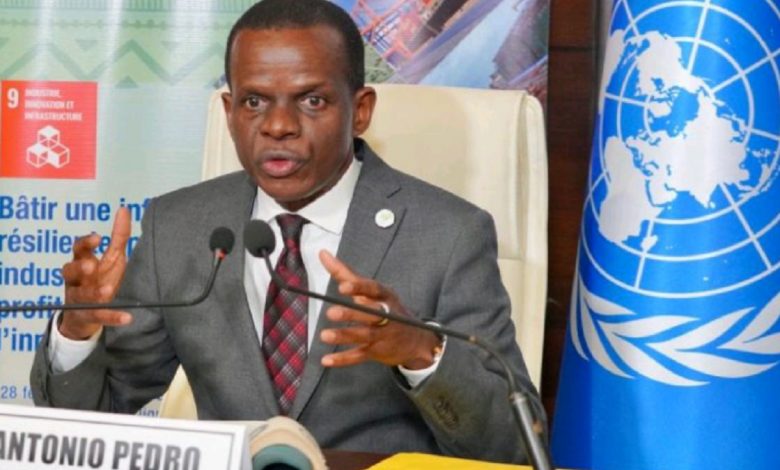
Internal Trade In Africa Rises by 20%, Below Target-ECA

The Economic Commission for Africa, ECA says the African Continental Free Trade Area, AfCFTA increased intra-African trade by 20 percent in 2022, below the commission’s prediction of 52 percent by 2022.

Speaking on the sidelines of the Ninth Session of the Africa Regional Forum on Sustainable Development in Niamey, Niger, ECA Acting Executive Secretary, Antonio Pedro said the level of trade had increased.
Pedro was then asked if the commission had achieved the objective of 52 percent intra-African trade.

“Certainly not yet. But the levels of intra-African trade have gone up from 13 percent or so, before the African Continental Free Trade Area agreement was adopted, to now around 20 percent but that is not good enough because other regions are trading amongst themselves.

“I mean, above 70 percent or so Europe, Asia. So, that certainly is our target,” he said. The acting executive secretary said the rise in intra-African trade, was already encouraging certain countries to trade amongst themselves.

“Under the AfCFTA Trade Division, Kenya, a couple of other countries Ethiopia and so on and so forth. So now it’s really about scale, it is about making these movements that cover the entire continent.

“One is to look at the product complementarity between our countries, so we could have African countries trading inputs with another country where, perhaps, you have a much larger processing capacity and one example that I like to cite is between, for example, Gabon and Cameroon.

“Cameroon has processing facilities for palm oil products that require additional inputs coming from the sub-region, and in this case, one could look at certain processed palm oil products coming from Gabon being processed in Cameroon to produce from soaps to oils to all sorts of other things,” he explained. Pedro said these were some of the efforts which needed to happen.

He said the commission was making a trade decision supporting modeling, an exercise to identify the best export destinations for African countries.

However, he said the distance between African countries was much farther away than the distance between Africa and other continents.

He says, “In the case of Cameroon, we have done one study; Nigeria certainly is the closest trade destination, however, what is very interesting is that a country that is not far from Cameroon which is the Democratic Republic of Congo, DRC is trade distance.

“Countries that are miles away, China and the U.S. are closer trade-wise to Cameroon than DRC.

“Why is it that DRC is a trade distance is because there are issues with infrastructure? There are issues with essentially the connections and we need to address those binding constraints to Africa trading amongst themselves such as infrastructure.

“Some are hard infrastructure that we need to invest in improving links between our respective countries, others are soft infrastructure.”

The acting executive secretary also said protocols that had been approved and some that were in the pipeline needed to be mainstreamed and domesticated in national legislation.

“We still have situations where the customs departments are not aware. We are already trading within these AfCFTA trade regimes and they do not know the list of 90 percent of products that can be traded without barriers or levies.

“We do not face problems in trading, and also communication about the AfCFTA needs to be improved within government departments,” he explained.

Pedro also added that information needed to reach the operators on the ground so that when companies or individuals were exporting, they were not faced with all sorts of barriers.

read more
Business

Flutterwave debunks losing N2.9 billion to hackers.

Flutterwave, a unicorn in the African financial industry, has denied losing $2,949,557,867 to hackers.

On Sunday, it was previously revealed that hackers had stolen $2,949,557,867 from the company’s accounts, with over 300 clients being impacted.

The company said, “We want to reassure you that Flutterwave has not been hacked. As a financial institution, we monitor transactions through our transaction monitoring systems and 24-hour fraud desk and review any suspicious activity. We collaborate with other financial institutions and law enforcement agencies to keep our ecosystem safe and secure.”

It also stated that neither the company account nor any of its clients’ money had been lost.

“During a routine check of our transaction monitoring system, we identified an unusual trend of transactions on some users’ profiles. Our team immediately launched a review (in line with our standard operating procedure), which revealed that some users who had not activated some of our recommended security settings might have been susceptible.”

“We want to confirm that no user lost any funds, and we take pride in the fact that our security measures were able to address the issue before any harm could be done to our users. We want to reassure you that Flutterwave has not been hacked.” It added.

However , it was revealed on Sunday that Albert Onimole, the tech giant’s lawyer, had informed the State Criminal Intelligence Department, Panti, Yaba, about the case.

The breach on Flutterwave’s accounts, which occurred a few weeks ago, according to Onimole’s letter, revealed that the aforementioned cash was initially transferred to 28 accounts in 63 transactions.

Despite the fact that the receiving accounts were mentioned, the police have not yet frozen those accounts to stop the money from being moved.

Flutterwave claims that certain commercial banks permitted the transfer of the funds to additional accounts, lengthening the money trail.

read more
Business

“Including more women will increase financial and insurance inclusiveness” – Expert

Dr. Henry Ationu, a specialist in insurance, has said that more involvement of women in the production and consumption of financial services in Nigeria would improve insurance and financial inclusion.

He mentioned regulation, technology, and financial knowledge as elements that would support financial inclusion in a statement.

Ationu, who is also the president of the University of Lagos Actuarial Science and Insurance Class of 1989 Alumni Association and the founder of Heat Finance and Investments Ltd, which owns Heatmoney, made these remarks at a symposium and award presentation the group held in honor of Prof. Sunday Aduloju, a classmate who was promoted to the position of Professor of Insurance and Risk Management at the University of Lagos (Unilag).

Dr. Biodun Adedipe delivered the key paper at the conference, “Insurance and Financial Inclusion: Designing Insurance Products for the Informal Sector.”

read more
1 2 3 4 5
Page 2 of 5