admin, Author at The Lafete Magazine | Page 314 of 398
close

admin

News & Announcements

Twitter Makes First African Recruitment From Ghana

Twitter has announced that it was recruiting eleven people in Ghana, the company’s first hire on the African continent, and plans to open an office there later.

The social media giant joins Facebook and other tech companies moving into Africa, where founder Jack Dorsey spent a month in 2019.

“Africa will define the future,” Dorsey said at the time, after visiting Nigeria, Ghana, Ethiopia and South Africa.

The jobs advertised in Ghana include positions for engineering, marketing and communications specialists.

According to Twitter, the move is motivated by the company’s mission to serve the public conversation and to increase the number of people who feel comfortable participating in it.

 “Today, in line with our growth strategy, we’re excited to announce that we are now actively building a team in Ghana. To truly serve the public conversation, we must be more immersed in the rich and vibrant communities that drive the conversations taking place every day across the African continent,” wrote Twitter on its blog Monday.

Twitter said that its new team members would be working remotely under work-from-home policies while it explored “the opportunity to open an office in Ghana in the future.”

Ghana’s support for free speech and online freedoms made it the company’s choice for its first African location, Twitter said.

It added that the Secretariat of the African Continental Free Trade Area (AfCFTA) base in the Ghanaian capital Accra had played into the decision.

“The choice of Ghana as HQ for Twitter’s Africa operations are EXCELLENT news,” Ghana’s President Nana Akufo-Addo said on Twitter on Monday.

“This is the start of a beautiful partnership between Twitter and Ghana, which is critical for the development of Ghana’s hugely important tech sector.”

Facebook has several offices in Africa, including in Ghana’s neighbour Nigeria, where Mark Zuckerberg has been on a visit.
read more
News & Announcements

Anxiety As Police In Kashmir Ban Live Media Coverage Of Gun Battles

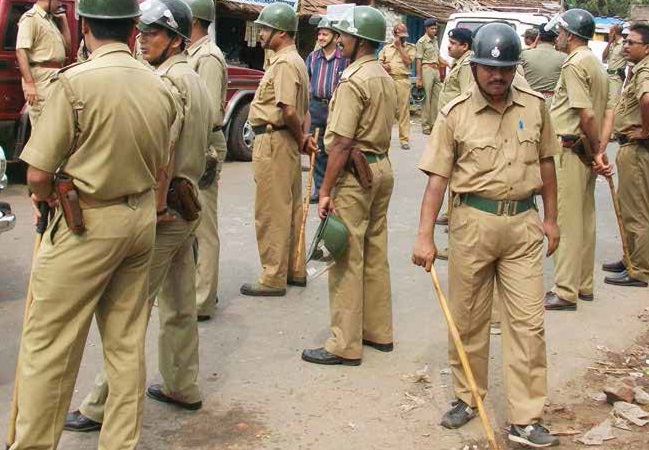
Journalists and media organizations in Indian-administered Kashmir say they are concerned over a new directive issued by the police prohibiting reporters from approaching the sites of gun battles and covering “law and order” situations, saying it puts the “national security in jeopardy”.

In the directive issued late on Tuesday, reports Aljazeera, the disputed region’s police chief, Inspector General Vijay Kumar, asked media personnel “not to come closer to encounter sites” and “not carry live coverage of any encounter” with armed rebels, who for decades have been fighting for either an independent Kashmir state or its merger with neighbouring Muslim-majority Pakistan.

The region’s police said “freedom of speech and expression is subject to reasonable restrictions” and asked the media not to “interfere in professional and bonafide duty” of police and security forces at the sites of “encounter”, as gunfights with rebels are called.

“No operational content should be carried which is likely to incite violence or contains anything against maintenance of [law and order] or which promotes anti-national sentiment,” said the directive.

The order has been criticised by a dozen Kashmiri journalist groups. “If this is a part of the official policy of police then it appears to be a tactic to coerce journalists into not reporting facts on the ground,” the groups said in a joint statement.

“It also seems to be a part of the string of measures taken by the authorities to suppress freedom of the press in the region. Summoning journalists to police stations, filing FIRs and seeking informal explanations for their work has intensified in the past two years,” it added.

The statement said Kashmiri journalists “have worked under tremendous pressure for the past several decades and despite facing threats to life, liberty and property, they upheld the principles of journalism and reporting”, adding that “such attacks on press freedom and journalism is highly distressful”.

Last week, a photojournalist was kicked by a policeman during the coverage of a gun battle in southern Kashmir; a video of the incident was widely shared on social media, triggering criticism over the treatment of journalists by the Indian authorities.

Farooq Javed Khan, president of Kashmir Press Photographers Association, a local union of photojournalists in the region, told Al Jazeera the new directives will impact their work.

“We do not go close to the gunfights; we always cooperate with the authorities. Our cameras show the reality, they capture what they see, we don’t create anything of our own,” he said. “We shoot and leave the spot, that’s all we do.”

After India stripped its only Muslim-majority region of its special constitutional status in August 2019, a crippling security lockdown and communications blackout was imposed for months, preventing local journalists from doing their jobs.

To further muzzle the press, which already operates in one of the world’s most militarised regions, the Indian government last year introduced a new media policy that allows it to determine what is “fake news” and “anti-national” content.

In the last two years, many Kashmiri journalists have been summoned and booked by the police. At least 19 journalists have been killed in the Kashmir conflict since an armed rebellion against Indian rule began in the 1990s.

In March 2020, the International Press Institute said journalism in Indian-administered Kashmir is under “a dramatic state of repression”.

“The state is using a mix of harassment, intimidation, surveillance and online information control to silence critical voices and force journalists to resort to self-censorship,” said the media watchdog.

Laxmi Murthy, co-founder of Free Speech Collective, an organisation that advocates freedom of expression told Al Jazeera the “recent strictures, coming as they do in the backdrop of a lack of transparency and lack of access to official sources for verification will further impede accurately reporting”.

“Reporters in Kashmir do the important job of verifying events on the ground and informing the public. Free flow of verified news is crucial to a functioning democracy and the latest advisory does not bode well for genuine journalism in the public interest.”

read more
1 312 313 314 315 316 398
Page 314 of 398