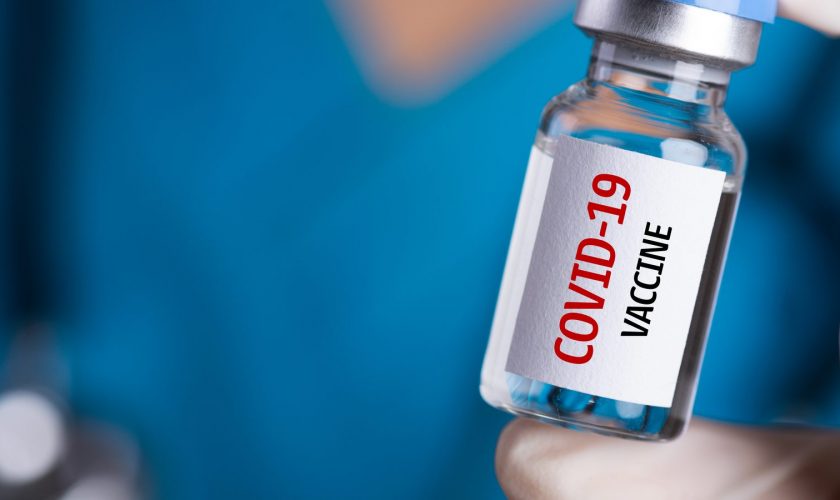
A call has gone for the African continent to ensure that the continent starts manufacturing the Coronavirus vaccines for use among Africans in order to meet the challenges of the future.
Continental heads of state and international health officials say vaccine manufacturing must come to Africa in earnest to combat both the illness and future health emergencies.
Increasing the manufacturing capacity for Covid-19 vaccines in Africa could help ensure the continent does not lag behind in vaccinating its population.
However, scarce capital, lack of technology, inadequate incentives for investment and a minimal workforce are among the barriers to quickly ramping up production. Skills gaps and weak regulatory environments have also been cited as challenges to the continent in increasing long-term access to vaccines.
A high-level meeting brought together heads of State and key players in Africa’s health sector to discuss local production of vaccines. Kenya was, however, not represented in the two-day meeting organised by the Africa Centres for Disease Control and Prevention (Africa CDC).
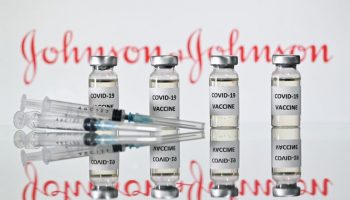
At the meeting, speakers unanimously agreed that increasing the manufacturing capacity for Covid-19 vaccines in Africa could help ensure the continent doesn’t continue depending on the West for vaccines. Currently, South Africa is the only country that recently started to make the Johnson & Johnson Covid-19 vaccine for the continent.
Rwanda has taken bold steps with President Paul Kagame announcing that the East African nation was in talks to produce vaccines.
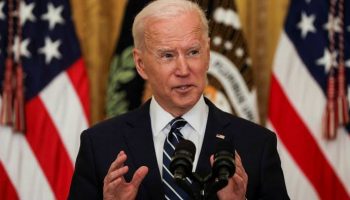
“For Africa, we need to move from being really very sorry for ourselves which is the case today, and move from what we know has not worked for Africa to something we can and are able to do and AfCFTA makes these investments even more attractive,” President Kagame said.
According to Dr Collins Tabu, head of Kenya’s national vaccines and immunisation programme, Kenya has also been holding closed-door meetings to increase its manufacturing capacity.
“We are already producing animal vaccines for the region. The country has been gearing up to move on with the production of childhood vaccines. We are working on legal mechanisms to have things in place,” said Dr Tabu in an interview with the local TV news channel, but did not say why the country had no representation at the meeting.
While Africa has reported a relatively low number of cases (about 4.4 million) compared to other regions, it has seen the world’s slowest rollout of vaccination campaigns. Less than two per cent of the 700 million vaccine doses administered globally to date have been in Africa, the leaders said in the virtual conference.
“There remains a shocking imbalance in the global distribution of vaccines, as I have said many times … The pandemic has shown that the global manufacturing capacity and supply chains are not sufficient to deliver vaccines and other essential health products quickly and equitably to where they are needed most,” said Tedros Adhanom Ghebreyesus, the director-general of the World Health Organization (WHO).
“That’s why building up the vaccine manufacturing capacity in Africa is so important.”
Africa is lagging in vaccinating its people against Covid-19. Continental heads of State and international health officials say vaccine manufacturing must come to Africa in earnest to combat both the illness and future health emergencies.
“Vaccine equity cannot be achieved by goodwill alone. Africa needs to expand its production capacity for vaccines and other essential medical products” noted President Kagame.
According to Mr. Kagame, AfCFTA, a trading regime that provides for $3.4 billion (Sh364.1 billion) trade in a market of 1.2 billion people should make an investment in vaccine development and manufacturing in Africa “even more attractive”.
To have the manufacturing up and running, the leaders drawn from the health, finance, and governance sectors continued to push for pharmaceutical companies to waive intellectual property rights and share the expertise in producing vaccines to a broad base of manufacturers. Earlier, this push fell short without support from high-income countries.
So far, solutions for expanding manufacturing have included some instances of pharmaceutical companies transferring the know-how and rights for a vaccine’s production to other companies, such as AstraZeneca allowing the Serum Institute of India and South Korea’s SK BioScience to produce its vaccine.
In Africa, Algeria partnered with Moscow to start producing Russia’s Sputnik V vaccine in September, with part of the production, will be intended for African countries.
Of the 1.3 billion doses used in Africa annually, the continent only produces 12 million doses.
John Nkengasong, director of the Africa Centers for Disease Control and Prevention said the continent has just a handful of vaccine manufacturing and that 99 per cent of vaccines are imported.
Economist Vera Songwe, executive secretary of the United Nations Economic Commission for Africa estimated that if the continent can seize on medical manufacturing, six million jobs can be created.
However, she said the continent should not stop there.
“We have about 80 different variables that get into vaccine production. So yes, Africa should produce vaccines, but the whole vaccine supply chain — syringes, plastics, containers for the vaccines — also can, and should, be produced on the continent,” she said.
But a wide-scale increase in production will not be simple, vaccine manufacturing experts said.
Currently, African nations only produce one per cent of the vaccines used on the continent, with scattered, limited capacity. Although experts are still hashing out how to do this, one thing they seem to agree on is that it will not be quick or cheap.
To that end, Ms Songwe said, the African continent is asking for 25 per cent of the International Monetary Fund’s international reserve asset, a fund that gives countries access to major currency reserves.
Ngozi Okonjo-Iweala, who heads the World Trade Organization (WTO), said a plan to manufacture vaccines in Africa requires much more than time, care, and money. It requires changes to intellectual property laws, trade agreements, transport networks, research capabilities, and more, she added.
“The world is now learning how to do this better for the next time and putting in place a framework to manage the next pandemic. Africa must also prepare and think of how to do better for future crises,” said Dr. Okonjo-Iweala, who is also the African Union special envoy for Covid-19.
“The World Bank estimates that each month of delaying vaccine access costs Africa $13.8 billion in lost output.”