
Canadian government awards FG a $9.2 million grant for COVID-19.

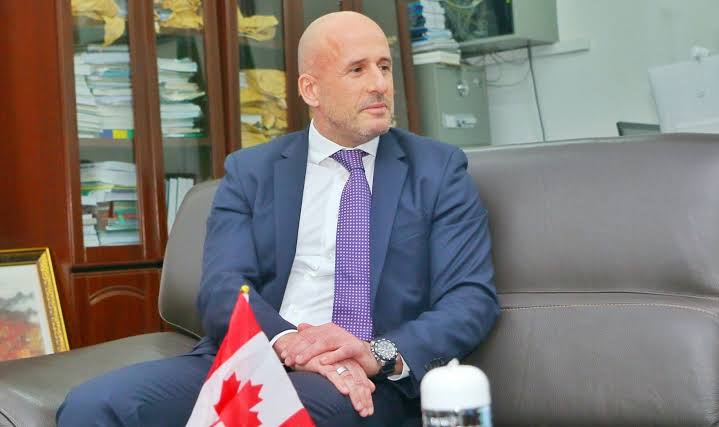
The Canadian government gave the Federal Government a $9,261,920 grant on Wednesday to help scale up the COVID-19 immunization program among high-risk groups. The grant will also help Nigeria’s healthcare system grow.
The project is another illustration of Canada’s historical institutional relationship with the WHO to support Nigeria in the crucial work for preventing disease and protecting those most at risk, said Jamie Christoff, High Commissioner of Canada to Nigeria, in a speech at the grant’s Abuja launch.
Christoff stated that even if COVID-19 is no longer a worldwide emergency, strengthening public health systems is still crucial for a comprehensive and long-lasting recovery.
“We must intentionally link up these efforts with routine immunisation and other services. This can help, for example, to reach children who missed routine vaccinations over the pandemic. We know that ultimately, it takes a health system to turn a vaccine into vaccination.”
In addition, he stated that the initiative would include COVID-19 into the nation’s health information systems, boosting data collection and management for disease surveillance, including data that takes gender into account.
Christoff added that “Under CanGIVE, the WHO project will be implemented in seven countries, where Nigeria receives the greatest share of $9 million Canadian Dollars. Nigeria was also amongst the first countries to receive COVID-19 vaccine doses from Canada in September of 2021, and I am pleased to be able to continue Canada’s support to Nigeria with this latest project.”
Dr. Walter Mulombo, the Country Representative of the World Health Organization in Nigeria, stated in his speech that the award has arrived at the ideal time to aid in boosting vaccination rates and coverage among priority populations.
“As of now, 14 states are performing less than 50 per cent vaccination coverage of their target population, and we still have some vulnerable populations that are not sufficiently covered. Key among these subgroups is the aged 50 years and above, people with co-morbidities, health workers, people living in humanitarian and security-compromised communities, and pregnant women.
“The WHO Director General’s declaration that COVID-19 is no longer a Public Health Emergency of International Concerns marks a turning point in the pandemic. The declaration does not mean COVID-19 is over as a global/national health threat. Though considerable achievements have been made, we are still at risk of infection as cases are still being reported in a number of countries.
“I would like to take this opportunity, to caution all of us on the need to continue protecting ourselves by completing the primary series of COVID-19 vaccination and for those who have completed to continue with the booster dose schedule,” Mulombo said.
According to Dr. Faisal Shuaib, Executive Director and Chief Executive Officer of the National Primary Health Care Development Agency, since the COVID-19 vaccination program was introduced in Nigeria on March 5, 2021, more than 75% of the target population of people aged 18 and older have received at least one dose of the COVID-19 vaccine.
“The programme has been implemented in phases, ensuring that eligible populations are reached and no one is left behind. Nigeria was among the first countries to establish an electronic registry and integrate COVID-19 vaccination with other primary healthcare services. Our One Country, One Team, One Plan, One Budget approach reflects our commitment to integrating lessons learned during and after the pandemic into our healthcare system.
“While we have made significant progress, we still have work to do. Several states have primary series coverage below 70 per cent, and booster doses account for just over 20 per cent of vaccinations. Therefore, this grant targets states with lower performance and aims to reach high-priority populations,” he said.


A vote for Raila Odinga will address Africa’s prosperity promptly.


Many Happy Returns To Princess Adeshewa Loveth


Dozens Trapped As Four-storey Building Collapse In Abuja


Rhema Voice Chapel International Sierra Leone Turns Sod To A Magnificent Church Building

