
Officials ranks Anambra the state with highest number of children with Tuberculosis.

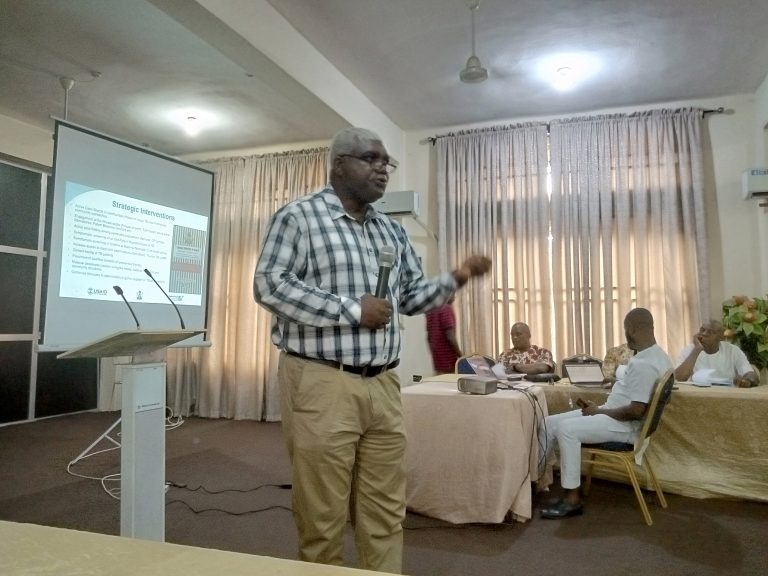
Dr. Ugochukwu Chukwulobelu, the program manager for Anambra State’s management of tuberculosis, leprosy, and buruli ulcers, claims that the state is responsible for the majority of Nigeria’s cases of childhood tuberculosis.
At the ongoing stakeholders’ engagement, which was held by the Federal Ministry of Health on Thursday in Awka in collaboration with the KNCV Tuberculosis Foundation and Breakthrough Action Nigeria, Chukwulobelu made the statement.
He described tuberculosis as an airborne illness brought on by the bacterium “Mycobacterium tuberculosis,” which often attacks the lungs but can potentially harm other body organs.
The program manager claimed that when a person with tuberculosis of the lungs or throat coughs, sneezes, or talks, the disease is disseminated through the air.
“According to statistics on TB burden, Nigeria ranks number six in the world and number one in Africa, with every local government having TB cases.
“Anambra has the highest burden of TB drug resistance cases and childhood TB contribution in the South-East and Nigeria. This is not a good thing for the state.
“To reduce the high burden of TB, the state government, in collaboration with the National Tuberculosis and Leprosy Control Programme and other partners, set up 14 laboratories with gene Xpert machines for diagnoses.
“We have about 800 Directly Observed Treatments Centres for TB, but the major problem is lack of awareness among residents about TB, its diagnosis and treatment,” he said.
Chukwulobelu asked the media to focus their reporting on the impact and symptoms of the illness as well as the availability of medical care for sufferers.
“Persistent cough for two weeks or more, fever, unexplainable weight loss and drenching night sweats are signs used to screen patients.
“Residents should report suspected cases of TB within their communities.
“TB patients should also adhere to their treatments to prevent drug-resistant TB cases which are even more dangerous.
“Everyone has a role to play to reduce the burden of the disease,” the programme manager said.
Also, according to Dr. Chijioke Oke of KNCV-Nigeria, children who are HIV positive, underweight children, and children who live with adults who have TB are all at risk of contracting the disease.
Oke said that some of the difficulties with the disease’s control in the state include low kid TB awareness, stigma, low funding for childhood TB, and low index suspicion for childhood TB by healthcare providers.
He claimed that as children do not know how to properly spit out sputum after coughing, but instead swallow it, children’s stool must be used to test them for TB.
“Our major challenge with Childhood TB control in the state is that parents are scared and do not allow doctors to take their children’s stool for tests.
“Some of them think the medical personnel want to use their children’s stool for ‘juju’.
“It shows the level of ignorance and lack of awareness among residents,” Oke said.


A vote for Raila Odinga will address Africa’s prosperity promptly.


Many Happy Returns To Princess Adeshewa Loveth


Dozens Trapped As Four-storey Building Collapse In Abuja


Rhema Voice Chapel International Sierra Leone Turns Sod To A Magnificent Church Building

