
“Lagos and Ibadan stadiums owe N950 million on electricity bills” – Sport Minister
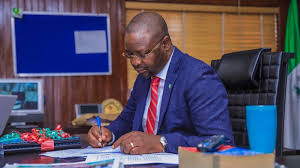
The Obafemi Awolowo Stadium in Ibadan and the National Stadium in Lagos each owe a whopping N950 million in electrical bills, this was announced by the sports minister Sunday Dare during a recent trip to both venues.
“As at five years ago, the National Stadium, Lagos owed N600m in electricity bills while the Obafemi Awolowo Stadium owe about N350m. The water in Ibadan was restored after N150m was paid,” the minister said.
After making fruitless attempts to collect the money paid by the sports administration, the dissatisfied electrical distribution business in charge of the Lagos stadium stopped sending bills to the venue in 2018, according to information.
Dare bemoaned the rot of the Lagos stadium, where construction is taking place within the main bowl pitch, tartan tracks, and scoreboard thanks to N400 million in sponsorship from wealthy businessman Kessington Adebutu.
“The work has been ongoing, but we are working on a complete fix of the electrical problems because the connection is the most important: it connects the sprinklers, the scoreboard, you can’t go to the floodlights yet because to fix them, you need about N10bn. All the cables have been stolen, what you have there is a carcass. I almost wept day I went to the stadium Control Room. Everything there is gone, except the wood,” Dare said.
“There’s no money to see off what I wanted to happen at the Lagos stadium. I can’t run faster than the money on the table. Look at Abuja stadium, it was a corn field, I have the pictures, everything was completely destroyed. We’ve played more than 17 international matches there now, FIFA and CAF matches. We brought in the reserve bench and took care of all the FIFA conditions.”
Dare said that the National Sports Industry Policy, which the President, Major General Muhammad Buhari (ret. ), signed last November, will aid in luring private finance to the sports industry.
“The efforts we made in three-and-a-half years was to make sure we got private funding and they told us, ‘there’s no policy in sports development, sports here is not business.’ There must be government business policy behind sports. It took us two-and-a-half years to get that ready. November 2 last year, the Sports Industry Policy was approved. The technical committee and the finance ministry are working out the brochure of incentives because that’s what the private sector needs to come in.”
Dare continued by saying that the Federal Government has taken steps to return some of its stadiums to the states as a result of the challenging economic climate in the nation.


