
Poachers In Botswana Take Advantage Of Okavango Delta flood Waters

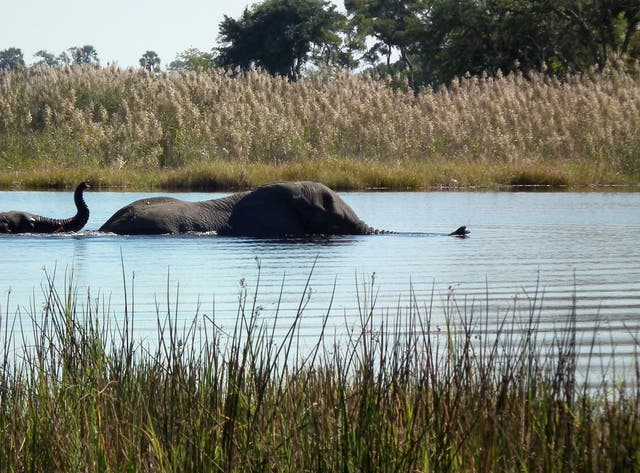
While the majority of residents in Botswana’s Okavango Delta are celebrating the return of the annual floods, the Okavango Kopano Mokoro Community Trust’s (OKMCT) escort guides are worried that poaching will increase.
At an event organised by the Trust in June to welcome the annual floods at Boro village, OKMCT senior escort guide, Monopane Namanga said they appreciate the return of the floods, as it will benefit most people in the area and will resuscitate the struggling tourism sector.
He however expressed concern that whenever the flood waters arrive, poaching incidents go up. Inevitably, this puts community escort guides whose mandate is to take care of wildlife in the delta, on high alert.
Namanga said the return of water means that their workload will increase as there will be more movements of people getting into the delta using their boats.
He added that most of them are tour operators with their guests exploring the beauty of the delta.
”Others who enter into the delta are community members living within some settlements in the delta, either going to harvest tswii (a traditional potato-like vegetable that grows in rivers) and reeds, or fishing,” he added.
However, he said there is an arrangement for anyone who enters the delta to register at the Boro mokoro (canoe) station.
This enables monitoring of movements in the delta and “it is our responsibility as escort guides to strictly monitor this,” he emphasised.
He advised that tour operators transporting tourists must pay gate fees to the Trust office in Maun and show proof of payment before they are allowed inside the delta.
Community members going to harvest grass or tswii must also have a permit from the Department of Forestry before they can enter the delta.
”The same applies to those who go inside for fishing, they also have to present fishing licences,” he noted.
He said that it has become a common practice for people to enter the delta posing as fishermen when in fact they are poachers that have come to kill small game such as impala and kudu for meat consumption.
Namanga noted that when water levels are high, law enforcement agencies relax their patrols as they cannot go deep inside the delta.
Poachers then take advantage of this by using dugout canoes and once they enter the delta, it is not easy to trace them.
Since the anti-poaching unit struggles to track poachers in these cases, they depend on help from OKMCT as it is easy for escort guides to travel deep into the delta.
Namanga explained that they inform the Botswana Defence Force (BDF) camp inside the delta whenever they notice suspicious movements by people that have entered the delta, to assist them by arresting poachers.
The senior escort guide further stated that they have a good working relationship with BDF officers who patrol the delta.
He dismissed media reports suggesting that the sour relationship between the community escort guides and the BDF has increased cases of poaching in the delta.
”Since I have been a community escort guide, we have been working well with the BDF as they are the ones doing patrols in the delta-like us,” he noted.
Efforts to get a comment from the Department of Wildlife and National Parks office in Maun on how they are prepared to deal with poaching as water returns were futile at press time as they did not respond to our questions.


A vote for Raila Odinga will address Africa’s prosperity promptly.


Many Happy Returns To Princess Adeshewa Loveth


Dozens Trapped As Four-storey Building Collapse In Abuja


Rhema Voice Chapel International Sierra Leone Turns Sod To A Magnificent Church Building

