
Aftermath Of Poll: Tanzanian Opposition Leader Run To German Envoy’s Residence After Death Threat

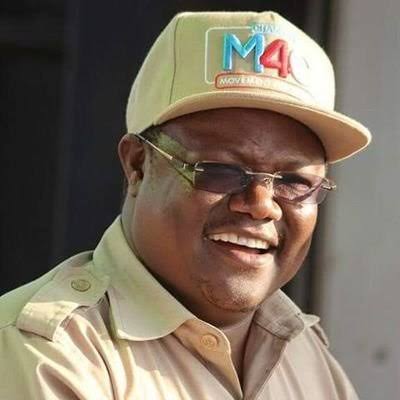
Tundu Lissu, the opposition leader of the Tanzanian CHADEMA party, on Saturday took refuge at the official residence of the German Ambassador to the country in Dar es Salaam after he receives death threats as a result of the disputed presidential election.
Lissu, who as head of leading opposition party CHADEMA was the main challenger to President John Magufuli in the October 28 election, said immediately after the vote, he started getting death threats.
“I received two unknown calls whose callers told me they will deal with me once and for all,” he told Reuters.
“We are waiting for the embassy to negotiate with the government for us to leave (to go) abroad. I cannot leave in a normal way without security assurance.”
Officials at the embassy were not immediately reachable for comment.
Police said there were no threats against Lissu and were unaware of him seeking refuge, adding that he had been provided with police security in the run-up to the elections.
“He finished the campaign safely and he went to vote safely. He is safe and (from) what we know there is no threat against him. Lissu is just creating things. There are no threats against him,” Dar es Salaam police special zone commander Lazaro Mambosasa told Reuters.
Lissu was shot 16 times and seriously wounded in 2017 in what remains an unsolved case.
He and other opposition leaders including CHADEMA chairman Freeman Mbowe and ACT-Wazalendo party leader Zitto Kabwe were briefly arrested this week after calling for demonstrations to demand a re-run of the election, saying it was riddled with fraud. They also want a new independent electoral commission.
Police said the demonstrations were illegal and were meant to cause violence.
Magufuli, who was sworn in on Thursday for his final five-year term, has promised to work with his rivals.
He is praised by some for pushing through big-impact infrastructure projects and a sweeping anti-corruption campaign.
His critics accuse his government of intolerance and authoritarianism, including a crackdown on critical voices, closure of some media outlets, and preventing opposition rallies.
The government denies that it stifles dissent.


A vote for Raila Odinga will address Africa’s prosperity promptly.


Many Happy Returns To Princess Adeshewa Loveth


Dozens Trapped As Four-storey Building Collapse In Abuja


Rhema Voice Chapel International Sierra Leone Turns Sod To A Magnificent Church Building

