News & Announcements Archives | Page 66 of 322 | The Lafete Magazine
close

News & Announcements

News & Announcements

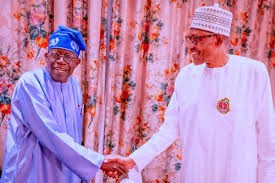
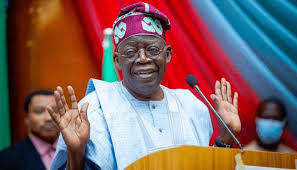
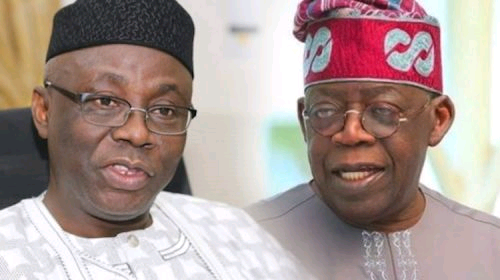
I Will Never Call Tinubu ‘My President’ – Tunde Bakare

The Serving Overseer of the Citadel Global Community Church, Pastor Tunde Bakare, has said that he will never call the President-elect, Bola Tinubu, his president.

The cleric and politician, during a webinar yesterday, alleged a series of malpractices during the 2023 elections, saying the Independent National Electoral Commission (INEC) made a mess of the electioneering process.

He said these while responding during a Question and Answer session after delivering his speech on the Zoom programme titled, ‘Building the New Nigeria: The Role of the Diaspora’ organised by the PTB4Nigeria In Diaspora Group.

The meeting began 7pm Saturday night and was monitored by our correspondent.

While speaking earlier during the programme, he said the 2023 elections were below acceptable standards.

When asked if he would be happy to work for the new government as a Minister of Diaspora Engagements, he laughed and said he would say what he said to the outgoing President Muhammadu Buhari last week.

Bakare said he told Buhari that sometimes he called him President of Nigeria and other times, he called him “My President.”

“Last Wednesday, I was at the Glass House where he (Buhari) has been restricted now because the main house is being renovated. I said I have done that for you. I want you to know that, because of the circumstances of your flying into power on the wings of integrity and incorruptibility, but you’re now passing onto someone who does not have that value,” the cleric told the participants.

He said that at “any public lecture anywhere, before this mess is cleared off, I will address Asiwaju as a President of the Federal Republic of Nigeria but I will never call him my president.”

He said he didn’t participate in the elections, and therefore, no one could say he lost in the exercise.

Bakare, who participated in the All Progressives Congress (APC) presidential primary election on June 14, 2022 and polled no vote, said: “I participated in the primary, and there were hundreds who participated only by stepping down, so there is no shame in what we have done. We spoke truth to power within seven minutes.


“I wasn’t there when they voted, I wasn’t there when they scored (me) zero, but we won that badge of zero and badge of honour.”
                 

read more
News & Announcements

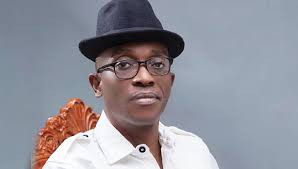
Hotelier Beaten To Death By Children Over Side Chic In Delta

A popular hotelier, Joseph Emekeme known as Semikolo, the Chairman of Covenant Suites, a hotel chain in Sapele, Delta State, was on Saturday confirmed dead.

Sources said the man fell gravely ill after his sons assaulted him.

It is alleged that the sons who graduated from Covenant University caught their father with a side chic and demanded a million naira bribe, or they’ll inform their mom, who was holidaying in the United States then.

It is said that the father called off their bluff, and true to their threat, they reported the sleazy affair to their mother, who was incensed.

The next day the father dropped by the Coca-Cola depot of the wife, and when the sons saw him, they hounded him out of the place.

According to insiders, he angrily went home and seized the keys to the sons’ cars, which drew their ire, and they descended on him with blows and kicks. He called the police, and the boys broke the head of one of the police officers.

The boys were arrested, and the father was rushed to the hospital. The father’s condition deteriorated quickly, and he was referred to the University of Benin Teaching Hospital, where he fought for his life.

It was gathered that the wife quickly flew back to the country and facilitated the release of the sons from police custody and strangely discharged the husband against the doctor’s advice from UBTH, where he was in a coma, and brought him home where he died.

read more
News & Announcements

I have faith that you’ll guide Nigeria with honesty, vision Tinubu hears from Buhari

On Saturday, President Muhammadu Buhari expressed his optimism that Asiwaju Bola Tinubu, who will take office in January, will lead the nation with morality, vision, and a strong sense of commitment.

Additionally, President Buhari stated that the battle against corruption and the values of accountability and openness should be supported.

The outgoing President cautioned that the government should work to foster an environment where every Nigerian has the equal opportunity to thrive regardless of their background, ethnicity, religion, or social status in a speech at the inaugural lecture in advance of his handover and the inauguration of the President-elect, Asiwaju Tinubu, on May 29.

According to him, “As we come to the close of this important inauguration lecture, I stand before you with profound sense of pride and gratitude. Today we have embarked on a journey of intersection, enlightenment, and collective growth. 

“We have delved deep into the theme of deepening democracy for development and explored the lessons that will guide us as we transition to a new era. 

“Throughout this lecture, we have recognized the challenges and divisions that have tested the very fabric of our nation we have confronted the harsh realities of inequality, the persistence of corruption and the imperative to empower all citizens.

“But more importantly, we have unearth the transformative power of democracy, and the immense potential it holds for our great nation. In the course of this lecture, we have learned that democracy is not merely a system of governance. It is a way of life. It requires active participation, inclusivity and relentless pursuit of justice, and fairness. 

“We have understood that true democracy thrives when the voices of all students heard, valued and represented, regardless of their background, or social status. The underlying philosophy of this lecture has been rooted in the belief that our nation’s progress rests on the place of unity inclusivity and shared responsibility. 

“We have acknowledged the task of nation building is a collective one transcending political affiliations and fasten that interest, which is our commitment to live in no Nigeria behind, ensuring that every citizen feels the positive impact of good governance and enjoys the dividends of democracy. 

“The lessons we have learned here are not mere intellectual exercises with a call to action. As I prepare to hand over the reins of governance to the president-elect on the 29th of May, I feel a renewed sense of hope, hinged on the capacity of my successor, His Excellency Bola Ahmed Tinubu to deliver on the assignment given to him by Nigerians. 

“And at the same time, you are being reminded of the immense responsibilities entrusted open us as leaders and the tremendous potentials that lies within our great nation. We must heed the lessons of this lecture and translate them into concrete actions.”

President Buhari, who will exit office on Monday after eight years in office further said, “We must continue to prioritize the welfare and well-being of our citizens, providing them with quality education, accessible health care, and sustainable livelihoods. 

“We must fight against corruption in all its forms upholding the principles of transparency, accountability, and the rule of law. But above all, we must remain united. Our diversity is our strength and it is through dialogue, understanding and respect. We can overcome our differences and forge a common path towards progress. 

“Let us foster an environment where every Nigerian has an equal opportunity to thrive regardless of their background, ethnicity, religion, or social status. As I conclude, I want to express my deep appreciation to the esteemed speakers, most especially our keynote speaker, His Excellency Uhuru Kenyatta, for once again, accepting my invitation to share his wealth of knowledge with us. 

“To the president-elect, I offer my heartfelt congratulations and assurance, unwavering support. I trust that you will lead our nation with integrity, vision and deep commitment to the ideals of democracy and national development. 

“Let’s remember that the true measure of our success lies not in the titles we hold or the position we occupy, it is the positive impact we make on the lives of our fellow citizens. 

“Together, let us move forward, guided by the lessons learned from this lecture and build a Nigeria that is prosperous, inclusive and anchored on the principles of democracy.”

read more
News & Announcements

Court upholds Abure’s position as LP chairman, halts Apapa-faction

A State High Court in Edo dismissed the notice of suspension against Julius Abure, the Labour Party’s embattled national chairman, on Friday. The notice had been issued by certain party members at the ward level.

Justice Emmanuel Aihamoje, the court, dismissed the case on Friday because it lacked merit.

This was said in a statement released on Friday in Abuja by the party’s acting national publicity secretary, Obiora Ifoh, who also revealed that Abure and the executives of LP Ward 3 in Esan North East, Edo State, filed the case.

Aihamoje ruled that the party ward executive in Uromi in ward 3 lacked the authority required by the Labour Party Constitution, in particular Acts 13 & 17 and the Electoral Act of 2022, as amended, to depose the party’s national chairperson in his nearly two-hour-long decision.

In order to prevent Lamidi Apapa and his side from ousting or suspending Abure as the national chairman until a new national convention of the party is called, the judge in Suit No. HUC/21/2023 went ahead and issued a perpetual injunction.

Aihamoje added that the alleged Wards 3 executive’s decision to suspend the party’s national chairperson was made beyond the bounds of its authority under the Labour Party Constitution.

Thompson Ehiguese, the chairman of the Labour Party for Ward 3, responded to the decision by telling reporters present at the courthouse that it had put a stop to swindlers posing as Labour Party members in the ward.

He said, “These charlatans claiming to be members of our party are from Edo North and members of APC. I want to use this medium to congratulate the Labour Party and the Obidient Movement that stood firmly with Comrade Julius Abure while the sponsored crisis in our great party lasted.

“The judgement is explicitly clear that Barrister Julius Abure remains the national Chairman until the party convention holds next year. Nothing can change our collective resolve to reclaim Nigerian masses’ mandate freely given to Mr Peter Obi and the party in the last presidential election.

On his part, Edo State Labour Party Chairman, Kelly Ogbaloi, affirmed that Labour party has been vindicated, adding that the court has confirmed Apapa and his faction are ‘tragic power seekers.’

“Apapa, who before then was a deputy national chairman and a custodian of the constitution of the party, knew that the act of those who came to Abuja to announce the suspension of the national chairman was not doing so legally, since the action was an aberration to the provisions of the party’s constitution, instead, he ran to the court, seeking ex-parte motion to restrain the national chairman.

“Today they have been basically told that the charade can no longer be entertained by the court”, he said.

read more
News & Announcements

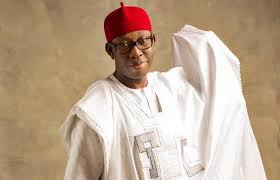
Okowa’s eight years of landmarks and milestone in Delta state

Analysts have excited considerable interest as governors wind down for new administrations nationwide. Outgoing Delta State governor Senator Dr Ifeanyi Okowa is in the first rank of those attracting attention. He has received so much positive and negative attention.

I noticed Temidayo Akinboyo’s feature, “Ifeanyi Okowa: Eight years of few ups and many downs”, in the Premium Times of 22 May 2023 as I was in Asaba the previous weekend. I read it with keen interest but saw that it is an example of the shortcomings of critics of Okowa who work to the answer but end up providing validation of the outgoing governor contrary to their thesis.

Before reading his essay, I engaged in a similar debate on a robust platform where some critics sought to dress Okowa in glittering generalities of negativism.  My column, The Public Sphere in EMetro.com, pays close attention to the South-East and South-South, so I am familiar with the issues around Delta State.

Akinboyo regurgitates the talking points of the sundry opposition in Delta State but cloths it in the garb of economic analysis. For instance, in a remarkable feat of gracelessness, the author cavils that Okowa “snatched victory from the jaws of defeat for the PDP” in the 2023 elections. The fact says otherwise. The facts indicate that outgoing governor Okowa’s performance won the confidence of Deltans, who delivered his successor in the Rt Hon. Sheriff Oborevwori and retained an overwhelming majority in the state House of Assembly. How does a man “snatch victory from the jaws of defeat” by winning 21 out of 25 local government areas? How does that happen except in jaundiced analysis?

Moving from “it is hard to assess his tenure holistically…,” Akinboyo nevertheless goes on to do this “hard’ task and fails. Woefully. His detailing of his itemised areas shows Okowa in good standing, contrary to his summation. The areas are “internally generated revenue, fiscal sustainability, poverty rate, unemployment rate, ease of doing business and budgetary allocations.” There is also the allegation that Okowa allegedly “failed to use the resources (of Delta State) for the infrastructural and human capital development” of the state. We must thank Akinboyo for initiating this examination of the Okowa record.

Infrastructural and human capital development are some of the many strong points of Okowa as governor. Okowa transformed the infrastructural and human capital foundation of Delta State. He transformed Asaba into the state’s de jure and de facto capital. For many years post-creation, Asaba was indistinct, neither a state capital nor a regional city. Asaba boasts today of many projects, including one of the best state secretariats in Nigeria, a network of roads that has seen neighbouring Okpanam merge into Asaba, the upgrade of the Asaba airport, and the completion of the Stephen Keshi Stadium after 18 years on the drawing board. Today, the massive infrastructural renewal that has turned Asaba around lured investors and homeowners and made it one of Nigeria’s most dynamic property markets—Asaba throbs with life from the work of Governor Okowa.

Okowa’s Storm Water Drainage project removed Asaba from the ignominy of the Flood Capital of the South-South. A similar stormwater drainage project in Warri, the commercial capital, is at 85 per cent completion as the governor leaves. It will change Warri.

Governor Ifeanyi Okowa delivered “a transforming and prospering economy…,” according to NextMoney and MONEY magazines. I read the journals ahead of my trip and gladly shared some of the data they highlighted. Landmark projects and significant milestones announce the Okowa years. Like Akinboyo, we should bring out some economic indicators.

1. Delta State has an estimated GDP of US$15 billion as of 2022, making it the third-largest state economy in Nigeria. Estimated growth has been 60% since 2015.

2. Delta State has an estimated per capita income of US$2701, higher than Nigeria’s national figure of US$2085 by World Bank estimates.

3. Delta State is number one in crude oil production. It is a function of peace, security, and good governance in the state. Okowa engaged the restiveness in the creeks and stopped it. Before Okowa, oil production fell severely, and insecurity forced oil firms out of the state.

4. According to the National Bureau of Statistics figures, Delta State ranked the second lowest in poverty in Nigeria in 2020, a significant leap from the 12th-lowest poverty rate in 2010. The 2021 Multiple Indicator Cluster/National Immunization Coverage Survey, also by the NBS, showed that only 4.2% of households fall within the poorest quintile (20%).

5. The National Competitiveness Council of Nigeria, in its 2017 Report, declared Delta State the first in human capital development due mainly to Okowa’s entrepreneurship development programmes which boosted the social services sector.

6. Asaba Airport has moved up from the 15th position to the sixth in passenger traffic. Okowa made the necessary investment to upgrade the airport after it was downgraded by the Federal Airports Authority just before he assumed office in May 2015. It is now a concession run by Asaba Airport Limited. The Federal Government has followed the concession route with the Nnamdi Azikiwe Airport, Abuja, and the Mallam Aminu Kano International Airport (MAKIA) in Kano. I recall engaging some naysayers in my column regarding the airport concession then.

7. Under Okowa, Delta State was the first to introduce the mandatory health insurance scheme by establishing the Delta State Contributory Health Commission in 2016. Delta State currently holds the number one position in comparative health coverage across Nigerian states. It is the first state in Nigeria to cover over 20% of its population with health insurance services with over 1.3 million enrollees. It is on a good trajectory towards achieving the Universal Health Coverage mandate of the United Nations.  

8. The Delta State Contributory Health Commission is Nigeria’s first and only Health Insurance Agency, listed by the National Information Technology Development Agency (NITDA) as compliant with the National Data Protection Regulation (NDPR) requirement for National Data storage and management.

9. Delta State has an increasingly diversified economy whereby the non-oil sector constitutes 52.5% of 2020 GDP compared to 41.9% in 2013.

10. Delta State continued to better its internally generated revenue by increasing it cumulatively by 82.04% from 2016 to 2021.

11. Delta State under Okowa created 14,075 new youth entrepreneurs through skills training, retraining, reorientation, start-up and working capital support. It also created 223,905 jobs through multifaceted programmes and initiatives. It facilitated 1,325,750 indirect jobs from the multiplier effects of investments in public infrastructure works, public-private partnerships, community-level development projects and public-private collaborative youth empowerment grants.

12. Delta State has an unemployment rate of 31 per cent from the latest reckoning of the National Bureau of Statistics. It is less than the national average of 37.2 per cent.

Okowa’s many infrastructure projects provide a platform for Deltans to activate – and maximise – their potential. With about 2,000 kilometres of roads and over 1,400 kilometres of drainage channels constructed by his administration, Delta State boasts a network of roads and bridges that have furthered rural-urban integration and enhanced trade and commerce. The many roads and physical infrastructure in the riverine areas, such as the 20.29 kilometres Obotobo – I Obotobo – II –Sokebolou-Yokri Road in Burutu Local Government, Okenrekoko township roads, and Ogulagha township roads are few of them. It would be interesting to visit the market on the sea that Okowa built, the Ogheye Floating Market in Warri North LGA.

Temidayo Akinboyo admits the many strides of the Okowa government in education and human capital development. Okowa’s three new universities and polytechnics have enhanced access to higher education for Delta State students. In addition, Governor Okowa revived the six moribund technical colleges in the state. He began constructing ten new ones in line with his administration’s policy emphasis on skills acquisition through technical/vocational education. Three out of the ten have been completed.

The many policy and administrative actions of the Okowa government significantly enhanced the ease of doing business in Delta State and attracted new investors. Evidence of a better business environment is the continued attraction of new businesses. They include these 15 PPP projects.

i.                    Concessions: Asaba International Airport; Leisure Park and Film Village; Agro-Industrial Park, Aboh Ogwashi-Uku; Norsworthy Farms and Agro-Allied Industries, Akwukwu-Igbo; Delta State Rest Park, Umunede, Automobile Dealers and Mechanics Park, Asaba, Warri Trailer Park, and Ogbe-Ogonogo Market, Asaba, Ovie Fish Feed Mill to O-Secul Nigeria Limited.

ii.                  UTM Offshore Floating Liquefied Natural Gas Plant, Warri, Stallion Tricycle Assembly Plant, Asaba, Private-Public Ownership of Songhai Delta Agricultural Complex, Amukpe, Virtual Gas CNG Plant, Ebede, Ukwuani LGA, DELCOM CO-OP 17, 345 hectares Oil Palm Development Initiative.

The many ups of Okowa in eight years are multifaceted and speak to responsiveness, responsibility, and reliability in tackling the challenges of Delta State and moving it many notches higher on the development indicators. He answered and went beyond bare economic fundamentals. Indeed, the evidence is that Okowa lifted Delta State and recorded numerous ups.La Fete Communications #1 Karl Drive By Tennis CourtHill Station, Freetown, Sierra Leone

read more
News & Announcements

Okowa’s eight years of landmarks and milestones in Delta State

Analysts have excited considerable interest as governors wind down for new administrations nationwide. Outgoing Delta State governor Senator Dr Ifeanyi Okowa is in the first rank of those attracting attention. He has received so much positive and negative attention.

I noticed Temidayo Akinboyo’s feature, “Ifeanyi Okowa: Eight years of few ups and many downs”, in the Premium Times of 22 May 2023 as I was in Asaba the previous weekend. I read it with keen interest but saw that it is an example of the shortcomings of critics of Okowa who work to the answer but end up providing validation of the outgoing governor contrary to their thesis.

Before reading his essay, I engaged in a similar debate on a robust platform where some critics sought to dress Okowa in glittering generalities of negativism.  My column, The Public Sphere in EMetro.com, pays close attention to the South-East and South-South, so I am familiar with the issues around Delta State.

Akinboyo regurgitates the talking points of the sundry opposition in Delta State but cloths it in the garb of economic analysis. For instance, in a remarkable feat of gracelessness, the author cavils that Okowa “snatched victory from the jaws of defeat for the PDP” in the 2023 elections. The fact says otherwise. The facts indicate that outgoing governor Okowa’s performance won the confidence of Deltans, who delivered his successor in the Rt Hon. Sheriff Oborevwori and retained an overwhelming majority in the state House of Assembly. How does a man “snatch victory from the jaws of defeat” by winning 21 out of 25 local government areas? How does that happen except in jaundiced analysis?

Moving from “it is hard to assess his tenure holistically…,” Akinboyo nevertheless goes on to do this “hard’ task and fails. Woefully. His detailing of his itemised areas shows Okowa in good standing, contrary to his summation. The areas are “internally generated revenue, fiscal sustainability, poverty rate, unemployment rate, ease of doing business and budgetary allocations.” There is also the allegation that Okowa allegedly “failed to use the resources (of Delta State) for the infrastructural and human capital development” of the state. We must thank Akinboyo for initiating this examination of the Okowa record.

Infrastructural and human capital development are some of the many strong points of Okowa as governor. Okowa transformed the infrastructural and human capital foundation of Delta State. He transformed Asaba into the state’s de jure and de facto capital. For many years post-creation, Asaba was indistinct, neither a state capital nor a regional city. Asaba boasts today of many projects, including one of the best state secretariats in Nigeria, a network of roads that has seen neighbouring Okpanam merge into Asaba, the upgrade of the Asaba airport, and the completion of the Stephen Keshi Stadium after 18 years on the drawing board. Today, the massive infrastructural renewal that has turned Asaba around lured investors and homeowners and made it one of Nigeria’s most dynamic property markets—Asaba throbs with life from the work of Governor Okowa.

Okowa’s Storm Water Drainage project removed Asaba from the ignominy of the Flood Capital of the South-South. A similar stormwater drainage project in Warri, the commercial capital, is at 85 per cent completion as the governor leaves. It will change Warri.

Governor Ifeanyi Okowa delivered “a transforming and prospering economy…,” according to NextMoney and MONEY magazines. I read the journals ahead of my trip and gladly shared some of the data they highlighted. Landmark projects and significant milestones announce the Okowa years. Like Akinboyo, we should bring out some economic indicators.

1.     Delta State has an estimated GDP of US$15 billion as of 2022, making it the third-largest state economy in Nigeria. Estimated growth has been 60% since 2015.

2.     Delta State has an estimated per capita income of US$2701, higher than Nigeria’s national figure of US$2085 by World Bank estimates.

3.     Delta State is number one in crude oil production. It is a function of peace, security, and good governance in the state. Okowa engaged the restiveness in the creeks and stopped it. Before Okowa, oil production fell severely, and insecurity forced oil firms out of the state.

4.     According to the National Bureau of Statistics figures, Delta State ranked the second lowest in poverty in Nigeria in 2020, a significant leap from the 12th-lowest poverty rate in 2010. The 2021 Multiple Indicator Cluster/National Immunization Coverage Survey, also by the NBS, showed that only 4.2% of households fall within the poorest quintile (20%).

5.     The National Competitiveness Council of Nigeria, in its 2017 Report, declared Delta State the first in human capital development due mainly to Okowa’s entrepreneurship development programmes which boosted the social services sector.

6.     Asaba Airport has moved up from the 15th position to the sixth in passenger traffic. Okowa made the necessary investment to upgrade the airport after it was downgraded by the Federal Airports Authority just before he assumed office in May 2015. It is now a concession run by Asaba Airport Limited. The Federal Government has followed the concession route with the Nnamdi Azikiwe Airport, Abuja, and the Mallam Aminu Kano International Airport (MAKIA) in Kano. I recall engaging some naysayers in my column regarding the airport concession then.

7.      Under Okowa, Delta State was the first to introduce the mandatory health insurance scheme by establishing the Delta State Contributory Health Commission in 2016. Delta State currently holds the number one position in comparative health coverage across Nigerian states. It is the first state in Nigeria to cover over 20% of its population with health insurance services with over 1.3 million enrollees. It is on a good trajectory towards achieving the Universal Health Coverage mandate of the United Nations.  

8.     The Delta State Contributory Health Commission is Nigeria’s first and only Health Insurance Agency, listed by the National Information Technology Development Agency (NITDA) as compliant with the National Data Protection Regulation (NDPR) requirement for National Data storage and management.

9.     Delta State has an increasingly diversified economy whereby the non-oil sector constitutes 52.5% of 2020 GDP compared to 41.9% in 2013.

10.Delta State continued to better its internally generated revenue by increasing it cumulatively by 82.04% from 2016 to 2021.

11. Delta State under Okowa created 14,075 new youth entrepreneurs through skills training, retraining, reorientation, start-up and working capital support. It also created 223,905 jobs through multifaceted programmes and initiatives. It facilitated 1,325,750 indirect jobs from the multiplier effects of investments in public infrastructure works, public-private partnerships, community-level development projects and public-private collaborative youth empowerment grants.

12.Delta State has an unemployment rate of 31 per cent from the latest reckoning of the National Bureau of Statistics. It is less than the national average of 37.2 per cent.

Okowa’s many infrastructure projects provide a platform for Deltans to activate – and maximise – their potential. With about 2,000 kilometres of roads and over 1,400 kilometres of drainage channels constructed by his administration, Delta State boasts a network of roads and bridges that have furthered rural-urban integration and enhanced trade and commerce. The many roads and physical infrastructure in the riverine areas, such as the 20.29 kilometres Obotobo – I Obotobo – II –Sokebolou-Yokri Road in Burutu Local Government, Okenrekoko township roads, and Ogulagha township roads are few of them. It would be interesting to visit the market on the sea that Okowa built, the Ogheye Floating Market in Warri North LGA.

Temidayo Akinboyo admits the many strides of the Okowa government in education and human capital development. Okowa’s three new universities and polytechnics have enhanced access to higher education for Delta State students. In addition, Governor Okowa revived the six moribund technical colleges in the state. He began constructing ten new ones in line with his administration’s policy emphasis on skills acquisition through technical/vocational education. Three out of the ten have been completed.

The many policy and administrative actions of the Okowa government significantly enhanced the ease of doing business in Delta State and attracted new investors. Evidence of a better business environment is the continued attraction of new businesses. They include these 15 PPP projects.

i.                    Concessions: Asaba International Airport; Leisure Park and Film Village; Agro-Industrial Park, Aboh Ogwashi-Uku; Norsworthy Farms and Agro-Allied Industries, Akwukwu-Igbo; Delta State Rest Park, Umunede, Automobile Dealers and Mechanics Park, Asaba, Warri Trailer Park, and Ogbe-Ogonogo Market, Asaba, Ovie Fish Feed Mill to O-Secul Nigeria Limited.

ii.                  UTM Offshore Floating Liquefied Natural Gas Plant, Warri, Stallion Tricycle Assembly Plant, Asaba, Private-Public Ownership of Songhai Delta Agricultural Complex, Amukpe, Virtual Gas CNG Plant, Ebede, Ukwuani LGA, DELCOM CO-OP 17, 345 hectares Oil Palm Development Initiative.

The many ups of Okowa in eight years are multifaceted and speak to responsiveness, responsibility, and reliability in tackling the challenges of Delta State and moving it many notches higher on the development indicators. He answered and went beyond bare economic fundamentals. Indeed, the evidence is that Okowa lifted Delta State and recorded numerous ups.

read more
News & Announcements

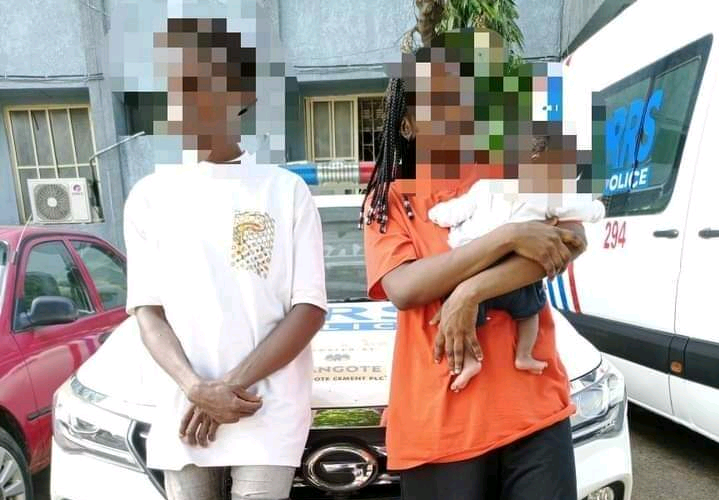
RRS Operatives Arrest Mother,Accomplice Over Plot To Sell Two-Month old  Baby 

A mother from hell has been arrested with her accomplice by the men of the Rapid Response Squad (RRS) in Lagos over plot to sell two month old baby.

The suspect, Maria Ahmadu and her accomplice, Oge Okolie were about to be lynched when RSS operatives arrived at the scene and saved her from the angry mob.

The incident happened at Oshodi area of the State.  

According to the statement, the accomplice was the intermediary between the mother of the baby and prospective buyer.

However, the deal was foiled inside a bus in the popular Oshodi area of the state, while Okolie was taking the baby to the suspected buyer, according to statement published on the social media pages of RSS.

The baby had started crying ceaselessly and suspicious passengers inside the bus had queried Okolie why she could not breastfeed it if it were her own biological child.

“The suspect was about to be lynched when RRS operatives quickly stepped in to rescue her as well as the baby.

“Preliminary investigations led to the arrest of the mother of the baby, one Maria Ahmadu ‘f’ aged 26,” the RRS said in the statement.

It added that Commander of RRS, CSP Olayinka Egbeyemi has since transferred the suspects and baby to the Gender Unit of the Command for further investigation and prosecution.

read more
News & Announcements

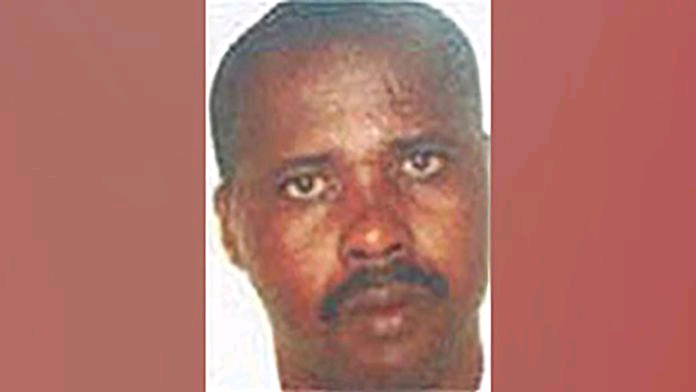
Most Wanted Rwandan Genocide Suspect Arrested In South Africa After Decades On The Run

The most wanted fugitive in the Rwandan genocide of 1994 has been arrested in Paarl, South Africa after decades on the run.

Fulgence Kayishema is accused of orchestrating the killing of more than 2,000 Tutsi refugees – women, men, children and the elderly – at Nyange Catholic Church during the genocide. He has been on the run since 2001.

He was captured Wednesday in a joint operation between the South African authorities and UN investigators.

When he was arrested, Kayishema initially denied his identity, according to a statement from the UN team. But by the end of the evening he told them: “I have been waiting a long time to be arrested.”Investigators said he used multiple identities and forged documents to evade detection.

“The arrest was the culmination of an intense, thorough and rigorous investigation,” a senior official at the prosecutor’s office involved in the case told CNN.

“Family members and known associates were exhaustively investigated. That ultimately led to identifying the right location to search and finding the critical intelligence that was needed.”

“Fulgence Kayishema was a fugitive for more than 20 years. His arrest ensures that he will finally face justice for his alleged crimes,” said Chief Prosecutor Serge Brammertz of the United Nations’ International Residual Mechanism for Criminal Tribunals (IRMCT).

“Genocide is the most serious crime known to humankind. The international community has committed to ensure that its perpetrators will be prosecuted and punished. This arrest is a tangible demonstration that this commitment does not fade and that justice will be done, no matter how long it takes,” Brammertz said.

At the end of the genocide in July 1994, Kayishema fled to the Democratic Republic of Congo with his wife, children and brother-in-law.

 After relocating to other African countries, he moved to South Africa in 1999 and claimed asylum in Cape Town, using a false name.

According to prosecutors, since his arrival in South Africa he was able to rely on a tight support network including former Rwandan military members which went to extreme lengths to conceal his activities and whereabouts.

In recent years, the IRMCT prosecutor has complained about the lack of cooperation from South African authorities and there have been a series of near misses capturing Kayishema. 

A report describes a failure to arrest Kayishema three years ago.

But on Thursday, Brammertz lauded the cooperation and support of the South African government.

The events in Nyanga, Rwanda, were one of the most brutal of the genocide, in which an estimated 800,000 Tutsis and moderate Hutus were killed over the period of 90 days.

The tribunal alleges that Kayishema directly participated in the “planning and execution of this massacre.” 

The indictment says he bought and distributed petrol to burn down the church while refugees were inside.

Kayishema and others are also accused of using a bulldozer to collapse the church following the fire, while refugees were still inside.

The former priest at the church, Athanase Seromba, was convicted over the massacre in 2006 and sentenced to 15 years in prison, which was later increased to a life sentence on appeal.

Kayishema is due to be arraigned on Friday in a Cape Town court.

A reward of up to $5,000,000 was offered by the US War Crimes Rewards Program for information on Kayishema and the other fugitives wanted for perpetrating the Rwandan genocide.

With the arrest of Kayishema, the UN is still seeking three more prominent suspects.

In 2020, another fugitive was captured in a Paris suburb after more than 20 years on the run.

Félicien Kabuga, “one of the world’s most wanted fugitives,” who is alleged to have been a leading figure in the genocide, was arrested in a joint operation with French authorities.

The Rwandan genocide saw Hutu militias and civilians alike murder vast numbers of members of the Tutsi ethnic minority: men, women and children, many of whom had been their neighbors before the conflict began.

The killings finally came to an end 100 days later, when Rwandan Patriotic Front (RPF) troops, led by Paul Kagame, defeated the Hutu rebels and took control of the country.

read more
News & Announcements

FBI documents reveal the assassination plot against Queen Elizabeth in 1983.

A new report from the Federal Bureau of Investigation in the United States describes an attempt to kill the late Queen Elizabeth II during her visit to California in 1983.

The FBI learned of the plot on February 4, 1983, a month before the monarch and her late husband, Prince Philip, were scheduled to make an official visit to the United States.

The threats were made by a man seeking retribution for his daughter who was “killed in Northern Ireland by a rubber bullet,” according to the documents that were made accessible on the Bureau’s information website, the Vault.

Following a Freedom of Information Act request made to the Bureau by US news media following the queen’s passing last year, the documents were made publicly available earlier this week.

The 102-paged document partly read , “He was going to attempt to harm Queen Elizabeth and would do this either by dropping some object off the Golden Gate Bridge onto the Royal Yacht Britannia when it sails underneath, or would attempt to kill Queen Elizabeth when she visited Yosemite National Park.”

The Queen’s Yacht was approaching the area when the Secret Service decided to close the walkways on the Golden Gate Bridge as a response. Her Majesty visited without any apparent problems despite the threat.

The Queen has experienced a number of assassination attempts during the course of her long reign. Most recently, in December 2021, a guy by the name of Jaswant Singh Chail entered Windsor Castle armed with a crossbow and informed authorities that his goal was to assassinate the monarch.

Chail, who was 19 at the time, released a TikTok video of himself discussing his intentions to exact revenge on the British for the Amritsar massacre in India in 1919 less than an hour before he was apprehended.

On September 8, 2022, nine months after the tragedy, the Queen passed away.

Chail was charged with attempting to “injure the person of Her Majesty Queen Elizabeth II, making threats to kill, and possessing an offensive weapon. He was arraigned in February 2023 and entered a plea of guilty.

read more
News & Announcements

Supreme Court rejects the PDP’s lawsuit, upholds Bola Tinubu’s eligibility for the presidency.

Asiwaju Bola Tinubu, the president-elect, was found to be eligible to run in the February 25 presidential election, according to the Supreme Court.

A five-member panel of the supreme court ruled unanimously on Friday that Tinubu’s opposition Peoples Democratic Party, PDP, appeal to question the legitimacy of his candidacy lacked merit.

The PDP had asked for Tinubu’s disqualification in the appeal with the reference number SC/CV/501/2023 on the grounds that the Vice President-elect, Senator Kashim Shettima, had let himself to be nominated for more than one seat before to the 2023 general elections.

It informed the court that Shettima received two nominations—one for the Vice Presidential position and the other for the Borno Central Senatorial seat.

The PDP claimed that Shettima’s dual nomination violated Sections 29(1), 33, 35, and 84(1) and (2) of the Electoral Act of 2022, as amended, in flagrant fashion.

As a result, in addition to asking the court to invalidate Tinubu and Shettima’s candidacy, the appellant also requested an order compelling the Independent National Electoral Commission, INEC, to strike their names from the list of candidates who had been nominated or supported and were therefore qualified to run for president.

While this was going on, the Supreme Court ruled that the opposition PDP lacked locus standi (legal authority) to meddle in the affairs of the ruling All Progressives Congress, APC, which nominated both Tinubu and Shettima for the presidency.

The Supreme Court confirmed the concurrent rulings of the Federal High Court in Abuja and the Court of Appeal, which had previously dismissed the PDP’s challenge.

It concurred with the respondents that neither section 149 of the Electoral Act of 2022 nor section 285 (14) (c) of the 1999 Constitution, as amended, provided the locus standi (legal right) to contest Shettima’s candidacy on the grounds of double nomination.

The supreme court ruled that section 84 of the Electoral Act only gave an aspirant the right to contest the party’s nomination of a candidate if they had taken part in the party’s primary election.

It was ruled that the PDP had failed to prove that the APC’s nomination had caused it harm, highlighting the fact that it is against the law for one political party to meddle in the internal affairs of another.

The PDP was unable to demonstrate that its civil rights and obligations were under jeopardy, according to the Supreme Court.

The appeal was referred to as the behavior of “a nosy busy-body and a meddling interloper that is peeping into the affairs of its neighbor,” according to the statement.

Furthermore, the high court chastised the PDP for submitting the appeal, calling it frivolous and likely to make the legal system a laughingstock.

The top court ruled that the evidence presented to it demonstrated that Shettima legally withdrew on July 6, 2022, from consideration as the APC’s candidate for the Borno senatorial election.

“In whichever angle this appeal is veiwed, it is frivolous and bound to fail. 

“From the trial court, down to this court, it has been a waste of precious judicial time. 

“The instant appeal was unnecessary and counsel should do better to advice their client against filing this sort of suit in future,” Justice Jauro added.

The Supreme Court granted the respondents’ request for N2 million in damages against the PDP while rejecting the appeal.

read more
1 64 65 66 67 68 322
Page 66 of 322