News & Announcements Archives | Page 47 of 322 | The Lafete Magazine
close

News & Announcements

News & Announcements

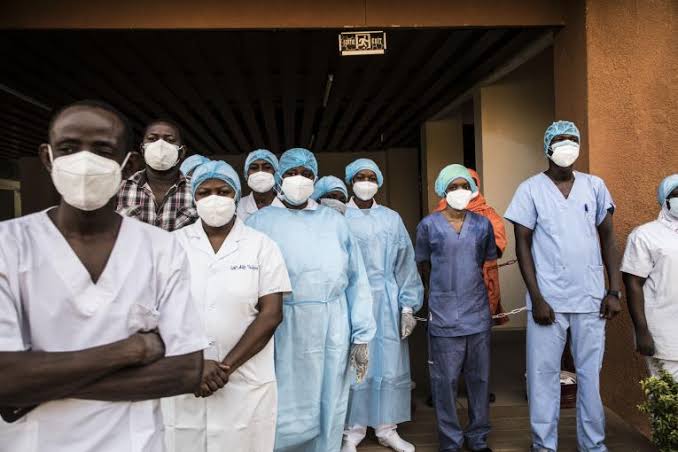
Anambra introduces a clock-in device to reduce absences among health professionals

In order to reduce absenteeism and make sure that health personnel take their jobs seriously, the Anambra State Government claims it has started installing clock-in devices in public health institutions.

Dr. Afam Obidike, the state’s commissioner for health, revealed this in Awka while addressing managers of the state’s public hospitals.

Obidike noticed that many medical staff members were absent when he unexpectedly visited hospitals, and some medical facilities did not open for business.

He claims that this mentality is to blame for the state’s high death toll and has stymied advancement in the medical field.

The commissioner claimed that the tool will eradicate laziness and absenteeism among healthcare professionals.

He asserted that the administration of Governor Chukwuma Soludo takes the provision of healthcare seriously and is committed to ensuring that residents have access to high-quality care in primary care clinics, general hospitals, and tertiary care facilities.

“This is part of the reasons for the installation of the clock-in device in all government hospitals; it is to ensure that healthcare workers are at their duty posts to attend to the health needs of the people.

“The device will also be used to monitor the hours health workers put in each day and that will subsequently determine their monthly salaries and allowances.

“The goal is to eliminate maternal and infant mortalities, as well as restore the confidence of our people in the healthcare services we provide in the state,” he said.

The commissioner added that the state’s hospitals were improving their referral systems and that the government was telemedicine-izing healthcare services.

“We are establishing the ‘Hub and Spoke’ approach for proper networking among the hospitals. Telemedicine will also allow primary healthcare centres to have access to different doctors.

“We are strengthening at least one general hospital in each local government area so that primary health centres can refer patients when the need arises.

“The state government is doing all it can with limited resources and as healthcare providers, we cannot afford to fail,” he said.

Obidike advised the hospital administrators to conduct weekly clinical and mortality reviews and submit the results to the ministry for follow-up action.

read more
News & Announcements

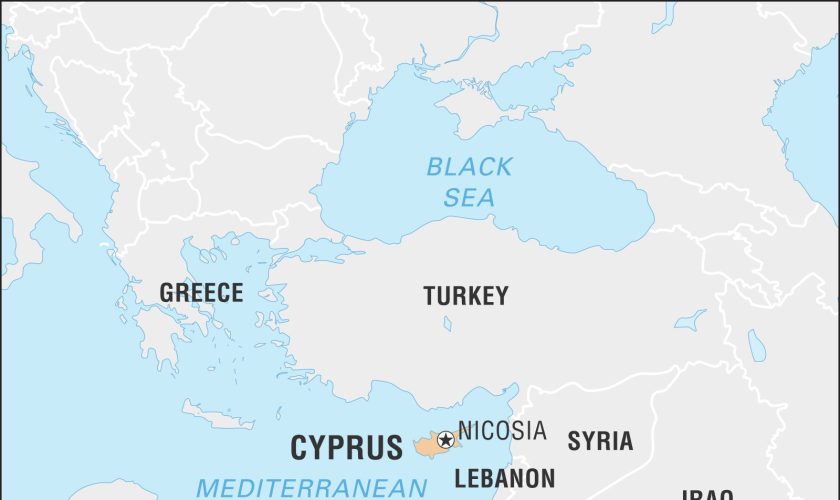
Man imprisoned for having sex with victim of human trafficking in Cyprus

In a case prosecutors heralded as a turning point for the Mediterranean island of Cyprus, a Cypriot court sentenced a man to prison on Friday for using a human trafficking victim’s sex as payment.

“This is the first time that a ‘client’ has been convicted by a Cypriot court,” the state prosecution service said.

“The convicted person was sentenced today to concurrent prison sentences of 2.5 years and three years since he was also found guilty and sentenced for the crime of rape.”

The woman who had been trafficked was a minor when her journey began, according to the evidence that was presented in court.

The Nicosia Criminal Court gave the guy who was indicted in the same case for trafficking the lady consecutive terms of five and six years in jail.

He was found guilty of pimping, financial abuse, withholding personal documents, trafficking the girl as a minor and an adult for sexual exploitation, and common assault.

The prosecution service said it was also the first time a Cypriot court had convicted a person for “trafficking a minor, with the purpose of sexual exploitation”.

For the offense of common assault, the third defendant in the case received a four-month prison sentence.

Without specifying the woman’s age or nationality at the time the traffickers began abusing her, the report claimed that the woman’s experience started while she was still a minor.

“The woman’s trafficker deprived her of the necessary means of living, pushing her towards prostitution.”

The ‘client’, as the prosecution service called him, was convicted of rape as the woman said she was forced to have unprotected intercourse with him.

“While the trafficking victim initially provided consensual sex services, in the process, these services ended up being non-consensual since it was clear from the complainant that she did not consent to unprotected vaginal intercourse,” the prosecution service said.

read more
News & Announcements

Bloomberg ranks Dangote richest in Africa, Bill Gates 4th in world

According to the Bloomberg Billionaires Index, Aliko Dangote, president of the Dangote Group, has continued to hold the title of richest man in Africa despite fluctuations in the value of the naira relative to the dollar.

Dangote ranked first among African billionaires on the Index with a worth estimated at an astonishing $15.6 billion in the most recent daily top billionaire listings, which were published on Tuesday.

The richest persons in the world are Ellon Musk and Bernard Arnault, with respective fortunes of $219 billion and $194 billion. Bill Gates, the CEO of Microsoft, comes in second with $130 billion in wealth, followed by Jeff Bezos in third with $151 billion, and Larry Ellison in fifth with $130 billion.

The fact that Dangote consistently ranks as the wealthiest person in Africa, despite the erratic nature of the Nigerian currency, is a testament to his successful commercial operations and investments across numerous industries.

Only five other Africans were included on the most current list of the 500 richest people in the world as of 2023. They include the wealthy South Africans Johann Rupert and his family ($13.3 billion in assets), Nicky Oppenheimer ($9.0 billion in assets), Nassef Sawiris ($7.47 billion in assets), Natie Kirsh ($7.37 billion in assets), and Naguib Sawiris ($5.93 billion in assets).

read more
News & Announcements

ASUU rejects NUC-designed curricula

The Core Curriculum Minimum Academic Standards created by the National Universities Commission have been rejected by the Academic Staff Union of Universities.

The union described it as nightmare-like, a threat to the standard of higher education, and a diminution of the authority of the university senate at universities in Nigeria.

According to a statement released on Friday and signed by Prof. Emmanuel Osodeke, national president of ASUU, it was absurd that the Nigerian University System was being forced to adopt prepackaged CCMAS content comprising 70% of its total content, while university Senates—who are formally in charge of developing academic programs—were only given 30% to work with.

It emphasized that there were rising concerns regarding the CCMAS documents’ major flaws and obvious weaknesses.

“ASUU is not unaware that setting academic standards and assuring quality in the NUS is within the remit of the NUC. Section 10(1) of the Education (National Minimum Standards and Establishment of Institutions) Act, Cap E3, Laws of the Federation of Nigeria 2004, enjoins the NUC to lay down the minimum standards for all universities and other degree awarding institutions in the Federation and conduct the accreditation of their degrees and other academic awards.

“However, the process of generating the standard is as important (if not more important) than what is produced as “minimum standards”.

“In this instance, the NUC has recently, through some hazy procedures, churned out CCMAS documents containing 70% curricular contents in 17 academic fields with little or no input from the universities. The academic disciplines covered are (i) Administration and Management, (ii) Agriculture, (iii) Allied Health Sciences, (iv) Architecture, (v) Arts, (vi) Basic Medical Sciences, (vii) Computing, (viii) Communication and Media Studies, (ix) Education, (x) Engineering and Technology, (xi) Environmental Sciences, (xii) Law, (xiii) Medicine and Dentistry, (xiv) Pharmaceutical Science, (xv) Sciences, (xvi) Social Sciences, and (xvii) Veterinary Medicine,” it read partly.

It emphasized that despite their dissatisfaction, many university administrators were holding back on publicly criticizing CCMAS.

However, the statement showed that certain university Senates were open about their discontent with the NUC’s continuous attempts to impose CCMAS on Nigerian universities.

It read, “The CCMAS is a nightmarish model of curriculum reengineering. It is an aberration to the Nigerian University System. The CCMAS documents are flawed both in process and in content. There is no basis for the 70% “untouchable CCMAS,” which cannot stand the test of critical scrutiny of university Senates.”

However, it suggested that “NUC should encourage universities, as currently being done by the University of Ibadan, to propose innovations for the review of their programmes. Proposals from across universities should then be sieved and synthesised by more competent expert teams to review the existing BMAS documents and/or create new ones as appropriate.

“The difference here is the bottom-up approach, unlike the top-bottom or take-it-or-leave-it model of the CCMAS.”

read more
News & Announcements

French Police Arrest 150 Protesting Teenager’s Killing Over Traffic Violation

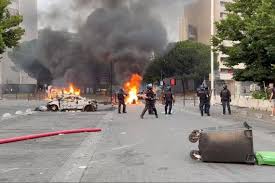
Violent protests broke out in France in the early hours of Thursday as anger grows over the police killing of a teenager, with security forces arresting 150 people in the chaos that saw balaclava-clad protesters burning cars and setting off fireworks.

Nahel M., 17, was shot in the chest at point-blank range on Tuesday morning in an incident that has reignited debate in France about police tactics long criticized by rights groups over the treatment of people in low-income suburbs, particularly ethnic minorities.

The teenager’s mother called for a march on Thursday afternoon in the Paris suburb of Nanterre where he was killed, in tribute to her only child.

In a sign of the seriousness of the situation, President Emmanuel Macron called an early morning crisis meeting of his ministers, the Elysee announced.

There had already been clashes the previous evening and while Wednesday night began calmly, unrest erupted in other French cities, including Toulouse, Dijon and Lyon before violence after midnight hit the Paris region, where around 2,000 riot police had been deployed.

“A night of intolerable violence against symbols of the republic, with town halls, schools and police stations set on fire or attacked,” Interior Minister Gerald Darmanin wrote on Twitter as he announced the 150 arrests figure.

He expressed support for police but added in an apparent swipe at the hard-left: “Shame on those who did not call for calm.”

‘Justice for Nahel‘
In the region around Nanterre, masked demonstrators dressed in black launched fireworks and firecrackers at security forces.

A thick column of smoke billowed above the area where AFP journalists saw more than a dozen cars and garbage cans set ablaze and barriers blocking off roads.

Graffiti sprayed on the walls of one building called for “justice for Nahel” and said, “Police kill”.

In the working-class 18th and 19th districts of northeastern Paris, police fired flash balls to disperse protesters burning rubbish, but instead of leaving, the crowd responded by throwing bottles.

“We are sick of being treated like this. This is for Nahel, we are Nahel,” said two young men calling themselves “Avengers” as they wheeled rubbish bins from a nearby estate to add to a burning barricade.

One said his family had lived in France for three generations but “they are never going to accept us”.

In the Essonne region south of the capital, a group set a bus on fire after forcing all the passengers off, police said, while in Clamart a tram was set on fire.

In the southern city of Toulouse, several cars were torched and responding police and firefighters pelted with projectiles, a police source said, while authorities reported similar scenes in Dijon and Lyon.

At France’s second-largest prison complex, Fresnes, protesters attacked security at the entrance with fireworks, a police source told AFP.

“They did not enter the prison grounds. The police were quickly called in,” the source added.


‘Unforgivable‘
The victim was pulled over for breaking traffic rules.

Police initially reported that an officer had shot at the teenager because he was driving at him, but this was contradicted by a video circulating on social media and authenticated by AFP.

The footage shows the two policemen standing by the side of the stationary car, with one pointing a weapon at the driver.

A voice is heard saying: “You are going to get a bullet in the head.”

The police officer then appears to fire as the car abruptly drives off.

Hoping to tamp down the spreading violence, authorities have pleaded for calm.

On Wednesday, the Nanterre town hall urged an end to the “destructive spiral”, while the government issued rare criticism of the security forces.

“A teenager was killed. That is inexplicable and unforgivable,” President Emmanuel Macron said during an official visit to Marseille, southern France.

France is haunted by the prospect of a repeat of the 2005 riots sparked by the death of two black boys during a police chase. Those protests resulted in around 6,000 people being arrested.

“There are all the ingredients for another explosion potentially,” one government adviser told AFP on condition of anonymity.

Last year, 13 people were killed after refusing to stop for police traffic checks, with a law change in 2017 that gave officers greater powers to use their weapons now under scrutiny.

“What I see on this video is the execution by police of a 17-year-old kid, in France, in 2023, in broad daylight,” said Greens party leader Marine Tondelier said.

But far-right leader Marine Le Pen said the officer was entitled to the “presumption of innocence”.

The 38-year-old policeman filmed firing the lethal shot was taken into custody and is under investigation for voluntary manslaughter.

read more
News & Announcements

Gaurd, Gunmen Dead In Shooting At U.S Consulate In Saudi

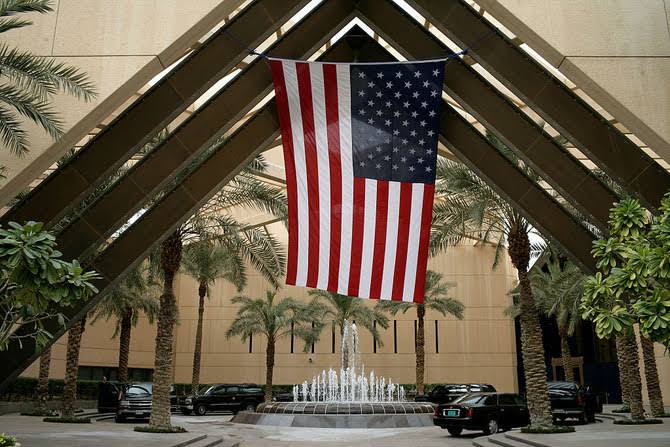
Saudi authorities were investigating Thursday after an assailant and a security guard were killed in an exchange of gunfire outside the US consulate in Jeddah, the gateway city for the massive hajj pilgrimage taking place in Mecca.

The gunman and a Nepalese security guard both died after the exchange of fire outside the consulate on Wednesday evening, officials said, giving no possible motive for the incident.

“At 6:45 pm (1545 GMT), a man stopped in a car in front of the consulate building and got out with a weapon in his hand,” the official Saudi Press Agency quoted a police spokesman as saying.

“Security forces reacted… resulting in an exchange of fire that killed the assailant,” it said, adding that the Nepalese guard later died of his wounds.

The shooting coincided with the final day of the hajj at nearby Mecca. More than 1.6 million foreign pilgrims arriving on planes and boats have streamed through coastal Jeddah en route to the rituals.

“Security investigations are still underway to ascertain the circumstances” of the incident, the police spokesman said.

The gunman’s nationality has not been revealed. US officials said no Americans were hurt and that the consulate had been secured.

“We offer our sincere condolences to the family and loved ones of the deceased local guards member,” the State Department said in a statement in Washington.

“The consulate was appropriately locked down and no Americans were harmed in the attack,” it said.

The United States was in touch with the kingdom as it starts its investigation, the statement added.

The US consulate in the Red Sea City has been the target of previous attacks, including one on July 4, 2016 — American Independence Day — when a suicide bomber blew himself up.

In December 2004, the consulate was stormed by suspected Islamist extremists in an attack that left five non-American staff and contractors dead, as well as four gunmen.

That attack, claimed by Al-Qaeda’s Saudi branch, was the first on a diplomatic mission in Saudi Arabia but one of a string of bombings and shootings in the kingdom at the time.

In recent times, Jeddah has been a hub of US diplomatic activity as the United States and Saudi Arabia together try to mediate between warring generals in Sudan.

Secretary of State Antony Blinken visited the city earlier this month when he met Crown Prince Mohammed bin Salman, Saudi Arabia’s de facto ruler.

read more
News & Announcements

ICPC Alleges: Ex-Jamb Registrar, Dibu Ojerinde Used Fake Names To Commit Fraud

The Independent Corrupt Practices and Other Related Offences Commission said on Wednesday that it remained undaunted in its prosecution of a former Registrar of Joint Admissions and Matriculation Board, Prof. Dibu Ojerinde.

The ICPC, which is prosecuting Ojerinde for alleged N5bn fraud, alleged in a statement on Wednesday that the the don “used several false names, aliases, and forged means of identification such as Akanbi Lamidi, Adeniyi Banji, Habibulahi Lamidi, Joshua Olaniran Olakuleyin, etc to perpetrate his corrupt practices through various bank accounts and still retains the resources and influence to evade justice.”

The ICPC also rejected a recent ruling of the Federal High Court in Abuja, which ordered it to pay Ojerinde N1m damages over his re-arrest on January 26 on the court premises.

Justice Obiora Egwuatu, ruling on a fundamental rights suit filed by Ojerinde, had declared that the re-arrest and continued detention of the JAMB ex-helmsman was illegal, holding that the ICPC violated Ojerinde’s right to personal liberty.

The judge ordered the anti-graft agency to pay Ojerinde N1m  in damages in addition to another N200,000  as the cost of instituting the lawsuit.

But in a statement on Wednesday by its spokesperson, Azuka Ogugua, the ICPC rejected the ruling, declaring that it was going to challenge it at the Court of Appeal.

The ICPC contended that Ojerinde’s re-arrest was based on a warrant issued by the Chief Judge of the Federal High Court.

read more
News & Announcements

Japa: Germany’s Immigration Law Creates New Job Opportunities For Nigerians, Others

The German parliament passed an immigration law on Friday designed to encourage more people from outside the European Union, including Nigeria, to come to Germany for work.
According to Interior Minister of Social Democrats (SPD) Nancy Faeser, the draft law secures prosperity in Germany.

“It would only work if the bureaucratic hurdles were dismantled during its implementation,” she said.

Like many countries in Europe, Germany is facing a shortage of skilled workers.

In 2022, the country’s labour shortage rose to an all-time high: the Institute for Employment Research (IAB) found 1.74 million vacant positions throughout Germany.

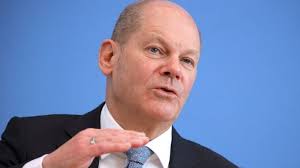
Together with Federal Chancellor Olaf Scholz, she emphasized removing bureaucracy and improving the digitization and efficiency of the system, according to Euro News.

“We know that we can only guarantee our future, the efficiency of our economy, and the efficiency of our social security systems if we have enough skilled workers at our disposal,” said Scholz.

“From within the European Union, that’s not so difficult because there is freedom of movement. About the rest of the world, it is a greater challenge,” he added.

Here are key things to know about how the law opens job opportunities for Nigerians and other nationals.

1. According to Euro News, the reforms are to modernize the country’s immigration legislation expected to make it easier for third-country nationals to work in Germany. It could increase the number of non-EU workers in Germany by 60,000 per year.

2. The reforms to the Skilled Immigration Act particularly focus on workers with vocational, non-academic training. Existing rules for qualified professionals with university degrees will also be relaxed.

3. Germany is hoping to combat its shortage of skilled workers with a new ‘opportunity card’ called chancenkarte. The ‘chancenkarte’ will use a points system to enable workers with the required skills to come to Germany more easily.

4. The points-based system will take into account qualifications, professional experience, age, German language skills, and ties to Germany.

5. Every year, quotas will be set depending on which industries need workers. Three out of four of the following criteria must also be met to apply for the scheme: a degree or vocational training, three years of professional experience, language skills, or a previous stay in Germany, and 35 years old or younger.

6. Currently, most non-EU citizens need to have a job offer before they can relocate to Germany. A visa for job seekers already exists, but the ‘chancenkarte’ is expected to make it easier and faster for people looking to find work in Germany.

7. Citizens of certain countries with visa agreements can already enter Germany for 90 days visa-free but are only permitted to take up short-term employment.

8. The opportunity card will allow people to come and look for a job or apprenticeship while in the country rather than applying from abroad. Applicants must be able to prove they can afford to pay their living expenses in the meantime.

9. The exact details of the scheme are yet to be formalized. The chancenkarte is not expected to be available until at least the end of 2023.

10. The new system will make it easier for people with professional experience – rather than a university degree – to come and work in Germany.

11. Germany will become more open to job experience and professional qualifications that are recognized in workers’ native countries. Currently, the country is strict about which qualifications it recognizes.

12. It will also be easier for those without a job offer to seek work in Germany via the opportunity card.

13. Qualified job seekers with degrees or vocational certificates will be allowed to stay in the country for one year as they search for employment. While looking for full-time employment, they will be permitted to work up to 20 hours per week.

14. Rules will also be eased for those with a job offer and a recognized diploma. Salary thresholds will be lowered, it will be easier for workers to bring their families to Germany, and it will be easier to gain permanent residency.

15. Job opportunities are open in Germany for immigrants that are craftspeople, electrical engineers, IT specialists, careers, nurses, catering, and hospitality professionals.

read more
News & AnnouncementsSports

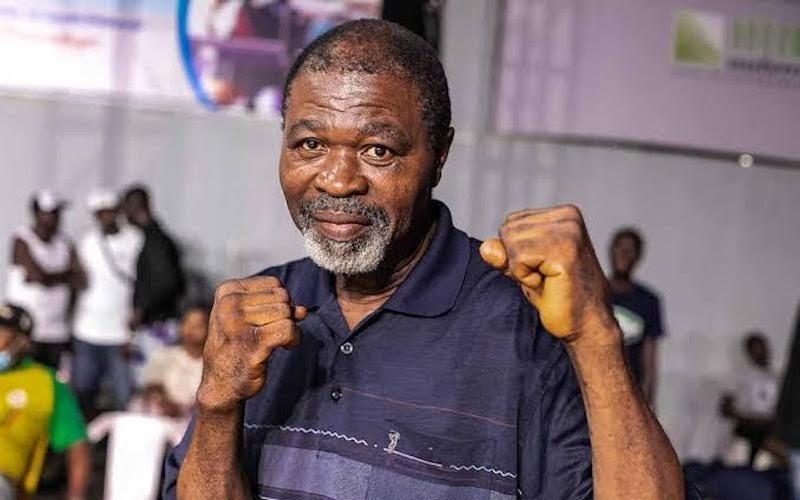
Olympic athlete Okorodudu passes away; hospital seizes body over unpaid N.6m

Jeremiah ‘Jerry’ Okorodudu, a former boxer from Nigeria, passed away on Wednesday night at a private hospital in Lawandon, Lagos, following weeks of bed rest due to a foot ulcer, according to The PUNCH.

The PUNCH received confirmation of Okorodudu’s death from his wife, Adenike.

Adenike claimed that the hospital would not release her husband’s body until the unpaid N600,000 medical bill was settled.

“He is dead now but we still need to pay N600,000 to get his body out of the hospital,” Adenike told Newsmen.

His age was 64.

The Olympian had been transferred from a number of institutions before being transported to the Lawanson hospital, mostly because of a lack of funding.

The Olympian’s demise was also confirmed by Remi Aboderin, president of the West Africa Boxing Union, and the secretary general of the Nigerian Boxing Board of Control.

“It is true about his death. I just confirmed it after you called me and I reached out to some colleagues,” Aboderin told.

“It is unfortunate that he died this way, and I am actually lost for words. May his soul rest in peace,” he said.

At the Olympic Games in Los Angeles in 1984, Okorodudu fought as a representative of Nigeria in the middleweight division.

At the Oluyole 1979 National Sports Festival in Ibadan, he won the gold medal.

In 2020, he developed a mobility-impairing boil infection, which started his current medical situation. Then, at Dans Hospital in Ikorodu, Lagos, he underwent a successful operation.

But after being told he had a foot ulcer and had a stroke, his health deteriorated again.

read more
News & Announcements

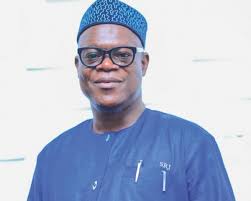
Conflict occurs between Adeleke’s aide and the former Senate spokesperson at the Osogbo Eid prayer site.

Ademola Adeleke’s assistants and Dr. Ajibola Basiru, an ex-spokesperson for the Senate, got into a fight over the seating arrangement at the Osogbo Eid worshipping grounds on Wednesday.

When the Eid-el-Kabir prayers were about to start, Basiru and other notable Osogbo natives arrived at the praying area. It was later discovered that while they were waiting for the prayers to start, some individuals who were reportedly the governor’s aides informed Basiru that he was sitting in Adeleke’s designated spot and that he should move to the second row.

Despite the argument over the directive, Basiru was seen getting up from his previous seat.

When the controversy over the seating arrangement started, Adeleke hadn’t yet arrived at the location.

Asiwaju Musulumi of Yorubaland, Edo, and Delta, Dr. Tunde Badmus led Adeleke into the praying area, but she was unable to get to the front row because the dispute was still being worked out.

Later, the governor’s motorcade was seen leaving the location as the prayers were about to begin.

Following the prayers, the police sealed the door to the prayer area amid reports that Basiru’s arrest had been ordered; however, the door was eventually unlocked, and the attendees exited the area.

Olawale Rasheed, the governor of Osun’s spokesperson, could not be contacted on his cell number, while attempts to call Basiru’s telephone rang out in vain.

read more
1 45 46 47 48 49 322
Page 47 of 322