News & Announcements Archives | Page 298 of 322 | The Lafete Magazine
close

News & Announcements

News & Announcements

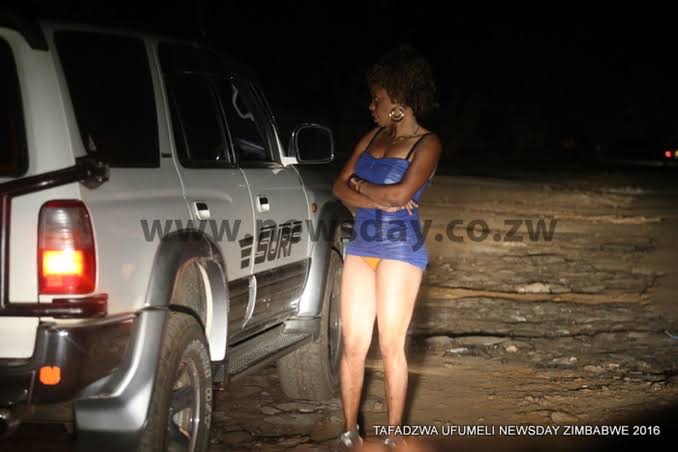
Worsening Economic Crisis Pushes Prostitution Rate High In Zimbabwe

Prostitution has witnessed a huge increase in Zimbabwe following the deepening of the Country’s economic woes due to the impact of the Coronavirus pandemic.

A report from Thomas Reuters Foundation shows that even underage women in the crisis-ridden country now take to prostitution to make ends meet.

Esther Kamupunga (not her real name), for example, spoke to the media and said she was laid off by her employers in Mature, the eastern part of the country after the economy was grounded due to COVID-19.

THE 24-year-old single mother of two said she could not withstand her two children going to be without food, hence she toed the line of prostitution.

“Life was better until the advent of this coronavirus. Our business came to a standstill due to lockdown … unfortunately I was one of the people who were retrenched,” she said, shielding her face from passing car headlights.

“I have two children. I could not watch them going to bed without eating anything. I had no option but to follow some friends to this shopping centre,” she told the Thomson Reuters Foundation, declining to publish her real name.

The southern African nation is experiencing its worst economic crisis in a decade, with crippling hyperinflation, unemployment, strikes by public workers and shortages of food, medicine and foreign currency.

Sex workers and charities providing them with health care services said the number of women selling sex has increased, particularly young girls facing hunger at home.

“We have a lot of cases coming to us of girls who were now engaged in transactional sex because of the increase in the household poverty,” said Beatrice Savadye, director of Roots Africa, a local charity supporting young people.

Savadye said she received 350 reports of children having sex in exchange for money or gifts from March to June – double the previous year – in Mazowe, a mining town 40 km north of Harare.

Her charity has been giving food parcels to hungry families.

Ordinary Zimbabweans say life is difficult, with inflation above 700%, rocketing prices for basic goods, electricity and petrol, and lagging salaries – prompting teachers to refuse to return to work without a pay rise last month.

“Hunger drives us into the sex trade,” said Hazel Zemura, who has sold sex for a decade and works for Women Against All Forms of Discrimination, which runs health programmes for sex workers.

“As our incomes, like the cross border trading – the importation of weaves and makeup kits from China for resale – got eroded during the lockdown, we had to turn to men for survival.”

The latest government data shows 16% of Zimbabweans were unemployed in 2019, but many regard this as an underestimate.

The lockdown, followed by a curfew in July, forced traders off the streets, while the closure of Zimbabwe’s borders for all non-essential travel cut off a lifeline for 1 million informal cross-border traders, said economist Victor Bhoroma.

“Covid-19 has exacerbated an already dire situation in terms of employment,” the independent analyst said from the capital Harare, adding that about 6 million Zimbabweans who work in small businesses and informal trade were severely affected.

“The lockdowns in the tourism and hospitality sector, transport, aviation and leisure services, manufacturing, fast food and retailing and sports have resulted in massive retrenchments and layoffs in the last seven months,” he added.’’

Zimbabwe has recorded about 8 300 coronavirus cases and about 250 deaths, according to Johns Hopkins University.

Coronavirus restrictions have made sex work riskier as women have been unable to get free condoms from their usual clinics and illegal brothels in residential areas and downtown nightclubs have closed.

“Some sex workers, because they do not have condoms, they would put a cloth up their vagina to prevent pregnancy and contracting HIV. After sex they would remove the cloth and wash it for reuse with another client,” said Savadye of Roots Africa.

But Zemura said some of her members chose not to use condoms because they can charge more.

“Unprotected sex pays more. So at times, we have it despite the risks,” she said.

The closure of brothels has pushed sex workers into riskier places, like secluded fields and deserted buildings, said Charmaine Dube, programme coordinator for the sex worker rights group Pow Wow in Bulawayo, Zimbabwe’s second-largest city.

Many brothels remain closed, although the easing of the curfew – with people told to stay home from 8 pm to 6 am – has allowed sex workers back on to the streets, she said.

Kamupunga, the ex-waitress, takes clients who pay for a “short time” to an open field, for which she charges about $2, although she is often pushed to accept half that.

“We lie on a cloth spread on top of the grass. It provides comfort suitable for a short time,” she said, adding that taking clients to her home – known as “night” – costs them about $10.

Although coronavirus infection rates are falling and most children have returned to school this month, many women fear they will not be able to return to their old jobs.

International borders have yet to reopen, forcing one former trader, who used to buy kitchen utensils and clothes in South Africa for resale locally, to keep selling her body to provide for herself and her child.

“Some goods are being illegally imported into the country but the bribes that traders pay to the police make the business unprofitable,” the 26-year-old said one night while waiting for men in the backyard of a closed nightclub.

“My daughter stays with my mother … I send money to them every month.”

She hopes to return to her old job when borders reopen in December. But Bhoroma, the economist, was sceptical.

“The economy still has challenges in terms of high inflation, foreign currency shortages, high costs of production and depressed local demand,” he said.
read more
News & Announcements

French Prosecutors Say Knife Attack At Nice Was Terrorism

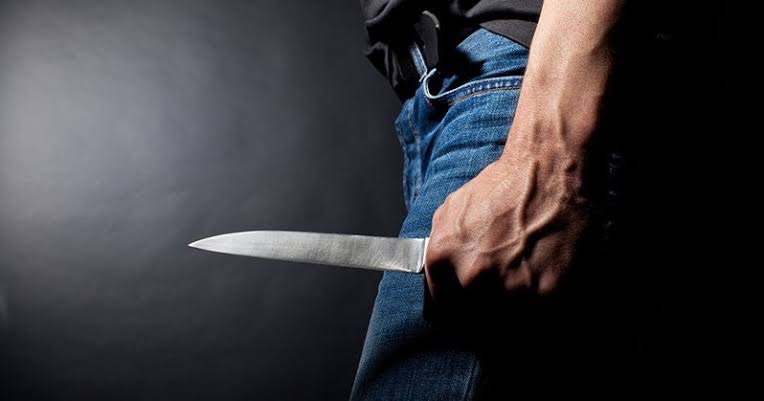
French anti-terrorism prosecutors are investigating a knife attack at a church in the Mediterranean city of Nice that killed at least two people and wounded several others at a time when French authorities are on high alert for extremist violence.


The assailant, according to a report on CBS News, was arrested shortly after the Thursday morning attack at Nice’s Notre Dame Church and taken to a nearby hospital after being injured during his arrest, a police official said. He was believed to be acting alone and authorities aren’t searching for other assailants, the official said. She wasn’t authorized to be publicly named.The anti-terrorism prosecutor’s office said an investigation was opened into an attack with a terrorist connection.Nice Mayor Christian Estrosi said the attacker shouted “Allahu akbar!” (God is greatest) repeatedly as police apprehended him and that “the meaning of his gesture left no doubt,” Reuters reported.
Speaking to reporters in Nice, Estrosi said the suspect kept repeating the phrase even while under medication, French news agency Agence France-Presse reported, and that two people were killed inside the church, while a third person who escaped to a nearby bar was in critical condition.Estrosi told French broadcaster BFM TV that one of the people who was killed in the church, a woman, was beheaded.Images on French media showed the neighborhood locked down and surrounded by police and emergency vehicles. Sounds of explosions could be heard as sappers blew up suspicious objects.The exact motive of the attack was unclear but comes as France is under alert for Islamic extremist acts amid tensions over caricatures of the Muslim Prophet Muhammad published by satirical French weekly Charlie Hebdo, and after two other recent attacks in France with links to the cartoons.The lower house of parliament suspended a debate on new virus restrictions and held a moment of silence Thursday for the victims. The prime minister rushed from the hall to head to a crisis center overseeing the aftermath of the attack.

read more
News & Announcements

Saudi Arabian Held After Stabbing Guard At French Consulate In Riyad

Saudi Arabia’s state-run news agency is reporting that a Saudi man has been detained after stabbing and slightly wounding a guard at the French Consulate in the city of Jiddah.The Saudi Press Agency’s report on Thursday offered no motive for the attack.However, it comes amid heightened tensions after an assailant decapitated a French middle school teacher who showed caricatures of the Prophet Muhammad for a class on free speech. Those caricatures were published by Charlie Hebdo and cited by the men who gunned down the newspaper’s editorial meeting in 2015.On Thursday, authorities say an attacker armed with a knife killed three people at a church in the French city of Nice.

read more
News & Announcements

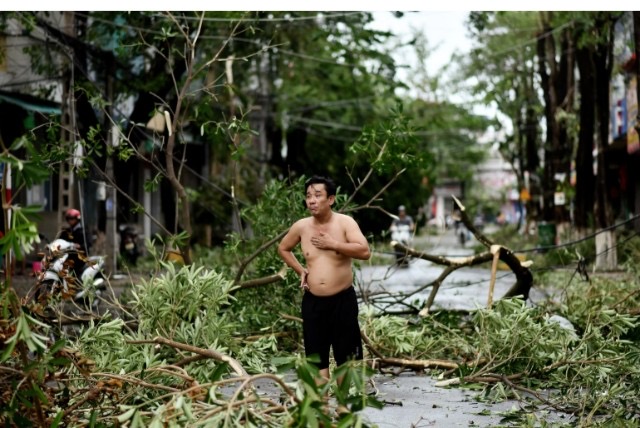
Typhoon Molave Leaves 21 Persons Dead, Dozens Missing In Vietnam

Vietnam has deployed heavy machinery and hundreds of soldiers to search for survivors buried under landslides triggered by torrential rains from Typhoon Molave, one of the strongest typhoons to hit in the region in decades.

Twenty-one people, according to Aljazeera, have been killed and dozens more were feared dead on Thursday after a typhoon tore through central Vietnam a day earlier, triggering landslides in the central province of Quang Nam and causing some of the worst destruction seen in years.

Rescue efforts were hampered by bad weather at the tail end of the storm and tens remained missing, a government statement said.

“We can forecast the storm path or the amount of rain, but can’t predict when landslides happen,” Deputy Prime Minister Trinh Dinh Dung said in a statement.

“The road is covered under deep mud and heavy rains are still lashing the area, but rescue work has to be carried out quickly.”

Nineteen bodies had so far been pulled from the mud across three hard-hit villages in Quang Nam province, state media reported. Authorities said another 45 people were believed to be buried in the area.

Two people were killed earlier as they tried to protect their homes from the typhoon.

Since early October, Vietnam has been battered by storms, heavy rains, and floods which have left at least 130 dead. More than one million people were already “in severe danger and in need of relief” before the latest typhoon hit, according to the International Federation of the Red Cross (IFRC).

The fourth big storm to hit Vietnam within a month, Typhoon Molave ripped off roofs, uprooted trees, and left millions without electricity in the central region, according to local media. More than 89,000 homes were damaged, the IFRC said in a statement on Thursday.

Twenty-six fishermen also remain missing after their boats sank when trying to return to port on Tuesday and two navy vessels had been mobilized to find them.

“The people of Vietnam are tough, yet this is among the worst destruction ever seen in many areas,” Nguyen Thi Xuan Thu, president of the Vietnam Red Cross Society said on Wednesday. “The relentless storms and flooding are taking a devastating human toll, further destroying livelihoods and isolating millions of people.”

She added: “All our hard work in containing the social and economic fallout of COVID-19 is being undone by these massive storms hitting us one after the other.”

The IFRC has launched an appeal for $4.2m to help those affected, saying that at least 150,000 people were at immediate risk of food shortages and hunger after floodwaters destroyed thousands of hectares of crops and killed more than two million cattle and poultry.

The back-to-back storms have stretched relief teams to the limit, it added.

Molave weakened to a tropical depression after making landfall on Wednesday and is expected to reach Laos later on Thursday.

Heavy rain of up to 700 millimeters (27.5 inches) will continue in parts of central Vietnam until Saturday, Vietnam’s weather agency said.

Hoang Phuong Thao, executive director of ActionAid Vietnam, said the typhoon had brought more death and destruction to communities already “torn apart by the worst flooding we’ve seen in decades”.

Vietnam is prone to natural disasters in the rainy season between June and November, with central coastal provinces commonly impacted, but the storms have noticeably worsened in recent years.

The Red Cross said the storms were “yet another example of the devastating impact of climate change”.

read more
News & Announcements

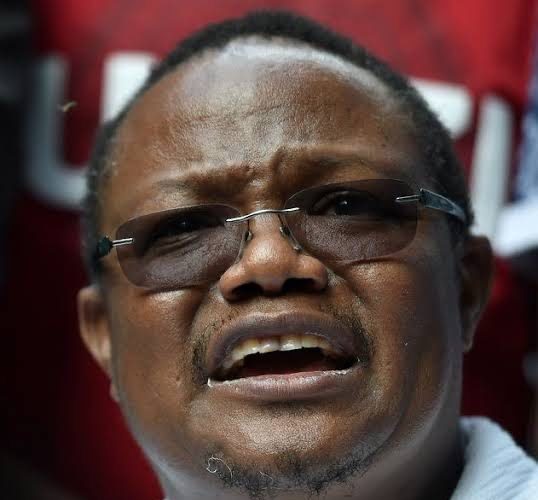
Tanzanian Opposition Leader Rejects Presidential Election, Alleges Widespread Rigging

The leading opposition candidate in Wednesday’s presidential election in Tanzania, Tundu Lissu of CHADEMA Party, is rejecting the exercise, alleging widespread irregularities in the poll.

Lissu said whatever happened was not an election and was like “spitting in the face of democracy.”

INDEPENDENT reports that Lissu also appeared to warn of unrest: “Those in power are telling Tanzanians, ‘If you want to change, look for it another way, not through the ballot box, not through democracy,” he told reporters Thursday. 

“The message they are sending is, ‘Use force if you can … We won’t let you win through democracy. If you want, use force.”

Lissu asserted that thousands of observers were turned away from polling stations and those who managed to enter were not given official results.

The other top opposition party, ACT Wazalendo, announced that its presidential candidate in the semi-autonomous region of Zanzibar, Seif Sharif Hamad, was arrested Thursday for the second time in a week.

The East African nation’s electoral commission has denied allegations of irregularities as populist President John Magufuli seeks a second five-year term. The results could be announced as soon as Thursday.

Tanzania Elections Watch, a regional group of eminent persons, expressed concerns about the conduct of the vote.

“Unfortunately, in Tanzania the announcement made by the National Electoral Commission is final,” the group’s co-chair Frederick Ssempebwa told a briefing, as results cannot be challenged in court. “There is no avenue for the aggrieved parties to air their views.”

The declaration of results could trigger a wave of instability, Ssempebwa said.

read more
News & Announcements

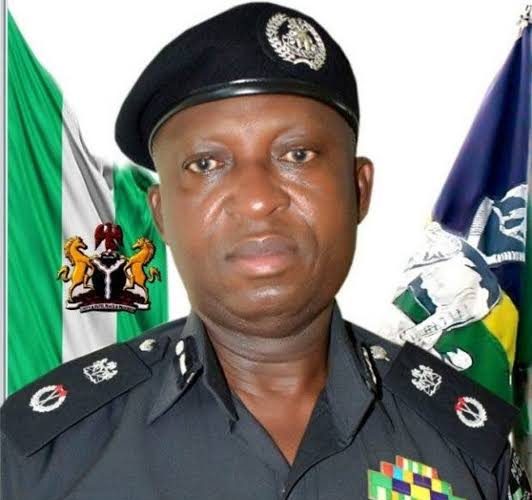
We Lost At Least Six Officers To #EndSARS Protest, Says Lagos Police Chief

Mr. Hakeem Odumosu, the Lagos State Police Commissioner in the southwestern part of Nigeria, has disclosed that the command in the state lost at least six officers while more than thirty others were wounded in the recently relaxed #EndSARS protest that rocked Nigeria.


Young Nigerians, it will be recalled, took to the streets in a peaceful protest to demand the proscription of the dreaded and notorious Special Anti-Robbery Squad (SARS), which had over the years accounted for the death of so many innocent Nigerians.
In the protest that lasted for more than two weeks in virtually all the major cities in Nigerian, the Nigerian Government allegedly deployed security agencies and also used maximum force against the protesters, leading to the death of some youths around the country, even as thugs hijacked the hitherto peaceful exercise to burn public facilities, including police stations.Meanwhile, the Lagos State Police boss, Odumosu, disclosed the deaths of his men on Tuesday, saying his officers had apprehended 520 suspects in connection with the Policemen’s killing and other criminal acts during the protests.


Addressing journalists at the Police Headquarters, Odumosu also disclosed that 30 police stations and posts were burnt, while 18 police stations and posts were vandalized. The commissioner explained that the 520 suspects were held for various offenses ranging from arson to robbery, murder, rioting, malicious damage, and unlawful possession of firearms.

“The protests which started peacefully turned violent on Monday, October 12, when some criminally-minded hoodlums at the Surulere protest venue cashed-in on the precarious situation. 
“They proceeded to attack the Anti kidnapping Unit’s Office of the Command located at Iyun Road, Western Avenue, Surulere, with premeditated intention to liberate suspected kidnappers detained inside the facility.

“In the process, three of the policemen on duty were shot and critically injured while two suspects were set free,” the Commissioner said. 
Odumosu listed the murdered policemen as an Assistant Superintendent of Police (ASP) Yard Edward, attached to Denton Station; Inspector Olayinka Erinfolami, attached to the defunct Anti-Kidnapping Unit; Inspector Adegbenro Aderibigbe, attached to Meiran Division; Sergeant Abejide Abiodun, attached to Operations, State Headquarters and two others attached to Orile Police Station. According to him, four civilians also lost their lives during the crises in the state.

He added: “At least 58 police vehicles at various locations within the state were burnt, while 13 police vehicles were vandalized. “Also, 62 vehicles, belonging to individuals and those connected with some pending cases were burnt while nine vehicles were vandalized by the hoodlums. Similarly, 15 motorcycles and tricycles were burnt, while 65 were vandalized at various locations within the state.” Odumosu added that 67 buses at BRT Terminal, Iddo, were burnt.


“Most importantly, 19-year old Olamilekan Ibrahim, who is among those that broke into a new generation bank and carted away cash and other valuables in Lekki, was arrested with N250,000, which is his own share of the loot from the banks, and a locally-made pistol.

“Also, two suspects, Ebere Ruben (29) and Samuel Oyediran (16), were arrested by operatives of Rapid Response Squad (RRS) for their involvement in the burning of the BRT terminal at Berger and TVC Station in Lagos State, respectively, with left-over of some quantities of petroleum products with which they set the places ablaze.”
The police chief said that in the light of the above, it was now a known fact that the protest was hijacked by armed hoodlums who had been responsible for a series of killings, arson, and looting of many shopping outlets in the state.

He said: “Thorough investigation into the cases has commenced. Members of the public should be assured that they will be updated as investigation progresses.”

read more
News & Announcements

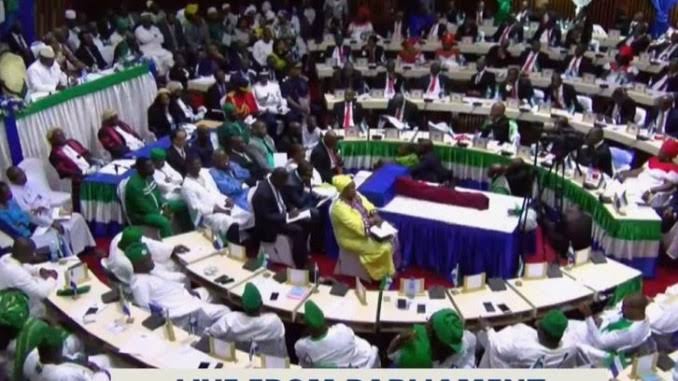
Sierra Leone Parliament Approves $40m Loan To Boost Education

The Parliament of Sierra Leone has voted and approved a whopping $40 million to boost the country’s education sector

The President Julius Maada Bio-led government signed with the OPEC Fund for International Development (OFID) and the Arab Bank for Economic Development in Africa (BADEA) respectively, to help boost the country’s education sector with the loan.

Despite the efforts of the government to boost education through hundreds of millions of dollars already spent on that sector in the last five years, Sierra Leone, according to information gathered from sierraleonetelegraph, still lags behind other African countries in terms of literacy levels – at less than 40 percent of the population.

Millions of school children and college students in the country are making do with inadequate learning materials, overpopulated classrooms, and dilapidated school buildings.

But all that is about to change, should the government spend the $40 million loan it says it will secure from the OFID and BADEA to build new schools and colleges, refurbish dilapidated buildings, and procure more learning and teaching materials.

Presenting both loan agreements to parliament for approval, the Deputy Minister of Finance, Dr Patricia Laverley, said the loan agreements were aimed at implementing the government’s education project for 2020 and 2021 in order to achieve higher quality education in the country.

Dr. Laverley also said that the project would be focusing on the rehabilitation and construction of schools and colleges in some parts of the country.

The Deputy Minister said Bunumbu Teachers College, MMCET Goderich and Congo Cross campuses would benefit through their expansion projects; and Government Secondary School in Magburaka, Bo Government School, Government Secondary School Kenema and Prince of Wales would be rehabilitated and maintained.

Speaking to the motion, Chairman of Finance Committee, Hon. Francis Amara Kai- Samba, described the loan agreements as “simple and straight agreement”. He recalled that the government has allocated 21% of the national budget to the free quality education which is a flagship project of the government.

The Opposition Chief Whip, Hon. Hassan Sesay reaffirmed that the agreement is “non-controversial” and appreciated the efforts of the government for seeking these loan agreements for the development of the education sector in the country. He called for the project to be executed for its intended purposes.

Hon. Joseph Williams Lamin supported the loan agreements and noted that it is “non-controversial”, and appealed for Koyeama Government School in Bo District to benefit from the subsequent project.

Hon. Veronica Kadie Sesay commended President Bio for the loan agreements to support the education sector and said it is very timely and essential for the development of Sierra Leone. She pleaded for remote allowances for teachers in the rural areas in order to attract more experienced teachers to serve in the provinces; and thanked donor partners for supporting the sector in the country.

She supported the rehabilitation of Koyeama Government School and the Government Matora Secondary School for Girls in Magburaka, Tonkolili District.

Hon. Lahai Marah said Billions of Leones have been expended on education and that everything is just centred on education. He spoke on the need for the government to assess and monitor the implementation of free quality education.

He blamed the government for the deplorable state of government primary schools across the country and called for proper assessment of and accountability for the free quality education scheme, as well as subsidies for schools.

Hon. Marah questioned the two million dollars consultancy fee spent on the project and three thousand five hundred dollars payment per month for the project coordinator.

Hon. Bash Kamara of SLPP said the rural schools must be improved to catch up with their counterparts in the urban areas and emphasized on the challenges faced by Koyeama Government Secondary School, which he said: “is starving from government support”.

Hon. Paul Saa Sam of C4C acknowledged the intervention of the government in support of the free quality education and emphasized the need for the total support of all schools in rural communities.

Leader of NGC, Hon. Dr Kandeh Yumkella said the agreement is targeting human capital development, and spoke of the importance of improving education in our rural communities. He called for proper assessment of the education sector and effective monitoring and implementation of the project.

Leader of Opposition, Hon. Chernor R.M. Bah said that the debate has been touching because it has to do with the government’s flagship program. He said the free quality education is on its embryonic stage and called on all to support the scheme to succeed.

He advised all MPs to avoid politicising the free quality education programme and urged the government to continuously monitor and supervise the implementation of this project which would serve as a catalyst in boosting the free education programme.

Concluding the debate, the Acting Leader of Government Business, Hon. Bashiru Silikie thanked colleague MPs for their contributions and said that he is pleased with the loan agreements aimed at promoting the free quality education programme in the country.

He also acknowledged the challenges highlighted by colleague MPs in respect of the free quality education.  He said to achieve quality education, the government should recruit and incentivise well-trained and qualified teachers.

read more
News & Announcements

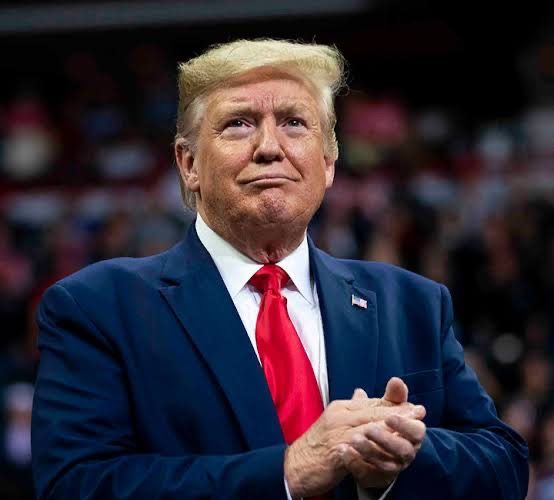
Donald Trump’s Campaign Website Hacked

Donald Trump’s official campaign website was seized for a short time by hackers on Tuesday (27 October).

A message was placed on the website by the alleged hackers, claiming they had evidence that ‘completely discredits’ Trump as a president.

They also said they can prove his ‘criminal involvement’ in manipulating the upcoming 2020 election. It also blamed the Trump government for the origin of Covid-19.

The ‘about’ page of the website was replaced by a message, which said: “the world has had enough of the fake-news spread (sic) daily by President Donald J. Trump.”

The website first had difficulties at 7.20 pm ET but was back up and running as usual by 7.45 pm ET.

The post read: “Strictly classified information is exposed proving that the Trump gov is involved in the origin of the coronavirus.

“We have evidence that completely discredits Mr. Trump as a president, proving his criminal involvement and cooperation with foreign actors manipulating the 2020 elections. US citizens have no choice.”

A message reading, ‘this site was seized’ appeared briefly on the ‘About’ and ‘Events’ pages of DonaldJTrump.com before the website was taken offline completely.

However, it’s widely believed to be a poorly executed attempt to scam for crypto-currency.

There was a link to two cryptocurrency wallets with Monero – a ‘private, secure, and untraceable digital’ cryptocurrency.

Viewers of the page were asked to make a donation to one of the pages as a way to ‘vote’ as to whether the alleged data should be shared by the hackers.

It went on to say that whichever one of the links has the most money by the end of the day would determine what would happen next.

The post read: “After the deadline, we will compare the funds and execute the will of the world.

“In both cases, we will inform you.”

The page then had an encryption key with an email address at the non-existent domain name, ‘planet.gov‘.

Trump 2020 Communications Director Tim Murtaugh said that there was no danger of a data breach.

In a statement, he said: “Earlier this evening, the Trump campaign website was defaced and we are working with law enforcement authorities to investigate the source of the attack.

“There was no exposure to sensitive date because none of it is actually stored on the site. The website has been restored.”

According to Tech Crunch, the Moreno cryptocurrency is easy to send but hard to track.

read more
News & Announcements

Nigeria’s Okonjo-Iweala Emerges First African, Woman DG of WTO

In what is another first for the former Nigerian Minister of Finance, Dr. Ngozi Okonjo-Iweala has entered the history book as the first African and the first woman to attain the exalted position of Director General of the World Trade Organisation (WTO).

Okonjo-Iweala became the finalist after eliminating South Korea’s current Trade Minister, Yoo Myung-hee in a fierce battle for the coveted job on Monday night.

Reports say that influential nations within the global power bloc had a rigorous time working in the Nigerian’s favour with high-level negotiations even as China reportedly tilted the dynamics.

The New Diplomat Europe’s outpost office gathered that with the EU nations and the United States moved in the opposite direction, a move that triggered a deadlock between the two powerful geopolitical allies for the first time in many years and it was the decisive and quiet support of China that finally tipped the scales in Okonjo-Iweala’s favour.

A top diplomat in Geneva told The New Diplomat in confidence: “China quietly changed the game. They said nothing openly but silently they, deftly China voted in Nigeria’s favour.”

Okonjo-Iweala, 66, served as Nigeria’s first female finance and later foreign minister, and has a 25-year career behind her as a development economist and international finance expert at the World Bank, eventually becoming its number two. She is also on Twitter’s board of directors and is a special envoy for the World Health Organization’s COVID-19 fight.

Thus, Okonjo-Iweala has successfully edged out South Korea’s Myung-hee. Yoo Myung-hee 53, is the serving South Korea’s trade minister, following a long career in trade, diplomacy, law and foreign affairs. She had previously served as South Korea’s foreign Affairs minister, among others.

A lawyer and diplomat, Myung-hee holds degrees in Law, Public Policy and was called to the New York Bar.

read more
News & Announcements

Nigeria Received $26.9bn From Foreign Donors In Six Years

Nigeria has received $26.942 billion Development Assistance funds from International Donors between 2015 and 2020. This is according to the country’s national government.  
The amount comprised $2.339 billion received in 2015, $1.150 billion gotten in 2016, $ 774.933 million collected in 2017, $22.016 bill obtained in 2018, $655.642 million received in 2019 and $5.639 million gotten in 2020.


Minister of State for Budget and National Planning, Clement Agba, disclosed this in Abuja on Tuesday while briefing House of Representatives Committee on Civil Society and Development Partners on Donor Funds Receipts, Transfers and Disbursement to Government Agencies, Civil Society and Non-Governmental Organizations in Nigeria.
Agba explained that these donations came from the European Development Fund (EDF); United Nations Development Systems (UNDS); China through the Bilateral Agreement between the Government of Nigeria and the People’s Republic of China signed since1972; Japan Activities in Nigeria via the Japan International Cooperation Agency (JICA); Korean International Cooperation Agency (KOICA); Department for International Development DFID; United States Agency for International Development (USAID) and the German International Cooperation (GIZ).


The minister who said his ministry did not receive donor funds, hence cannot transfer or disburse what is not received, declared that Nigeria does not currently qualify for Budget support because it is not classified as very poor but as a lower middle-income country that is only qualified for projects/programmes support. 
He said: “The implication of this is that donors do not give us the funds for management, rather donors work with the sectoral stakeholders to fund the project directly after identifying the needs by the MDAs/States in line with the Paris Declaration on Aid Effectiveness. 
“For the purpose of clarification, the Federal Ministry of Finance, Budget and National Planning is responsible for coordinating Nigeria’s multilateral and bilateral economic cooperation including development Aid and Technical Assistance Programmes by signing of Cooperation Agreements (after obtaining Power of Attorney from Ministry of Foreign Affairs), facilitating the implementation of Programmes and Projects as well as Monitoring and Evaluation. 

“In carrying out these functions, the role of the Ministry is to coordinate the  Bilateral and Multilateral Institutions, Non-Governmental Organizations (NGOs), International Non-Governmental Organizations (INGOs), as well as Civil Society Organizations (CSOs). 
“Interventions in these identified areas are done directly in collaboration with the relevant Ministries, Department and Agencies (MDAS) as well as States and Local Government Areas through their implementing Agencies. In view of the above, procurement is carried out directly by the Donors. 

“In order to have a bird’s eye view of the grants/Aid given by donors, the Ministry maintains a Development Assistance Database (DAD). The DAB is a web-based dashboard that tracks spending by the International Development Partners, INGOs, etc. Donors are expected to upload spend across sectors to the DAB”, Agba told lawmakers.
Meanwhile, Federal lawmaker, Kabiru Idris, who chaired the committee said in line with its mandate, the committee had received several petitions, alleging misappropriation, misuse, and diversion of donor funds, as well as falsification of performance reports for the purpose of obtaining more funds from Donor Agencies/Organizations. 

“Also in line with its mandate, the committee received a referral from the House of Representatives, mandating it to investigate the operations of Non-Governmental Organizations (NGOs) so as to ascertain their sources of funding. their bases of operations and locations. This was after it had deliberated on a motion titled “Need for Special Intervention in the Protracted Situation in the Country” 
“It was in the light of the foregoing that we wrote you two letters, to brief the Committee on the following: How the Department of International Corporation has been carrying out its responsibilities of managing Multilateral and Bilateral Economic Cooperation including Development Aid and Technical Assistance Programmes.
“Donor funds received by Government Agencies and NonGovemmental Organizations (NGOs) from 2015 to date; and the operations of Non-Government Organizations (NGOs), particularly those operating in the northeast, so as to ascertain their sources of funding, their bases of operations and their locations.
“The information gathered from this interaction will enable the Committee effectively carry out its oversight mandate as we“ as embarking on further engagements with NGOs, both local and international,” the lawmaker said.

read more
1 296 297 298 299 300 322
Page 298 of 322