News & Announcements Archives | Page 293 of 322 | The Lafete Magazine
close

News & Announcements

News & Announcements

Limited Resources Force Indefinite Postponement Of Uganda’s Presidential Debate

A two-day Uganda presidential candidates’ debate has been canceled indefinitely.

The inter-religious council that was organising the debate scheduled to start on Friday said the cancellation was because of limited resources, local media report.

The council also said the Covid-19 situation was to blame for the last-minute cancellation.

The organisers said the presidential debate was to have brought together more than 10 presidential candidates.

The campaigns in Uganda are ongoing with police often dispersing large crowds accused of violating the guidelines issued by the electoral commission.

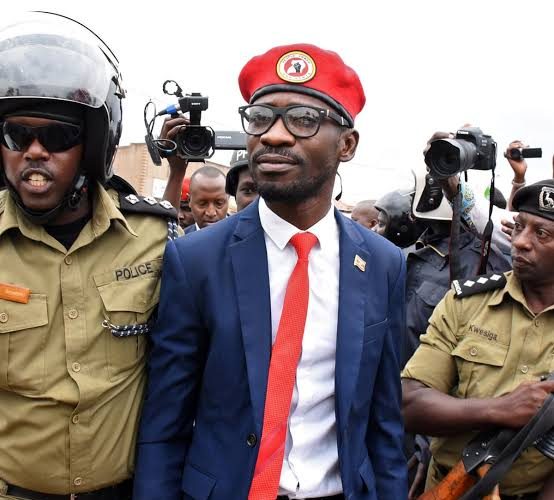
One of the presidential candidates, Robert Kyagulanyi popularly known as Bobi Wine, asked the electoral body to protect opposition politicians from harassment by the security forces.
read more
News & Announcements

Hungry Madagascarns Feed On Clay To Stay Alive

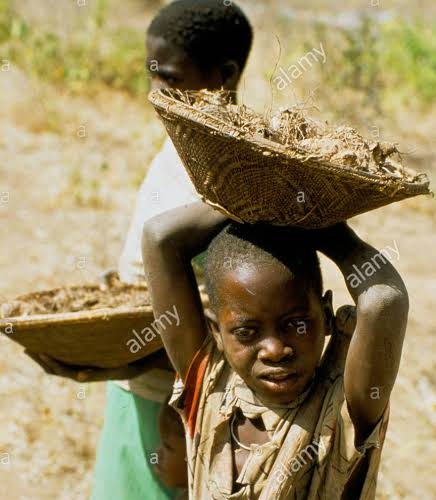
Following the debilitating effects of hunger in the southern African country of Madagascar, starving citizens of the country are feeding on white clay mixed with tamarind in order to stay alive.

Some of the citizens of the drought-ravaged country, AP reports, say the acidic tastes of tamarind starves off hunger, which is their major challenge.

“We call it survival soil because it allows the acidic taste of tamarind to seep into our mouths, which staves off hunger,” said Doday Fandilava Noelisona, a 35-year-old farmer in the village of Fenoaivo.

“These days we no longer look for food to live on, but for ways to fill the empty stomachs,” said the father of six.

The staple food in the arid region is usually cactus fruit.

Rows of prickly green succulents surround villages, serving both as perimeter fences and food pantries.

But after more than a year without rain, even the cacti have stopped producing fruit.

The rare sight of their wilted skin attests to the gruelling conditions prevailing in the region, around 100 kilometres (62 miles) west of the city of Fort-Dauphin.

In Fenoaivo, villagers dread a repeat of a terrible drought that killed hundreds in the 1990s.

“We called it the era of scattered skeletons because they were all over the roads. People no longer had enough energy to bury the remains of their brothers and sisters,” recalled Avianay Idamy, 42.

To prevent a similar misfortune befalling his family, Idamy started eking out a living by selling firewood and charcoal.

The father of nine acknowledged the trade was “not the most sensible” for the environment, but said it allowed him to buy food for his family.

“Usually I cultivate alluvial land on river banks, but there is no ran and nothing grows,” Idamy told AFP.

“I had also invested my savings in livestock to sell if needed but bandits stole everything from us this year, even our kitchen utensils,” he added.

Idamy sells his charcoal for the equivalent of 30 US cents (25 euro centimes) a bag, just enough for his family to eat cassava once a day.

Like their neighbours, they swallow clay mixed with tamarind between meals.

Nine people starved to death in the nearby village of Ankilomarovahetsy in September, about 10 kilometres (6.2 miles) away.

“Eight children and a mother,” said 65-year-old Rafanampy, the community leader, who did not give his surname.

Resident Samba Vaha, 26, lost her one-year-old child Manovondahy.

“My son died after two days of illness, I couldn’t take him to see a doctor,” she said.

Children have particularly struggled to digest the clay and tamarind mixture, “which causes belly swelling,” explained Theodore Mbainaissem, the local head of the World Food Program (WFP).

Half of the population in the southern region of the Indian Ocean island — 1.5 million people — is currently in need of emergency food aid, according to WFP.

Around 31 million euros ($37.6 million) are urgently needed to feed the hungry.

A few kilometres (miles) away in the town of Beraketa, global charity Action Against Hunger (ACF) has set up shop in coordination with the WFP.

“Child malnutrition here is cyclical,” and this year it started earlier in October instead of January, said ACF’s head of nutrition, Annick Rakotoanosy.

The centre attends to around 50 severely malnourished children — swollen bellies and lean legs — and 100 other patients each week.

The children are at risk of death, especially if malnutrition is complicated by diarrhoea, respiratory infections or malaria.

While droughts are not uncommon in the area, this dry spell has been compounded by climate impact.

“For three years in some communities, two in others, there has been no rain,” said the WFP’s Mbainaissem.

Mounting insecurity and livestock thefts have exacerbated poverty and complicated humanitarian relief efforts.

“The whole north of Amboasary (district), for example, is deprived of it,” Mbainaissem deplored.

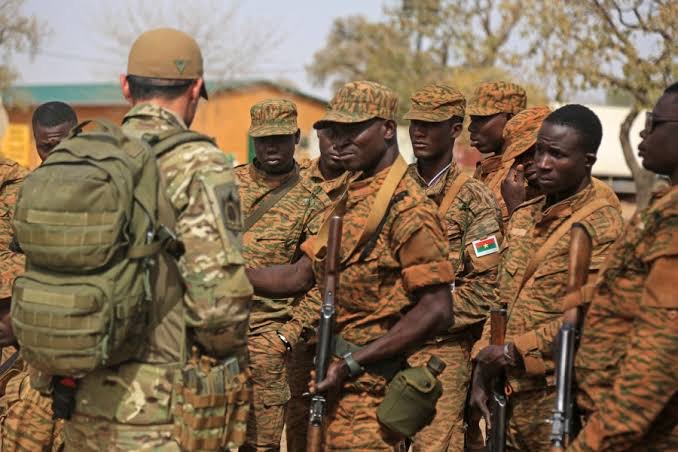
Madagascar’s government has deployed the military to distribute food and first aid in the area.

Early in October, President Andry Rajoelina, his wife and son doled out rations in villages.

Without emergency food assistance, “we are facing disaster”, Mbainaissem warned.

“Now even tamarind is starting to become scarce.”

read more
News & Announcements

Namibia Puts Up 170 Elephants For Sale To Curb Encroachment

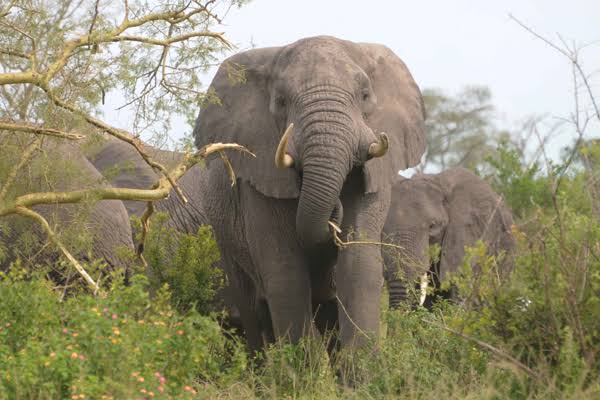
Namibia is putting 170 live elephants up for sale to curb rising tusker populations under pressure from drought and territorial conflict with humans.

An advertisement for the sale of 170 “high value” elephants was carried Wednesday by a state-owned daily newspaper, New Era.

The ministry says the elephants are being sold “due to drought and increase in elephant numbers coupled with human-elephant conflict incidences.”

The sparsely-populated semi-arid southern African country is home to some 28,000 elephants, according to official estimates.

Environment Minister Pohamba Shifeta said that the government-backed the policy of selling live animals after being criticised for shooting elephants to control overpopulation.

“We decided -– after research -– to sell them instead,” he said.  

The elephant population had dwindled to about 5,000 animals at independence in 1990, but increased phenomenally thanks to a globally-lauded conservation programme.

The advertisement said pachyderms on sale would comprise entire herds in order to preserve the important social structure in elephant communities — infants or juveniles will not be left behind. 

Shifeta warned that Namibia would not recklessly sell the elephants to buyers, saying “we have to make sure that the country is conducive.”  

For export purposes, the buyers must ensure that CITES requirements are met by both exporting and importing states for the trade to be authorised, according to the notice.

In October, 100 wild buffalo went up for sale in Namibia.

Last year the government offered for sale around 1,000 animals including 600 buffalo, 150 springboks, 60 giraffes, and 28 elephants.

read more
News & Announcements

Aftermath Of Attack: Electoral Body Changes Security Details Of Ugandan Presidential Hopeful Bobi Wine

Following the police attack on his security team, which left a lot of his aides and others seriously injured, the Ugandan Electoral Commission (UEC), on Thursday effected changes to the security details of Robert Kyagulanyi, popularly called Bobi Wine, the National Unity Platform candidate in next year’s presidential election.

Justice Simon Byabakama, the EC chairperson, confirmed that the head of the Very Important Persons Protection Unit, Ms. Hadijja Namutebi, had decided to switch the team for the pop star-turned-politician. 

“I am not in charge of the security but what I can tell you is that the security detail of Mr. Kyagulanyi has been withdrawn because I think they are tired and they don’t have leadership at this time,” he said. 

This comes just a day after the commander of Bobi Wine’s security detail, Mr. Wilfred Kato Kubai, was shot by a rubber bullet on the face together with the pop star’s right-hand man, Mr. Dan Magic. They were taken to Mulago hospital for further treatment. 

Sources told Daily Monitor that Bobi Wine had contested the decision to change his bodyguards but EC officials insisted that they should be exchanged and a new team take over immediately. 

“We are aware that they are changing our security team, let us wait and see because we are not the ones in charge. We shall continue to do our work,” Bobi Wine said. 

“The head of my security which EC gave us was shot at by the police. We believe they were targeting me because the head of security officer, Kato, and one of my producers was also shot and thrown at teargas canisters, his face split and lost his teeth,” he added. 

In the wake of the campaigns when the security was given to Bobi Wine, he rejected them after he was forcibly picked from the nomination centre and taken to his home. Bobi Wine accused them of conniving with other officers to brutalise him. 

On Wednesday, Justice Byabakama said: “It took my intervention. I called Bobi Wine and convinced him to allow the bodyguards so he should be happy when we withdraw them.” 

read more
News & Announcements

Liberian War Crime Trial Begins In Switzerland

Liberian War Crime Trial will formerly start in Switzerland Thursday, as former warlord will become the first Liberian to face a war crimes trial over alleged atrocities during the country’s 1990s civil war when he goes on trial in Switzerland on Thursday.

Alieu Kosiah, who was arrested in Switzerland in 2014, stands accused of murder, rape, and a string of other crimes during the first of Liberia’s back-to-back civil wars, which together killed some 250 000 people between 1989 and 2003.

No Liberian has ever been convicted – either in the west African country or anywhere else – of war crimes committed during the conflict.

Kosiah’s trial marks several milestones according to Human Rights Watch, which points out that he will be the first person ever tried for war crimes in a non-military criminal court in Switzerland. 

He will also be the first Liberian to face trial over war crimes committed during its first civil war, from 1989 to 1996, the rights group said.

Liberia’s former warlord-turned-president Charles Taylor was convicted in 2012 of war crimes and crimes against humanity — but that was over atrocities committed in neighbouring Sierra Leone, not in his own country.

Switzerland recognises the principle of universal justice, allowing it to try people suspected of committing the most heinous international crimes regardless of where they were committed.

But this is the first time its civilian court system will hear an international war crimes case.

Kosiah’s trial before the Swiss federal court in the southern city of Bellinzona had been repeatedly postponed due to the coronavirus crisis.

But even as Switzerland remains hard-hit by the second wave of Covid-19 infections, the judiciary finally managed to set the date for the initial part of the hearing, which is due to last until December 11.

Kosiah’s alleged victims will not be able to come from Africa to testify until next year. Civitas Maxima, an organisation representing them, has voiced outrage that the trial is starting without them.

“Kosiah maintains that everyone is lying and that he has committed no crimes,” Civitas Maxima lawyer Romain Wavre told AFP.

“We, therefore, asked that Kosiah’s hearing be delayed until 2021, so that our clients, the victims, could be present.”

The Swiss prosecution accuses Kosiah of a string of war crimes while he served as a commander of the United Liberation Movement of Liberia for Democracy (ULIMO) — and the armed group created to fight Taylor’s rebel force.

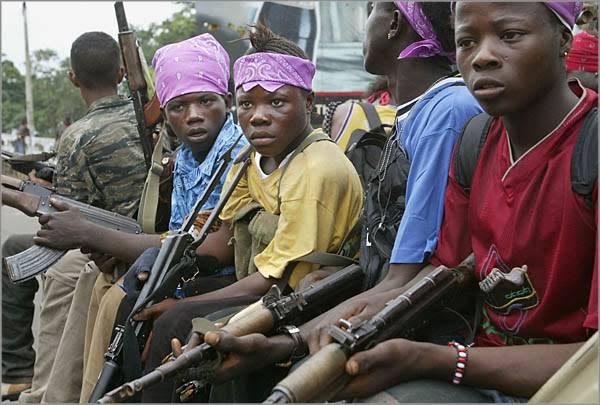
Among the charges is the recruitment of children as fighters, pillaging, ordering killings, and committing murder himself.

Cruel treatment of civilians, the defamation of corpses, and rape are also listed among the accusations.

The charges reflect the brutality of Liberia’s two civil wars, which were marked by numerous massacres committed by often drugged-up fighters, mutilations, and sexual violence used as a weapon of war.

The widespread use of child soldiers and even cannibalism were also among the horrors seen during this grisly period.

‘Impunity’

Most of the commanders of the different groups fled the country after the wars ended in 2003 and, like Kosiah, a number of other suspected Liberian war criminals have been arrested abroad.

But more than 15 years after Liberians laid down their arms, many of those in charge back then still hold positions of political and economic influence in the country.

And many of the recommendations put forth in a 2009 Truth and Reconciliation Commission report have remained unimplemented.

The underlying causes of the conflict — including ethnic divisions and economic disparities — remain strongly felt in Liberian society.

“Many victims in Liberia feel an enormous frustration,” Civitas Maxima director Alain Werner told AFP, pointing to the “complete impunity that reigns in the country for past war crimes.”

read more
News & Announcements

Kenya’s COVID-19 Cases Rise To 87,249

The Kenyan Minister of Health, Mutahi Kagwe, on Friday revealed that the country’s Coronavirus infections have risen to 87,249 with an 866 increase in the number of cases.

The minister said in the past 24 hours, 7,815 samples had been tested.

This raised the total number of samples tested in the country since the first case was confirmed on March 13, to 919,411.

Cabinet Secretary Kagwe said Kenya’s death toll had increased by six to 1,506.

The number of recovered patients rose by 322 to 68,100, he said, noting 259 of them were treated at home and 63 in hospital.

As of December 4, 1,194 patients had been hospitalised countrywide while 7.984 were in the home-based care programme.

Of those admitted, 77 were in intensive care units (ICU), with 31 of them on ventilator support and 45 on supplemental oxygen.

Another 67 patients were separately on supplemental oxygen – 57 of them in general wards and 10 in high dependency units (HDU).

Of the new patients, 828 were Kenyans and 38 foreigners whereas males numbered 525 and females 341.

The youngest was three months old and the oldest 100.

Nairobia accounted for 273 of the new infections, Mombasa 78, Nakuru 73, Kiambu 55, Kirinyaga 49, Nyamira 35, Kisumu 27, Kilifi and Kajiado 23 each, Uasin Gishu and Nyeri 21 each, Meru 19, Kericho 18 and Busia 16.

And then came Machakos with 15, Kisii 13, Bomet 12, Tana River and Siaya 11 each, Migori 10, Taita Taveta and Laikipia nine each, Bungoma and Baringo eight each, Murang’a and Embu four each, and Homa Bay, Vihiga, Kitui and Lamu three each.

Garissa and Nandi counties followed with two cases each while Nyandarua, Narok, Wajir, Makueni, and Isiolo each had one new infection.

read more
News & Announcements

Medics In Tunisia Protest Death Of Colleague In Hospital Elevator

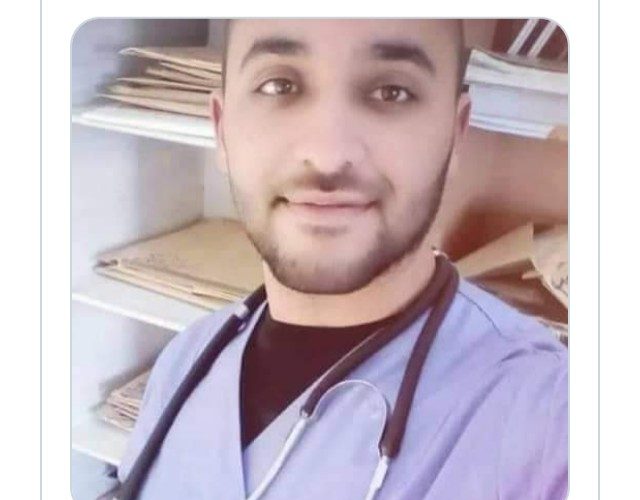
Following the death inside a hospital elevator of a medical doctor, Bedreddedine Aloui, 27, hundreds of medics in Tunisia protested on Friday.

Aloui plunged to his death Thursday down an elevator shaft after the lift doors opened but with no elevator in place, witnesses interviewed by local media said.

The elevator, in a hospital in the marginalised Jendouba region, had allegedly remained in service despite a long-reported fault.

Hundreds of doctors, health workers, and medical students gathered in front of the health ministry in the capital Tunis on Friday, demanding the health minister and other officials be sacked, an AFP correspondent reported.

The hospital has been visited by two government ministers over the past months, including Health Minister Faouzi Mehdi in October.

“A young doctor has died as a result of this negligence,” said Zied Bouguerra, a member of the Tunisian Organisation of Young Doctors.

A protest was also held in the eastern port city of Sfax.

Local media reported that Prime Minister Hichem Mechichi ordered a state funeral, with the surgeon to be buried Friday in his native Kasserine, in western Tunisia.

Tunisians have also taken to social media to denounce what they say are dysfunctional public services, particularly in the health sector, in the midst of the novel coronavirus pandemic.

Tunisia had managed to keep its outbreak largely contained until the end of June but cases have soared in recent months.

The North African country has officially registered over 3 300 deaths and is nearing 100 000 infections.

Hospitals with limited resources and management problems have been struggling to cope.

The accident came at a time when the country’s health budget is currently before parliament.

read more
News & Announcements

Clashes Between Two Military Factions Leave Four Soldiers Dead In South Sudan

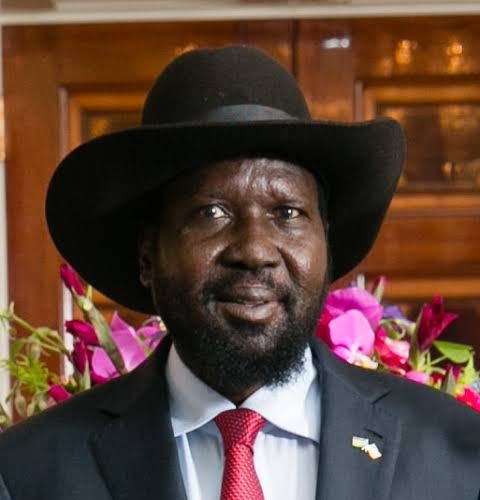
Four soldiers in South Sudan have reportedly died as a result of clashes between forces loyal to President Salva Kiir and those loyal to First Vice President, Dr Riek Machar.

The attack took place in Central Equatorial State and among the dead soldiers is a general. This is according to Machar’s deputy military spokesperson.

Speaking to ‘The EastAfrican’ on Thursday in Juba, Col Lam Paul, Sudan People’s Liberation Army-In-Opposition deputy military spokesman, confirmed that a fight between South Sudan People’s Defence Forces and SPLA-IO forces in Morroto area on Wednesday left a total of five soldiers killed and six others injured on both sides.


“SSPDF has been attacking our forces in various training areas within Central Equatoria State and others, particularly areas of Kejo-Keji. The attacks started from 21st of November to 27th and also yesterday [Wednesday].

“The Wednesday clashes left four of our IO soldiers killed and six others injured. Our soldiers were airlifted to Juba for treatment. 

“Our commanders on the ground have also reported to us that the general who commanded the SSPDF soldiers during the attack was killed by our forces,” said Lam.

The SSPDF general killed is identified as Brig-General Gatgueng Bipal who SPLA-IO claims commanded the forces.

In response, South Sudan People’s Defence Forces acting spokesman, Major General Santos Domic, denied the alleged killing of the general.

“There were reported clashes in Morroto area but according to our sources there, the clashes were between the locals and the SPLA-IO and thus currently I don’t have any information regarding any of our soldiers or general killed in those clashes,” said Domic.

SPLA-IO accused Gen Moses Lokuju, its former senior military commander who last month switched sides by pledging allegiance to the SSPDF under President Kiir, of being behind the continued attacks on its sites.

SPLA accuses Gen Lokujo of launching continuous attacks on training centres for unified forces.

According to the SPLA-IO, Gen Lokuju switched sides, escaping punishment for the alleged killing of three SPLA-IO officers in May 2020.

On Monday this week, IO accused Gen Moses of ceasefire violations in Central Equatoria State, adding that his violations were being aided by the SSPDF army headquarters in Juba. SSPDF denied these claims.

The ceasefire monitoring body, CTSAM-VM, last month identified Gen Moses as the one responsible for the ongoing displacements in Kajo-keji County, Central Equatoria State.

Last month, the Intergovernmental Authority on Development Special Envoy for South Sudan, Ambassador Ismail Wais, said he was disappointed over reports of fighting between a splinter group and the SPLA-IO in Yei River area, Central Equatoria State.

The revitalised peace agreement mandates the Joint Defence Board to exercise command and control over all forces during the Pre-Transitional Period.

The body, which is made up of senior military leaders, last month planned to summon the officers responsible for the confrontation. But such efforts seem to have not materialised, according to observers.

read more
News & Announcements

Nigerian Insecurity Worsening As Boko Haram Kills 43 Rice Farmers

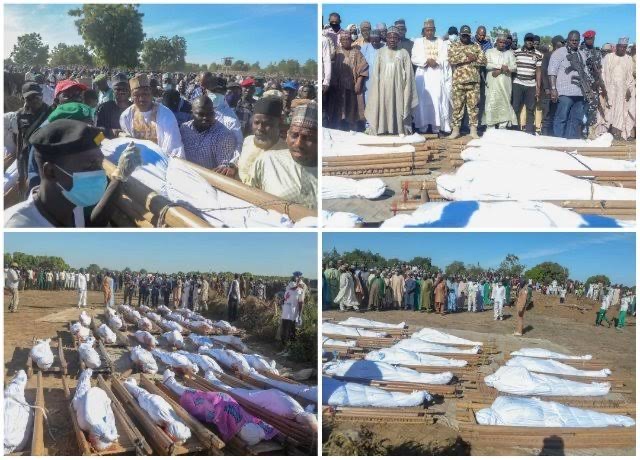
The insecurity situation has continued to get worse as the terrorist group, Boko Haram, on Saturday, killed 43 Rice Farmers in the troubled Borneo State.

The farmers were attacked in Marrabati and Hammayya villages near Zabarmari in the Jere Local Government Area of Borno State. 

The insurgents, who have been on the rampage since 2009, were also reported to have destroyed the rice plantation after killing the farmers.

On his verified Twitter account, President Buhari said, “I condemn the killing of our hardworking farmers by terrorists in Borno State. The entire country is hurt by these senseless killings. My thoughts are with their families in this time of grief. May their souls rest in peace.”

He said the government had supported the armed forces with materials and necessary support “to take all necessary steps to protect the country’s population and its territory.

The victims of the attack had gone to harvest their rice when they met their deaths.

The Civilian Joint Task Force (CJTF), a body assisting the military in tackling Boko Haram and other terrorists in the region, reported that the farmers were gathered before the assailants shot many of them at close range and beheaded others.

Reports say that the victims were labourers hired from Sokoto State and that soldiers were pursuing the terrorists.

A distraught Borno State Governor Babagana Zulum asked to see the bodies before they were buried on Sunday.

The 51-year-old Professor of Soil and Water Engineering, said: “It is disheartening that more than 40 citizens were slaughtered while working in their farmland. Accept my deepest sympathy over this carnage, once again, that affects every human with a conscience.’’

He said he discussed with the military how to track the insurgents and rescue the abducted farmers.

“Our people are in very difficult situations. They are in two different extreme conditions; if they stay at home they may be killed by hunger and starvation. If they go out to their farmlands, they risk getting killed by insurgents. This is very sad.’’

Mr. Zulum reiterated his appeal for the Nigerian Federal Government to recruit more youths into the (CJTF), and hunters into the Nigerian military and civil defense, so they can join Agro Rangers in the protection of farmers.

“We need many boots to protect farmlands and our youths understand the terrain. We will not lose hope because we have to remain optimistic about ending the insurgency,” he said.

Nigeria’s former Vice President Atiku Abubakar described the incident as heartbreaking.

“Words fail me. The lives of our citizens should be worth much more than this,” he said.

He said that a reorganisation of the nation’s security architecture is long overdue.

On her part, former education minister, activist and politician Oby Ezekwesili told President Buhari, “43 of your citizens were just beheaded within the territory you swore an oath to defend and you are telling us “I am hurt”. Please don’t be hurt. Be hot in your pursuit of justice for the dead. Be hot against evil in the land.”

In its reaction to the killings, Amnesty International (AI) condemned the targeting of civilians, describing it as contempt for human life.

Via Twitter, AI urged Boko Haram to “end its campaign of vicious and unlawful killings of civilians.”

Since 2009, over 35,000 people have been killed in Borno, Adamawa, and Yobe states, the epicentres of the insurgency. Social infrastructure has also been destroyed, especially in Borno, the seat of Lake Chad and which shares a border with Chad, Cameroon, and Niger.

In addition, more than two million Nigerians have been displaced.

As the insurgency festers, the activities of bandits in northwest states, have hampered Nigeria’s food security goal and enhanced poverty.

The latest killings came three days after Sultan of Sokoto and President-General of Jamaatu Nasril Islam, Alhaji Sa’ad Abubakar lll, reported that bandits killed 76 people in Sokoto in one day.

The Supreme of Nigerian Muslims said most of the reports on the insecurity in the northern part of the country are not reported because the region lacks a strong media presence.

Speaking at the 4th Quarter 2020 meeting of the Nigeria Inter-Religious Council in Abuja, the monarch said the insecurity in the north has become so worrisome that people are afraid to travel short distances.

“It is regrettable that no strong media platform can report this story to the world,” he said, adding that residents no longer go to their farms, which threatens food production.

“People think the north is safe but that assumption is not true. It’s the worst place to be in this country because bandits go to villages, households, and markets with AK-47 rifles,” he said.

“I am not only a traditional ruler but also a religious leader, so I am better-placed to tell the story.

On Saturday, the Chief of Army Staff, Lt-Gen Tukur Yusuf Buratai, declared that under no circumstance would the army allow the occupation of any part of Nigeria by terrorists.

The defence headquarters said the air force had knocked out more hideouts of the terrorists in Borno State.

He spoke at the 62nd passing out parade of the Nigerian Military School, where he pledged adequate security for Nigerians as they go about their businesses.

“I assure all Nigerians that the Nigerian army is committed to the unity and indivisibility of this country and would do everything humanly possible to ensure that no part of this country is occupied by criminal elements,” he said through the army’s chief of administration, Major General US Yakubu.

“The army, as you all know, has been involved in various operations and exercises in support of civil authority. To mention particularly is the maintenance of internal security in addition to its constitutional role of protecting the territorial integrity of Nigeria,’’ he added.

Northern elders have joined their Southern counterparts in asking President Buhari to sack the service chiefs without further delay as “they are no longer useful”.

Meanwhile, chief spokesman of Defence Headquarters Maj-Gen John Enenche said in Abuja that air raids were conducted on Friday in Ngwuri Gana, along the Gulumba Gana-Kumshe axis, and in Tumbuma Baba on the fringes of Lake Chad, both in northern Borno.

He said the airstrikes were conducted under a new subsidiary operation dubbed “Wutar Tabki II”.

read more
News & Announcements

Ethiopian Troop Bombards Tigray Capital With Heavy Shelling

Heavy shelling struck the capital of Ethiopia’s Tigray region on Saturday, the local government and humanitarian sources said, as the city of half a million braced for an attack against leaders of the regional ruling party.

Ethiopia’s military “has started hitting with heavy weaponry and artillery the centre of Mekele”, the local government said in a statement carried by Tigrayan media — a claim confirmed by two humanitarian officials with staff in the city.

“The Tigray regional state calls upon all who have a clear conscience, including the international community, to condemn the artillery and warplane attacks and massacres being committed,” the statement said.

Prime Minister Abiy Ahmed, winner of last year’s Nobel Peace Prize, announced on November 4 he had ordered military operations against Tigray’s ruling party, the Tigray People’s Liberation Front (TPLF).

More than three weeks of fierce fighting has left thousands dead “including many civilians as well as security forces”, the International Crisis Group said Friday.

Tens of thousands of refugees have streamed over the border into Sudan, and rockets launched from Tigray targeted the capital of neighbouring Eritrea for a second time Friday night, exacerbating fears the conflict could draw in the wider Horn of Africa region.

Abiy announced Thursday that he had ordered a “final” offensive on TPLF leaders, and Ethiopia’s military says it has encircled the city.

A communications blackout in Tigray has made it difficult to verify claims from both sides about how the fighting is going.

A spokesperson for a crisis committee formed in response to hostilities in Tigray did not immediately respond to a request for comment Saturday about reported shelling in Mekele, which has already been hit by airstrikes.

A spokesperson for Abiy’s office referred AFP to past statements indicating military operations would be undertaken “strategically” to avoid undue harm to civilians.

The Ethiopian army said Saturday it would take control of Mekele “within a few days”, according to a report from state-affiliated Fana Broadcasting Corporate.

read more
1 291 292 293 294 295 322
Page 293 of 322