News & Announcements Archives | Page 262 of 322 | The Lafete Magazine
close

News & Announcements

News & Announcements

Tanzania Announces New Measures To Combat New Covid-19 Variant

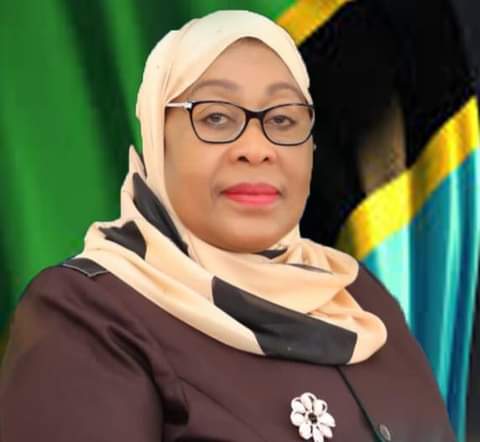
Tanzania has announced new measures to control the spread of coronavirus in a departure from the approach taken by its late leader John Magufuli, a COVID skeptic, who had downplayed the pandemic.

Travellers entering Tanzania must show proof of a negative coronavirus test is taken in the 72 hours before arrival, the health ministry said late on Monday, citing concern about new variants of the disease.

Those arriving from countries with a high number of coronavirus infections will also need to pay for an additional rapid test, though it was not specified how this criterion would be determined.

In addition, those who have visited a country with “new COVID-19 variants” in the previous two weeks will be required to undergo mandatory 14-day quarantine at their own expense.

Citizens can isolate themselves at home, while foreigners will need to choose a government facility.

“Based on the global epidemiological situation and emergence of new variants of viruses that cause COVID-19, there is an increased risk of their importation into our country,” Tanzania’s Chief Medical Officer Abel Makubi said in a statement.

The restrictions come nearly two months after Samia Suluhu Hassan became president following the death of Magufuli, who spent the better part of the pandemic playing down the virus. He had urged Tanzanians to shun mask-wearing and also denounced vaccines as a Western conspiracy, frustrating the World Health Organization.

The government said Magufuli, nicknamed the “Bulldozer” for his uncompromising leadership style died of a heart condition in late March after a mysterious three-week absence – but his political opponents insisted he had coronavirus.

The new president signalled a departure from her predecessor’s position in April, saying it was “not proper” to ignore the disease, ordering a science-based approach to Tanzania’s COVID-19 policy.

Tanzania has not reported any COVID-19 data since April 2020. Its last record showed 509 infections and 16 fatalities.

Barely two months after reporting its first case of the coronavirus, Tanzania lifted the mandatory quarantine of passengers and eased restrictions aimed at curbing the spread of the disease.

Government officials have previously taken few measures to contain the disease, instead of promoting prayer and herbal remedies to treat the illness, drawing criticism from opposition leaders and the international community.
read more
News & Announcements

Insecurity: Nigerian Army Says It Won’t Overthrow Buhari

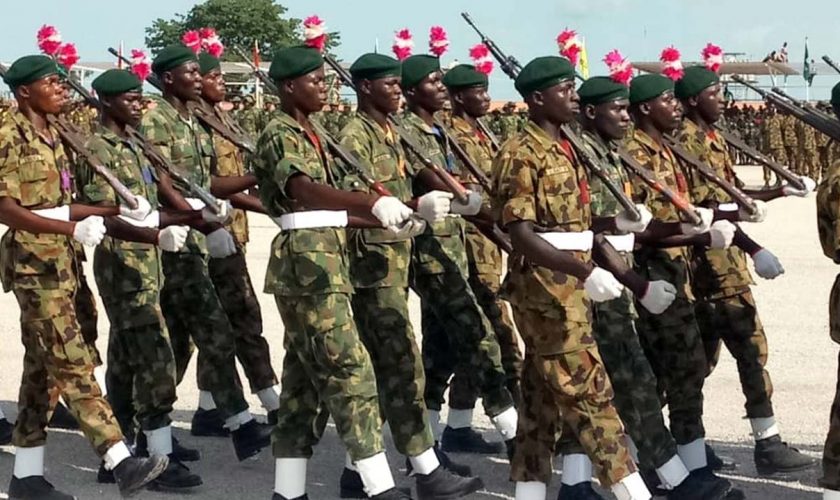
Nigeria’s military has warned local politicians to desist from incitement and pledged it would not overthrow President Muhammadu Buhari, whose government has come under criticism over growing insecurity in the country.

From a jihadist insurgency in the northeast to herder-farmer clashes in the centre, banditry in the northwest and separatist tensions in the southeast, Buhari’s armed forces appear to be struggling to curb insecurity.

However, the country’s military, while reacting to agitation by some secessionists and opposition figures to topple the government, has pledged its loyalty to Mr. Buhari, a former army general. Such a coup, if it happened, would effectively end civilian rule that was restored in 1999 after prolonged military rule.

In a statement issued by Acting Director Defence Information, Brigadier General Onyema Nwachukwu, the military said it has no intention of taking over power again in Nigeria. This, it says, is because it believes that despite tough times, democracy is the way to go and militarism is no longer fashionable.

The army also warned politicians nursing ambitions of ruling Nigeria outside the ballot box, saying it would continue to defend the country’s democracy. 

“We shall continue to remain apolitical, subordinate to the Civil Authority, firmly loyal to the President, Commander-in-Chief of the Armed Forces of the Federal Republic of Nigeria, President Muhammadu Buhari and the 1999 Constitution as Amended…We shall continue to discharge our constitutional responsibilities professionally, especially in protecting the country’s democracy, defence of the territorial integrity of the country as well as protection of lives and properties of citizens,” the statement said in part.

“We also wish to remind all military personnel that it is treasonable to even contemplate this illegality. The full wrath of the law will be brought to bear on any personnel found to collude with people having such agenda.”

read more
News & Announcements

India’s COVID-19 Case Nears 20 Million As Shortage Of Oxygen Escalates

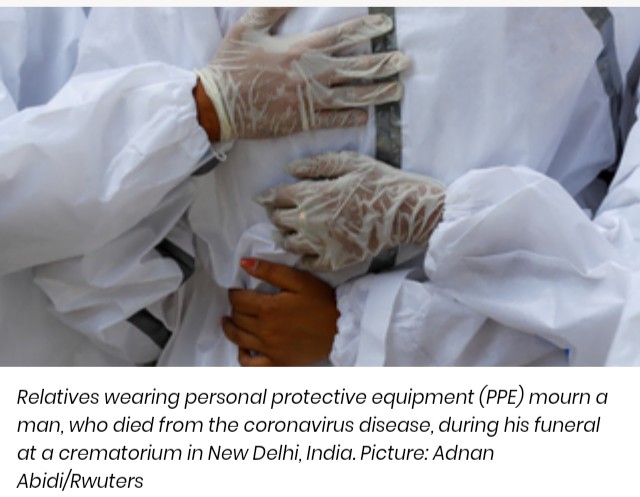
India’s total Covid-19 caseload neared 20 million on Monday as oxygen shortages in hospitals exacerbated a devastating second wave and much-needed foreign assistance continued to pour in.

Infections have soared by around eight million since the end of March, according to official data which many suspects are a considerable underestimate.

AFP reports that India’s underfunded health care system is under severe strain, with fatal shortages of beds, drugs and oxygen leaving some to die awaiting treatment in long queues outside hospitals in capital New Delhi and other cities.

Twenty-four people died in one hospital overnight on Sunday in the southern state of Karnataka after the hospital ran out of oxygen, press reports and sources said, though the district administration denied that shortages had caused the deaths.

Another 12 died on Saturday in a hospital in the capital New Delhi after it ran out of oxygen, reports said.

Several hospitals sent out desperate appeals for oxygen on social media overnight, with deliveries arriving only in the nick of time.

One children’s clinic in Delhi raised the alarm on Twitter over a shortage of oxygen that has reportedly left around 25 to 30 newborns and children at risk.

“Oxygen is a basic requirement of a hospital and a consistent supply has not been assured. We are constantly firefighting,” the head of the Madhukar Rainbow Children’s Hospital Dr Dinesh told the Indian Express daily.

Federal and state authorities have been scrambling to get extra oxygen to hospitals, including by sourcing it from industry and sending special “Oxygen Express” trains.

Foreign assistance has also been pouring in, including from Germany and France, which this weekend sent medical equipment including oxygen-generating plants.

“Out there the hospitals are full. People are sometimes dying in front of the hospitals. They have no more oxygen,” German ambassador Walter J. Lindner said.

Adding to the pressure on Prime Minister Narendra Modi, the Supreme Court on Sunday ordered the government to rectify the oxygen situation in Delhi by midnight (1830 GMT) on Monday.

The surge has been blamed in part on new virus variants and the government has allowed huge religious and political gatherings in recent months.

Health ministry data on Monday showed that India had added around 370 000 new infections in the previous 24 hours as well as 3 400 deaths.

The total caseload is now 19.9 million with 219 000 deaths.

Per capita, however, the rates remain much lower than in many other countries.

Brazil, for example – which has a population less than a fifth the size of India’s – has recorded almost 410,000 deaths and the United States around 575 000.

India’s vaccination drive is also faltering, with around 15.7 million shots administered so far, equating to just over one percent of the population of 1.3 billion people.

read more
News & Announcements

26 Killed In Bangladesh Boat Accident

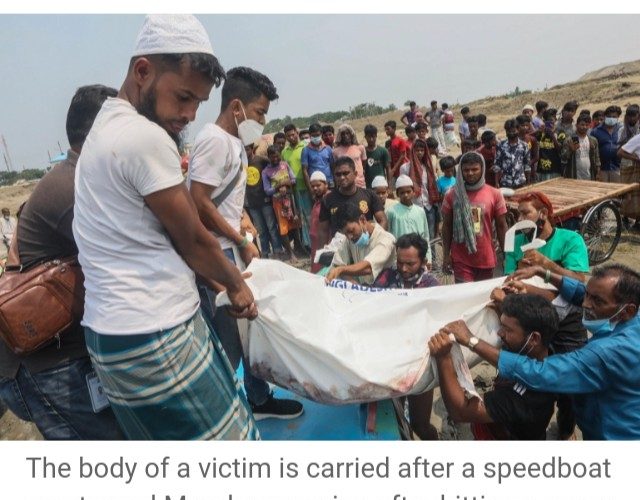
At least 26 people have been killed after a speedboat packed with passengers collided with a vessel transporting sand in the latest maritime disaster to hit Bangladesh.

Police said on Monday the speedboat carrying about 36 passengers from the town of Mawa slammed into the other vessel on the Padma River near the rural town of Shibchar.

“We have so far recovered 26 bodies, including a woman. We have also rescued five injured people, including three children,” police official Amir Hossain said.

Hossain, according to News Agency, said the bow of the passenger boat was destroyed when the speedboat smashed into the side of the transport vessel and quickly sank.

The speedboat was carrying passengers in violation of government restrictions during a nationwide coronavirus lockdown, said Rahima Khatun, a top government official in the area.

Divers and local people retrieved 26 bodies from the water and were searching for those still missing.

Witness Abdur Rahman said there was a loud noise when the boats collided and the vessels then overturned.

“When we rushed to the spot we found the speedboat torn into two pieces. Hundreds of villagers immediately started conducting rescue work before they were joined by police and the fire service.

Construction work has slowed ferry transport on the river, prompting many to make the journey on the less-safe speedboats, which take only about 15 minutes to make the crossing in contrast to up to two hours on ferries.

Khatun said the driver of the speedboat would be investigated as he appeared to have hit the transport vessel, which was moored at the time.

“A probe has been ordered into the accident,” he said.

Maritime accidents are common in Bangladesh, a delta nation crisscrossed by hundreds of rivers.

Authorities blame poor maintenance, lax safety standards at shipyards, and overcrowding for many of the accidents.

Vessels transporting sand sit low in the water and can be hard to see in choppy conditions, particularly when light is poor.

In early April, more than 30 people died when a ferry packed with 50 passengers hurrying home from the central city of Narayanganj ahead of the impending coronavirus lockdown collided with a larger cargo vessel.

In June last year, a ferry sank in the capital Dhaka after it was hit from behind by another ferry, killing at least 32 people.

In February 2015, at least 78 people died when an overcrowded ship collided with a cargo ship.

read more
News & Announcements

3 Killed, 27 Hospitalized As Boat Capsized In America

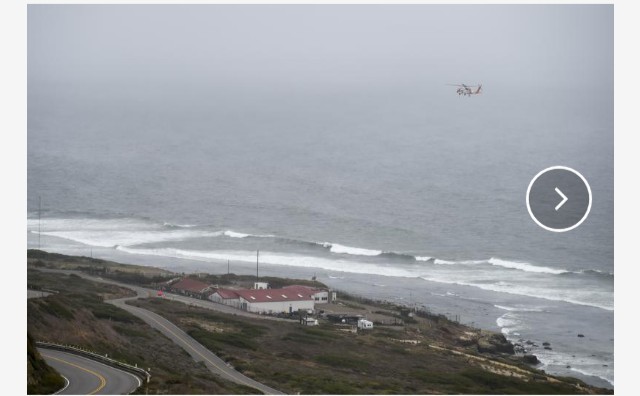
A packed boat being used in a suspected human smuggling operation capsized Sunday and broke apart in powerful surf along the rocky San Diego coast, killing three people and injuring more than two dozen others, authorities said.

Lifeguards, the U.S. Coast Guard and other agencies responded around 10:30 a.m. following reports of an overturned vessel in the waves near the rugged peninsula of Point Loma, according to the San Diego Fire-Rescue Department.

The original call was for a handful of people overboard but as rescuers arrived in boats and jet skis they quickly realized “it was going to be a bigger situation with more people,” said San Diego Lifeguard Services Lt. Rick Romero.

“There are people in the water, drowning, getting sucked out the rip current there,” he said.

Seven people were pulled from the waves, including three who drowned, said Romero. One person was rescued from a cliff and 22 others managed to make it to shore on their own, he said.

“Once we arrived on the scene, the boat had basically been broken apart,” Romero said. “Conditions were pretty rough: 5 to 6 feet of surf, windy, cold.”

A total of 27 people were transported to hospitals with “a wide variety of injuries” including hypothermia, Romero said. Most of the victims were able to walk themselves to ambulances, he said.

Officials said the group was overcrowded on a 40-foot (12-meter) cabin cruiser that is larger than the typical open-top wooden panga-style boats often used by smugglers to bring people illegally into the U.S. from Mexico.

“Every indication from our perspective was this was a smuggling vessel. We haven’t confirmed their nationality,” said Jeff Stephenson, a supervising agent with U.S. Border Patrol.

Under a pandemic-related order in effect since March 2020, migrants from Mexico and people from Central American countries of Guatemala, El Salvador and Honduras picked up at the border are immediately expelled to Mexico without an opportunity to seek asylum. President Joe Biden has exempted unaccompanied children from expulsions but the vast majority of adults are quickly sent back without facing any consequences.

Border Patrol agents went to hospitals to interview survivors of the capsizing, including the boat’s captain who Stephenson described as a “suspected smuggler.” Smugglers typically face federal charges and those being smuggled are usually deported.

San Diego Fire-Rescue Department spokesman Jose Ysea said when he arrived on the scene near the Cabrillo National Monument there was a “large debris field” of splintered wood and other items in the choppy waters.

“In that area of Point Loma, it’s very rocky. It’s likely the waves just kept pounding the boat, breaking it apart,” he said.

There were life preservers on board, but it wasn’t known how many or whether any passengers were wearing them, officials said.

Among the rescuers was an unnamed Navy sailor who was in the area with his family and jumped in the water to assist someone in an effort described by Romero as a “huge help.”

Officials believed everyone on board was accounted for right away, but crews in boats and aircraft continued to search the area for several hours for other possible survivors, Ysea said.

On Thursday, border officials intercepted a panga-type vessel traveling without navigation lights 11 miles (18 kilometers) off the coast of Point Loma with 21 people on board. The crew took all 15 men and six women into custody. Agents determined all were Mexican citizens with no legal status to enter the U.S., according to a statement released by Customs and Border Protection. Two of the people on the boat, the suspected smugglers, will face charges, it said.

Border Patrol on Friday said law enforcement officials would be ramping up operations to disrupt maritime smuggling off the coast of San Diego this weekend.

As warmer weather comes to San Diego, there is a misperception that it will make illegal crossings safer or easier, the agency said in a statement.

In early March, an SUV packed with migrants collided with a tractor-trailer in the farming community of Holtville, California, about 125 miles (200 kilometers) east of San Diego. The crash killed 13 of 25 people inside 1997 Ford Expedition, including the driver, in one of the deadliest border-related crashes in U.S. history.

read more
News & Announcements

16 Solders Ambushed, Killed In Niger Republic

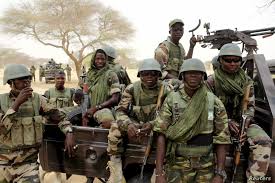
Sixteen Nigerien soldiers were killed and another was missing after an ambush on a military patrol in the Tahoua region near the border with Mali.

During the attack by “bandits” on Saturday, the toll was “16 dead, six injured and one missing”, Tahoua official Ibrahim Miko said on public television.

He attended the funeral of Lieutenant Maman Namewa, commander of the patrol that was attacked.

The vast desert area of Tahoua in west Niger – near the borders of Mali and Burkina Faso – has been plagued by violence since 2012.

In March, an attack by the rebel fighters on three villages near Niger’s border with Mali left a total of 141 people dead. They were the worst attacks committed by armed groups in Niger in recent years.

The world’s poorest nation, according to the UN’s development rankings for 189 countries, Niger is also struggling with violence that has spilt over from Mali and Nigeria.

The attacks in western Niger are often attributed to armed groups affiliated with al-Qaeda and ISIL (ISIS).

Such attacks against civilians have multiplied this year, with more than 300 people killed in villages and encampments in western Niger.

On Sunday, the government said troops had killed 24 “suspected terrorists” after they tried to escape after being captured in the west of the country.

The suspects were planning an attack on the market town of Banibangou, but the army was alerted and, after an exchange of gunfire, 26 people were arrested on April 28, the defence ministry said in a statement. One of the “suspected terrorists” died later from gunshot wounds.

As they were awaiting transfer to nearby Chinegodar where there is a military base “the prisoners tried to escape” overnight on Thursday and managed to disarm a guard, the ministry said.

“After ignoring warning shots, 24 prisoners were fatally wounded and one of them was able to escape”, it said, adding that an inquiry into the incident had been launched.

read more
News & Announcements

Bill, Melinda Gates Announce Divorce

Tech billionaire, Bill Gates and his wife, Melinda Gates have announced divorce after 27 years of marriage, having tied the knots on January 1, 1994, in Hawaii.

In a joint statement Monday, the couple announced they’ve decided to end their marriage, saying, “Over the last 27 years, we have raised three incredible children and built a foundation that works all over the world to enable all people to lead healthy, productive lives.”They continue, “We continue to share a belief in that mission and will continue our work together at the foundation, but we no longer believe we can grow together as a couple in the next phase of our lives.”

TMZ reports that Bill and Melinda began dating in 1987 after meeting at a New York trade show, and she’d go on to work in marketing for Microsoft and be appointed as General Manager of Information Products in the early ’90s.

On January 1, 1994, the couple wedded in Hawaii and Melinda left the company in 1996 to focus on starting their family.

Bill and Melinda have three adult children, Jennifer, Rory and Phoebe, and reside in their huge, earth-sheltered family mansion, dubbed Xanadu 2.0, overlooking Lake Washington in Medina, WA.

Along with being mega-rich, the duo is widely known for their philanthropic efforts ever since launching the Bill & Melinda Gates Foundation in 2000. It was estimated in 2014 that they had donated $28 billion to the foundation, a number that’s only skyrocketed in recent years.

For instance, the Gates Foundation made a contribution of $250 million in late 2020 to fight the COVID-19 pandemic.

The Gates’ net worth is estimated at more than $130 billion

read more
News & Announcements

EU Summons Russian Envoy Over Travel Ban On Its Officials

The European Union has summoned Russia’s Ambassador Vladimir Chizhov to condemn Moscow’s decision to bar eight officials from entering the country in retaliation for sanctions imposed on Russian citizens by the EU.

Diplomatic tensions, Reuters reports, have continued to rise since the start of 2021 when Moscow expelled European diplomats during an official visit by the EU’s high representative.

The EU has in turn angered Moscow by demanding that Kremlin critic Alexey Navalny should be released from prison while blacklisting more Russian officials for human rights abuses.

Russia’s ambassador to the EU, Vladimir Chizhov, was summoned “to condemn the decision of the Russian authorities from last Friday to ban eight European Union nationals from entering the territory of the Russian Federation”, the EU Commission said in a statement.

“Ambassador Chizhov was informed of the strong rejection and firm condemnation by the EU institutions and EU member states of this decision, which was purely politically motivated and lacks any legal justification,” the EU executive added.

In the meeting with Chizhov, the EU representatives also recalled Russia’s expulsion of Czech diplomats and Russia’s executive order of so-called “unfriendly states”, according to the statement.

Russia’s foreign ministry said on Friday those banned included Vera Jourova, vice president for values and transparency at the executive European Commission, David Sassoli, the president of the European Parliament, and Jacques Maire, a member of the French delegation at the Council of Europe’s Parliamentary Assembly.

“The importance of diplomatic efforts to rectify the current unhealthy situation in the dialogue between Moscow and Brussels was stressed,” Chizhov said in a statement after the meeting, adding the Russian side had reaffirmed its readiness for this endeavour.

The EU will consider its next steps at a meeting of foreign ministers next week but may also look to the Council of Europe, a non-EU body of which Russia is a member, for ways to respond to what Brussels says are continued Russian rights abuses.

Moscow has called on the EU not to interfere in its internal affairs and denies any wrongdoing.

Navalny was arrested in January upon his return from Germany where he spent five months recovering from a nerve agent poisoning that he blames on the Kremlin. Russian authorities denied any involvement and questioned whether he was even poisoned. European labs have confirmed that Navalny was poisoned.

He was sentenced in February to two and a half years in prison for parole violations on an earlier embezzlement conviction that he says was politically motivated.

The EU imposed sanctions in March on two Russians accused of persecuting gay and lesbian people in the southern Russian region of Chechnya.

The EU also imposed sanctions on four senior Russian officials close to President Vladimir Putin in March.

read more
News & Announcements

UN Warns Of Large-Scale Conflict In South Sudan If Peace Accord Isn’t Implemented

A United Nations report warns that the slow implementation of a revitalized peace accord in South Sudan risks pushing the country back into a “large-scale conflict”.

Political, military and ethnic divisions in South Sudan are widening, leading to multiple violent incidents between the main signatories to last year’s ceasefire, the possibility of renewed war, and nearly 100,000 people facing “famine-like conditions”, it said.

In the 81-page report sent to the UN Security Council on Monday, a panel of experts, Aljazeera reports, said slow-moving reforms by President Salva Kiir’s government and more than a year of political disputes and disagreements over how to implement the February 2020 ceasefire and a 2018 peace agreement has led to frayed relations between Kiir and First Vice President Riek Machar.

Discontent within Kiir’s Sudan People’s Liberation Movement and his power base in the Dinka ethnic group over his handling of the transition “has led to calls for new leadership”, said the report.

It quoted multiple confidential sources in Kiir’s camp as saying divisions had formed over the distribution of government positions and the president’s attempts “to manage internal tensions among his supporters had failed and resulted in security incidents outside the capital”.

As for Machar, the panel said his inability to influence the government’s decision-making or spur implementation of the ceasefire has led the Sudan People’s Liberation Movement-Army in Opposition, which the vice president heads, to begin “to break apart”.

Some political and military leaders in Machar’s camp are challenging his leadership, and some officers have defected to the government, the experts said.

There were high hopes for peace and stability once oil-rich South Sudan gained its independence from Sudan in 2011. But the country slid into ethnic violence in December 2013 when forces loyal to Kiir started battling those loyal to Machar, his former vice president who belongs to the Nuer ethnic group.

Numerous attempts at peace failed, including a deal that saw Machar return as vice president in 2016 only to flee months later amid renewed fighting. The civil war has killed nearly 400,000 people and displaced millions.

Intense international pressure followed the recent peace deal and coalition government led by Kiir, with Machar as his deputy. But the government has failed to achieve many reforms, including completing the unification of army command, graduating a unified force, and reconstituting the Transitional National Legislative Assembly.

“Given the concerns of civil society, political leaders and military officials regarding the ability of the agreement to bring lasting peace to South Sudan and their nascent calls for Mr Kiir and Mr Machar to step down, urgent engagement is needed to avert a return to large-scale conflict,” the panel said.

The experts cited multiple sources in the government and armed groups mostly agreeing that two and a half years after the signing of the peace agreement, its momentum has waned. They said officials from Kiir and Machar’s parties also mainly agreed “the slow pace of implementation and the shifting political stances of some of the signatories had made the agreement unlikely to be implemented”.

The panel also said the unity government has failed to improve protections of the rights of civilians “who have faced continued threats from government security forces and armed groups”.

The international famine warning system has reported that about half of South Sudan’s population faces “high levels of acute food insecurity”, and more than 92,000 people living in several areas – including the Greater Pibor Administrative Area, northern Bahr al-Ghazal and Warrap – “were facing famine-like conditions as of early March 2021”, the experts said.

The people of South Sudan “are in need of humanitarian assistance in 2021 than ever before”, the report said.

“Despite the humanitarian needs of 8.5 million people, the government has imposed bureaucratic barriers to the delivery of humanitarian aid, and the ongoing conflict has prevented its safe delivery,” it added.

The experts also called for an arms embargo, which is set to expire at the end of May, to be kept in place and for new sanctions against those hindering implementation of the revived 2018 peace agreement and obstructing the delivery of humanitarian aid.

They also called for an independent assessment of how the government is managing its arms stockpiles.

read more
News & Announcements

Somalia President Bows To Pressure, Cancels Tenure Extension

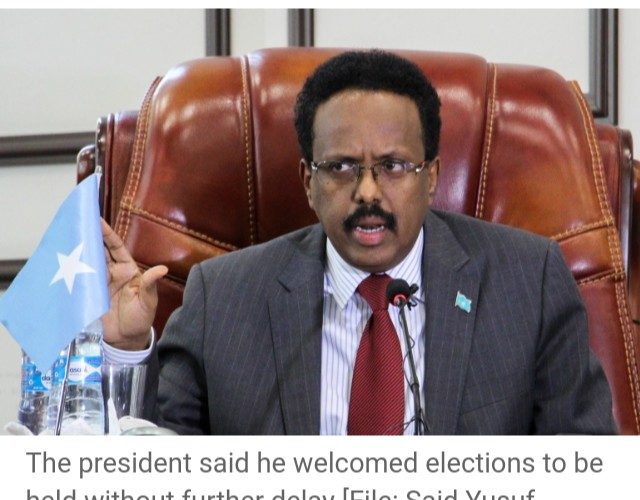
Somalia’s President Mohamed Abdullahi Mohamed announced he will not attempt to extend his term by two years, bowing to domestic and international pressure after clashes in the capital Mogadishu split security forces along clan lines.

News Agency reports that hours earlier, Prime Minister Mohamed Hussein Roble denounced the proposed term extension and called for preparations for a new presidential election.

The president’s term expired in February, but the country failed to hold elections as planned. Earlier this month, the lower house of parliament voted to extend Mohamed’s four-year term by another two years.

The Senate rejected the move, provoking a political crisis.Commanders in the police and the military defected to the opposition, and rival factions of the security forces fortified positions in central Mogadishu, raising fears of heavy fighting in the heart of the capital, and a security vacuum in the surrounding areas that could be exploited by al-Qaeda-linked al-Shabab fighters.

In a televised statement early on Wednesday, the president said he commended the efforts of the prime minister and other political leaders and welcomed the statements they issued calling for elections to be held without further delay. He also called for urgent discussions with the signatories to an agreement signed last September on the conduct of the vote.

The opposition, which demanded the president to resign, did not immediately respond. The president did not discuss the opposition in his speech, but denounced unnamed “individuals and foreign entities who have no aim other than to destabilise the country”.

The heads of two regional states who had been staunch allies of the president also rejected on Tuesday the proposed two-year extension of Mohamed’s term. Those leaders said in statements immediately after the president’s speech they welcomed his announcement.

Prime Minister Roble backed that joint statement and called on security forces to return to their barracks. He also urged opposition leaders to stop any actions that could harm Somalia’s stability.

Mohamed’s attempt to extend his term also angered foreign donors who backed his government.

This week, opposition forces abandoned positions in the countryside as they headed for a showdown in the capital, allowing al-Shabab to take over at least one town.

Forces loyal to the opposition hold important parts of Mogadishu and clashed with government forces over the weekend, raising worries the country could return to an all-out war.

Alarmed by the extraordinary developments, the United Nations, African Union, United States, and others on Tuesday warned against the “emerging fragmentation” of the Somali National Army along clan lines.

Some residents fled, worried that Somalia was again collapsing into conflict after years of trying to rebuild from its devastating civil war.

The president said he urged “all security agencies to maintain the stability of the capital and the safety of innocent civilians, avoiding any actions that may lead to insecurity”.Somalia’s election was delayed amid disputes between the federal government and the states of Puntland and Jubbaland along with the opposition.The president, a former US citizen who gave up that status while in office, tried to defend his actions on the election standoff in a recent interview with his former local newspaper, The Buffalo News, asserting Somalia “cannot afford a power vacuum”, and the extra time would allow officials to organise the first one-person-one-vote direct election in decades.

He added, “Who can lead if we leave?”

The latest unrest is the second bout of violence in Mogadishu over the proposed extension to Mohamed’s term.

Continued clashes could further splinter Somali security forces along ethnic lines, said the International Crisis Group, a think-tank.

“Somalia is teetering on the brink of a major breakdown once again,” it said in a briefing published on Tuesday.

Somalia’s fledgeling armed forces are drawn from clan militias that have often battled each other for power and resources.

Mohamed is Darod, one of Somalia’s main clans. The majority of the Somali military in the capital is Hawiye, another large clan. Most of the opposition leaders are Hawiye.

When asked if he would peacefully hand over power if someone else is elected, the president in his interview with The Buffalo News replied, “Absolutely, without any hesitation.”

read more
1 260 261 262 263 264 322
Page 262 of 322