News & Announcements Archives | Page 258 of 322 | The Lafete Magazine
close

News & Announcements

News & Announcements

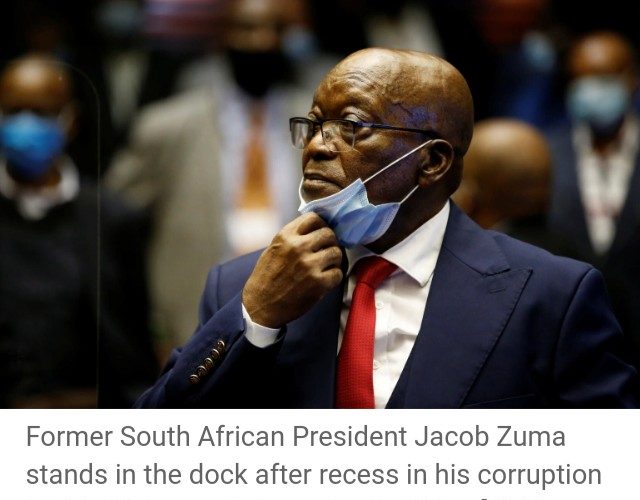
Ex-President Zuma Pleads Not Guilty To Corruption Charges

Former President Jacob Zuma of South Africa has pleaded not guilty to corruption, fraud, racketeering, and money laundering charges relating to a 1999 arms deal when he was deputy president.

Zuma has repeatedly rejected the charges and says he is the victim of a politically motivated witch-hunt by his opponents.

“I plead not guilty,” he said on Wednesday after the prosecutor read the charges out in court.

Zuma, who also faces a separate inquiry into corruption during his time as president from 2009 to 2018, is accused of accepting 500,000 rands ($34,000) annually from French arms company Thales, the company from an investigation into the $2bn deal.

Zuma’s defence team is calling for the recusal of state prosecutor Billy Downer because he has “no title to prosecute”. The prosecution requested more time to respond, so it will not be dealt with on Wednesday but rather on July 19, said the presiding judge.

“Jacob Zuma is arguing that the lead prosecutor is not impartial, is not independent and this would jeopardise the prospects of a fair trial,” Al Jazeera’s Fahmida Miller, reporting from Johannesburg, said.

She added that South Africans were bracing for “a very lengthy process, one that is likely to take months, if not years”.

The National Prosecuting Authority (NPA) initially filed the charges against Zuma a decade ago but set them aside shortly before he successfully ran for president in 2009. Following appeals and lobbying by opposition parties, the NPA reinstated the charges in March 2018, a month after the ruling African National Congress (ANC) party forced him out of office.

Thales was known as Thomson-CSF at the time of the deal. It has said it did not know about any transgressions by any of its employees concerning the award of the contracts. Its representative in court also pleaded not guilty to the racketeering, corruption, and money laundering charges.
read more
News & Announcements

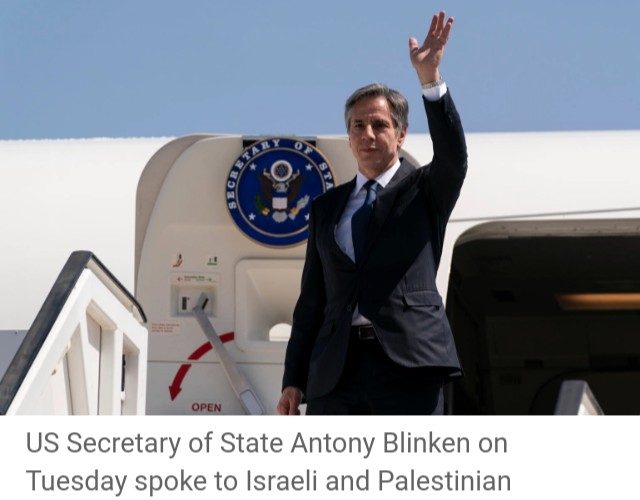
Blinken Arrives Egypt To Bolster Israel, Palestinian Ceasefire

United States Secretary of State Antony Blinken has arrived in Egypt on the second day of a regional tour to bolster a ceasefire reached last week between Israel and Hamas, the Palestinian faction that runs the besieged Gaza Strip.

Aljazeera reports that eleven days of Israeli bombardment that began on May 10 killed at least 248 Palestinians, including 66 children, and wounded nearly 2,000 others in the coastal enclave. At least 12 people in Israel, including two children, were killed by rockets fired by Hamas and other armed groups from Gaza during the same period.

Blinken’s visit to Cairo on Wednesday came a day after he held separate meetings with Israeli Prime Minister Benjamin Netanyahu and Palestinian Authority (PA) President Mahmoud Abbas. The top US diplomat pledged millions in aid to rebuilding efforts in Gaza that he said the US would “ensure” would not benefit Hamas, with whom Washington does not have direct contact and labels a “terrorist organisation”.

In Cairo, Blinken was due to meet Egyptian President Abdel Fattah el-Sisi before flying on to Jordan for talks with King Abdullah II.

Egyptian mediators have been leading negotiations between Israel and Hamas.

US President Joe Biden, in a call with el-Sisi on Monday, thanked Egypt for “its successful diplomacy” and coordination with Washington to achieve the ceasefire.

The Biden administration has credited its own “quiet”, behind-the-scenes approach with bringing an end to the bombings, brushing off criticism that the US did not take a hard enough line with Israel in the early days of the escalation, which included the US blocking four times a United Nations Security Council joint statement calling for a ceasefire.

Following his meetings with Netanyahu and Abbas on Tuesday, Blinken called on all parties “to build on the ceasefire and try to move things in a genuinely positive direction”.

He said the Biden administration “would notify Congress of our intention to provide $75m in additional development and economic assistance to the Palestinians in 2021”. He also pledged $5.5m in “immediate disaster assistance” for Gaza and about $32m for the United Nations agency for Palestinian refugees.

Blinken said the US will work with partners to “ensure that Hamas does not benefit from the reconstruction assistance”, but did not offer details on how that would be achieved, or how the ongoing discord between Hamas and the Fatah-led PA would be navigated.

While referencing that a future Israel-Palestine peace process “ultimately requires two states”, and condemning actions that lead to further violence, including annexation, home demolitions and settlement activities, Blinken has put relatively little emphasis on wider peace negotiations during his trip.

Instead, he said the US would support economic development and the creation of opportunities in the occupied Palestinian territory and called for “equality” for Palestinians.

Blinken also announced the US plans to reopen its Consulate General in occupied East Jerusalem, which had overseen relations with the PA before former President Donald Trump relocated the US embassy in Israel to Jerusalem in 2018 – a move denounced by Palestinians and rights groups.

The Biden administration has said it will keep the embassy in Jerusalem.

Blinken also announced on Tuesday that Washington would replenish Israel’s Iron Dome air defence system, as the administration has repeatedly indicated it does not plan to heed the calls of some US legislators to curtail arms sales and unconditioned military aid to Israel in the wake of the violence.

read more
News & Announcements

Mali’s Interim President Resigns Two Days After Military Arrest

Mali’s interim president and prime minister have resigned two days after they were arrested by the military, an aide to the vice president said.

Soldiers, led by interim Vice President Assimi Goita, arrested President Bah Ndaw and Prime Minister Moctar Ouane and took them to a military base on Monday after a cabinet reshuffle in which two officers lost their posts.

The military’s actions Aljazeera reports, have jeopardised Mali’s return to democracy following a coup last August and drawn condemnation from international powers.

“The president and his prime minister have resigned. Negotiations are ongoing for their liberation and the formation of a new government,” said Baba Cisse, an aide to Goita, on Wednesday in comments sent to the Reuters news agency by the military.

A member of the Economic Community of West African States (ECOWAS), which is visiting the country in an attempt to resolve the standoff, confirmed the president’s resignation to the AFP news agency, requesting anonymity.

During a meeting with Goita late on Tuesday, the ECOWAS delegation, led by former Nigerian President Goodluck Jonathan, raised the possibility of sanctions against the officers responsible for the takeover, said a military official who was present.

The United Nations Security Council was set to hold an emergency meeting later on Wednesday at the request of former colonial power France and others.

On Monday, the UN, African Union, ECOWAS, European Union and the United States issued a rare joint statement, attacking the detention and demanding the release of Ndaw and Ouane.

Mali’s neighbours and international powers fear the political crisis could further destabilise a country that armed groups linked to al-Qaeda and ISIL (ISIS) have used as a launchpad for attacks across the region.

On Tuesday, Goita, who led the coup in August against President Ibrahim Boubacar Keita, said the president and the prime minister had violated the transitional charter by failing to consult him about the new cabinet.

Goita promised that elections planned for next year at the end of the transitional period would go ahead.

He also accused the government of mishandling the situation in Mali, including a strike last week by the main union. The union said on Tuesday it would suspend the strike in light of the political crisis.

read more
News & Announcements

COVID-19: Pfizer, AstraZeneca Highly Effective Against India Variant – Study

The Pfizer-BioNTech and Oxford-AstraZeneca vaccines have been found to be highly effective against the coronavirus variant that was first identified in India, according to a study by Public Health England (PHE).

The Pfizer vaccine, according to the Aljazeera report, was 88-percent effective and the AstraZeneca jab was 60-percent effective against the B1617.2 strain after the second dose.

Both the vaccines were more effective against the so-called “Kent” strain – B.1.1.7, the COVID-19 variant dominant in Britain – with Pfizer being 93-percent effective while the AstraZeneca jab was 66-percent effective over the same period.

However, they were only 33-percent effective three weeks after the first dose.

Health Secretary Matt Hancock described the outcome as “groundbreaking,” while PHE said it expects to see even higher levels of effectiveness against hospital admission and death.

“This new evidence is groundbreaking and proves just how valuable our COVID-19 vaccination programme is in protecting the people we love,” Hancock said.

Earlier this month, the World Health Organization (WHO) dubbed the B1617.2 strain a “variant of global concern”.

The study, which took place between April 5 and May 16, found that both the vaccines were 33-percent effective against symptomatic disease from the B1617.2 strain three weeks after the first dose, compared with about 50 percent against the B.1.1.7 strain.

Some 12,675 genome-sequenced cases were included in the analysis, but only 1,054 were of the variant identified in India. The study included data for all age groups from April 5 to cover the period since the strain emerged.

New data from PHE shows there have been at least 2,889 cases of the B1617.2 strain recorded in England from February 1 this year to May 18.

Of those, 104 cases resulted in a visit to a hospital emergency department, 31 required overnight hospital admission and six resulted in a death.

The most common strain in England, according to the data, is the B.1.1.7 variant, with 132,082 cases recorded over the same period. The virus has infected 4.46 million people and caused the death of 128,000 people in the UK since its outbreak last year.

Dr Mary Ramsay, head of immunisation at PHE, added: “This study provides reassurance that two doses of either vaccine offer high levels of protection against symptomatic disease from the B1617.2 variant.

“We expect the vaccines to be even more effective at preventing hospitalisation and death, so it is vital to get both doses to gain maximum protection against all existing and emerging variants.”

A separate analysis by PHE indicates that the vaccination programme has so far prevented 13,000 deaths and about 39,100 hospital admissions in older people in England, up to May 9.

Under the government’s plans, a lifting of remaining coronavirus restrictions is due to take place from June 21.

The latest figures show that more than 50 million doses of coronavirus vaccine have been given in Britain in Europe’s fastest vaccination programme so far, but it has faced a new challenge from the spread of the variant first found in India.

Data published on Saturday showed new COVID cases reported in Britain rose by 10.5 percent in the seven days to May 22 although it remained a fraction of levels seen earlier this year.

Prime Minister Boris Johnson this month ordered a ramping up of administering second vaccine doses to people over 50 and those who are clinically vulnerable.

Concern about rising cases in Britain of the variant first found in India prompted Germany to say on Friday that anyone entering the country from the United Kingdom would have to quarantine for two weeks on arrival.

read more
News & Announcements

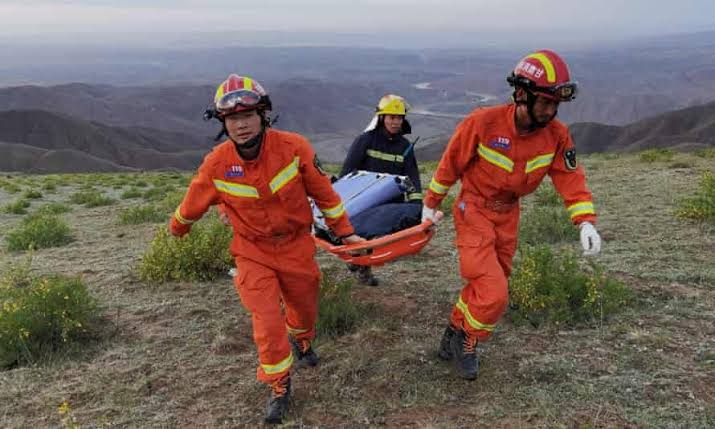
Very Bad, Freezing Weather Kills 21 Runners In China

Twenty-one people were killed after hail, freezing rain and high winds hit runners taking part in a 100-kilometer cross-country mountain race in China, state media said Sunday.

The extreme weather, according to AFP, hit a high-altitude section of the race held in the Yellow River Stone Forest near Baiyin city in northwestern Gansu province Saturday afternoon.

Among the dead were elite Chinese long-distance runners, local media reported.

State broadcaster CCTV on Sunday reported the final missing competitor had been found having “already lost their vital signs”, citing the local rescue command headquarters.

“This suggests that this incident caused 21 deaths in total,” CCTV said. City officials had earlier confirmed 20 deaths and one person missing at a briefing earlier on Sunday.

Baiyin city mayor Zhang Xuchen said that at around midday a section of the ultramarathon course — between kilometres 20 and 31 — was “suddenly affected by disastrous weather”.

“In a short period of time, hailstones and ice rain suddenly fell in the local area, and there were strong winds. The temperature sharply dropped,” Zhang said.

Shortly after receiving messages seeking help from some participants, marathon organisers dispatched a rescue team that managed to save 18 of the 172 participants.

At around 2 pm, weather conditions worsened and the race was immediately called off as local authorities sent more rescuers to help, Zhang said, adding that provincial authorities will further investigate its cause.

The victims included top domestic marathon runners Liang Jing and Huang Guanjun, local media reported, citing a friend of Huang’s and Wei Pulong, Liang’s coach. Liang had won multiple Chinese ultramarathons in recent years.

Huang, who was deaf-mute, won the men’s hearing-impaired marathon at the 2019 National Paralympic Games held in Tianjin. Marathon organisers confirmed his death to a friend, who was cited in local media.

State news agency Xinhua reported that some of the runners suffered from hypothermia, and Zhang said earlier that eight people were being treated for minor injuries in hospital and were in a stable condition.

Video footage broadcast on state media showed emergency rescue personnel in combat fatigues carrying flashlights as they climbed through the rocky terrain at night.

Some marathon participants, wrapped in heavy-duty blankets, were filmed being put on to a stretcher by rescuers.

“My whole body was soaked through, including my shoes and socks. I couldn’t stand up straight because of the wind, I was very worried I’d be blown over. The cold became more and more unbearable,” one survivor was quoted as saying in local media.

“While descending the mountain, I was already experiencing hypothermia symptoms.”

Temperatures in the mountainous terrain dropped further overnight, Xinhua said, making search and rescue “more difficult”.

read more
News & Announcements

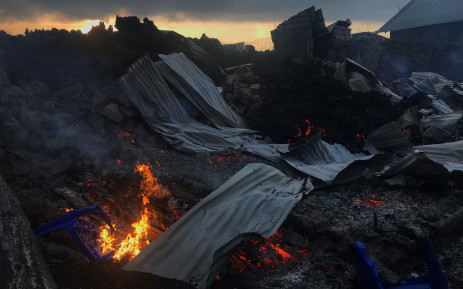
Thousands Flee As Volcano Hits DR Congo

Thousands have fled a volcanic eruption in the Democratic Republic of Congo, but the flaming lava from Mount Nyiragongo appeared to have come to a halt on the outskirts of Goma city early Sunday.

According to an AFP correspondent at the scene, the molten rock, which the eruption had sent close to Goma airport on the shores of Lake Kivu, still appeared unstable, but had come to a standstill in the suburbs of the eastern city.

And around a dozen earth tremors were felt in the early hours.

“People are beginning to return to their homes. The situation seems to have calmed down for the moment,” one resident said.

“But people are still scared. The authorities still haven’t made any official announcement so far this morning,” he added.

Thousands had fled during the night and many families slept on pavements surrounded by their belongings under a night sky turned red by fire and fumes.

“There is a smell of sulphur. In the distance you can see giant flames coming out of the mountain,” one resident, Carine Mbala, told AFP.

Officials said the lava had reached Goma city airport although residents said it had stopped at the edge of the facility.

Goma appeared relatively calm as dawn broke, but people said they are still wary.

“People are wondering whether the volcano has stopped, or whether it will continue, whether the lava will reappear,” one resident said.

A few cars were seen on the streets, but no police or military presence was visible.

“We’re not convinced that the eruption is over in just a day. We’re waiting,” said one man.

On Saturday, Communications Minister Patrick Muyaya had said that the government had activated an evacuation plan and was “discussing the urgent measures to take at present.”

Congolese President Felix Tshisekedi had said he would “interrupt his stay in Europe to return home this Sunday to supervise the coordination of aid”.

By early Sunday, between 5,000 and 7,000 people had arrived in neighbouring Rwanda, according to the country’s national broadcaster.

The Rwanda Broadcast Agency tweeted photos of those arriving in Rubavu district but said early Sunday that the evacuees had already begun heading home.

“At the moment, the Congolese who had evacuated into Rwanda because of the Nyiragongo volcanic eruption are returning to their homeland. It appears that the eruption has stopped,” it tweeted.

The first departures from Goma city came even before the official confirmation that Mount Nyiragongo had erupted at around 7:00 pm Saturday, spewing red fumes into the night sky.

Power was already cut in large parts of the city when hundreds of residents began leaving their homes.

Some headed out of the southern end of the city towards the nearby border post with Rwanda, while others headed west towards Sake, in the neighbouring Congolese region of Masisi.

Resident Richard Bahati said he was incredibly worried about the eruption: “I lived through this volcano problem in 2002.

“The volcano had devastated all our homes and all our possessions. That’s why I’m scared again this time.”

Electricity was cut off in a large part of the city, with thousands of people — encumbered with mattresses, food and parcels — heading towards the Rwandan border.

“There are a lot of people on the road, a lot of cars, it’s an escape,” one man with his family in his car told AFP.

“It is moving at a snail’s pace, on three or four lanes,” he said, adding: “There are children, women, old people who are on foot and the rain is coming. It’s complicated.”

Goma is home to a large contingent of peacekeepers and staff of MONUSCO, the UN mission in the country, as well as the base of many NGOs and international organisations.

Several planes, belonging to Monusco and private companies, took off in the evening, according to an airport source, with a local adding they had also seen the unusual nighttime activity.

In a May 10 report, the Goma Vulcanology Observatory warned that seismic activity around the volcano had increased and warranted careful monitoring.

The last time Nyiragongo erupted was January 17, 2002, killing more than a hundred people and covering almost all of the eastern part of Goma with lava, including half of the airport’s landing strip.

During that eruption, the victims were mostly sick or elderly abandoned to their fate in the northern districts of the city with some looting also taking place.

read more
News & Announcements

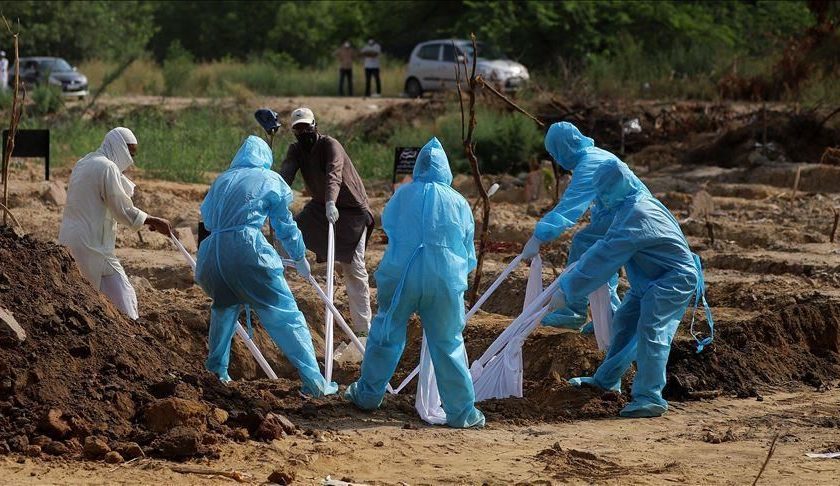
India Equals Brazil, The US In More Than 300,000 COVID Deaths

India has crossed 300,000 coronavirus deaths, the third country after the United States and Brazil to hit the grim figure, as it battles a huge second wave of infections now affecting the poorer countryside.

India’s health ministry on Monday reported 4,454 coronavirus-related deaths over the last 24 hours, with the total death toll now standing at 303,720 after adding 50,000 deaths in just under two weeks.

Daily coronavirus infections rose by 222,315, taking the country’s caseload to 26.75 million, according to the health ministry data.

The milestone came as slowed vaccine deliveries mar the country’s fight against the pandemic, forcing many to miss their shots, and a rare “black fungus” infection affecting COVID-19 patients worrying the doctors.

Many experts however believe the real toll is much higher, particularly as the disease spreads into rural areas where the majority of the 1.35 billion population lives and where health facilities and record-keeping is poor.

Al Jazeera’s Elizabeth Puranam, reporting from New Delhi, said Indian journalists, doctors and crematoriums all say many deaths are not being counted.

“The official death toll only takes into account people who are dying in hospitals, but most Indians don’t die in hospitals, they die at home. And only around 22 percent of deaths in the country are medically certified,” she said.

Several Indian states have halted the COVID-19 vaccination drive for those in the 18-44 age group due to a shortage of vaccine supplies, regional officials confirmed on Sunday.

States where vaccinations for this age group have been stopped include Chhattisgarh, New Delhi, Karnakata, Maharashtra and Rajasthan – all among the worst affected by a current second wave of the pandemic.

“The vaccination drive is not going well at all. There are very severe shortages of vaccines and the (federal) government have told states to make their own arrangements with vaccine manufacturers, both local and foreign,” said Al Jazeera’s Puranam.

People aged 45 and above are also finding it difficult to get their second dose in several regions, with a number of vaccination centres remaining closed in cities like New Delhi, Mumbai and Pune. Signs posted outside these centres said supplies had run out.

“Delhi is also running short of Covaxin doses for the 45-plus age group, we have supplies for just one more day, we have a week’s supply of Covishield,” said Atishi of Delhi’s ruling Aam Aadmi Party.

The country began inoculating its 1.3 billion population on January 16 with the two vaccines approved by its drugs regulator.

These are Covishield, which is the name under which the AstraZeneca vaccine is produced in India by the Pune-based Serum Institute of India, and Covaxin, manufactured by Hyderabad-based Bharat Biotech.

The government had planned to vaccinate 300 million people by July but a little more than 195 million shots have been administered so far. Only 43 million people have received the required two shots.

The number of vaccines being administered daily has dropped during the past month from 3.2 million doses on April 26 to 2.4 million on May 11 and to 1.5 million on Saturday, government data showed.

“Vaccination is really the only answer and Indians are already paying a heavy price for the way the government has gone about planning, pricing and the rollout,” said virologist Dr T Jacob John.

Federal government representatives have said the glitch in vaccine supplies were temporary and there would be around two billion doses of vaccines available between June and December.

However, experts say the government is not likely to hit that the goal, pointing out that four of the vaccines the government was basing its projections are still in the clinical trials stage.

“We don’t know whether those would be licenced and when,” epidemiologist Dr Chandrakant Lahariya was quoted as saying by The Hindu newspaper.

Lahariya said a realistic estimate of vaccine availability between August and December, this year would be around 1.3 billion doses.

read more
News & Announcements

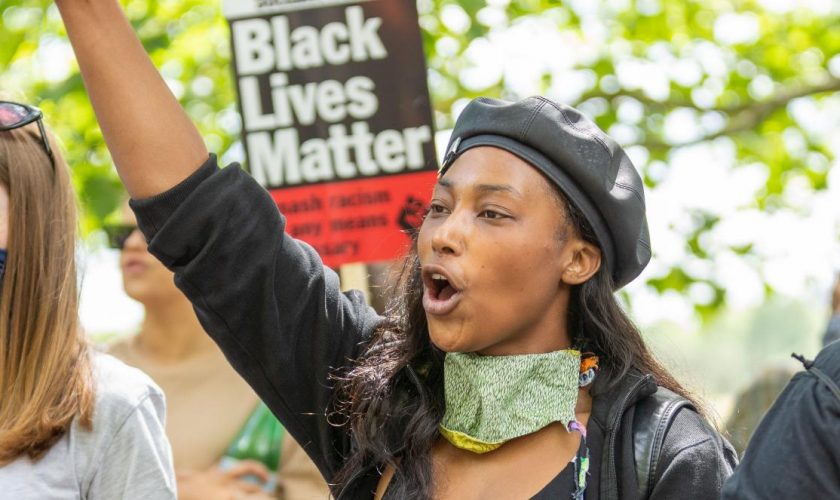
Black Lives Matter Activist, Sasha, In Critical Condition After Gunshot On Head

British Black Lives Matter activist Sasha Johnson is in a critical condition after being shot in the head in London, her political party said.

 “It is with great sadness that we inform you that our own Sasha Johnson has sustained a gunshot wound to her head. She is currently hospitalised and in a critical condition,” Taking the Initiative Party (TTIP) said in a statement

TTIP said the incident happened in the early hours of Sunday after numerous death threats.

TTIP said Sasha, 27, has always been actively fighting for black people and the injustices that surround the black community.

“Sasha is also a mother of three and a strong, powerful voice for our people and our community. Let’s all come together and pray for Sasha, pray for her recovery and show our support to her family and loved ones,” TTIP said.

Imarn Ayton, a friend of Johnson’s, told the BBC that doctors had carried out surgery on her fellow activist, which had gone well and she was now with her parents.

She explained to the British broadcaster that Johnson had been at a party when she was injured, but she did not believe she was the intended victim.

“As far as I am aware… this incident is more related to rival gangs as opposed to her activism,” Ayton was quoted as saying.

CNN said detectives from the Met’s Specialist Crime Command (Trident) were investigating and looking to speak to anyone who was at the party in the Consort Road area of London.

“A dedicated team of detectives is working tirelessly to identify the person or persons responsible for this shooting,” Detective Chief Inspector Jim Tele was quoted as saying.

According to CNN, Tele said they needed the public’s help and urged people to come forward if they had witnessed or heard information about the incident.

read more
News & Announcements

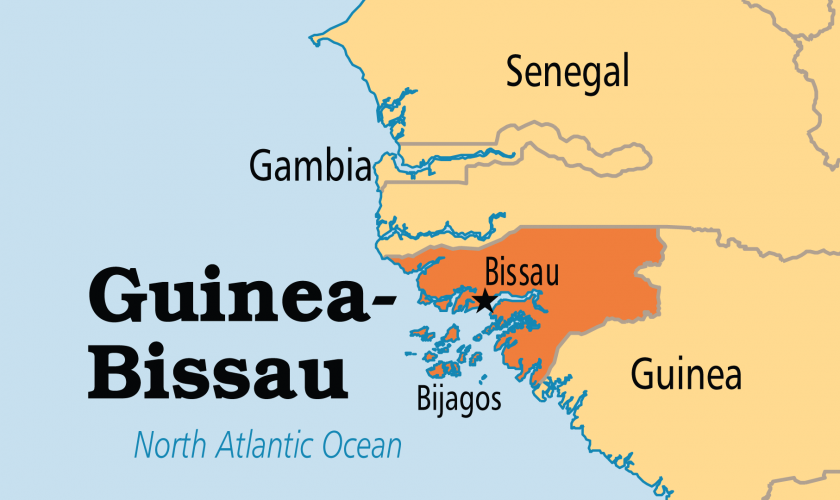
Road Accident In Guinea-Bissau Kills 14

Fourteen people have died in southern Guinea-Bissau after a cargo truck crashed into village homes, according to police.

The driver was speeding around a bend when he lost control and careered into the small village of Cambesse, 180km (120 miles) south of the capital Bissau.

AFP reports that thirteen people were killed when the truck ploughed through several houses in the early hours of Sunday, said a police officer who declined to be named. The driver was also killed.

A hospital worker in Bissau confirmed the death toll.

Guinea-Bissau is an impoverished former Portuguese colony of about two million people, where the state of roads is poor and accidents are frequent.

The road south of the capital is often busy during the spring harvest of cashew nuts, the country’s main export.

read more
News & Announcements

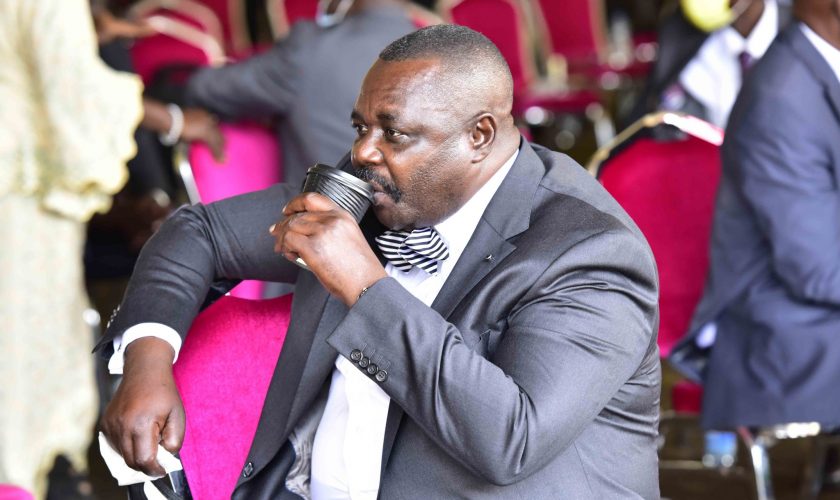
Jacob Oulanyah Elected Speaker Of Uganda’s 11th Parliament

Ugandan MP Jacob Oulanyah (Omoro County) is set to become the next Speaker of the 11th Parliament after he was declared winner of elections that took place during the first sitting on Monday.

Mr. Oulanyah got 310 votes, beating the incumbent, Kamuli Woman MP Rebecca Kadaga, who got 197 votes during the session at Kololo in Kampala. Kira Municipality MP Ibrahim Ssemujju was a distant third with 15 votes.

President Yoweri Museveni attended the first sitting which was chaired by Chief Justice Alfonse Owiny-Dollo.

The Nation says shortly after the votes were counted, there was a commotion in the House, which forced President Museveni to interject, calling the House to order.

He said: “Hello! Hello! Hello! You are going to kill the new Speaker and then what shall we do [sic]?”

“Sorry, your lordship, for taking over your work but I was trying to act as the minister of health,” he added.

Kalungu West MP Joseph Ssewungu rose and interjected on point of order, wondering why there were ‘strangers’ in the chambers of Parliament.

Mr. Ssewungu was concerned about the presence of President Museveni’s elite guards, the Special Forces Command (SFC), whom he noted were non-members.

“This is not about who lost or won. I’m wondering why we have strangers in the Chambers. Why are SFC here?”

The Chief Justice then directed all non-members to leave the Chambers.

President Museveni reinforced the CJ’s orders, telling members of his security team to leave.

“All soldiers get out of the tent,” Mr. Museveni bellowed and quickly added: “Ssewungu, I think now your allergy is treated. Ssewungu is allergic to SFC. I’m sorry (bows respectfully) your lordship.”

In his victory speech, Mr. Oulanyah pledged good leadership in Parliament and to “walk the talk”.

“I am truly humbled to be elected Speaker of this Parliament. I promise to work with the Deputy Speaker that you will select to repay the confidence you showed when you elected me as Speaker,” he said.

“We are stronger together. If we act in a harmonious way, we will always find a way. We have a collective responsibility to work together,” he added.

read more
1 256 257 258 259 260 322
Page 258 of 322