News & Announcements Archives | Page 225 of 322 | The Lafete Magazine
close

News & Announcements

News & Announcements

BBC To Axe 1,000 jobs, Scrap Some Traditional Broadcast Channels In Digital Transformation

The BBC is to axe 1,000 jobs and scraps some broadcast channels in traditional form as it prioritizes digital and copes with a funding freeze, the British public service broadcaster said on Thursday.
Aiming to “build a digital-first public service media organization”, the BBC said it would “change in step with the modern world, giving audiences the content they want… in the ways they want it”.
The network will create a single 24-hour television news channel serving the UK and abroad, absorbing BBC World.


Channels including children’s channels CBBC, BBC Four, and Radio 4 Extra will stop traditional broadcasting, while “a number” of World Service language services will become digital-only.
Director-General Tim Davie made a speech to BBC staff on Thursday in which he hailed “a fresh, new, global digital media organization which has never been seen before.


“We need to evolve faster and embrace the huge shifts in the market around us,” he told them.
The first phase of the changes, including job cuts, will save £500 million (585 million euros, $630 million) a year, £200 million of which will help offset the £285 million funding gap caused by the government earlier this year freezing the television license fee.


“The BBC will also reinvest £300 million to drive a digital-first approach, through changes to content and output and additional commercial income,” a statement said.
Further details are to be announced in the coming months, said the BBC, which marks its centenary this year.


The broadcaster has faced increasing claims from right-wingers since the UK’s divisive Brexit referendum in 2016 of political bias and pushing a “woke”, London-centric liberal agenda.
The BBC, founded by the Royal Charter and operating independently of government, has faced similar accusations from the political left.


Critics accused Culture Secretary Nadine Dorries of “cultural vandalism” and wrecking a world-renowned British institution when she announced the license-fee freeze.
The fee — payable by every household with a television set — funds BBC television, radio, and online services, as well as programming, many of which are exported commercially worldwide.


Supporters maintain the fee — currently £159 for a colour TV — provides excellent value for money, and a range of services from news and current affairs to wildlife documentaries, children’s output, drama and music.


But opponents, including rival commercial broadcasters, have long complained the guaranteed funding model, which criminalizes non-payers, is unfair.

read more
News & Announcements

Buhari Travels To Malabo For AU Extra-Ordinary Session

President Muhammadu Buhari has departed Abuja for the capital of Equatorial Guinea, Malabo, where he will take part in the African Union (AU) Extraordinary Session of Assembly of Heads of State and Government.


This was disclosed in a statement by his Senior Special Assistant on Media and Publicity, Mallam Garba Shehu.
He said the summit will specifically be focused on security.


The statement reads: “The three-day summit, which will hold on May 26th-28th, will also focus on Humanitarian Challenges in Africa, with related issues on migration, refugees, returnees and Internally Displaced Persons.
“At the summit, the African leaders will look at Terrorism and Unconstitutional Change of Government, with attendant spiraling effects on human rights and economies.


“President Buhari will join other Heads of State and Government to deliberate on Humanitarian Challenges, Hopes, and Challenges in Africa, and participate in the adoption of Assembly Declaration on Humanitarian Summit and pledging conference.
“On security and governance, the Assembly of Heads of State and Government of the African Union will take a united position on Terrorism and Unconstitutional Change of Government, and reach agreements on new approaches to stem the tide.”


The First Lady, Mrs. Aisha Buhari, who is the President of the African First Ladies Peace Mission, is accompanying her husband to the African Union meeting.
The President is accompanied by Minister of Foreign Affairs Geoffrey Onyeama; Minister of Defence, Maj-Gen Bashir Salihi Magashi (Retd); Minister of Humanitarian Affairs, Disaster Management & Social Development, Sadiya Umar Farouq; National Security Adviser, Maj-Gen Babagana Monguno (Retd); Director-General, National Intelligence Agency (NIA), Amb. Ahmed Rufa’i Abubakar and Chairman, Nigerians In Diaspora Commission (NiDCOM) Abike Dabiri-Erewa.

read more
News & Announcements

Fans Celebrate As Wizkid Bags 10 Headies  Nominations

Grammy-winning Nigerian singer, Ayo Balogun, popularly known as Wizkid has topped the 2022 Headies list with 10 nominations.


The organizers announced the complete list of the nominations on Tuesday. Wizkid bagged nominations in Male Artiste Of The Year, African Artiste Of The Year, Song Of The Year, Best Music Video, and Best Collaboration categories.
Wizkid also appeared in other categories like Best Recording, Best R&B Single, Best Afro eats Album, Album Of The Year, and Viewers Choice.


Fans have taken to Twitter to celebrate the Essence crooner on his groundbreaking feat.
A fan, @xandra_Jay tweeted, “I said it before and I keep saying that Wizkid is the greatest African Artiste of all time. See the #HeadiesNominees again.”


Another fan, @ada_meewah, said, “Wizkid is tired of awards, he is getting nominated every three market days. #HeadiesNominees #Headies2022”
Knocking critics, @philosophierol4 said, “Calling Wizkid local champion because he was nominated nine times in the Headies award is the most forced savage.


“Wizkid has more international awards recognition than all your favorites combined.”
“So Headies wants to hand over 9 awards to Wizkid in one night? GOAT (Greatest of all times) level,” @sir_momoraji tweeted.


Another singer who raked in multiple nominations was Mavin Record’s, Ayra Starr.
The forthcoming award ceremony, set to hold in the United States, had some first-timers like Portable, Magixx, and other fast-rising artists on its nomination list.

read more
News & AnnouncementsUncategorized

4 Eye Lagos Central Seat As Remi Tinubu Sets To Leave Senate

Senator Oluremi Tinubu, the wife of the National Leader of the All Progressives Congress (APC), Asiwaju Bola Ahmed Tinubu, is set to leave the upper chamber of the National Assembly following the move by her husband to contest the presidential election on the platform of the party.
With the development, those eyeing the Lagos Central senatorial seat occupied by Oluremi have stepped up campaigns ahead of the party’s senatorial primaries slated for this weekend.


Ondo is a firm partner to provide solar energy to homes. Customs intercepts 67 sacks of cannabis and 141 drums of petrol in Oyo.


The former first lady of the state has been in the red chamber since 2011 and will be completing her third term in 2023. Her predecessors in the district and colleagues from the other two districts – Lagos East and West – served one or two terms each.


Senator Gbenga Ashafa who represented Lagos East from 2011 to 2019 contested for a third term but lost to Senator Bayo Osinowo (deceased) before Senator Tokunbo Abiru was elected in a by-election.

Experts say it appears there is an unwritten law in Lagos APC that senators will serve for two terms only. But the rule was bent in the case of Senator Oluremi who contested for the third term in 2019.

But as the 2023 general elections inch nearer, a vacancy has already been established in Lagos Central and at least four APC chieftains have already indicated interest.


The four are the Deputy Speaker of the House of Assembly, Hon Wasiu Eshinlokun; a former Minister of Defence, Ambassador Demola Seriki; Director-General of the Asiwaju Bola Ahmed Tinubu (ABAT) movement, Hon Oyinlola Danmole; and Hon Akeem Apatira.


All the candidates have recently intensified their campaigns to clinch the ticket amid speculations that Oluremi has endorsed Hon Eshinlokun.

A chieftain of the party in the state said that “The development has been causing uneasy calm in the senatorial district ahead of the primaries. But all the aspirants also have the eyes and ears of the national leader, just that one of them is madam’s favourite.”


Speaking in an interview, the leader of the party in the senatorial district and Chairman of the Governor’s Advisory Council (GAC), Prince Tajudeen Olusi, said the alleged endorsement of an aspirant was hearsay.
He said while GAC and the party had put forward the option of a consensus, it had been clearly laid down that there would be a contest in a situation where consensus didn’t work.

read more
News & Announcements

In Sierra Leone, Local Fishers and Foreign Trawlers Battle For Their Catch

At wharfs across the Freetown Peninsula in Sierra Leone, local fishers say in recent years it’s become harder to get a good catch. They blame foreign trawlers for overexploiting the country’s fish stocks. Sierra Leone’s Ministry of Fisheries and Marine Resources says it has systems meant to curb illegal, unreported, and unregulated fishing, but enforcement remains a challenge.


In 2019, China signed a fisheries agreement with Sierra Leone that includes a promise to build a $55 million harbour, but some fishers say boats owned by its citizens are among the worst offenders.
FREETOWN, Sierra Leone — As dawn breaks, the fishing wharf at Tamba Kula in Freetown buzzes with the movement of early-morning commerce. Fishers just back from days spent far out at sea unload their catch from wooden boats, hauling snapper, barracuda, and other fish out of icy compartments into cartons carried onto the shore. There, women hand over wads of cash and fill plastic containers destined for Freetown’s bustling markets. Bleary-eyed fishermen cluster in packs under palm trees, smoking cigarettes and cracking jokes as Nigerian pop music blares from nearby speakers.


The scene is a familiar one along West Africa’s coast, where artisanal fishers like the ones at Tamba Kula provide millions of people with their daily nourishment. The ocean is the backbone of life in Sierra Leone, with fish accounting for around 80% of the country’s protein intake. Incomes generated from the sea build houses are reinvested in businesses, and send the children of fishers and market traders to school.
But life is getting harder in places like Tamba Kula. Over the past few years, fish have become scarcer, and the rickety boats with names like “God No Greedy” are having to go farther out to sea for catches that just a few years ago could be found much closer to shore. Sometimes the crews come back near empty-handed. When that happens, the boat owners lose their upfront investment in fuel and the crews don’t get paid.


Many fishermen say foreign trawlers are to blame. Those boats, made from steel and fiberglass, use industrial equipment to catch hundreds of times more fish than the small wooden boats can. In a competition playing out on Sierra Leone’s seas, its artisanal fishing communities are losing.
“When they come with their nets and catch all these fish, we can’t get our catch,” said Saio Kamara, Tamba Kula’s youth association chairman. “And that means we are spending all our money to go to sea for nothing.”


Red in oar and hookOverfishing isn’t a new problem in West Africa, where industrial fishing boats from across the world harvest massive quantities of seafood for both local and foreign markets. Many use ecologically destructive practices like bottom trawling, where vessels drag huge nets across the ocean floor, indiscriminately scooping up anything too big to escape and churning up corals, rocks, and sediment. In Ghana, for example, a report by the Environmental Justice Foundation (EJF) last year found that fish populations are on the edge of collapse, with the total landing tonnage caught by artisanal fishers declining by more than a third between 1996 and 2016. In 2018 alone, artisanal landings dropped by 13.8% compared to the preceding five-year average.


Among Ghanaians who earn their daily bread in the fishing economy, more than 80% surveyed by EJF said they were earning less than they did five years ago. They also said it was much more common for them to encounter industrial trawlers while out at sea than in previous years.
Ghana isn’t alone in its struggles with overfishing. In Sierra Leone, accurate data on fish populations are hard to come by: a long-planned stock assessment has yet to be completed due to funding gaps. But in 2019, one of the researchers in charge of the study said its preliminary findings indicated the country’s fisheries were “approaching a critical level.”


“The money we generate is not actually enough to fund fish research,” said Sheku Sei, an assistant director at Sierra Leone’s Ministry of Fisheries and Marine Resources. “We have to do surveys twice a year to count our fish stocks and know their abundance, but we haven’t been able to do that.”

In three communities along the Freetown peninsula, Sierra Leonean fishermen told Mongabay they were in a similar position to that of their counterparts in Ghana.
“Before, we experienced good catches, but now it’s come down,” said Aidu Williams, a fisherman for 40 years in Goderich wharf, down the coast from Tamba Kula. “Now we’re suffering because of the trawlers and the nets they use.”


Legally, industrial fishing vessels are banned from operating any closer than 5-6 nautical miles (9-11 kilometers) from shore, leaving what’s called the inshore exclusion zone to artisanal fishers. But those fishers say that in practice it’s common to see trawlers there anyway, particularly at night when they’re harder to spot. Their presence in the coastal zone is dangerous for the small wooden boats that artisanal fishers use, which can have their anchor lines damaged by the much bigger vessels or even be accidentally rammed and sunk.


“There are many conflicts,” Williams said. “They come to disturb us. At night they cut their lights and break our anchors. Then problems come.”
While most of the foreign vessels operating in Sierra Leonean waters are licensed by the government, others either skirt or outright break the law. Some have lapsed paperwork, aren’t authorized at all, or use prohibited practices like fishing in off-limits areas or underreporting their catch. In 2018, President Julius Maada Bio said that illegal, unreported, and unregulated (IUU) fishing was costing Sierra Leone around $50 million per year.


“The IUU fishing, I have to be candid with you, is a problem for the country,” said Sei from the fisheries ministry. “It’s a challenge for the ministry, but we’re trying to reduce it to a minimum.”
Sei told Mongabay that in recent years the Sierra Leonean government has taken a series of steps to combat IUU fishing. To obtain a license, fishing vessels have to install GPS beacons that connect to the “automatic identification system” (AIS) or other satellite monitoring networks. That allows ministry officials to track the boats in real-time: if they encroach into the exclusion zone, they can theoretically get hit with fines totaling more than $1.5 million. Sei said there are plans to use drones to catch offenders as well.
But AIS can be switched off, and other forms of IUU fishing are nearly impossible to track without surprise inspections at sea. Licensed boats often catch far more fish than they report, or they use banned nets with a small mesh size that also traps young fish and disrupts the breeding cycle.


The only patrol boat Apprehending violators can be nearly impossible. Sierra Leone has a navy, but its operational capacity is low, and unless the offending boat docks at a Sierra Leonean port it can easily evade arrest. In Goderich, the only government vessel stationed at the wharf when Mongabay visited was a single-engine fibreglass dinghy with little chance of chasing down a fast-moving trawler kilometre offshore at night.


Environmental watchdogs like EJF and Sea Shepherd sometimes feed information on IUU fishing to the Sierra Leonean authorities or carry out joint operations with its navy. But trawlers engaging in illegal activities have adapted their tactics to evade detection.
“At the beginning, it was easy for us to catch [them] because they were doing IUU in daylight with their [AIS] on, so even at our desk we could identify them and send on that information,” said Julien Daudu, program manager for West and Central Africa at EJF. “Now I think they understand they need to be a bit more careful, so they don’t use AIS anymore and do it at night.”


As of 2016, there were 156 foreign vessels licensed to fish in Sierra Leonean waters. The government says those boats bring value to the country by paying taxes and supplementing the artisanal catch, which accounts for around 65% of Sierra Leone’s total annual on-the-books fish production. Without the foreign fleets, fish demand would likely outstrip supply. But artisanal fishers say they’re on the wrong side of a power imbalance: in disputes over collisions or encroachment into prohibited fishing zones, it can be hard to get foreign boats to pay damages.


“They go through the government, and we don’t have the power to stop them,” said Saidu Kabia, deputy harbormaster of Tamba Kula. Kabia said he’s been trying to get compensation from a foreign trawler for nearly three years for damaging his boat in an accident that happened in the exclusion zone. He said he still doesn’t even know what nationality the boat’s owner is.
Statistically, the likeliest answer is the country that dominates Sierra Leone’s fishing industry: China. According to figures EJF shared with Mongabay, 73% of trawling licenses in the country as of 2020 were held by boats either flying a Chinese flag or owned by a Chinese company. Whether their outsized role in Sierra Leonean waters is welcome or not often depends on who you ask.


Friend and foeIn April, EJF released a report detailing the size and scope of China’s distant-water fishing fleet along with data on recorded instances of its involvement in IUU fishing. The fleet is by far the largest on Earth, with at least 2,700 vessels. Now mostly privately owned, it’s helped turn China into a global fishing superpower that’s responsible for 15% of the world’s total marine capture. A fifth of the Chinese catch is produced by these distant-water vessels, which operate in far-flung oceans across the world.
A big chunk of China’s distant-water fleet fishes in Africa. According to EJF, nearly 80% of China’s approved offshore fishing operations are located on the continent’s waters, and Sierra Leone is high on the list of favoured destinations. Last year, the two countries signed a bilateral fisheries agreement that included controversial plans for an industrial harbour to be built on a pristine beach near Freetown known for ecotourism.


Part of China’s famed Belt and Road Initiative, supporters of the deal say the multimillion-dollar harbour will allow Sierra Leone to better regulate its fisheries and set up export links to the European Union and elsewhere. But it’s fed resentment conspiracy theories among fishermen, many of whom have grown frustrated with China’s presence on the sea in recent years.
“They are ruining the sea with their trawlers,” Kabia said. “They catch all the fish but they don’t use all of them, and the ones they don’t want they throw out.”
But Sei of the fisheries ministry bristled at the notion that China plays a bigger role in IUU fishing than other countries.


“I will not want to subscribe to any blame game where somebody will single out a country like China, just because they are ready to give us money,” he told Mongabay in an interview in Freetown. “They have given a grant of $55 million — that is very magnanimous, and I can tell you as a private citizen that I’m very happy with that kind of grant.”
The Liao Dan Yu 6618, a Chinese trawler arrested for illegal fishing in 2021 during a joint operation by Sea Shepherd and the Sierra Leonean Navy. Image by Alice Gregoire/Sea Shepherd. Boats from the EU and other East Asian countries, he added, have also been caught fishing illegally in Sierra Leonean waters in recent years.


Since IUU fishing often goes undetected, it’s hard to tell with any specificity how much each country contributes to the problem. But China’s distant-water fleet is indisputably involved. EJF’s report said that among the fleet’s recorded IUU fishing incidents worldwide, Sierra Leone was the second-most common location in West Africa after Ghana.


This past March, a U.S. Navy ship working with Sierra Leonean authorities searched a Chinese trawler suspected of fishing illegally. The Chinese Embassy later denounced the boarding operation, saying it was an attempt to “drive a wedge in China-Sierra Leone cooperation.”
Some fishermen told Mongabay that during severe storms or when their boats had mechanical failures, the Chinese trawlers had helped them. But stories of outright conflict are common. In Tombo, a famed coastal fishing town at the southern tip of the Freetown peninsula, Joseph Musa said the anchor chain of the boat he was working on was damaged by a Chinese trawler fishing in the exclusion zone at night with its lights off. When his crew chased the vessel to demand payment for the damage, its captain came to the deck brandishing a handgun.


“I said that you are a foreigner and you don’t have any right to pull a pistol on me,” Musa said. “You damaged our chain and now you want to kill me? And the man said that the Salone [Sierra Leone] government was inside his pocket.”
What’s left, and what’s next? Illegal fishing grabs headlines, but it’s unclear how long fish stocks in countries like Sierra Leone can sustain even fully licensed and legal fishing at its current level. Sierra Leone’s Ministry of Fisheries and Marine Resources estimates that around 228,000 tons of fish are taken from the country’s waters every year. Without accurate data on how fast those fish are replenishing themselves, Sierra Leone could be heading toward a cliff.


To give fish stocks a chance at recovery, starting in 2019 the government placed a total ban on industrial fishing and exports during the month of April when many species breed. But three years into the new policy, it’s unclear how impactful it’s been. Some experts say that one month a year isn’t long enough to allow fish populations stressed by years of overexploitation to regenerate.


And climate change is likely to worsen the problem. One study released in January, co-authored by the fisheries ministry’s Sei, suggested that in some areas of the Sierra Leonean coast, warmer surface temperatures have already caused a reduction in the stock of small pelagic fish like snapper — a species crucial to local food security. In Tamba Kula, Kabia said shifts in the region’s climate are noticeable, with hotter weather pushing fish deeper below the surface, making them harder to find.
“This year, what I’m experiencing is the sun is too hot. And it makes the catch low, because when the sun heats the water the fish go down low to the cold water,” he said.


As Sierra Leone’s government struggles to balance the economic benefits of allowing foreign vessels to operate in its waters with the risks of overfishing, climate change could be the factor that tips the scales toward disaster. In a nightmare scenario, the ocean that has fed Sierra Leoneans for generations could be unable to meet local demand, putting the country in the surreal position of needing to import fish from abroad.


For fishers in Tamba Kula, Goderich and Tombo, there’s little reason to think easier days are on the horizon.


“I think we’re going to see a widespread collapse of small pelagic species in particular [in West Africa],” said Callum Nolan, senior oceans researcher at EJF. “And the issue with that is that it’s not only livelihoods, it’s also the main kind of protein that people eat.”Download all attachments as a zip file

read more
News & Announcements

4 Eye Lagos Central Seat As Remi Tinubu Sets To Leave Senate

Senator Oluremi Tinubu, the wife of the National Leader of the All Progressives Congress (APC), Asiwaju Bola Ahmed Tinubu, is set to leave the upper chamber of the National Assembly following the move by her husband to contest the presidential election on the platform of the party.


With the development, those eyeing the Lagos Central senatorial seat occupied by Oluremi have stepped up campaigns ahead of the party’s senatorial primaries slated for this weekend.
Ondo is a firm partner to provide solar energy to homes. Customs intercepts 67 sacks of cannabis and 141 drums of petrol in Oyo.


The former first lady of the state has been in the red chamber since 2011 and will be completing her third term in 2023. Her predecessors in the district and colleagues from the other two districts – Lagos East and West – served one or two terms each.


Senator Gbenga Ashafa who represented Lagos East from 2011 to 2019 contested for a third term but lost to Senator Bayo Osinowo (deceased) before Senator Tokunbo Abiru was elected in a by-election.

Experts say it appears there is an unwritten law in Lagos APC that senators will serve for two terms only. But the rule was bent in the case of Senator Oluremi who contested for the third term in 2019.

But as the 2023 general elections inch nearer, a vacancy has already been established in Lagos Central and at least four APC chieftains have already indicated interest.
The four are the Deputy Speaker of the House of Assembly, Hon Wasiu Eshinlokun; a former Minister of Defence, Ambassador Demola Seriki; Director-General of the Asiwaju Bola Ahmed Tinubu (ABAT) movement, Hon Oyinlola Danmole; and Hon Akeem Apatira.


All the candidates have recently intensified their campaigns to clinch the ticket amid speculations that Oluremi has endorsed Hon Eshinlokun.

A chieftain of the party in the state said that “The development has been causing uneasy calm in the senatorial district ahead of the primaries. But all the aspirants also have the eyes and ears of the national leader, just that one of them is madam’s favourite.”


Speaking in an interview, the leader of the party in the senatorial district and Chairman of the Governor’s Advisory Council (GAC), Prince Tajudeen Olusi, said the alleged endorsement of an aspirant was hearsay.
He said while GAC and the party had put forward the option of a consensus, it had been clearly laid down that there would be a contest in a situation where consensus didn’t work.

read more
News & Announcements

2023: Adediran Wins Lagos PDP Guber Race

Adediran polled 679 while his rival, David Kolawole Vaughan (Dakova) polled 20 votes at the governorship primaries held on Wednesday in Ikeja, Lagos.
While announcing the result after sorting and counting the votes, the Chairman of the Electoral Committee, Mr. Emmanuel Ogidi, said the accredited votes were 709 and that 10 votes were voided.
Ogidi said it was only 19 local governments out of 20 that participated in the election, saying that Ajeromi-Ifelodun local government delegates resisted accreditation because of their claim that the delegates’ list was at variance with what the Committee had.
He commended the aspirants for their show of sportsmanship during the contest, saying it was the best for the party in the state.


Ogidi added,” Having scored the highest votes of 679 and satisfied with the party’s guidelines, Dr Abdulazeez Olajide Adediran (Jandor) is hereby declared winner “.
While accepting the result, Vaughan thanked all for their support and contributions to the success of the exercise, even as he congratulated Adediran on his victory.


He, however, promised to join hands with him to build a better Lagos that would be the pride of all, adding that the concluded exercise was a “victory for PDP and victory for all.”


In his victory speech, Adediran (Jandor) dedicated the victory to the late former secretary to the state government, Princess Adeniran Ogunsanya, and the leaders of the Lagos PDP. Adediran explained that when he joined the party and that whenever he consulted with the leaders of the party, he was always been told that Chief Bode Goerge is the leader of Lagos PDP.
” I am going to use this ticket to unite Lagos PDP so that we can win Lagos in 2023. Until we will win in 2023, I will carry this flag all around. This is the ticket that would ensure we don’t need second-level approval before things are done in Lagos.


”I have a herculean task in winning Lagos for the PDP in 2023 and I believe I cannot do it alone. It is our task and we shall be victorious”.

read more
News & Announcements

Buhari Has Exposed Me To Governing Nigeria, Says Osinbajo

Vice President Yemi Osinbajo, SAN, has said that his principal, President Muhammadu Buhari has exposed him to how to govern a complex country like Nigeria.
The Vice President made the remarks on Wednesday, at the grand finale of his consultations with stakeholders and delegates of the All Progressives Congress (APC) across the country, held at Ikeja, Lagos ahead of the party’s presidential primaries.


Lagos Deputy Governor, Dr. Obafemi Hamzat, led other dignitaries in the entourage of the Vice President.
The party faithful who were elated showed their admiration and support for Osinbajo and his presidential aspiration.
Speaking to the large crowd, he explained why he decided to vie for the post of President, saying, “My decision to run for president is because first, I desire deeply to serve this country, to serve the people of this country, especially the man on the street, the common man.
“I desire to serve this country truthfully, very honestly, and transparently; to take this country to the best possible place.”


Osinbajo continued: “I’m not here to campaign but to celebrate with my people in Lagos. We will certainly get to a new Nigeria. Buhari has exposed me to governing a complex country like Nigeria.
“The truth is that God has not made a mistake, the reason God has allowed me to serve is that a time will come when our country will need new leadership. That time has come.
“I’m sure, everyone knows that if you have seven years of experience you will be better than those without experience. So, by the grace of God, I will achieve the aim of bringing about a new Nigeria.
“We can only see achieve it if we back it up with our votes beginning from this Sunday at the primaries.”

read more
News & Announcements

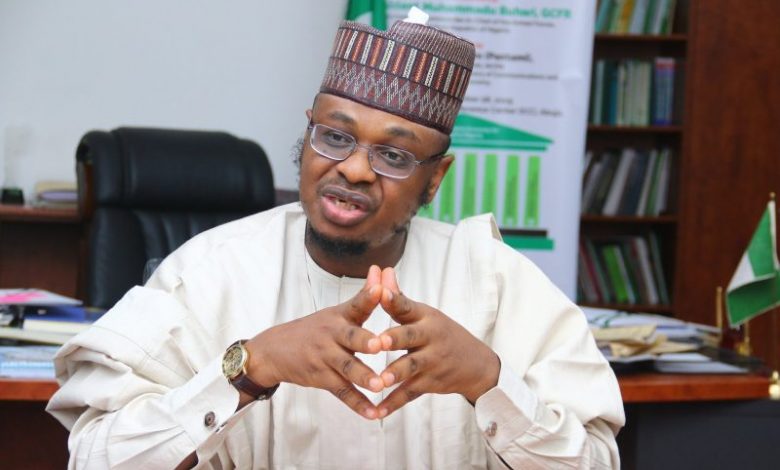
Why FG Approved Tax Reliefs For Tech Startups- Pantami 

The Federal Government has approved tax reliefs for tech startups to enable the implementation of strategies to encourage and support the development and growth of more Innovation-Driven Enterprises.
The Minister of Communications and Digital Economy, Isa Ali Pantami, said this in a statement Sunday by his technical assistant, Femi Adeluyi.


Pantami also said the tax reliefs and incentives would help to create millions of jobs in the country.
He said a number of the proposed strategies resulted from recommendations that were made at an interactive forum held on 22nd February 2022, where the Minister led a Federal Government delegation on a working visit to the Lagos digital innovation ecosystem.


“This will also help to develop innovative solutions to societal problems, and rapidly grow, as well as diversify the Nigerian economy, in line with the National Digital Economy Policy and Strategy for a digital Nigeria,” the statement read.
“Nigeria’s startup ecosystem attracted about 35 percent (estimated at $1.4billion) of the over $4billion raised by African startups, which is the highest raised by any startup ecosystem on the continent.
“The Nigeria Startup Bill was earlier approved by the Federal Executive Council and forwarded to the National Assembly and the process is about 90% complete.
“The approval of the incentives at the council will consolidate the gains recorded for far in the NSB process.


“The implementation of the National Digital Economy Policy and Strategy emphasizes the importance of the innovation and startup ecosystem to the development of an indigenous digital economy.”
The minister said the government would continue to position Nigeria to develop the tech ecosystem to transform Nigeria into a country with a sustainable and thriving digital economy.

read more
News & Announcements

Progress Wins Nigerian Idol 7, Gets N100m Grand Prize Progress has emerged winner of the Nigerian Idol season 7 music reality TV show. He defeated Zadok in the show finale.

According to the show host, IK Osakioduwa, over 45 million votes were recorded for the finale while over 200 million votes were recorded in the nine weeks of the program.
The finale of the competition, which started in February 2022, was hosted by media personality, IK with superstar singer Simi, creative entrepreneur, Obi Asika, and world acclaimed superstar, D’Banj as judges.
Progress’ win sees him getting a cash prize of N30 million, a brand new SUV, a Bigi branded refrigerator, and a year’s supply of Bigi drinks.


The winner will also get to record an EP and a music video, a weekend getaway from TravelBeta and a DStv Explora fully installed with a 12 months premium subscription.
This is coming nine weeks after the show kicked off with 12 contestants, the talents had to battle for the first spot.


At the finale were applauding performances from the judges and individual performances from D’Banj, Simi, Pheels, and the top two contestants – Progress and Zadok.
A performance by D’Banj and the last two talents, Zadok and Progress, performed one of his songs entitled Got my answers.

read more
1 223 224 225 226 227 322
Page 225 of 322