admin, Author at The Lafete Magazine | Page 9 of 398
close

admin

News & Announcements

Atiku requests that the court overturn Tinubu’s opposition to the academic records.

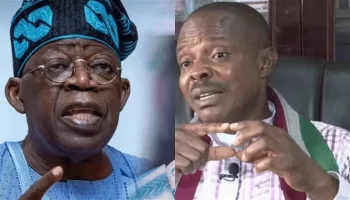
Atiku Abubakar, the PDP’s nominee for president, has submitted a new application asking the US Court to reject President Bola Tinubu’s request to prevent Chicago State University from disclosing his (Tinubu’s) academic record.

According to The PUNCH, Atiku had already obtained an order from a US magistrate for CSU to provide Tinubu’s academic records to his legal team.

Last Monday, Tinubu’s alma mater was required by the magistrate, Jeffrey Gilbert, to deliver all pertinent, non-privileged documents to Atiku’s legal team within two days.

Atiku is currently contesting Tinubu’s declaration as the victor of the presidential election held on February 25.

The Nigerian Supreme Court is now hearing the case.

Tinubu’s record of entrance and acceptance at the Chicago State University, dates of attendance, as well as the degrees, accolades, and honors Tinubu received from the CSU, are among the documents requested by the PDP candidate through his attorney, Angela Liu.

However, when the magistrate’s deadline drew nearer, Tinubu’s attorneys petitioned the US high court, arguing that the magistrate’s earlier judgment needed to be reviewed by a district judge.

The US district court ultimately agreed to the request for a review and a postponement of the magistrate’s order until Monday.

Oluwole Afolabi, Tinubu’s attorney in New York, put up two arguments in his motion.

First, contrary to Atiku’s assertion, his academic credentials are not relevant to Nigerian courts since “the Nigerian election proceedings and the Nigerian courts have explicitly been unreceptive to the discovery.”

His second reason is that Atiku’s request “is unduly intrusive because it allows the applicant (Atiku) to conduct a fishing expedition into the intervenor’s private, confidential, and protected educational records.”

But Atiku, in a fresh response filed on Wednesday, in Chicago, Illinois, urged the court to overrule Tinubu’s request in its entirety.

Atiku’s counsel, Angela Liu, appealed that “If the court overrules the objections, the applicant respectfully requests that it enter an order requiring production of documents no later than October 2, 2023, and the deposition scheduled no later than October 3, to allow time for transcripts to be finalised, and the discovery obtained to be sent to Nigeria (which is six hours ahead) by October 4, so that such evidence may, in turn, be filed with the Supreme Court by October 5, which is when applicant’s Nigerian counsel intend to submit any new evidence to the Supreme Court.”

Atiku’s lawyer explained that contrary to Tinubu’s “inflated rhetoric”, he is not seeking “to conduct a fishing expedition into Tinubu’s private, confidential, and protected educational records.”

The former vice president stated that he wants to investigate the legitimacy and provenance of 12 pages of documents, including two quite different diplomas, that claim to be from Colorado State University.

According to Atiku, there are inconsistencies between the data in the CSU documents and the affidavit Tinubu provided to INEC.

“If, as the intervenor asserts, he graduated from CSU in 1979 and the CSU documents are authentic copies issued, there is no reason why he should oppose the limited discovery the applicant seeks.”

Atiku’s legal team argued that the fact that the Nigerian Electoral Act specifically allows for the submission of new evidence to the Supreme Court in exceptional circumstances demonstrates its receptivity to the evidence sought.

The former vice president clarified that is not seeking the disclosure of Tinubu’s educational documents; he is seeking to authenticate documents that are already in the public record, adding that “Judge Gilbert’s Order may only be reviewed for clear error, even if the Court determines to the objections should nonetheless be overruled in their entirety.”

read more
News & Announcements

Why Chicago State University Shouldn’t Release My Academic Records To Atiku-Tinubu

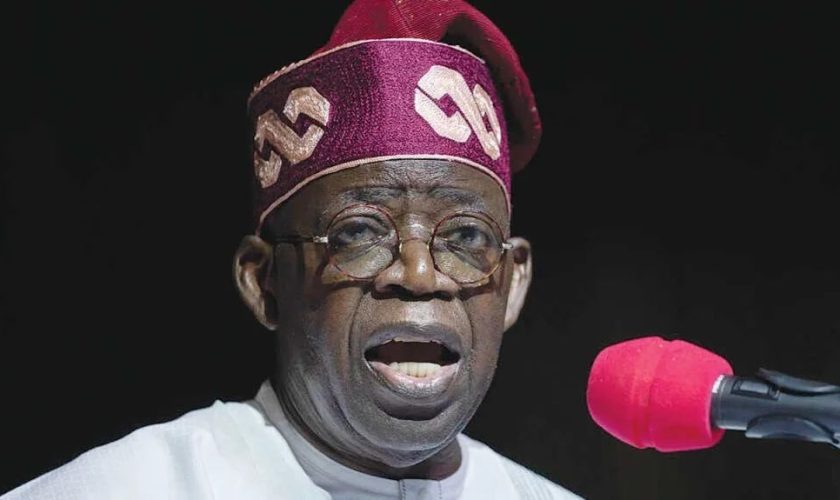
President Bola Tinubu, on Monday, intensified his legal efforts to block the Chicago State University from releasing his academic records to his rival presidential candidate during the last election, Atiku Abubakar.

After obtaining a reprieve from the District Court of Northern Illinois, Eastern Division, with the court temporarily suspending its 20 September order compelling the university to release the documents to Atiku, President Tinubu has now filed a more detailed objection seeking to convince the court to reverse the order outright.

Tinubu’s application, filed by his New York-based lawyer, Oluwole Afolabi, is anchored on two broad reasons.

First is that his academic records in issue are not useful in Nigerian courts as claimed by Atiku because “the Nigerian election proceedings and the Nigerian courts have explicitly been unreceptive to the discovery.”

Tinubu’s second reason is that Atiku’s request “is unduly intrusive because it allows Applicant (Atiku) to conduct a fishing expedition into Intervenor’s private, confidential, and protected educational records.”

He urged the court to set aside the previous order, saying his political opponents had previously used his illegally obtained academic records to attack him.

“The unlawful release of documents previously allowed Intervenor’s opponents to sow confusion and spread conspiracy theories,” Tinubu’s objection read in part.

It added that Atiku’s application was not anything more than “opposition research on a political opponent”.

Atiku had set off the legal battle with an application filed on 2 August requesting the court to order the Chicago State University to release Tinubu’s academic records to him.

The former Nigerian vice president requested the documents in the hope of using them at the Presidential Election Petition Court in Abuja to challenge the authenticity of the certificate presented by Tinubu to Nigeria’s electoral body, INEC, for the 2023 election.

He argued that among other things, a “second Chicago State University diploma has since emerged (dated June 27, 1979) that bears the name “Bola Ahmed Tinubu” but also presents with a different font, punctuation, seal, and signatures, than the June 22, 1979 diploma, among other alleged discrepancies.”

Atiku told the US court that he wanted to authenticate these documents whether a “Chicago State University diploma in the name of Bola Ahmed Tinubu dated June 22, 1979, that was submitted to the INEC before the Nigerian presidential election in February 2023 is genuine or was forged.”

On 19 September, a magistrate judge of the court, Jeffrey Gilbert, ordered the university to release the requested documents to Atiku within two days.

Tinubu’s legal team swiftly approached a district judge of the court to suspend the order to enable them to file a more elaborate challenge against it.

At an emergency hearing on 21 September, the district judge, Nancy Maldonado, agreed to delay the order compelling the Chicago State University to release the academic documents of President Tinubu.

Following the approval, Tinubu, through his legal team, filed his objection on Monday.

In the objection filed on Monday, Tinubu’s legal team argued that the magistrate judge granted Atiku’s application even though the applicant was barred from attempting to use the discovery in the foreign proceeding.

“That conclusion should be rejected because the discovery cannot be ‘for use’ in the foreign proceeding due to the decision of the Nigerian Election Court, and that decision shows the Nigerian courts would not be receptive to the discovery sought by the application.

“The Magistrate gave no weight to the decision of the Nigerian Election Court, which is authoritative proof of the unreceptivity of the foreign court to the discovery sought,” the objection read in part.

It added that the possibility that the Nigerian Supreme Court, where Atiku proceeded to challenge the decision of the Presidential Election Petition Court, may accept the documents was a mere speculation and not “not an indication that foreign courts might consider the discovery.”

In the other plank of objection, Tinubu’s team argued that while Atiku’s case at the Nigerian court only touched on “a CSU diploma”, the magistrate judge “erroneously concluded” to issue an order for the release of “other educational documents.”

They said the court erroneously held that “a foray into other documents” was permissible because “Intervenor also submitted other educational documents in a related proceeding in Nigeria.”

The objection added: “The Magistrate erred in requiring compliance with two subpoenas that go far beyond the narrow issue of the diploma submitted to the INEC, and finding that the education records protections were overcome by Applicant’s investigatory interests.

“The Magistrate determined that the Applicant’s interest outweighed the privacy interest because the Intervenor put the diploma at issue by submitting it to the INEC.

The Magistrate also concluded the Applicant’s interests were stronger as to ‘other educational documents’ submitted in related proceedings.

This second conclusion is clearly erroneous because the ‘other documents’ are not at issue in the electoral challenge, and discovery for “related proceedings” is merely another way of describing a fishing expedition.

Tinubu argued that he stood to suffer harm in allowing discovery on issues and documents outside the diploma because his records “were illegally obtained previously and have been utilised to attack him”.

He added: “Obtaining more documents via a subpoena – particularly ones that are not part of the INEC submission by Intervenor – is both improper and nonsensical.

“The unlawful release of documents previously allowed Intervenor’s opponents to sow confusion and spread conspiracy theories. Applicant should not be permitted to conduct discovery on the discovery illegally obtained by Applicant’s allies and Intervenor’s political opponents. Discovery on discovery is rarely appropriate and is certainly not appropriate when the sole issue Applicant identified is the Intervenor’s submission of his diploma to INEC.

“Nor does the fact that Intervenor’s educational records have been spread into court records justify discovery. Section 1782 does not authorise fishing expeditions to satisfy curiosity or resolve public controversy.”

In conclusion, Tinubu said the Chicago State University had already been established as the most critical by stating that he was awarded the degree as he stated.

“This point is irrelevant to Applicant because he is not seeking anything more than opposition research on a political opponent. The Magistrate Judge clearly erred in granting the application for discovery and concluding that Chicago State University must respond to the document and deposition subpoenas.

He urged the court to set aside the conclusion of the magistrate judge and reverse his order “because the information sought cannot be used and therefore is not “for use” in the foreign proceedings.

Atiku had, in his application, argued that among other things, a “second Chicago State University diploma has since emerged (dated June 27, 1979) that bears the name “Bola Ahmed Tinubu” but also presents with a different font, punctuation, seal, and signatures, than the June 22, 1979 diploma, among other alleged discrepancies.”

Atiku told the US that he wanted to authenticate these documents whether a “Chicago State University diploma in the name of Bola Ahmed Tinubu dated June 22, 1979, that was submitted to the INEC before the Nigerian presidential election in February 2023 is genuine or was forged.”

Atiku added that “under Nigerian law, the submission of a fraudulent document to the INEC would have disqualified President Tinubu from participating in the election.”

When Atiku filed his application in the US district court on 2 August, his petition challenging the presidential election was pending before the Nigerian Presidential Election Petition Tribunal. Therefore, Atiku said his application in the US court was to obtain discoveries that would support his petitions in the Nigerian court of appeal.

Court documents show that a day after Atiku’s application was filed, President Tinubu filed a motion to join in the suit. The judge granted the motion to intervene on 7 August.

read more
1 7 8 9 10 11 398
Page 9 of 398