admin, Author at The Lafete Magazine | Page 322 of 398
close

admin

News & Announcements

Breaking! Libya’s Interim PM Abdul Hamid Dbeibah Sworn In

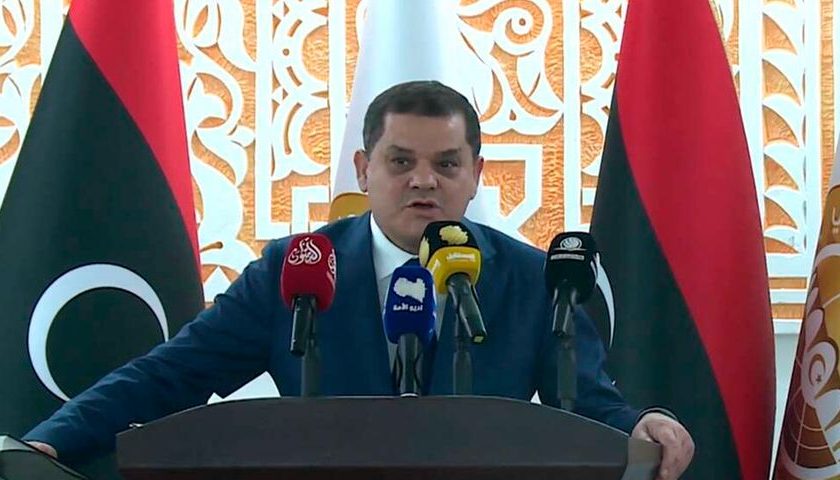
Libya’s new interim Prime Minister Abdul Hamid Dbeibah was sworn in Monday to lead the war-torn country’s transition to elections in December, after years of chaos and division.

The North African nation descended into conflict after dictator Moamer Kadhafi was toppled and killed in a NATO-backed uprising in 2011, resulting in multiple forces vying for power.

A United Nations-supervised process is aimed at uniting the country, building on an October ceasefire between rival administrations in the country’s east and west.

Dbeibah, selected at UN-sponsored talks in February alongside an interim three-member presidency council, took the oath of office in front of lawmakers in the eastern city of Tobruk.

More than 1,000 kilometres (630 miles) from the capital Tripoli in the west, Tobruk has been the seat of Libya’s elected parliament since 2014.

Dbeibah’s swearing-in comes after parliament last week approved his cabinet, in a move hailed by key leaders and foreign powers as “historic”.

His government includes two deputy prime ministers, 26 ministers and six ministers of state, with five posts including the key foreign affairs and justice portfolios handed to women, a first in Libya.

“This will be the government of all Libyans,” Dbeibah said after the vote. “Libya is one and united.”

Dbeibah’s administration is expected to replace both the UN-recognised Government of National Accord, based in Tripoli, and a parallel cabinet headquartered in the east, under the de facto control of forces of military strongman Khalifa Haftar.

Turkey has backed the GNA, while Haftar’s administration has drawn on support from the United Arab Emirates, Egypt and Russia.

Outgoing GNA head Fayez al-Sarraj has said he is “fully ready to hand over” power, while Haftar last month offered “the support of the armed forces for the peace process”.

But the new executive faces daunting challenges to unify the country’s institutions, end a decade of fighting marked by international interference and prepare for elections on December 24.

Dbeibah, 61, a wealthy businessman from the western port city of Misrata once held posts under Kadhafi but has shown no clear ideological position.

During Kadhafi’s rule, Misrata underwent an industrial and economic boom, from which the Dbeibah family and many others profited.

Dbeibah is also known to be supportive of the Muslim Brotherhood and is close to Turkey.

He holds a master’s degree from the University of Toronto in engineering and his expertise introduced him to Kadhafi’s inner circle and led him to head a company managing huge construction projects.

Dbeibah was considered an outsider compared to other candidates vying for the job, and his election process has been marred by allegations of vote-buying.

But Dbeibah jumped into his role even before his inauguration, including pledging to combat the coronavirus crisis and taking anti-corruption measures by freezing state-owned investment funds.

But after 42 years of dictatorship under Kadhafi and a decade of violence, the list of challenges is long.

The population of seven million, sitting atop Africa’s largest proven crude oil reserves, is mired in a dire economic crisis, with soaring unemployment, crippling inflation and endemic corruption.

Another key task will be ensuring the departure of an estimated 20,000 mercenaries and foreign fighters still in the country, whose presence Dbeibah has called “a stab in our back”.

The UN Security Council on Friday called for all foreign forces to leave “without further delay”.
read more
Uncategorized

Merkel’s Party In Crisis After Setback In Regional Polls

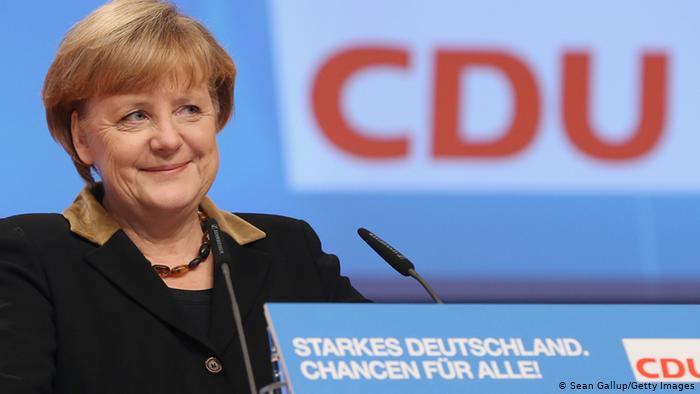
The CDU, the party of German Chancellor Angela Merkel, suffered record defeats in two regional votes on Sunday amid anger over a muddled coronavirus response, including a face mask procurement scandal and a sluggish vaccine rollout.

Sunday’s rout in the southwestern states of Baden-Wuerttemberg and Rhineland-Palatinate, according to News Agency, raised questions about the CDU’s chances in a September 26 general election, when Germans will choose a successor to Merkel.

“It can’t go on like this,” the Der Spiegel weekly said, adding Merkel’s house was “on fire”.

In the southwestern automotive hub of Baden-Wuerttemberg, the Greens won 31.4 percent of the vote and the CDU 23.4 percent, projections based on early results for broadcaster ZDF showed.

In neighbouring Rhineland-Palatinate, the left-leaning Social Democrats (SPD) came first again with 35.5 percent of the vote ahead of the CDU, which led there in opinion polls until last month but secured only 26.9 percent support in Sunday’s election.

The results were the CDU’s worst in post-World War II Germany in both states.

“This is not a good election evening for the CDU,” a glum-looking Paul Ziemiak, the party’s secretary-general, told reporters after the exit poll results.

Faction leader of the Green Party Andreas Schwarz and president of the Baden-Wuerttemberg state parliament Muhterem Aras bump fists, on the day of federal state elections, in Stuttgart, Germany, March 14, 2021 [Andreas Gebert/ Reuters]

“This is a super start to the super election year,” said Robert Habeck, the co-leader of the Greens, suggesting that the outcome was a good omen in a national election year.

Along with fears of a potential third coronavirus wave, CDU officials worry the party’s reputation took a hit in the last two weeks when several conservative legislators quit over allegations they received payments for arranging procurement deals.

The CDU has seen its national popularity wane from 40 percent last June, when Germany was widely praised for its response to the coronavirus pandemic, to approximately 33 percent this month.

The SPD’s candidate for chancellor, Olaf Scholz, said Sunday’s results showed a national government without the CDU and its Bavarian CSU sister party could be possible after September’s vote.

German Social Democratic Party (SPD) candidate for chancellor Olaf Scholz speaks at a two-day party meeting in Berlin, Germany February 7, 2021 [File: Tobias Schwarz/Pool via REUTERS]

Both regional election results open the way for potential regional alliances of the Greens, SPD and liberal Free Democrats (FDP), which had already governed in Rhineland-Palatinate before Sunday’s election.

CDU leaders fear the same constellation of parties could gain enough support to leave their party in opposition at the national level at September’s federal vote.

Markus Blume, the CSU secretary-general, called Sunday’s drubbing a “wake-up call” for the CDU/CSU.

If Germany’s largest bloc wants to stay in power when Merkel bows out after 16 years, it urgently needs to “win back trust”, he said.

“We need clear decisions and a clear course in the fight against the coronavirus,” he added.

The first order of business should be to decide the bloc’s candidate for chancellor, media outlet Spiegel said.

New CDU chief Armin Laschet is the obvious choice but he lacks broad support.

Critics say he has failed to carve out a political profile beyond representing continuity in the post-Merkel era.

Laschet needs to “free himself from Merkel’s shadow” and “say what the party stands for”, Andreas Roedder, a historian at Mainz University and a CDU member told the Bild daily.

Opinion polls suggest Germans would prefer to see popular Bavarian premier and CSU leader Markus Soeder in the top job but he has yet to declare a willingness to run.

If Soeder genuinely has ambitions to be chancellor, “he must strike now”, the Handelsblatt financial daily said.

No German chancellor has ever come from the CSU. Soeder and Laschet wants to settle the candidacy matter by May 23.

The conservatives’ woes come as Germany braces for a third COVID-19 wave, even while proceeding with a gradual reopening of schools and non-essential shops.

Latest forecasts by the country’s Robert Koch Institute for infectious diseases predict that by mid-April, new infections could surpass the peak is seen in December, when some 30,000 cases were reported every day.

Merkel and the premiers of Germany’s 16 federal states will discuss the next steps in the pandemic fight on March 22.

read more
1 320 321 322 323 324 398
Page 322 of 398