admin, Author at The Lafete Magazine | Page 305 of 398
close

admin

News & Announcements

India Equals Brazil, The US In More Than 300,000 COVID Deaths

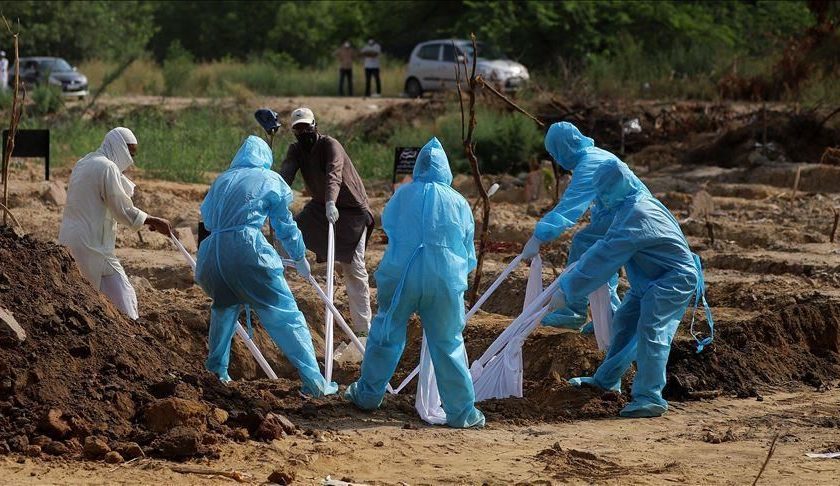
India has crossed 300,000 coronavirus deaths, the third country after the United States and Brazil to hit the grim figure, as it battles a huge second wave of infections now affecting the poorer countryside.

India’s health ministry on Monday reported 4,454 coronavirus-related deaths over the last 24 hours, with the total death toll now standing at 303,720 after adding 50,000 deaths in just under two weeks.

Daily coronavirus infections rose by 222,315, taking the country’s caseload to 26.75 million, according to the health ministry data.

The milestone came as slowed vaccine deliveries mar the country’s fight against the pandemic, forcing many to miss their shots, and a rare “black fungus” infection affecting COVID-19 patients worrying the doctors.

Many experts however believe the real toll is much higher, particularly as the disease spreads into rural areas where the majority of the 1.35 billion population lives and where health facilities and record-keeping is poor.

Al Jazeera’s Elizabeth Puranam, reporting from New Delhi, said Indian journalists, doctors and crematoriums all say many deaths are not being counted.

“The official death toll only takes into account people who are dying in hospitals, but most Indians don’t die in hospitals, they die at home. And only around 22 percent of deaths in the country are medically certified,” she said.

Several Indian states have halted the COVID-19 vaccination drive for those in the 18-44 age group due to a shortage of vaccine supplies, regional officials confirmed on Sunday.

States where vaccinations for this age group have been stopped include Chhattisgarh, New Delhi, Karnakata, Maharashtra and Rajasthan – all among the worst affected by a current second wave of the pandemic.

“The vaccination drive is not going well at all. There are very severe shortages of vaccines and the (federal) government have told states to make their own arrangements with vaccine manufacturers, both local and foreign,” said Al Jazeera’s Puranam.

People aged 45 and above are also finding it difficult to get their second dose in several regions, with a number of vaccination centres remaining closed in cities like New Delhi, Mumbai and Pune. Signs posted outside these centres said supplies had run out.

“Delhi is also running short of Covaxin doses for the 45-plus age group, we have supplies for just one more day, we have a week’s supply of Covishield,” said Atishi of Delhi’s ruling Aam Aadmi Party.

The country began inoculating its 1.3 billion population on January 16 with the two vaccines approved by its drugs regulator.

These are Covishield, which is the name under which the AstraZeneca vaccine is produced in India by the Pune-based Serum Institute of India, and Covaxin, manufactured by Hyderabad-based Bharat Biotech.

The government had planned to vaccinate 300 million people by July but a little more than 195 million shots have been administered so far. Only 43 million people have received the required two shots.

The number of vaccines being administered daily has dropped during the past month from 3.2 million doses on April 26 to 2.4 million on May 11 and to 1.5 million on Saturday, government data showed.

“Vaccination is really the only answer and Indians are already paying a heavy price for the way the government has gone about planning, pricing and the rollout,” said virologist Dr T Jacob John.

Federal government representatives have said the glitch in vaccine supplies were temporary and there would be around two billion doses of vaccines available between June and December.

However, experts say the government is not likely to hit that the goal, pointing out that four of the vaccines the government was basing its projections are still in the clinical trials stage.

“We don’t know whether those would be licenced and when,” epidemiologist Dr Chandrakant Lahariya was quoted as saying by The Hindu newspaper.

Lahariya said a realistic estimate of vaccine availability between August and December, this year would be around 1.3 billion doses.

read more
News & Announcements

Japan Opens Mass Vaccination Centers 2 Months Before Olympics

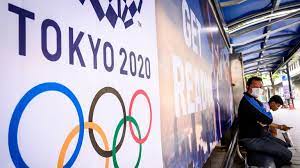
Japan mobilized military doctors and nurses to give shots to elderly people in Tokyo and Osaka on Monday as the government desperately tries to accelerate its vaccination rollout and curb coronavirus infections just two months before hosting the Olympics.

Report from AP has it that Prime Minister Yoshihide Suga is determined to hold the Olympics in Tokyo after a one-year delay and has made an ambitious pledge to finish vaccinating the country’s 36 million elderly people by the end of July, despite scepticism, it’s possible. Worries about public safety, while many Japanese remain unvaccinated, have prompted growing protests and calls for cancelling the games, set to start on July 23.

Suga’s government has repeatedly expanded the area and duration of a largely voluntary request-based virus state of emergency since late April and has made its virus-fighting measures stricter. Currently, Tokyo and nine other areas that are home to 40% of the country’s population are under the emergency and a further extension are deemed unavoidable.

With COVID-19 cases still high, Suga now says vaccines are key to getting infections under control. He has not made vaccinations conditional for holding the Olympics and has arranged for Pfizer to donate its vaccine for athletes through the International Olympic Committee while trying to speed up Japan’s inoculation drive as anti-Olympic sentiment grows.

Suga, speaking to reporters after a brief visit to the Tokyo centre, said accelerating the vaccine rollout is an “unprecedented challenge.”

“We will do whatever it takes to accomplish the project so that the people can get vaccinated and return to their ordinary daily lives as soon as possible,” he said.

At the two centres, staffed by about 280 military medical staff and 200 civilian nurses, the aim is to inoculate up to 10,000 people per day in Tokyo and 5,000 per day in Osaka for the next three months.

In hardest-hit Osaka, where hospitals are overflowing, with tens of thousands of people becoming sicker or even dying at home, dozens began lining up before the inoculation centre opened early Monday. In Tokyo, some vaccine recipients said they took taxis or shuttle buses to get to the centre to avoid packed commuter trains.

People inoculated at the two centres were the first in Japan to receive doses from Moderna Inc., one of two foreign-developed vaccines Japan approved on Friday.

Previously, Japan had used only Pfizer Inc., and only about 2% of the population of 126 million has received the required two doses.

Japan began vaccinating health care workers in mid-February after delays resulting from its decision to require additional vaccine clinical testing inside Japan — a decision many experts said was medically meaningless and only slowed the inoculation process.

Vaccinations for the next group — the elderly, who are more likely to suffer serious COVID-19 effects — started in mid-April but have been slowed by reservation procedures, unclear distribution plans and shortages of medical staff to give shots.

The completion of Japanese-developed vaccines is still uncertain, but government officials hope the approvals Friday of Moderna and AstraZeneca will accelerate inoculations.

 “Speeding up the rollout makes us feel safer because it affects our social life and the economy,” said Munemitsu Watanabe, a 71-year-old office worker who got his first shot at the Tokyo centre. “If 80-90% of the population gets vaccinated, I think we can hold the Olympics smoothly.”

That goal seems impossible to meet. Those currently eligible are 65 years or older, and some officials say it may take until next March before younger people are fully vaccinated.

Japan also has a dire shortage of medical staff who can give shots since only doctors and nurses can legally do so — and they are already busy treating COVID-19 patients.

Under pressure, Suga’s government has allowed dentists and retired nurses to perform inoculations, and on Monday asked for pharmacists’ help. Suga said he is also considering adding paramedics and clinical laboratory technicians to create a pool of “several tens of thousands” of medical personnel. There are worries, however, that loosening the criteria may increase vaccine hesitancy in the public.

Also Monday, Tokyo’s downtown Sumida district organized a one-time inoculation event at the Kokugikan sumo arena, a venue for Olympic boxing, to attract elderly people with a lottery to win sumo-themed souvenirs.

Several other local governments, including Aichi in central Japan and Gunma near Tokyo and Miyagi in the north, also were to open their own large vaccination centres on Monday.

read more
1 303 304 305 306 307 398
Page 305 of 398